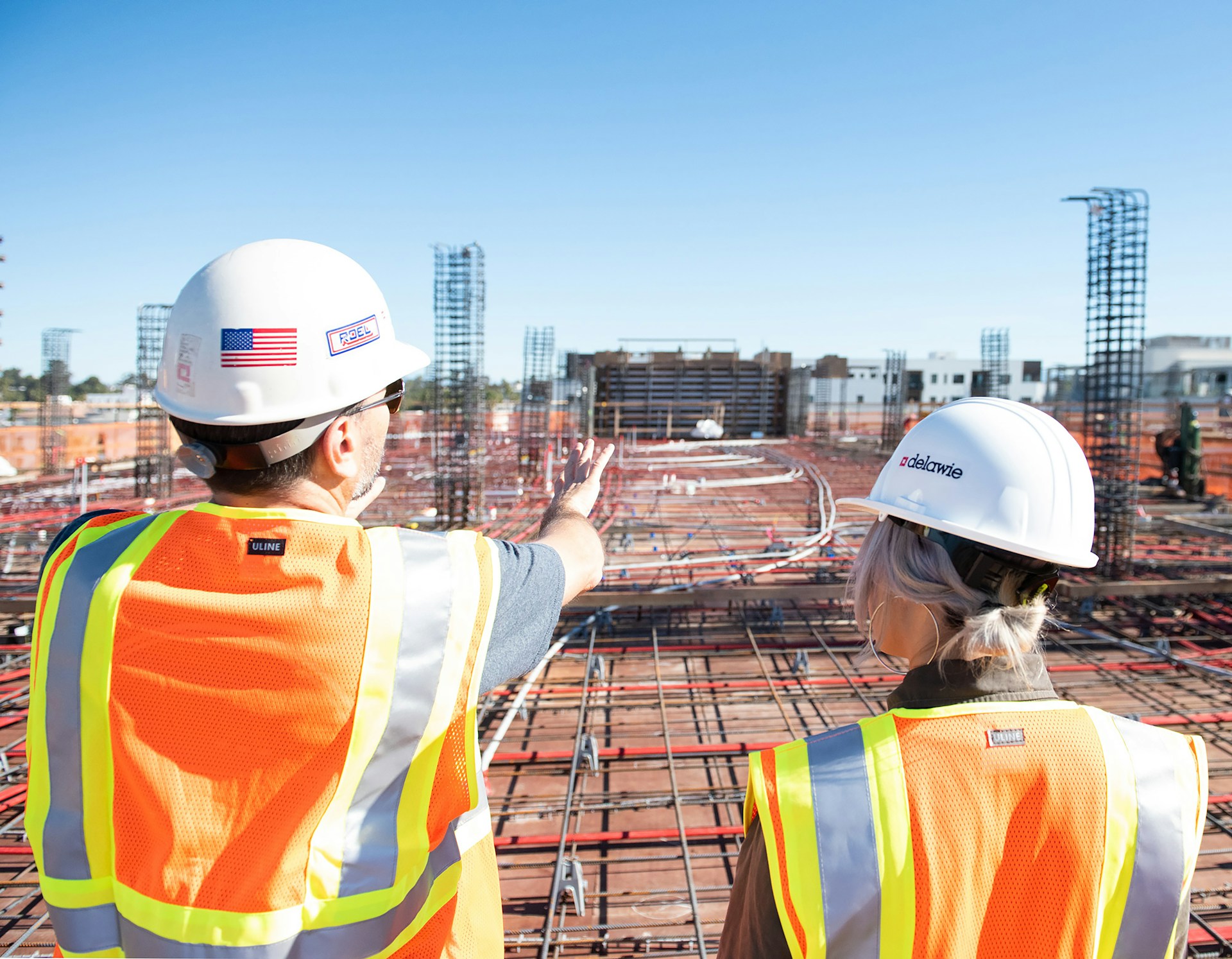
Every May, OSHA designates a week for the National Safety Stand-Down to Prevent Falls, inviting employers across every industry to pause operations and have a direct, structured conversation with their workforce about fall hazards and how to prevent them.

For manufacturing employers specifically, this week carries particular weight. Fall protection has held the top position on OSHA’s most cited violations list for 15 consecutive years, and the hazards that drive those citations do not exist only on construction sites. Elevated platforms, mezzanines, loading areas, maintenance catwalks, and unguarded machinery present fall exposure in manufacturing environments every single day. The Stand-Down is a prompt to address that exposure with intention, and to do it in a way that involves the workers who face those risks directly.
Explore Our Solutions!

Why the Numbers Still Demand Attention

Progress has been made. The Bureau of Labor Statistics recorded 844 fatal falls, slips, and trips across all industries in 2024, a 4.6 percent decrease from 885 in 2023, and federal OSHA investigated 11 percent fewer worker deaths in FY 2024 than the year prior. Those improvements reflect real effort from safety professionals, employers, and regulators working together.

The numbers that have not moved enough are the ones that keep fall protection at the top of every enforcement priority list. OSHA issued 5,914 fall protection citations in FY 2025, maintaining the category as the most cited violation for the 15th year running. Falls remain the second leading cause of preventable workplace deaths in the United States, and slips, trips, and falls caused more than 240,000 nonfatal injuries requiring days away from work in 2024. Behind every one of those numbers is a worker who did not get to go home the way they expected to.

The Stand-Down exists because direct and repeated conversations with workers change outcomes.

What the Stand-Down Actually Looks Like in a Manufacturing Setting

The Stand-Down is voluntary with no set format. OSHA recommends toolbox talks, equipment inspections, development of rescue plans, or other structured activities that prompt direct conversations about fall hazards between workers and management. Any company can join, and half of the Stand-Down events are held by businesses with 25 or fewer employees.

For a manufacturing facility, use an approach tailored to your workers’ actual hazards, not a general overview of fall protection. Structure the week around the real exposures in your facility:

Day one could focus on elevated work areas. Walk the floor with a supervisor and workers together and identify every location where a fall from height is possible. Mezzanine edges, platform openings, and roof access points are all worth covering in detail, particularly if any of those areas have changed in use since the last safety review.

On day two, address ladders and climbing equipment. Ladder violations are common, and misuse causes injuries in manufacturing. Inspect all portable ladders, fixed access ladders, and step stools so workers know what safe equipment looks like.

On day three, review PPE and fall arrest systems. Regularly inspect harnesses, lanyards, and anchor points. Teach workers to inspect their equipment themselves. Verify that rescue plans exist and ensure staff know the procedures.

Day four could be dedicated to near-miss reporting. Ask your workers directly: Have you seen something in the past month that concerned you? Have there been close calls that went unreported? Creating a structured opportunity for workers to raise these concerns during Stand-Down week, without any pressure attached, often surfaces hazards that formal inspections miss.

Close day five with a direct conversation about what will change. If workers join Stand-Down activities and see no results, they are less likely to participate next year. On the final day, state what you heard, what your team will address soon, and how workers can keep raising concerns.

Participation Goes Beyond the Week

The Stand-Down’s value lasts beyond May 8. Conversations, hazard identification, procedure reviews, and the trust built between workers and leadership during Stand-Down week strengthen your safety program year-round.

OSHA provides free resources for participating employers, including toolbox talk guides, fact sheets, posters, ladder safety materials, and a Certificate of Participation that employers can download after the event. These materials are available in English and Spanish, making them accessible to multilingual workforces common across manufacturing operations.

Register your Stand-Down event on OSHA’s site. This adds to national data and shows workers that your commitment to safety aligns with the broader community.

If your team is looking for structured guidance on preparing your fall protection program ahead of Stand-Down week, Arbill’s safety resources are built around the hazards that occur most frequently in manufacturing and warehouse environments. And if the Stand-Down surfaces gaps in your PPE program, training documentation, or compliance posture, Arbill’s safety advisors are ready to help you address them before they become citations.

See Our Safety Services!

Frequently Asked Questions


When is the OSHA Safety Stand-Down 2026? 

The 13th annual National Safety Stand-Down to Prevent Falls in Construction runs May 4 through 8, 2026. It is open to employers in all industries, not just construction.

Is the OSHA Stand-Down mandatory? 

The Stand-Down is voluntary. OSHA does not require participation, but provides free resources, including toolbox talk guides, fact sheets, posters, and a downloadable Certificate of Participation for employers who take part.

What should manufacturing employers do during the Stand-Down? 

Manufacturing employers are encouraged to structure the week around real fall hazards in their specific facility: elevated work areas, ladders and climbing equipment, fall arrest PPE, near-miss reporting, and a pledge to act on what surfaces during the week.

Why does fall protection keep appearing on OSHA’s most cited violations list? 

Fall protection has held the top spot on OSHA’s most-cited violations list for 15 consecutive years. The persistence of the citation reflects gaps between written programs and actual practice, including training completed but not retained, equipment not regularly inspected, and separation controls that have not kept pace with operational changes.

Request a Safety Assessment

Recent Posts

OSHA Stand-Down 2026: What Employers in Manufacturing Need to Know

OSHA Stand-Down 2026: What Employers in Manufacturing Need to Know

TruSense Forklift Safety
Forklift Blind Spots Are Killing Workers: How TruSense Is Changing Warehouse Safety in Real Time

Forklift Blind Spots Are Killing Workers: How TruSense Is Changing Warehouse Safety in Real Time

importance of PPE
Roadside to Processing Plant: A Head-to-Toe PPE Guide for Waste Collection and Sorting Workers

Roadside to Processing Plant: A Head-to-Toe PPE Guide for Waste Collection and Sorting Workers

Crystalline Silica Protection
Silica Dust, Fumes, and Grinding Debris: Building a Respiratory Protection Program That Actually Gets Used

Silica Dust, Fumes, and Grinding Debris: Building a Respiratory Protection Program That Actually Gets Used

Welding Hot Work Glove
The Hidden Hand Hazards in Metal Fabrication and How the Right Cut-Resistant Gloves Save Fingers

The Hidden Hand Hazards in Metal Fabrication and How the Right Cut-Resistant Gloves Save Fingers