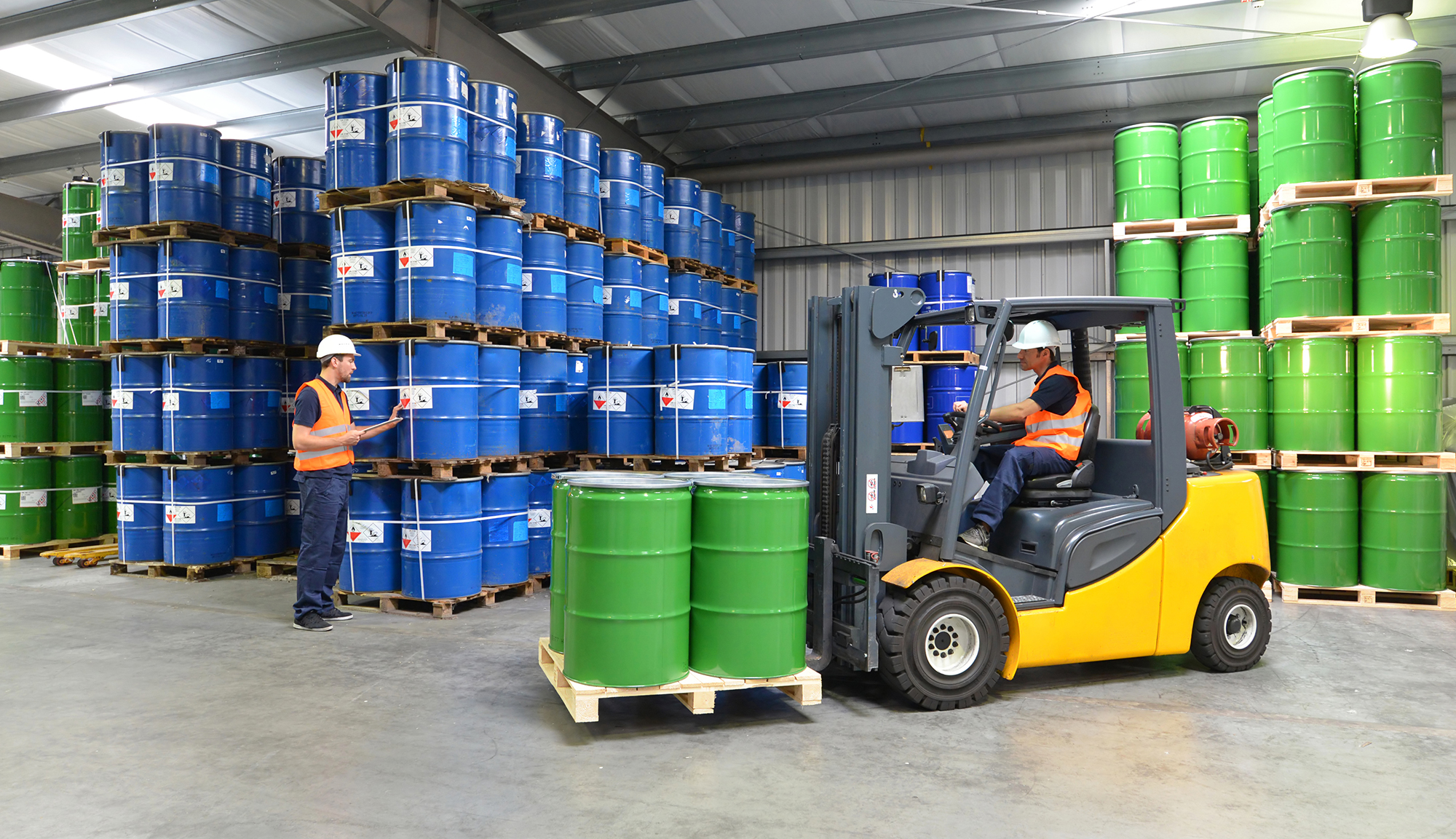
Forklifts keep warehouses, distribution centers, manufacturing facilities, and loading docks moving. They also create one of the most serious hazards in industrial environments: the risk of striking a pedestrian.

The danger is not always caused by careless driving. In many facilities, forklift operators are working around stacked inventory, narrow aisles, blind corners, loading dock activity, pedestrians, noise, and fast-moving schedules. A worker can step into a travel path. A forklift can reverse near a rack. A load can block the operator’s view. In seconds, a normal shift can turn into a serious incident.

Traditional forklift safety controls still matter. Training, mirrors, horns, lights, floor markings, walkways, and barriers all play a role. But they do not eliminate every blind spot. That is why many safety leaders are looking beyond passive warning systems and adding real-time alert technology.

TruSense™ Forklift, powered by Microshare, is Arbill’s real-time forklift safety alert system designed to help prevent collisions between forklifts, pedestrians, and equipment by sensing hazards operators may not see.

Why Forklift Blind Spots Are So Dangerous

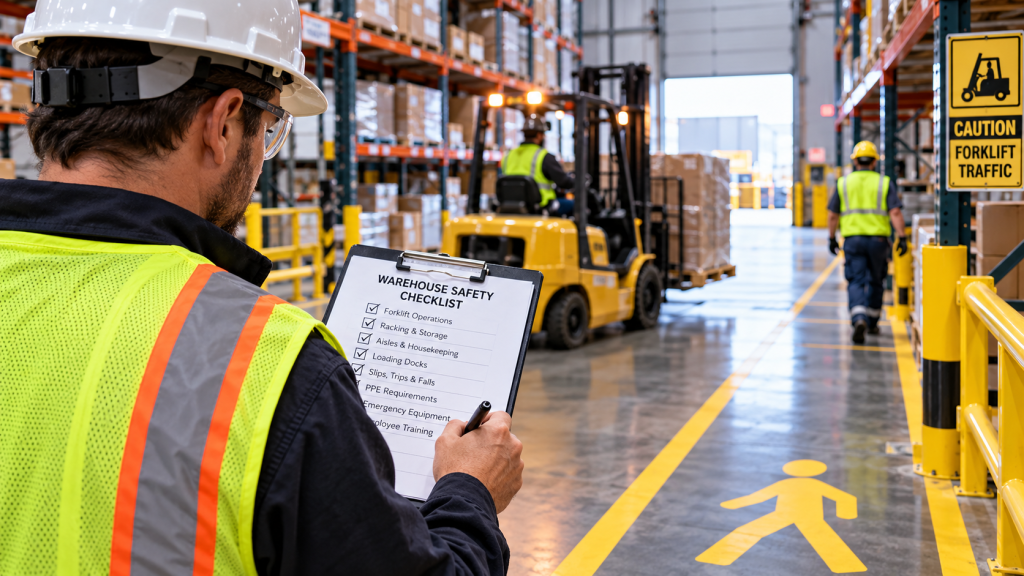
Forklift-pedestrian incidents happen because warehouses are shared spaces. Operators and pedestrians often work near each other, especially in busy aisles, staging areas, loading docks, production lines, and storage zones.

OSHA notes that many pedestrians and bystanders are injured in forklift-related accidents, including cases where forklifts strike pedestrians or falling loads strike nearby workers. OSHA also recommends separating forklift traffic from pedestrian traffic where possible, yielding to pedestrians, sounding horns at blind corners, and using alarms when backing up.

Blind spots become especially dangerous when:

  • A load blocks the operator’s forward view
  • High racking limits visibility at intersections
  • Pedestrians cross behind or beside a forklift
  • Forklifts reverse near active work zones
  • Noise makes horns or backup alarms harder to hear
  • Workers become used to forklift traffic and stop reacting quickly
  • Congested areas make it difficult to maintain safe distance

Arbill’s forklift and pedestrian safety guidance identifies limited visibility as a key risk, noting that forklift design, heavy loads, blind spots, high shelving, narrow aisles, crowded areas, and dim lighting can all increase the chance of collision.

Why Traditional Forklift Safety Measures Are Not Always Enough

Most facilities already use some combination of training, signage, mirrors, lights, horns, alarms, marked walkways, and supervisor reminders. These controls are important, but they often depend on one thing: someone noticing the hazard in time.

That is the problem.

A mirror only helps if the operator looks at the right moment. A horn only helps if the pedestrian hears it and reacts. A floor marking only works if people stay in the marked area. A training reminder only works if workers remember it during a fast-paced shift.

Traditional controls can also lose effectiveness over time. Workers may become desensitized to alarms. Operators may assume aisles are clear. Pedestrians may rush through work zones to save time. When production pressure rises, small shortcuts can become routine.

That does not mean facilities should remove traditional controls. It means they need another layer of protection that responds in real time.

How TruSense Helps Close the Awareness Gap

TruSense Forklift is designed to improve awareness when forklifts and pedestrians are operating near each other. According to Arbill, the system uses smart sensors to detect movement and proximity of people, objects, or other vehicles, then alerts operators and pedestrians immediately. It is designed to provide visual and audible alerts and support 360-degree awareness indoors and outdoors.

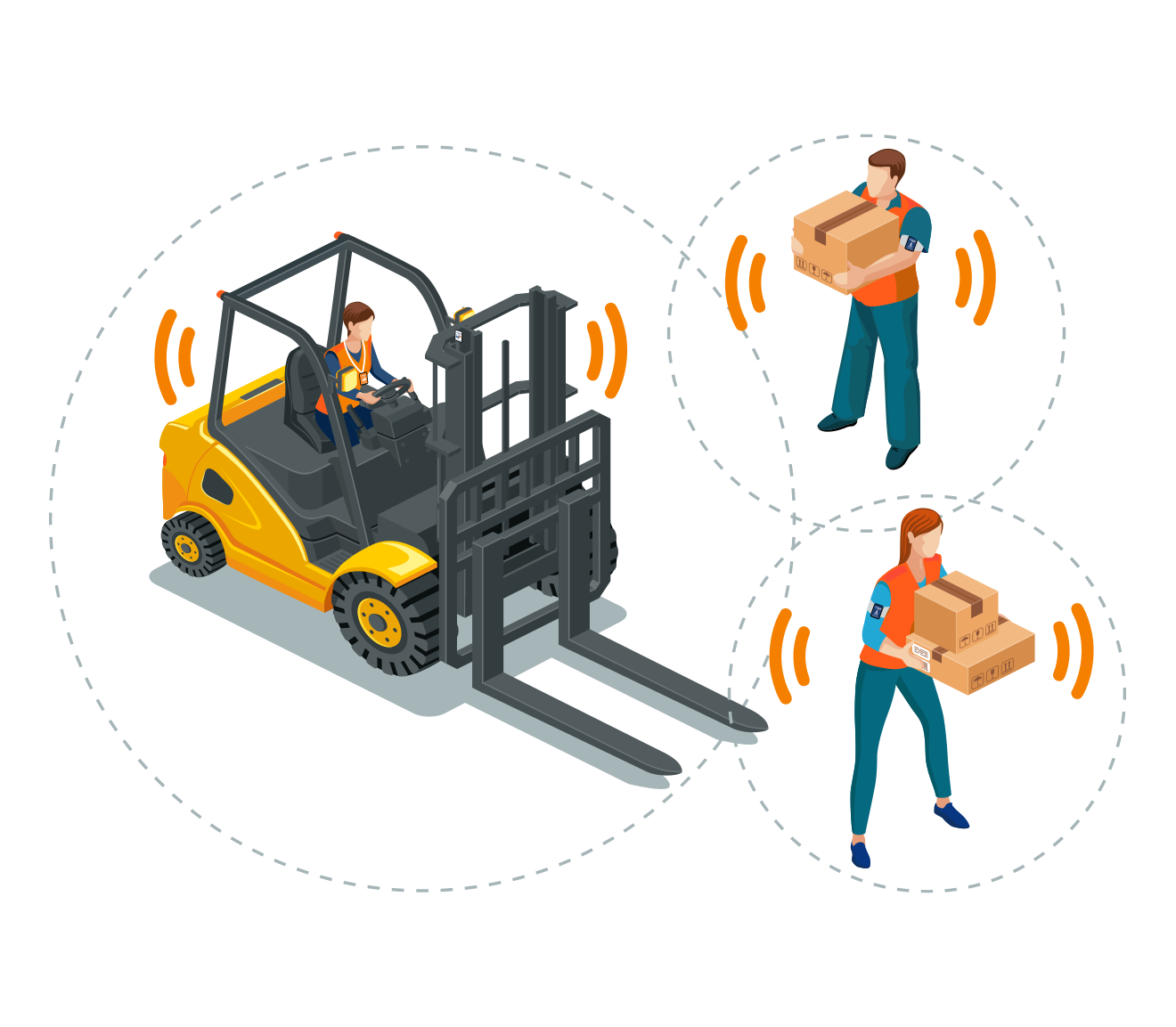
The system includes a forklift-mounted sensor and a wearable pedestrian sensor. Arbill explains that the forklift sensor is affixed to the machine and communicates with a sensor worn by the forklift operator, while the pedestrian sensor can be worn on the wrist, arm, safety vest, waistband, or lanyard.

When a pedestrian comes within the defined range, TruSense alerts workers in real time. Arbill states that TruSense vibrates and buzzes to alert forklift operators and nearby workers within six feet, giving pedestrians time to move away faster than a forklift can stop or pivot.

This makes TruSense different from passive safety tools. It does not simply mark a hazard zone or remind workers to be careful. It actively alerts people when proximity becomes a concern.

Explore Our Solutions!
TruSense Forklift Safety

Key Benefits of Real-Time Forklift Detection

1. Better Awareness Around Blind Spots

Blind spots are not always visible until it is too late. TruSense adds another layer of awareness by alerting workers when pedestrians, forklifts, or equipment are too close.

This is especially useful in:

  • Blind corners
  • Narrow aisles
  • Loading docks
  • High-traffic staging areas
  • Crosswalks inside warehouses
  • Production floors with shared pedestrian and forklift movement
  • Outdoor yards where visibility can change with lighting, weather, or equipment placement

2. Alerts for Both Operators and Pedestrians

A strong forklift safety system should not depend only on the operator. Pedestrians also need to know when they are entering a danger zone.

TruSense is built to alert both the forklift operator and nearby workers, helping both sides react before a close call becomes a collision.

3. Flexible Deployment Across Facilities

Arbill states that TruSense works with any forklift and integrates with all equipment types, regardless of age or manufacturer. It is also described as compatible with all forklift makes and models and designed for indoor and outdoor industrial environments.

That matters because many facilities operate mixed fleets. A warehouse may have older forklifts, newer electric units, pallet jacks, reach trucks, or equipment from multiple manufacturers. A safety system that can work across the fleet is easier to standardize.

4. Fast Setup Without Slowing Operations

Safety technology must fit the pace of industrial work. If implementation is complicated, expensive, or disruptive, adoption becomes harder.

Arbill describes TruSense as affordable, easy to install, and operational in days rather than weeks. The company also notes that it can be installed by Arbill or facility personnel.

5. Support for a Proactive Safety Culture

Real-time alerts do more than prevent individual close calls. They also reinforce awareness.

When workers receive immediate feedback near forklifts, they become more aware of high-risk zones, traffic patterns, and unsafe proximity. Over time, that can support better habits and stronger safety conversations.

Arbill positions TruSense as a proactive safety solution designed to reduce collisions and increase awareness in busy industrial settings.

As long as people go to work, we have an opportunity to help protect them.

Julie Copeland
Arbill CEO

Julie Copeland Arbill CEO

Where TruSense Can Have the Biggest Impact

TruSense is especially valuable in areas where pedestrians and forklifts routinely share space.

Loading Docks

Loading docks combine trucks, trailers, forklifts, pallets, pedestrians, staging lanes, and tight timing. Visibility changes constantly as trailers are loaded or unloaded. A worker walking behind a forklift or near a dock entrance may be difficult to see.

Warehouse Aisles and Intersections

Tall racks and narrow aisles create natural blind spots. Even when mirrors are installed, pedestrians and operators may not always see each other soon enough.

Production and Manufacturing Areas

Forklifts often move raw materials, finished goods, tools, scrap, and components through areas where employees are focused on production tasks. Workers may not expect forklift movement near their station.

Outdoor Yards

Outdoor operations bring additional challenges, including changing light, weather, uneven surfaces, vehicle traffic, and larger equipment movement. TruSense is designed for both indoor and outdoor industrial environments.

High-Turnover or Multi-Shift Facilities

Facilities with multiple shifts, seasonal workers, temporary labor, or frequent layout changes may struggle to keep everyone equally aware of forklift traffic patterns. Wearable alert technology can help reinforce safety in real time.

Implementing TruSense in a Warehouse Safety Program

TruSense should not replace a forklift safety program. It should strengthen it.

A practical implementation plan should include the following steps.

Assess Forklift-Pedestrian Risk Areas

Start by mapping the areas where forklifts and pedestrians interact. Look for blind corners, congested aisles, loading docks, intersections, pedestrian crossings, staging areas, and zones where visibility is blocked by racks, walls, doors, or stored materials.

OSHA recommends walking cluttered routes first to spot problems, using spotters where needed, warning pedestrians when there is not enough clearance, and sounding horns at blind corners, doorways, and aisles.

Review Existing Controls

Before adding technology, confirm that basic controls are in place. These may include:

  • Marked forklift routes
  • Pedestrian walkways
  • Barriers or guardrails where feasible
  • Good lighting
  • Warning signs
  • Floor markings
  • Mirrors at blind corners
  • Housekeeping to reduce clutter
  • Operator training and refresher training
  • Incident and near-miss reporting

Arbill’s forklift safety guidance recommends clear floor markings, signs, pedestrian paths, barriers where feasible, lighting, housekeeping, training, documentation, audits, and routine risk assessments.

Choose the Right Deployment Method

Pedestrian sensors can be worn in different ways, including on a waistband, inside a vest, on an armband, wrist, or lanyard. Devices may also be assigned to individuals or shared among shifts, which can make deployment practical for both small teams and larger facilities.

Train Operators and Pedestrians

Training should explain what the alerts mean and how workers should respond. Operators need to understand that alerts are not a substitute for safe driving, speed control, horn use, and proper observation. Pedestrians need to understand that a wearable alert does not give them permission to walk casually through forklift traffic.

Training should cover:

  • How TruSense works
  • Where sensors are worn
  • What vibration, buzzing, visual, or audible alerts mean
  • How to respond when an alert occurs
  • Where the highest-risk zones are located
  • How to report issues, near misses, or device problems
  • Why traditional safety rules still apply

Monitor Use and Improve the Program

After implementation, supervisors should observe how workers use the system. Are pedestrians wearing the sensors correctly? Are operators responding to alerts? Are there areas with frequent alerts that need layout changes, barriers, signs, or better traffic separation?

A real-time alert system can help reveal patterns that were previously invisible. If the same aisle, dock door, or intersection repeatedly creates alerts, that area may need a deeper safety review.

See Our Safety Services!
TrusSense Forklift Warning Distance

The Business Case for Preventing Forklift Incidents

The human cost of forklift incidents is the strongest reason to act. But the operational and financial costs are also significant.

Arbill’s forklift safety content cites OSHA estimates of 35,000 to 62,000 forklift-related injuries annually, notes that 36% of forklift fatalities involve pedestrians, and lists $41,003 as the average cost of a workers’ compensation claim.

Beyond direct injury costs, forklift incidents can also create:

  • Lost productivity
  • Equipment damage
  • Product damage
  • Investigation time
  • Training disruptions
  • Higher insurance costs
  • OSHA citations or penalties
  • Lower employee morale
  • Increased turnover risk

Arbill’s TruSense product sheet positions the system as a way to minimize injuries, downtime, and insurance costs while supporting a high-impact safety solution.

Real-Time Safety Is the Next Step Forward

Forklift blind spots are not a new problem. But warehouses and industrial facilities are more active, more congested, and more demanding than ever.

Training, mirrors, lights, horns, barriers, and marked walkways remain important. However, facilities also need tools that respond at the speed of the hazard. TruSense adds that layer by detecting proximity and alerting operators and nearby workers in real time.

For safety leaders, the goal is not simply to check a compliance box. The goal is to prevent the next close call, the next collision, and the next life-changing injury.

TruSense helps facilities move from passive awareness to active prevention. In high-traffic environments where forklifts and pedestrians work side by side, that real-time awareness can make all the difference.

Conclusion

Forklift blind spots are one of the most dangerous hazards in warehouse and industrial environments. Operators may not always see pedestrians, and pedestrians may not always hear or notice approaching equipment.

That is why safety programs need more than reminders. They need layers of protection that work in real time.

TruSense Forklift gives warehouse teams a smarter way to manage forklift-pedestrian risk by using sensors, wearable alerts, and immediate warnings to improve awareness before an incident occurs. Combined with training, traffic planning, barriers, signage, lighting, and strong safety leadership, it can help facilities reduce risk without slowing down the work.

When people and forklifts share the same space, every second matters. TruSense helps make those seconds safer.

Request a Safety Assessment

Recent Posts

TruSense Forklift Safety
Forklift Blind Spots Are Killing Workers: How TruSense Is Changing Warehouse Safety in Real Time

Forklift Blind Spots Are Killing Workers: How TruSense Is Changing Warehouse Safety in Real Time

importance of PPE
Roadside to Processing Plant: A Head-to-Toe PPE Guide for Waste Collection and Sorting Workers

Roadside to Processing Plant: A Head-to-Toe PPE Guide for Waste Collection and Sorting Workers

Crystalline Silica Protection
Silica Dust, Fumes, and Grinding Debris: Building a Respiratory Protection Program That Actually Gets Used

Silica Dust, Fumes, and Grinding Debris: Building a Respiratory Protection Program That Actually Gets Used

Welding Hot Work Glove
The Hidden Hand Hazards in Metal Fabrication and How the Right Cut-Resistant Gloves Save Fingers

The Hidden Hand Hazards in Metal Fabrication and How the Right Cut-Resistant Gloves Save Fingers

Woman checking safety program on laptop
7 Signs Your Workplace Safety Program Is Overdue for a Reset

7 Signs Your Workplace Safety Program Is Overdue for a Reset