Fall protection is not a budget line to trim.
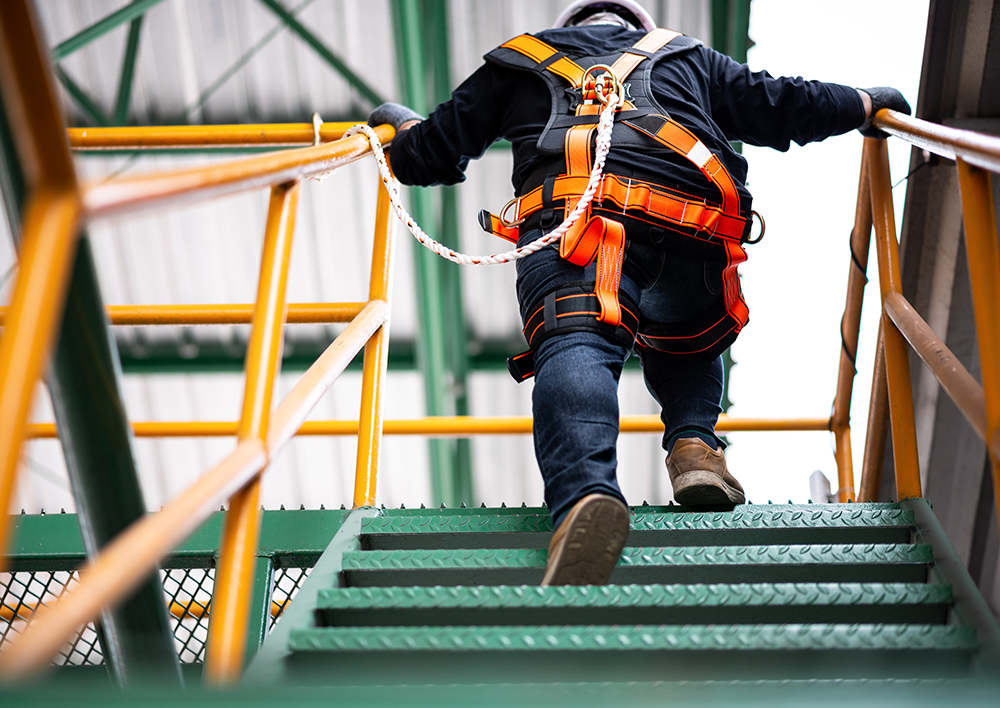
On rigs, elevated platforms, tank access points, ladders, mezzanines, loading areas, and service structures, one missing control can turn routine work into a serious injury or fatality. Oilfield workers may climb, inspect, maintain, repair, connect, disconnect, carry tools, access valves, or work near open edges while managing weather, equipment, slick surfaces, and time pressure.
That is why fall protection cannot be treated as optional when budgets tighten.
A harness in the storage room is not a fall protection program. A written policy is not enough if workers do not have safe access, the right equipment, proper anchorage, clearance planning, inspections, training, and rescue procedures.
For rigs and elevated platforms, compliance means more than owning fall protection gear. It means having a system that works before a worker leaves the ground.
Why Fall Protection Gets Cut — and Why That Creates Risk
When costs rise, some sites delay upgrades, extend equipment life, reduce training time, or postpone inspections. These decisions may look small at first, but they create gaps that show up during real work.
The uploaded draft makes this point clearly: budget constraints can tempt managers to delay upgrades or skip inspections, but fall protection equipment that does not meet current standards puts workers in immediate danger.
Cost-cutting can create problems such as:
- Worn harnesses staying in service
- Damaged lanyards not being replaced
- Self-retracting lifelines not being inspected
- Anchor points not being verified
- Workers using the wrong connector for the task
- Training being delayed or shortened
- Rescue procedures not being practiced
- Clearance calculations being skipped
- Temporary work platforms not being reassessed
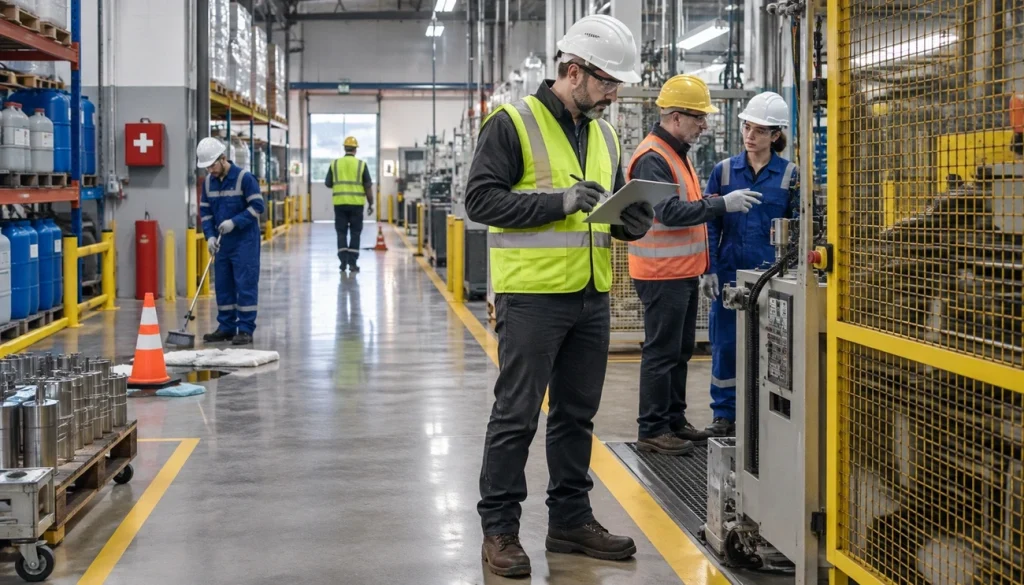
- Slick or damaged walking surfaces being ignored
These gaps may not be obvious until a worker falls, an OSHA inspection occurs, or a near miss reveals that the system was not as strong as the paperwork suggested.
What OSHA Expects From Fall Protection Programs
OSHA requires employers to protect workers from fall hazards and falling object hazards in covered workplaces. In general industry, 29 CFR 1910.28 requires employers to provide fall protection where employees are exposed to fall hazards. OSHA 1910.29 establishes criteria for fall protection systems, and 1910.30 covers training requirements for employees exposed to fall hazards.
For construction work, OSHA 1926 Subpart M sets fall protection requirements. OSHA 1926.501 covers the duty to have fall protection, and 1926.502 covers fall protection system criteria and practices.
For oil and gas operations, the applicable requirement depends on the work being performed, the worksite, and whether the activity falls under general industry, construction, or another applicable standard. EHS teams should evaluate the specific task instead of assuming one rule covers every situation.
The expectation is consistent: employers must identify fall hazards and provide protection before workers are exposed.