
Data center safety is not only an IT issue.

It is not only a facilities issue either.

A data center depends on both teams working together. IT teams understand uptime, server priority, network dependencies, backup systems, and recovery needs. Facilities teams understand electrical infrastructure, UPS systems, generators, HVAC, fire suppression, access controls, building systems, and physical hazards.

During normal operations, these responsibilities may feel separate. During an emergency, they become connected immediately.

A power event, fire alarm, cooling failure, smoke condition, electrical fault, weather disruption, or evacuation can affect both people and infrastructure at the same time. If IT and facilities teams do not have a coordinated plan, small communication gaps can turn into safety risks, delayed response, longer downtime, and avoidable confusion.

That is why data centers need a coordinated PPE and emergency response plan that protects workers, supports uptime, and gives both teams a shared playbook before something goes wrong.

Why Data Center Safety Requires Both Teams

Data centers are highly controlled environments, but that does not mean they are low-risk.

Behind the clean aisles and server racks are electrical systems, backup power equipment, batteries, cooling systems, fire suppression systems, confined or restricted access areas, elevated work, heavy equipment movement, and emergency response decisions that may need to happen quickly.

IT teams often focus on systems and uptime. Facilities teams often focus on infrastructure and physical operations. Both views are necessary.

The uploaded draft highlights the core problem: emergency response planning separates resilient data centers from vulnerable ones, and communication gaps between IT and facilities teams can create dangerous vulnerabilities that extend downtime and compromise safety.

A coordinated plan helps both teams understand:

  • Who makes decisions during an emergency
  • Which systems are most critical
  • Which areas require PPE
  • Who can enter electrical or mechanical rooms
  • When evacuation takes priority over equipment protection
  • How to communicate during outages
  • Which vendors must be contacted
  • How backup power and cooling procedures connect to IT recovery
  • What workers should do when conditions change

The goal is not just fast response. The goal is safe response.

Common Data Center Emergencies That Require Coordination

Data center emergencies can affect both workers and infrastructure.

A cooling failure can quickly become an IT uptime issue, but it may also require facilities teams to access mechanical rooms, roof units, or hot equipment. A fire alarm may require evacuation, but IT may need to understand which systems shut down, which remain online, and what data recovery steps apply. A power issue may involve electrical hazards, generator response, UPS load decisions, and equipment protection at the same time.

Common emergencies include:

  • Power outages
  • UPS failures
  • Generator issues
  • Electrical faults
  • Arc flash concerns
  • Fire or smoke conditions
  • Cooling system failures
  • Water leaks
  • Battery incidents
  • Severe weather
  • Access control failures
  • Physical security incidents
  • Cybersecurity events requiring physical response
  • Evacuations
  • Vendor or utility interruptions

Each situation needs clear roles. IT should not have to guess what facilities is doing, and facilities should not have to guess which systems IT needs protected first.

Electrical Hazards and Arc Flash Risk

Electrical hazards are one of the most serious safety concerns in data centers.

Facilities teams may work around switchgear, panels, UPS systems, generators, transfer switches, power distribution units, and other energized equipment. IT teams may not perform electrical work, but they may work near electrical infrastructure or need to understand restricted areas during emergency response.

OSHA’s arc flash guidance states that arc flashes typically involve equipment such as large electrical panels, motor control centers, switchboards, transformers, disconnect fuses, and metal-clad switchgear.

That matters in data centers because electrical infrastructure is central to uptime.

A coordinated plan should define:

  • Who is qualified to access electrical areas
  • What PPE is required for specific electrical tasks
  • Which areas IT staff should avoid during electrical work
  • How arc flash boundaries are communicated
  • How electrical emergencies are escalated
  • When work must stop
  • How lockout/tagout connects to system operations
  • How backup power decisions are coordinated

For a deeper internal resource, Arbill’s article on arc flash PPE strategy for utility worker safety explains why electrical PPE programs should be layered around hazard analysis, task-specific protection, training, testing, documentation, and access to the right equipment.

Data centers need that same mindset: not just a checklist, but a system.

Explore Our Solutions!
Emergency Response Planning for Data Centers and Why IT and Facilities Teams Must Work Together

Respiratory Protection and Smoke Response

Respiratory protection may be overlooked in data center planning, but it can become important during smoke, fire, battery, chemical, or cleanup events.

Workers should not enter smoke-filled areas or unknown atmospheres without proper assessment, training, and respiratory protection. Facilities teams may also face airborne hazards during maintenance, fire response support, battery incidents, cleanup, or emergency restoration.

OSHA’s respiratory protection standard requires employers to provide respirators when necessary to protect worker health and to establish and maintain a respiratory protection program when respirators are required.

A data center respiratory plan should define:

  • When workers must not enter an area
  • Who can assess airborne hazards
  • Which respirators are available
  • Whether fit testing is required
  • How cartridges are selected and replaced
  • Where respiratory equipment is stored
  • How smoke or chemical exposure is handled
  • When emergency responders must take over

For teams sourcing equipment, respiratory protection should be selected based on the hazard, worker role, and emergency response plan.

Respiratory PPE should not be treated as a storage item that no one knows how to use. It must be connected to training, access, and clear decision-making.

PPE Access Must Be Planned Before the Emergency

In an emergency, workers should not waste time searching for PPE.

Data centers may need PPE for electrical work, mechanical maintenance, battery areas, cleanup, fire response support, elevated access, weather-related response, and respiratory hazards. If the right PPE is locked in a distant storage room, out of stock, or unknown to the people responding, the plan is already weaker.

PPE access should be designed around real response needs.

That may include:

  • Arc-rated PPE for qualified electrical workers
  • Safety glasses and face protection
  • Gloves for electrical, mechanical, or cleanup tasks
  • Respiratory protection where required
  • Hearing protection near generators
  • Foot protection for facilities work
  • First aid and emergency supplies
  • High-visibility gear for exterior or loading areas
  • Weather-ready PPE for outdoor equipment response

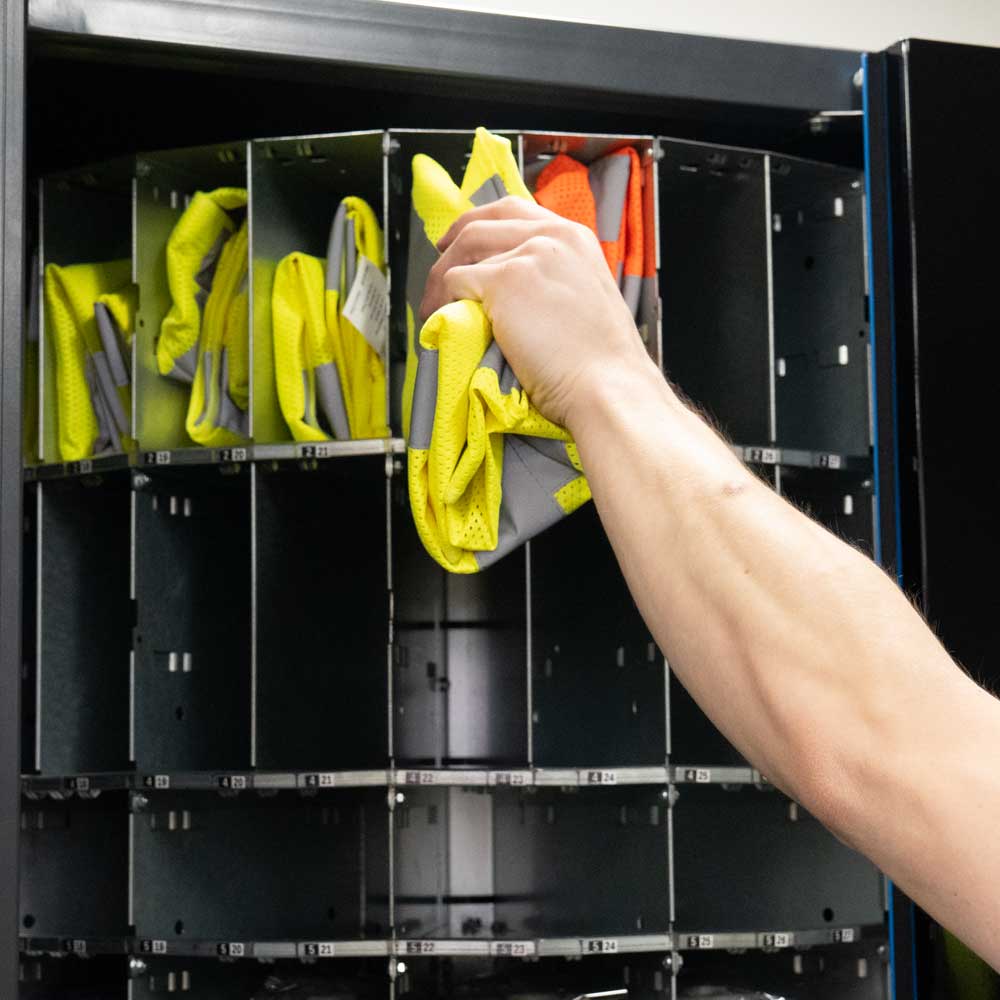
Arbill’s PPE vending solutions can help organizations improve access, track usage, manage inventory, and support worker accountability across shifts and teams.

For data centers, that can be especially useful because emergencies do not wait for the day shift, the storeroom manager, or a normal purchasing cycle.

Why IT and Facilities Teams Must Share the Same Plan

Separate plans create confusion.

IT may have a disaster recovery plan. Facilities may have an emergency action plan. Security may have access procedures. Vendors may have response contracts. But if those plans are not connected, the teams may respond in ways that conflict.

The uploaded draft notes that IT and facilities teams need cross-functional understanding because each team holds information the other needs during emergencies. IT understands system priority and data recovery. Facilities understands power, HVAC, fire suppression, building systems, and physical constraints.

A shared plan should clarify:

  • Emergency command structure
  • Communication channels
  • Escalation steps
  • Evacuation expectations
  • System shutdown authority
  • Critical load priorities
  • Vendor contact responsibilities
  • PPE requirements
  • Restricted areas
  • Recovery sequence
  • Post-incident review

The plan should be simple enough to use under pressure. If people need to search through multiple documents to know what to do, the plan needs work.

Building a Coordinated Emergency Response Plan

OSHA’s Emergency Action Plan standard requires covered employers to include procedures for reporting emergencies, evacuation, employees who remain to operate critical operations before evacuation, accounting for employees after evacuation, rescue or medical duties, and contact information for employees who need more details about the plan.

For data centers, the emergency response plan should connect those requirements with operational realities.

A coordinated plan should include:

  • Emergency reporting procedures
  • Evacuation routes and assembly points
  • Procedures for accounting for employees
  • Critical operations procedures before evacuation
  • Power shutdown and restoration protocols
  • Cooling failure escalation steps
  • Fire and smoke response
  • PPE requirements by task
  • Vendor and supplier contacts
  • Backup communication methods
  • Security and access control procedures
  • IT system recovery priorities
  • Facilities equipment response steps
  • Medical and first aid response
  • Post-incident review procedures

The uploaded draft emphasizes that written emergency plans alone are not enough. Teams need collaboration, testing, cross-functional understanding, and continuous improvement.

As long as people go to work, we have an opportunity to help protect them.

Julie Copeland
Arbill CEO

Julie Copeland Arbill CEO

Emergency Power and Cooling Require Clear Roles

Power and cooling are central to data center resilience.

Facilities teams may be responsible for generators, UPS systems, transfer switches, cooling equipment, fuel systems, and building infrastructure. IT teams may be responsible for workload prioritization, system health, failover, backup, and recovery. Both teams need to understand how one decision affects the other.

During a cooling failure, facilities may need to repair or bypass systems, while IT may need to reduce load, prioritize critical systems, or prepare for controlled shutdown. During a power event, facilities may focus on generator and UPS stability, while IT must understand how long systems can remain online and which workloads matter most.

The plan should answer:

  • Who declares a power emergency?
  • Who communicates UPS status?
  • Who decides when to reduce IT load?
  • Who contacts utilities or generator vendors?
  • Who monitors temperature thresholds?
  • Who authorizes controlled shutdown?
  • Who confirms restoration sequence?
  • Who updates leadership?

Without clear roles, teams may lose time debating decisions that should have been made before the event.

Weather and Exterior Response Planning

Data center emergencies are not always inside the white space.

Severe weather can affect generators, cooling equipment, fuel deliveries, roof areas, loading docks, utility feeds, and exterior access. Facilities teams may need to inspect outdoor equipment, manage water intrusion, respond to wind damage, or work around ice, heat, or storms.

Weather-ready PPE planning can help teams prepare for those conditions. Arbill’s guide on a weather-ready PPE program explains how changing field conditions can affect PPE selection, access, training, and worker reassessment.

Data centers may not be utility field operations, but the principle applies: workers responding outdoors need protection matched to the weather, task, and hazard.

Waste, Cleanup, and Post-Incident Hazards

After an emergency, cleanup can create new hazards.

A battery issue, smoke event, water leak, fire suppression discharge, damaged equipment, or contaminated material may require controlled cleanup. Workers may need gloves, eye protection, respiratory protection, protective clothing, and disposal procedures.

Arbill’s article on PPE for waste collection and sorting workers is useful because it reinforces how PPE should match exposure to sharp materials, biological hazards, chemicals, impact, and unpredictable waste streams.

For data centers, post-incident cleanup should not be assigned casually. The plan should identify who is trained, what PPE is required, what materials may be hazardous, and when outside specialists should be brought in.

Hot Weather, Mechanical Rooms, and Worker Fatigue

Data centers can create heat-related work conditions during HVAC failures, generator response, roof work, or mechanical room tasks.

Workers wearing PPE in hot conditions may face fatigue, reduced focus, or heat stress. That matters during emergency response because workers may be performing technical tasks under pressure.

Arbill’s article on PPE mistakes in hot weather can help teams think through hydration, heat stress, PPE comfort, and how hot conditions affect worker performance.

A coordinated plan should account for:

  • Heat stress during cooling failures
  • Generator area heat and noise
  • Roof or exterior work in summer
  • PPE comfort and compliance
  • Hydration and rest planning
  • Worker rotation during extended events

Protecting infrastructure should never come at the expense of worker safety.

See Our Safety Services!
PPE Vending Service and Support

Training That Brings IT and Facilities Together

The uploaded draft’s strongest usable section focuses on training. It explains that written emergency plans become effective only when teams practice together through drills, simulations, knowledge sharing, incident reviews, and lessons learned.

Training should bring IT and facilities teams into the same scenarios.

Examples include:

  • Cooling failure simulation
  • UPS failure drill
  • Fire alarm and evacuation drill
  • Smoke response tabletop exercise
  • Generator failure scenario
  • Cybersecurity incident requiring physical access control
  • Water leak response drill
  • Emergency communication test
  • Controlled shutdown exercise
  • Vendor contact drill

During training, each team should explain what they need from the other. IT should explain system priorities and recovery dependencies. Facilities should explain infrastructure limits and physical safety requirements.

The goal is shared understanding before the emergency.

Incident Reviews Turn Experience Into Better Planning

Every drill, alarm, near miss, or emergency should improve the plan.

The uploaded draft notes that incident reviews should examine what happened without assigning blame and should ask deeper questions than whether a checklist was followed.

A strong review should ask:

  • Did communication work?
  • Did the right people respond?
  • Was PPE available?
  • Were workers protected?
  • Were restricted areas controlled?
  • Were shutdown decisions clear?
  • Did backup communication work?
  • Did vendors respond as expected?
  • Were evacuation procedures followed?
  • Did the plan match actual conditions?
  • What should change before next time?

Lessons learned should be shared across IT, facilities, security, operations, and leadership. If findings stay in one department, the plan remains fragmented.

Building a Better Data Center Safety Program

A stronger data center safety program starts with joint planning.

IT and facilities teams should walk through the facility together, identify shared risks, and define how they will respond. They should review electrical rooms, mechanical areas, battery rooms, server rooms, roof equipment, generator areas, loading docks, emergency exits, PPE locations, and communication systems.

A practical program should include:

  • Cross-functional risk assessment
  • PPE hazard review
  • Emergency action plan alignment
  • Electrical safety procedures
  • Respiratory protection planning
  • Fire and smoke response
  • Cooling failure response
  • Power event response
  • Vendor contact lists
  • Backup communication methods
  • Joint drills and simulations
  • Incident review process
  • PPE inventory and access controls
  • Documentation updates

For broader safety support, PPE safety services can help organizations review PPE needs, improve protection strategies, and support safer work practices across facility teams.

The goal is simple: make sure the people protecting the data center are also protected by the plan.

Conclusion

Data center resilience depends on more than technology.

It depends on people, communication, PPE, emergency response, and cross-functional coordination. IT and facilities teams each hold critical knowledge. When they plan separately, gaps appear. When they train together, respond together, and review incidents together, the data center becomes safer and more resilient.

A coordinated PPE and emergency response plan helps protect workers, reduce confusion, support uptime, and improve response when conditions change.

The safest data centers do not wait for an emergency to discover whether IT and facilities can work together.

They build that coordination now.

Request a Safety Assessment

Recent Posts

Material Handling Equipment That Cuts Warehouse Injuries and Insurance Costs
Warehouse Ergonomics: How the Right Material Handling Equipment Reduces Injuries and Insurance Costs

Warehouse Ergonomics: How the Right Material Handling Equipment Reduces Injuries and Insurance Costs

Why OSHA Lockout Tagout Failures Still Cause Serious Injuries in Utilities
Lockout/Tagout in Utilities: Why LOTO Failures Are Still One of the Leading Causes of Serious Injuries

Lockout/Tagout in Utilities: Why LOTO Failures Are Still One of the Leading Causes of Serious Injuries

How to Build a Confined Space Training Program That Meets OSHA Standards and Protects Your Team
Confined Space Entry in Chemical Plants: Building a Program That Satisfies OSHA and Keeps Workers Safe

Confined Space Entry in Chemical Plants: Building a Program That Satisfies OSHA and Keeps Workers Safe

Emergency Response Planning for Data Centers and Why IT and Facilities Teams Must Work Together
Data Center Safety: Why IT and Facilities Teams Need a Coordinated PPE and Emergency Response Plan

Data Center Safety: Why IT and Facilities Teams Need a Coordinated PPE and Emergency Response Plan

The Real Cost of Recordable Incidents in Oil & Gas
The True Cost of a Recordable Incident in Oil & Gas — and How Managed Safety Services Change the Math

The True Cost of a Recordable Incident in Oil & Gas — and How Managed Safety Services Change the Math