The financial impact of a workplace incident rarely ends with the employee’s medical treatment or workers’ compensation claim.
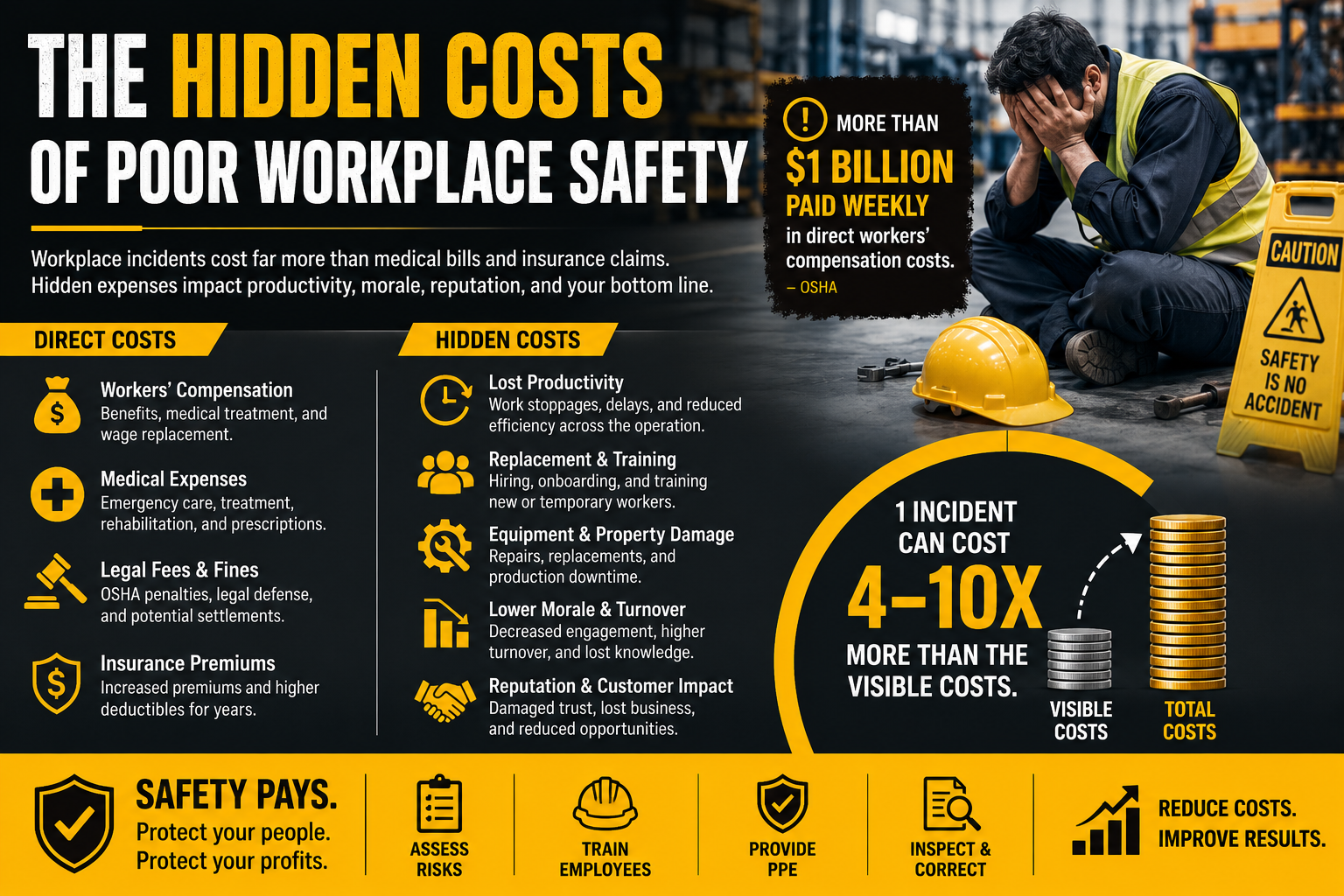
An injury can stop production, damage machinery, delay customer orders, pull supervisors away from their responsibilities, require replacement labor, increase insurance expenses, and weaken employee confidence. Investigations, regulatory responses, retraining, and corrective actions may continue long after the injured employee leaves the facility.
Some of these costs are easy to identify because they appear directly on invoices or claim reports. Others become distributed across payroll, maintenance, operations, quality control, human resources, and customer service.
That is why organizations frequently underestimate what poor workplace safety is truly costing them.
A strong safety program does more than reduce the likelihood of an OSHA citation. It protects employees while supporting productivity, workforce stability, operational continuity, equipment reliability, and long-term profitability.
For industrial organizations seeking to improve workplace protection, Arbill provides safety assessments, EHS consulting, employee training, PPE, and practical program support based on real operational risks.
Direct Incident Costs Are Only the Beginning
Direct costs are generally the most visible financial consequences of workplace injuries and illnesses.
Medical Treatment and Rehabilitation
A workplace injury may require emergency transportation, hospital care, diagnostic testing, surgery, medication, physical therapy, specialist appointments, and long-term rehabilitation.
The total expense can continue increasing as complications arise or recovery takes longer than expected. Even an incident that initially appears minor can become costly when an employee requires repeated treatment or cannot return to full duty.
The employer may also need to pay for occupational health evaluations, return-to-work assessments, ergonomic modifications, or temporary job accommodations.
Workers’ Compensation Costs
Workers’ compensation may cover medical treatment, wage replacement, rehabilitation, and other benefits depending on the injury and applicable state requirements.
OSHA reports that employers pay more than $1 billion per week in direct workers’ compensation costs for disabling, nonfatal workplace injuries.
The claim amount is not necessarily the employer’s final financial exposure. A serious claim may also affect future premiums, experience modification calculations, deductibles, and underwriting requirements.
OSHA Citations and Corrective Expenses
When an OSHA inspection identifies violations, the employer may face financial penalties and mandatory correction deadlines.
However, the citation itself may represent only a portion of the total cost. The organization may also need to update equipment, engage consultants, revise written programs, complete exposure monitoring, provide additional PPE, and retrain affected workers.
Employers that repeatedly experience the same compliance weaknesses may face increased scrutiny and more serious enforcement consequences.
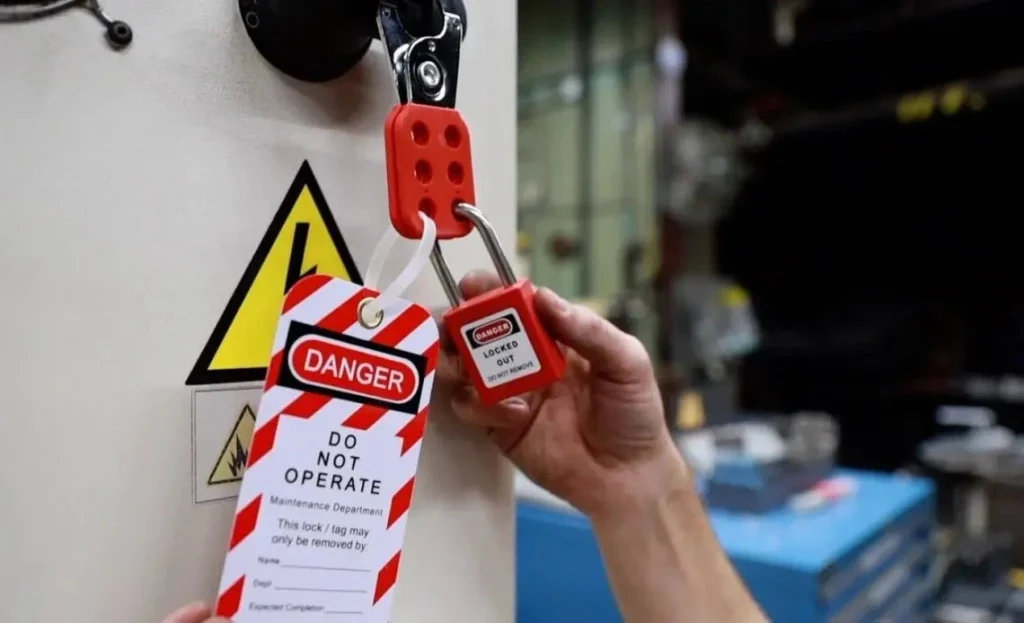
Arbill’s guide to OSHA’s most frequently cited violations explains how recurring problems involving fall protection, hazard communication, lockout/tagout, respiratory protection, forklifts, and machine guarding can develop.
Legal and Administrative Costs
A serious incident may require support from attorneys, insurers, medical professionals, technical consultants, and expert witnesses.
Management and administrative teams may spend substantial time collecting records, responding to requests, reviewing policies, preparing reports, and participating in interviews or legal proceedings.
Those hours carry a real cost even when they never appear as a separate line on the incident report.
Lost Productivity Can Exceed the Visible Claim
An incident immediately changes how work is performed.
The Initial Work Stoppage
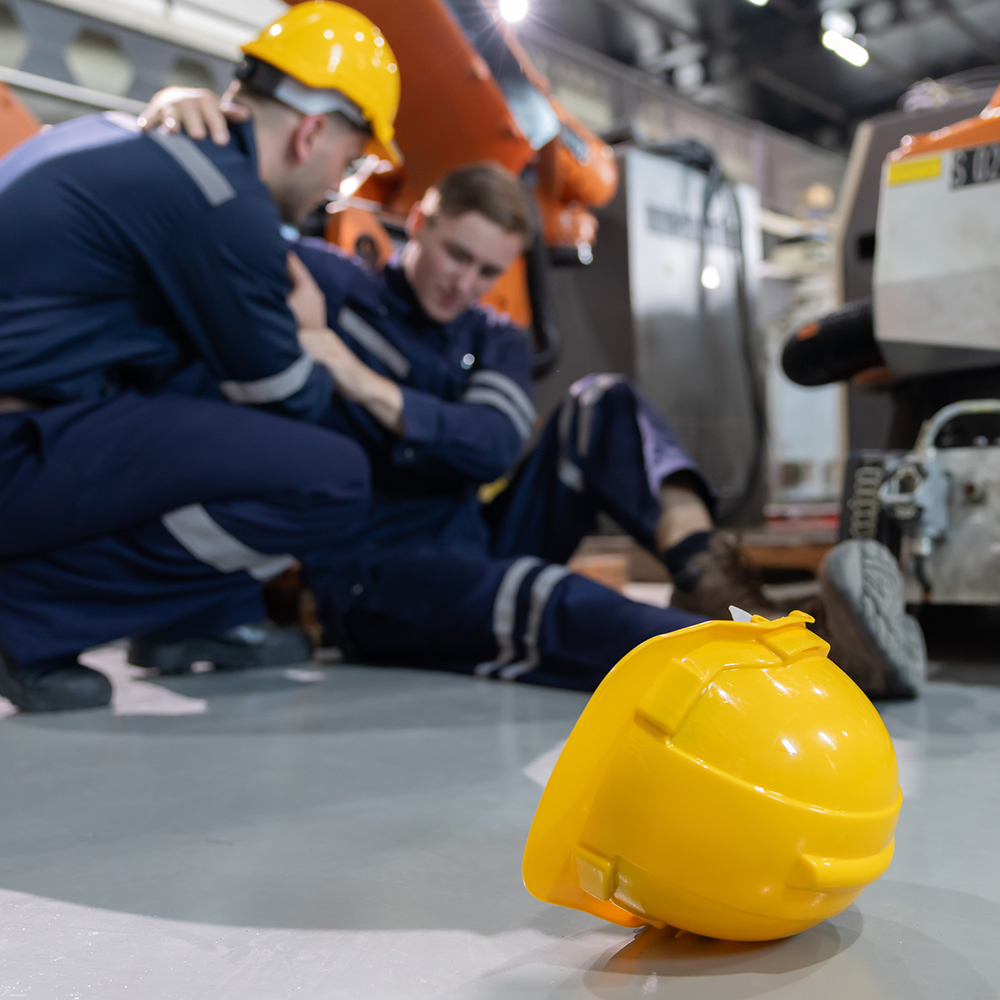
When an employee is injured, nearby work normally stops. Coworkers may assist the employee, secure machinery, contact emergency services, or help evacuate an area.
Supervisors, safety personnel, maintenance teams, security, and management may all be redirected from their normal responsibilities.
Depending on the circumstances, the interruption may last a few minutes, several hours, or multiple shifts.
Investigation Time
A meaningful investigation involves more than completing an incident form.
The organization may need to interview witnesses, examine equipment, review video, collect photographs, analyze training records, compare written procedures with actual practices, and identify root causes.
This process is essential for preventing recurrence, but it takes experienced personnel away from production, quality, maintenance, logistics, or customer-facing responsibilities.
OSHA includes accident investigation and corrective-action implementation among the indirect costs associated with workplace injuries.
Production Delays
An affected machine, department, or work area may remain unavailable until the employer confirms that operations can resume safely.
Lost production can affect downstream processes. Materials may accumulate, employees may wait for work, and orders may miss scheduled shipping dates.
The company may respond with overtime, additional shifts, expedited transportation, or temporary production transfers. These measures may restore output, but they also increase operating expenses.
Reduced Efficiency During Recovery
When an experienced worker is absent, another employee may need to take over the position.
The replacement worker may be less familiar with the equipment, process, customer requirements, or quality standards. Supervisors may need to provide closer oversight, while coworkers absorb additional responsibilities.
The operation can remain less efficient even when the position is technically covered.