Manufacturing equipment can appear completely shut down and still contain enough stored energy to seriously injure or kill a worker.
Electrical circuits may remain energized. Hydraulic accumulators can retain pressure. Pneumatic systems may contain compressed air. Elevated machine components can move under gravity. Springs, flywheels, capacitors, heated materials, and process fluids can also release energy unexpectedly during maintenance or servicing.
That is why simply pressing a stop button or shutting down a machine is not enough.
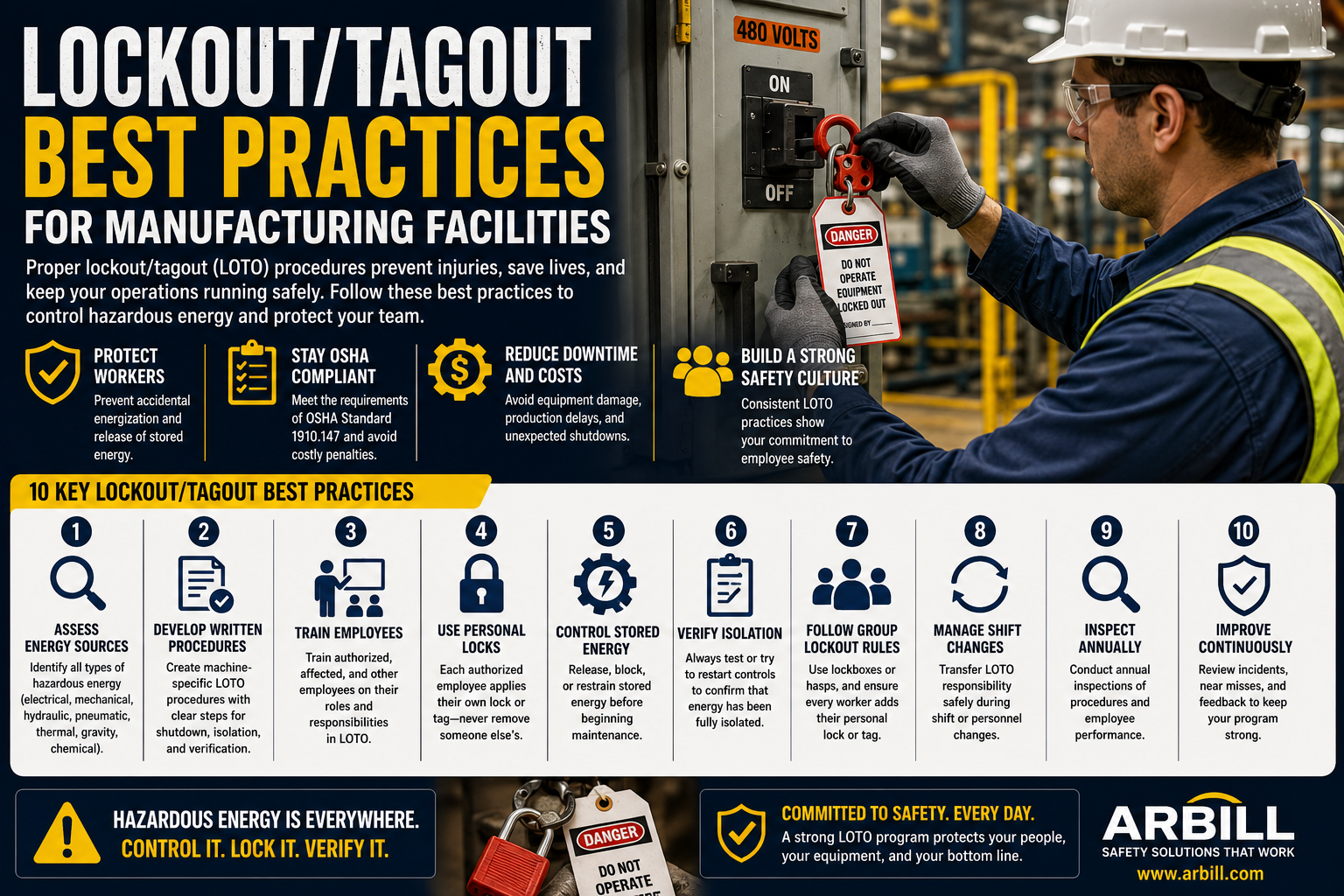
An effective lockout/tagout program establishes a repeatable process for identifying every hazardous energy source, isolating it, controlling stored energy, applying personal locks or tags, verifying that isolation is effective, and maintaining that protection until servicing is complete.
For manufacturers, consistent energy control protects employees while also helping reduce unplanned downtime, equipment damage, regulatory exposure, and maintenance errors.
What Is Lockout/Tagout?
Lockout/tagout, commonly called LOTO, is a hazardous-energy control process used during servicing and maintenance of machines and equipment.
OSHA’s general industry standard, 29 CFR 1910.147, applies when unexpected energization, startup, or release of stored energy could injure employees.
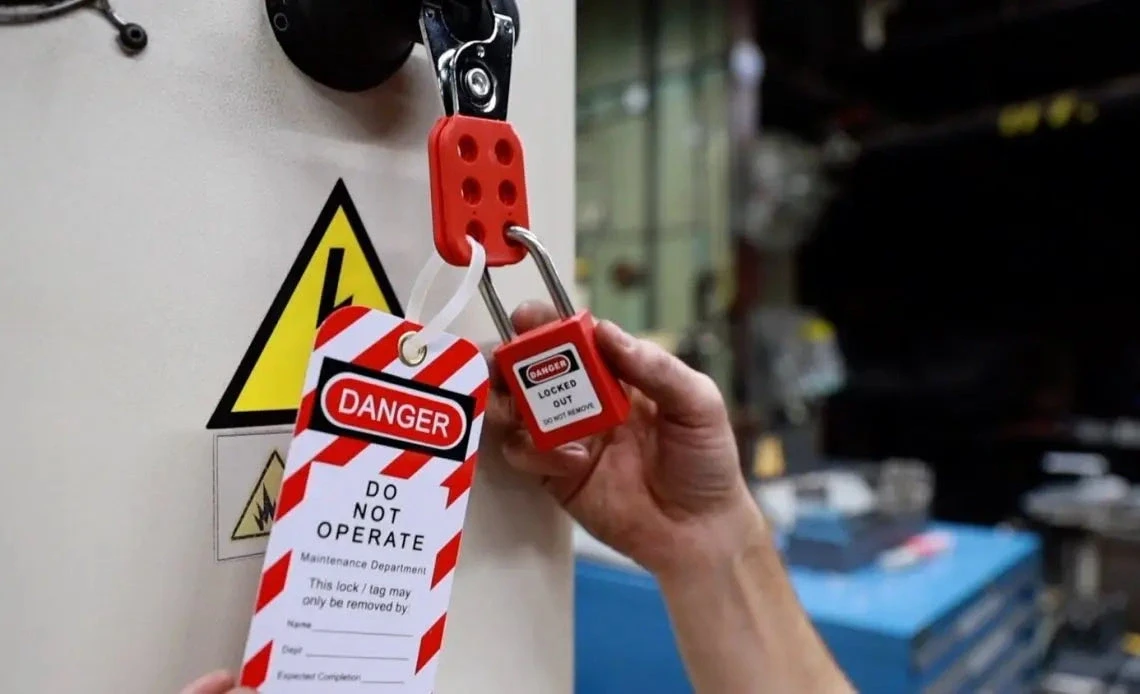
Lockout Physically Restrains the Energy-Isolating Device
A lockout device holds an energy-isolating device in a safe or off position.
Examples may include locks applied to disconnect switches, circuit breakers, valves, or other devices that physically prevent energy from reaching the machine.
The lock provides physical restraint rather than simply communicating that the equipment should remain off.
Tags Provide Warning Information
A tagout device provides a prominent warning that the equipment must not be operated.
OSHA emphasizes that tags are warning devices and do not provide the same physical restraint as locks. Where equipment is capable of being locked out, lockout generally must be used unless the employer can demonstrate that a tagout system provides full employee protection.
Manufacturing facilities should therefore avoid treating a tag as interchangeable with a personal lock.
Start With an Energy-Control Assessment
Before writing procedures, the facility needs to understand where hazardous energy exists.
This should be performed systematically across equipment and processes rather than relying only on old manuals or generic machine lists.
Arbill’s guide on what an EHS assessment is explains how structured workplace evaluations can identify gaps between written programs and actual operating conditions.
Identify Every Energy Source
Manufacturing machinery often combines several types of energy.
Electrical power may run motors and controls while hydraulics move cylinders, compressed air actuates clamps, and gravity acts on elevated tooling.
Common hazardous-energy sources include electrical, hydraulic, pneumatic, mechanical, thermal, chemical, and gravitational energy.
The assessment should also consider stored energy after the primary supply has been disconnected.
Look Beyond the Main Disconnect
One machine may have several isolation points.
A production cell may share compressed air, electrical feeds, hydraulic systems, conveyor controls, robotic equipment, and auxiliary systems.
The main machine disconnect may isolate only part of the hazard.
Maintenance personnel should understand where energy enters the system and how connected equipment can affect the task.
Involve the Employees Who Work on the Equipment
Operators understand how equipment behaves during production.
Maintenance technicians often know about modifications, bypasses, secondary power sources, added utilities, or unusual shutdown behavior that drawings may not show.
Including frontline personnel can reveal hazards that would otherwise be missed.
Develop Clear Equipment-Specific Procedures
OSHA requires employers to develop, document, and use energy-control procedures except in certain limited situations specified by the standard.
At minimum, the procedure must explain its intended use and provide specific steps for shutdown, isolation, blocking, securing, placement and removal of devices, and verification of energy control.
Make Procedures Easy to Follow in the Field
A procedure should be usable by a maintenance technician standing in front of the machine.
It should clearly identify the machine or equipment, energy sources, isolation locations, stored-energy controls, verification methods, and restoration steps.
Photographs or diagrams can be especially useful on complex production equipment.
Avoid vague instructions such as “lock out all energy.”
Workers need to know exactly which disconnect, valve, breaker, block, or other isolating device applies.
Keep the Sequence Logical
The normal sequence should follow the actual flow of work.
The authorized employee first prepares for shutdown and understands the type and magnitude of energy involved. Affected employees are then notified, the machine is shut down, energy-isolating devices are operated, locks or tags are applied, stored energy is controlled, and isolation is verified before servicing begins.
Consistent sequencing helps reduce missed steps.