Hard hats and safety helmets may look similar, but appearance alone does not tell employers how much protection a worker actually receives.
The more important differences involve impact ratings, electrical classifications, retention systems, suspension design, fit, accessories, and the specific hazards present in the workplace.
Traditional hard hats remain appropriate for many industrial and construction environments. Modern safety helmets can add features such as chin straps, closer-fitting shells, foam liners, and enhanced side-impact protection depending on the model.
However, employers should not assume that every safety helmet provides more protection than every traditional hard hat.
A climbing-style helmet can still be Type I. A traditional-looking hard hat can carry the electrical class a worker needs. A modern helmet with ventilation may provide excellent impact protection while offering no electrical protection.
The correct choice starts with the hazard assessment, not the shape of the helmet.
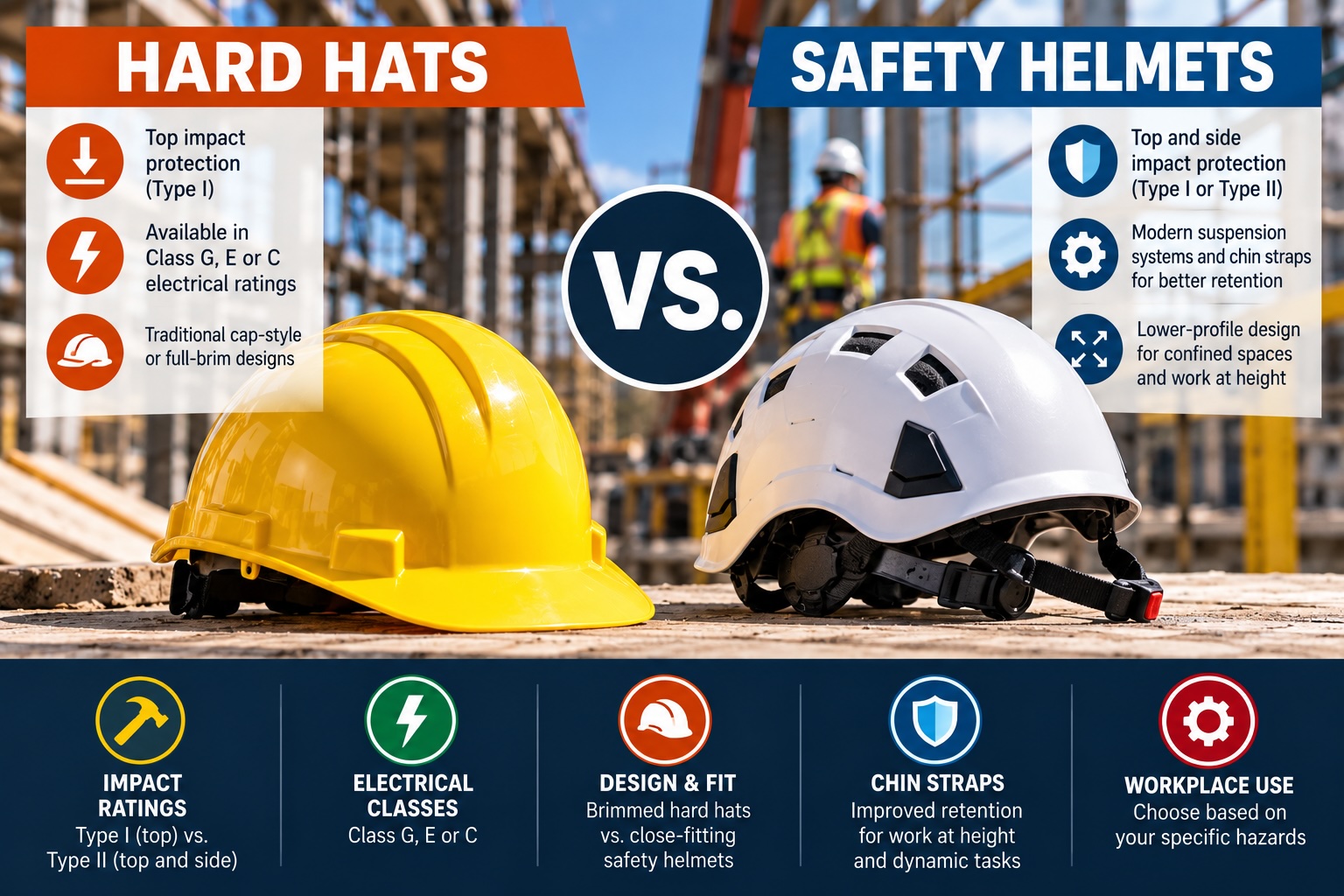
Hard Hats vs. Safety Helmets: What Is the Difference?
There is no single OSHA definition that says one particular shell shape is a “hard hat” while another is a “safety helmet.”
The terms generally describe different design approaches.
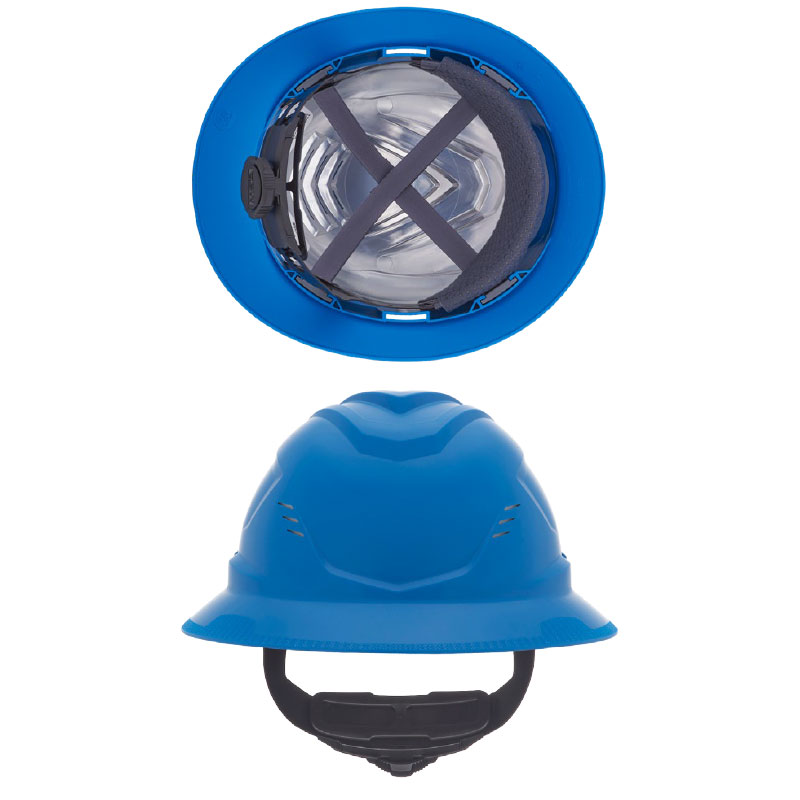
Traditional hard hats commonly use a rigid shell supported above the head by an internal suspension system. Many have front brims or full brims and are designed primarily around overhead impact protection.
Safety helmets often use a closer-fitting profile influenced by climbing and mountaineering designs. They may incorporate foam liners, multi-point suspension, and integrated chin straps that help the helmet remain on the worker’s head during movement or a fall.
OSHA has increasingly encouraged employers to consider modern safety helmets where workplace conditions justify their features, especially where workers face lateral impacts, falls, awkward positions, or work at height. (OSHA Head Protection Guidance)
The key word is consider.
The appropriate head protection still depends on the actual hazard.
Traditional Hard Hat Design
Traditional hard hats typically use a shell and suspension system.
The suspension creates space between the shell and the worker’s head. When an object strikes the helmet, the shell and suspension work together to distribute and absorb some of the force.
Cap-style models generally have a front brim.
Full-brim models extend around the entire shell and can also provide additional protection from sun, rain, and falling debris.
These designs remain common across:
Construction, utilities, warehouses, manufacturing, maintenance, and industrial operations.
They should not be viewed as obsolete simply because newer helmet styles have entered the market.
If the helmet provides the protection required by the hazard assessment and complies with applicable requirements, it can remain an appropriate choice.
Modern Safety Helmet Design
Safety helmets typically sit closer to the worker’s head.
Many use a rigid outer shell combined with an energy-absorbing liner such as expanded polystyrene foam.
They may also include:
Multi-point suspension systems, integrated chin straps, adjustable retention systems, accessory mounting points, and more compact profiles.
These features can make safety helmets useful for employees who climb, bend frequently, work at height, or operate in environments where head protection could otherwise come off during sudden movement.
The important point is that these features describe the design, not necessarily the protection rating.
Shape Does Not Determine Protection
A helmet that looks advanced does not automatically provide Type II protection.
Likewise, a brimmed hard hat is not automatically limited to inferior protection.
The markings inside the helmet determine what performance has actually been tested.
For example, the Truline A305101 safety helmet uses a close-fitting, climbing-style design with a chin strap, yet its listed rating is Type I, Class C.
That means its shape and retention features should not be confused with a Type II impact rating or electrical protection.
Employers should always read the certification markings rather than judging protection by appearance.