A workplace safety audit helps employers replace assumptions with evidence.

A loose machine guard, blocked emergency exit, damaged respirator, missing training record, or poorly stored chemical can become part of daily operations when nobody steps back to examine the system as a whole. Over time, employees may stop noticing conditions that have become familiar, even when those conditions create real risk.

A structured safety audit gives employers a way to identify those gaps before they contribute to an injury, regulatory problem, or operational disruption.

The strongest audits do more than walk through a facility with a checklist. They review written programs, training records, regulatory documentation, PPE, work practices, equipment, chemical handling, emergency readiness, and employee feedback. Findings are then ranked, assigned to responsible owners, corrected, and verified.

That final step matters. An audit only creates value when findings lead to action.

What Is a Workplace Safety Audit?

A workplace safety audit is a structured review of how well actual workplace conditions and practices align with safety requirements, internal procedures, and expected controls.

Depending on the facility, the audit may include a walkthrough, regulatory-record review, written-program review, training documentation, PPE assessment, equipment inspection, environmental conditions, and employee interviews.

The purpose is to understand whether the safety system is functioning as intended.

A company may have excellent written procedures but poor implementation. Another facility may have strong day-to-day practices but outdated documentation. The audit is designed to identify both kinds of gaps.

Safety Audit vs. Risk Assessment

A safety audit and a risk assessment are related, but they are not exactly the same.

The audit collects and evaluates evidence.

It asks whether procedures exist, whether training has been completed, whether equipment is being used correctly, whether records are current, and whether site conditions match written expectations.

A risk assessment focuses more specifically on the hazard itself.

It considers who could be harmed, how the exposure could occur, how severe the potential outcome might be, and how likely the event is to happen.

These two activities work best together.

An audit may identify a damaged machine guard. The risk assessment then helps determine how urgently that condition should be corrected based on exposure frequency and potential injury severity.

Step 1: Define the Purpose of the Audit

Before anyone begins walking through the facility, decide what the audit needs to accomplish.

A vague goal such as “check safety” usually produces an equally vague report.

A stronger audit begins with a specific question.

For example, the organization may want to evaluate general OSHA readiness, review PPE compliance, assess chemical-management practices, examine a high-injury department, prepare for expansion, or develop a broader safety roadmap.

The purpose determines the scope.

Decide How Broad the Review Should Be

Not every audit needs to cover the entire organization.

A focused review may examine one department, one hazard category, or one site.

A broader audit may evaluate the complete safety-management system.

Rapid Review

A rapid assessment can provide a high-level look at current workplace conditions.

It may be appropriate when management needs to identify obvious concerns quickly or establish a starting point for a more detailed review.

Discovery-Level Audit

A deeper audit looks beyond visible hazards.

It can include written programs, training records, regulatory documentation, PPE, equipment, employee practices, and broader compliance gaps.

This type of review is useful when the employer needs a structured corrective-action plan.

Full-Scope Assessment

A more expansive audit can examine safety culture, performance, accountability, documentation, and long-term program maturity.

This is particularly useful for organizations that want to move beyond basic compliance and build a multi-year safety roadmap.

Arbill’s EHS safety assessments can support organizations that need anything from a focused workplace review to a broader assessment of safety systems and compliance gaps.

Write the Scope Before the Walkthrough

A written scope prevents important areas from being overlooked.

Define which departments, shifts, buildings, tasks, equipment, documents, and programs will be included.

If environmental responsibilities are part of the review, identify them as well.

That may include:

Chemical storage, hazardous waste, universal waste, tanks, secondary containment, spill prevention, or other site-specific environmental concerns.

The audit team should know the boundaries before work begins.

Assemble the Right Audit Team

One person rarely sees every aspect of workplace safety.

A stronger team may include:

Safety personnel, supervisors, maintenance employees, operations representatives, and workers who perform the actual tasks.

Each perspective provides different information.

A supervisor may understand the intended procedure, while an operator knows how the job actually happens during production pressure. Maintenance employees may know where guards are routinely removed or where equipment repeatedly leaks.

Worker involvement can help reveal gaps that are not visible during a short walkthrough.

Gather Records Before Entering the Work Area

An audit becomes more useful when the team understands what the workplace says it should be doing before observing what actually happens.

Collect relevant documents such as:

  • Written safety programs
  • Training records
  • Injury and illness records
  • Inspection records
  • PPE assessments
  • Equipment procedures
  • Safety Data Sheets
  • Previous audit reports
  • Corrective-action records

These documents provide a reference point for the walkthrough.

If the written procedure says one thing and employees routinely do another, that difference becomes an important finding.


Explore Our Solutions!
How to Conduct a Workplace Safety Audit

Step 2: Review Written Safety Programs

Written programs should reflect current operations.

Changes in equipment, staffing, chemicals, facility layout, or work practices can make older documents inaccurate.

Review the programs relevant to the scope of the audit.

Depending on the workplace, this could include:

Hazard communication, lockout/tagout, respiratory protection, hearing conservation, PPE, confined spaces, emergency response, fall protection, or other regulated activities.

Do not focus only on whether the document exists.

Ask whether it describes the way the work is performed today.

Compare Procedures With Actual Work

One of the most valuable parts of a safety audit is comparing paper with practice.

A procedure may say that employees use a particular guard, but the guard may be routinely removed during setup.

A respiratory program may identify one model of respirator while employees are using another.

A written chemical-handling procedure may require splash goggles, while workers are wearing only safety glasses.

These gaps often reveal more than the document itself.

The audit should identify not only what is missing but where implementation has drifted away from the written expectation.

Review Training Records

Training documentation can show whether employees received instruction relevant to their work.

Review dates, topics, employees covered, and any certification or competency requirements that apply.

The record should make sense in relation to the tasks being performed.

If workers are operating equipment or using PPE they were never trained on, that should be treated as a program gap.

Arbill’s EHS safety training can support employers that need to address training gaps identified during an audit.

Review Incident and Near-Miss History

Past events can help the audit team identify where hazards repeatedly appear.

Look for patterns involving:

The same task, department, machine, body part, chemical, or location.

A series of minor incidents may point to a larger condition that has not yet resulted in a serious injury.

Near misses are especially useful because they reveal exposures without the cost of an actual injury.

If several workers have almost slipped in the same area, the problem deserves attention even if no injury has occurred.

Step 3: Walk the Workplace

The physical walkthrough is where records and procedures meet reality.

Observe the workplace while normal operations are occurring.

Look at equipment, work practices, storage, traffic flow, emergency routes, housekeeping, PPE, lighting, chemical handling, and employee behavior.

The goal is not simply to find violations.

The goal is to understand whether existing controls work under real conditions.

Inspect Walking and Working Surfaces

Look for conditions such as:

Leaks, spills, debris, damaged flooring, blocked aisles, uneven surfaces, snow or ice, unsecured cords, or temporary obstructions.

A minor housekeeping problem can become a serious incident when combined with heavy material handling, vehicle traffic, or poor visibility.

Document the exact location and condition rather than writing broad notes such as “poor housekeeping.”

Inspect Machinery and Equipment

Check whether machines are properly guarded and maintained.

Look for missing guards, bypassed interlocks, damaged emergency stops, unsafe modifications, leaking equipment, or signs that employees use improvised workarounds.

If hazardous energy is involved, compare maintenance practices with the company’s lockout/tagout procedures.

Arbill’s guide to lockout/tagout best practices for manufacturing facilities can help employers evaluate whether energy-control practices match actual maintenance and servicing work.

Review Emergency Routes and Equipment

Emergency equipment needs to be accessible when it is needed.

Inspect:

Exits, evacuation routes, fire extinguishers, first aid supplies, eyewash stations, emergency showers, alarms, spill kits, and other site-specific emergency equipment.

Do not simply confirm that the equipment exists.

Check whether employees can reach it.

A pallet stored in front of an eyewash station or an emergency exit blocked by inventory can make otherwise adequate equipment ineffective.

Inspect Chemical Storage and Hazard Communication

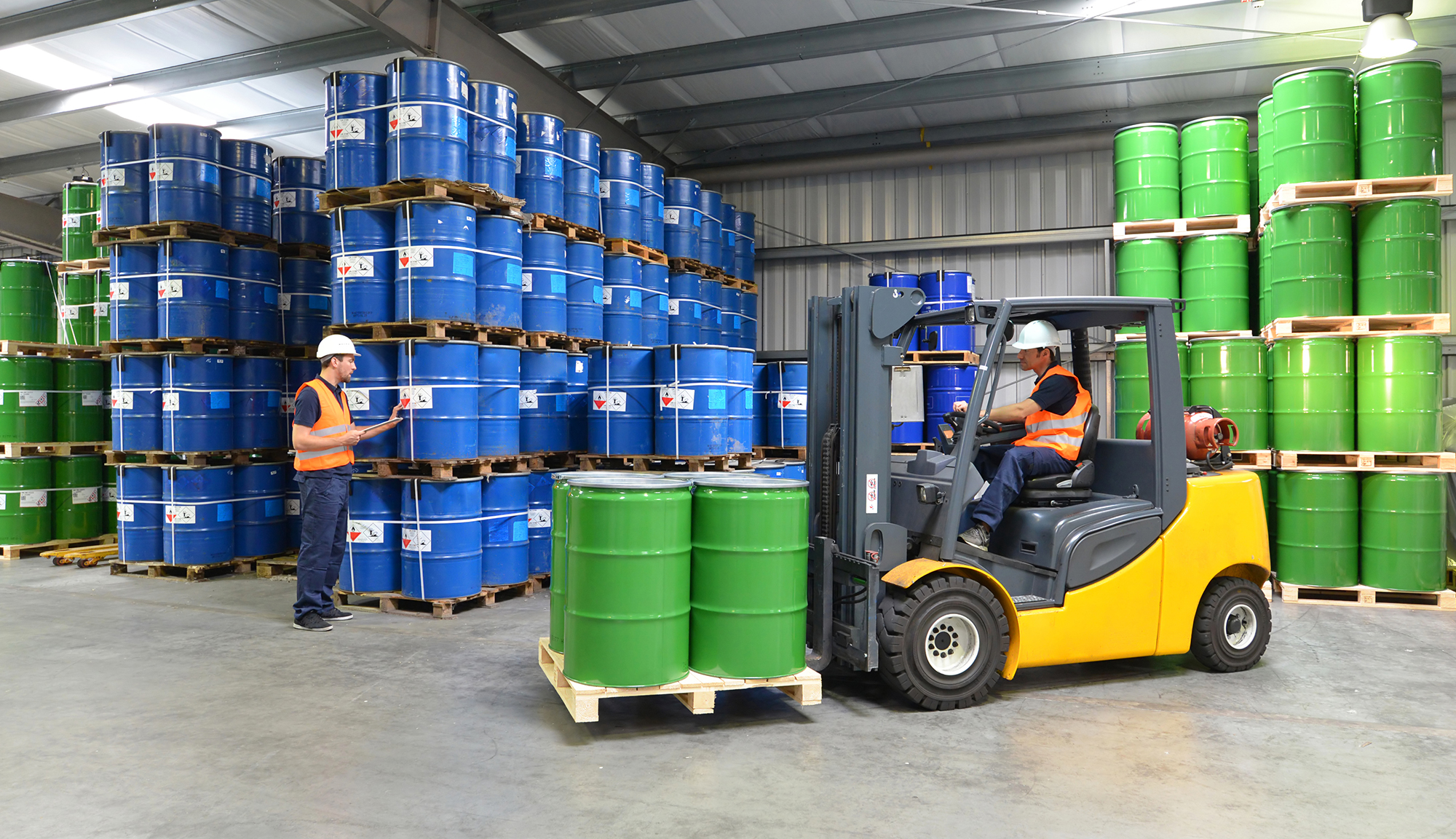
Where chemicals are present, compare the physical inventory with labels, Safety Data Sheets, and handling procedures.

Look at:

Container condition, secondary containers, chemical compatibility, storage areas, spill controls, employee access to SDSs, and waste handling.

If hazardous or universal waste is part of the audit scope, evaluate those areas separately.

The audit should record both the condition and the supporting documentation.

Observe Employees Performing Work

Some of the most important audit information comes from watching how jobs are actually performed.

Observe:

Setup, normal operation, material handling, cleaning, shutdown, maintenance, and waste disposal.

Compare each step with the written procedure.

Do not assume that differences mean the employee is careless.

A procedure that workers consistently bypass may be unrealistic, poorly designed, or incompatible with production demands.

The audit should identify why the difference exists.

Talk With Employees

Workers can explain details that are difficult to see.

Ask practical questions.

What hazards concern them?

Which equipment causes problems?

Which procedures are difficult to follow?

Does required PPE fit?

Are replacement supplies readily available?

Where do near misses occur?

Employee input can reveal recurring issues that may never appear in inspection records.

The goal is to understand the work, not interrogate the worker.

Review PPE Selection and Condition

Inspect the PPE being used for the actual tasks.

Check whether the equipment is appropriate for the hazard, fits the employee, remains in good condition, and is compatible with other required protection.

Look for worn gloves, damaged safety glasses, expired or unsuitable filters, degraded harnesses, altered helmets, or other obvious problems.

Compare observed equipment with the organization’s PPE hazard assessment.

Arbill’s guide on how to perform a PPE hazard assessment provides a useful framework for reviewing task-specific PPE needs during a safety audit.

Step 4: Document Findings Clearly

A vague finding is difficult to correct.

Instead of writing:

“Machine unsafe.”

Document what was actually observed.

For example:

“Guard on press number 4 was missing from the point of operation during normal production on second shift.”

Specific findings make it easier to understand the exposure and assign corrective action.

Include Evidence

Each finding should include enough information for someone who was not present during the audit to understand the issue.

Useful evidence may include:

Photographs, equipment identification, inspection notes, document references, worker observations, and dates.

Separate facts from recommendations.

The report should make clear what was observed and what the audit team recommends doing about it.

”As long as people go to work, we have an opportunity to help protect them.

Julie Copeland
Arbill CEO

Julie Copeland Arbill CEO

Step 5: Assess the Risk

Not every finding has the same urgency.

Risk ranking helps the organization decide what needs immediate attention and what can follow through a longer corrective-action process.

For each hazard, determine:

Who is exposed?

How could exposure occur?

How often can it happen?

How severe could the injury be?

What controls are already in place?

Use a Consistent Risk Matrix

A risk matrix can help compare findings consistently.

Most systems evaluate two basic factors:

Likelihood and severity.

Likelihood reflects how frequently the exposure may occur or how probable an event is under current conditions.

Severity considers the potential consequence if the event occurs.

These ratings are then combined into a risk level.

The exact scoring method can vary by organization, but the same method should be used for every finding.

Document the Reason for the Rating

Do not record only a number.

Explain why the hazard received the rating.

For example, repeated daily exposure to an unguarded machine may increase likelihood, while the potential for amputation creates high severity.

A blocked emergency exit may not affect employees every day, but the consequence during an emergency could be severe.

Documenting the reasoning makes prioritization easier to defend and review later.

Escalate Immediate Dangers

Some findings should not wait until the report is completed.

If the audit identifies an immediate serious hazard, management should be notified during the audit so appropriate protective action can be taken.

The team should document:

What was observed, who was exposed, and what immediate response occurred.

An audit should never leave workers knowingly exposed to a serious condition simply because the final report has not been written.

Keep Compliance and Risk Separate

A finding can be a compliance gap, a safety risk, or both.

These are related but not identical.

A missing training record may be a compliance issue even when immediate injury risk is relatively low.

A severe physical hazard may create high risk even if the audit team has not yet identified the exact regulatory requirement.

Track both elements.

This provides a clearer picture of why the issue matters.

Step 6: Choose Corrective Actions

Once findings have been ranked, determine how each one should be addressed.

Use the hierarchy of controls as the starting point.

OSHA’s Recommended Practices for Safety and Health Programs emphasize controlling hazards through elimination or substitution where feasible, followed by engineering controls, administrative controls, and PPE. (OSHA Hazard Prevention and Control)

This helps prevent the common mistake of responding to every audit finding with more training or more PPE.

Correct the Source Where Possible

If a machine hazard can be controlled through guarding, that may be stronger than simply telling employees to stay away.

If a chemical can be replaced with a less hazardous product, substitution may reduce risk more effectively than upgraded gloves.

If a pedestrian-forklift conflict can be reduced through physical separation, that may provide more reliable control than additional warning signs.

Training and PPE still matter, but they should support stronger controls rather than replace them unnecessarily.

Assign One Owner to Each Action

Corrective actions are more likely to be completed when responsibility is specific.

Avoid writing:

“Maintenance to fix.”

Identify a named role or responsible person.

Each action should have:

An owner, target completion date, required resources, and clear definition of completion.

This prevents findings from disappearing between departments.

Set Deadlines Based on Risk

Higher-risk findings should generally receive greater urgency.

Not every issue needs the same deadline.

An immediate machine hazard may require action before work continues.

A low-risk documentation improvement may reasonably follow a longer schedule.

Deadlines should reflect the seriousness of the exposure while still considering realistic procurement, engineering, or operational needs.

Identify Resources Needed

Some findings require more than a quick repair.

Corrective action may involve:

Engineering support, replacement equipment, contractor assistance, employee training, new PPE, written-program revision, or capital funding.

Document those needs when the action is assigned.

This helps management understand what is required to close the finding rather than repeatedly extending the deadline without solving the underlying problem.

Step 7: Write the Audit Report

The audit report should turn observations into a usable management tool.

A consistent format makes it easier to track multiple findings.

For each issue, include:

  • Finding number and title
  • Location and activity
  • Description of the condition
  • Supporting evidence
  • Risk rating
  • Compliance status
  • Existing controls
  • Recommended corrective action
  • Responsible owner
  • Target date

The report should be clear enough that management can make decisions without having to reconstruct what happened during the walkthrough.

Avoid Filling the Report With Generic Statements

Statements such as:

“Employees need to be more careful.”

“Improve housekeeping.”

“Use correct PPE.”

are usually too vague to create meaningful change.

A useful recommendation describes what should change.

For example:

“Relocate hose routing away from the primary pedestrian aisle and install an approved overhead reel system.”

Specific recommendations make follow-up possible.

Step 8: Verify Corrective Actions

Closing an action on a spreadsheet does not prove the hazard has been fixed.

Return to the area and verify the correction.

If a machine guard was installed, inspect it.

If training was completed, verify that workers understand the updated procedure.

If a chemical storage problem was corrected, inspect the new storage arrangement.

If PPE was changed, confirm employees are using the approved equipment properly.

Evidence should support closure.

Reassess Remaining Risk

A corrective action may reduce risk without eliminating it.

After the fix, reassess the hazard.

Ask whether the remaining exposure is acceptable and whether additional controls are necessary.

If the control works inconsistently, the action may need to remain open.

This prevents the organization from declaring success simply because something changed.

Update Written Programs

Audit findings often reveal that documentation no longer matches the workplace.

When procedures, responsibilities, equipment, or controls change, update written programs accordingly.

This is particularly important when corrective actions alter:

Lockout procedures, PPE requirements, chemical handling, emergency response, or employee responsibilities.

The written program should reflect the corrected workplace.

Update Training

Employees need to understand changes resulting from the audit.

If a new procedure, piece of PPE, machine guard, traffic route, or chemical-storage method has been introduced, training may need to change.

Do not assume employees will recognize the new expectation automatically.

Training should explain:

What changed, why it changed, and what employees now need to do differently.

Track Overdue Actions

Long corrective-action lists can quickly lose momentum.

Use an action register or tracking system to monitor:

Owner, target date, status, evidence, and overdue items.

Management should review overdue actions regularly.

If the same item is repeatedly delayed, identify why.

The problem may be insufficient funding, unclear responsibility, production conflict, or lack of technical resources.

Repeated delay is itself useful management information.

Look for Trends Across Audits

Individual findings matter, but patterns can reveal larger system weaknesses.

If several audits identify poor training records, the problem may be the training-management system rather than one department.

If multiple areas have damaged PPE, the issue may involve purchasing or replacement procedures.

If housekeeping appears repeatedly, workload or storage design may be contributing.

Trend analysis helps organizations move from correcting symptoms to improving the overall safety system.

See Our Safety Services!
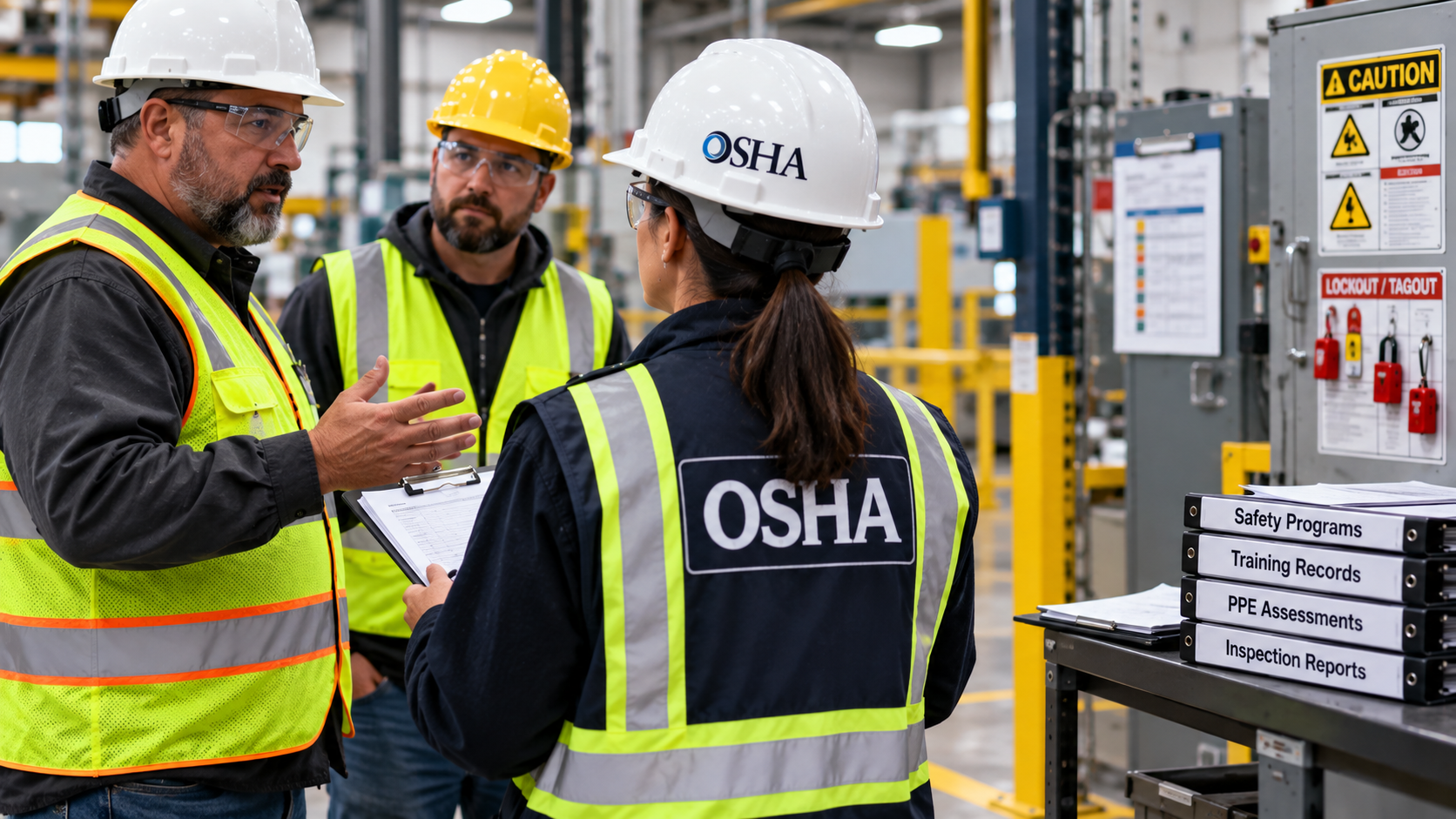
OSHA safety inspection with an inspector reviewing workplace conditions, safety records, lockout:tagout procedures, and employee compliance in an industrial facility

Set the Next Audit Date

A safety audit should not be treated as a one-time event.

Workplaces change continuously.

New equipment is installed. Employees change. Chemicals are replaced. Production layouts move. Contractors arrive. Procedures evolve.

Set a future audit date based on the needs of the facility.

Also establish triggers for additional reviews.

These may include:

Major process changes, serious incidents, repeated near misses, regulatory changes, new equipment, new chemicals, or major facility modifications.

Build a Long-Term Safety Roadmap

The most valuable outcome from a safety audit is not a long list of deficiencies.

It is a clear plan for improvement.

Some findings may be corrected immediately.

Others may require several months or significant capital investment.

Organize them into a practical roadmap based on risk, compliance needs, resources, and operational priorities.

Arbill’s EHS safety consulting can support organizations that need help turning assessment findings into written programs, corrective actions, training, and longer-term safety planning.

A Practical Workplace Safety Audit Checklist

Before closing the audit, confirm that the review has addressed the core areas included in its scope.

Check whether:

  • Written safety programs reflect current operations.
  • Training records match the tasks employees actually perform.
  • Incidents and near misses have been reviewed for patterns.
  • Walking surfaces, equipment, and emergency routes are safe.
  • Chemical storage and SDS information are current.
  • PPE matches the task and remains in usable condition.
  • Employees have been asked about real working conditions.
  • Findings have clear evidence and risk rankings.
  • Immediate hazards were escalated during the audit.
  • Corrective actions have owners and deadlines.
  • Completed actions will be verified.
  • Programs and training will be updated where needed.
  • The next audit or review date has been established.

The checklist should support the audit process rather than replace professional judgment.

Conclusion

A workplace safety audit provides an evidence-based way to understand whether safety policies, equipment, training, and actual work practices are aligned.

The process begins by defining a clear purpose and scope.

From there, employers should review written programs and records, inspect the workplace, observe employees performing real tasks, and talk with workers about the hazards they encounter.

Findings should then be assessed for risk, separated from compliance status where appropriate, and converted into specific corrective actions.

Each action needs an accountable owner, a realistic deadline, and verification after completion.

The strongest audits do not end with the report.

They lead to updated procedures, better training, safer equipment, stronger controls, and repeat reviews that confirm improvement continues over time.

When safety audits become part of normal operations rather than an occasional compliance exercise, employers gain a clearer picture of where risk exists and a more practical way to reduce it before an incident occurs.

Request a Safety Assessment

Recent Posts

Safety Training
Leading vs. Lagging Safety Indicators: What Should You Track?

Leading vs. Lagging Safety Indicators: What Should You Track?

How to Conduct a Job Hazard Analysis - Your Complete Risk Assessment
What Is a Job Hazard Analysis (JHA) and How Do You Conduct One?

What Is a Job Hazard Analysis (JHA) and How Do You Conduct One?

How to Conduct a Workplace Safety Audit

How to Conduct a Workplace Safety Audit

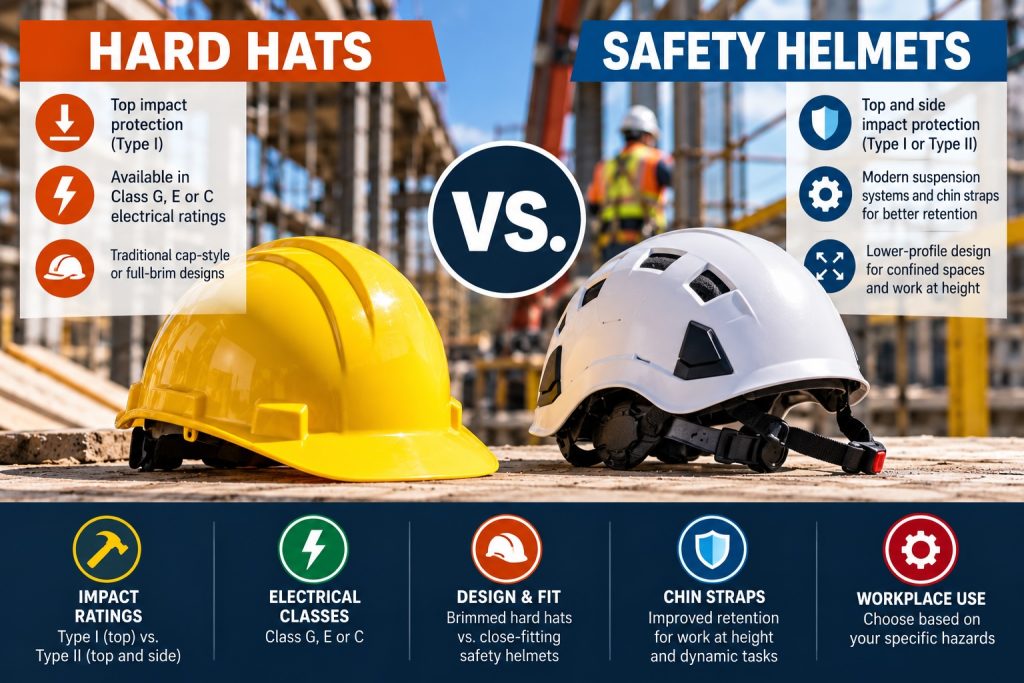
Hard Hats vs. Safety Helmets
Safety Helmets vs. Hard Hats: What Employers Need to Know

Safety Helmets vs. Hard Hats: What Employers Need to Know

How to Choose the Right Chemical-Resistant Gloves for the Job

How to Choose the Right Chemical-Resistant Gloves for the Job

  • Previous ProjectWhat Is a Job Hazard Analysis (JHA) and How Do You Conduct One?

  • Next ProjectSafety Helmets vs. Hard Hats: What Employers Need to Know

CUSTOMER SERVICE

800-523-5367

CONTACT US

Complete the short form below and an Arbill representative will get back to you within 24 hours.
* Required Fields

    ARBILL RESPECTS YOUR PRIVACY AND YOUR INFORMATION: By submitting the form above you agree to receiving emails from Arbill. Your submitted information is NEVER shared. You may unsubscribe at any time via the "unsubscribe" link in our emails. You can view our Privacy Policy HERE.