A safety helmet may look serviceable while no longer providing the protection its wearer expects.
Industrial head protection is exposed to sunlight, temperature changes, chemicals, dirt, vibration, repeated handling, and everyday impacts. These conditions can gradually weaken the shell, suspension, chin strap, and attachment points. Damage may be obvious, such as a crack or deep gouge, but deterioration can also develop without a dramatic visible change.
That makes replacement more complicated than checking whether the helmet still looks clean.
There is no single expiration schedule that applies to every safety helmet. The correct replacement decision depends on the manufacturer’s instructions, the helmet model, its date of manufacture or first use, its exposure history, and the results of regular inspections.
For employers managing industrial head protection, Arbill provides PPE, safety assessments, training, and program support built around workplace hazards and real operating conditions.
Do Safety Helmets Have an Expiration Date?
Safety helmets have limited service lives, but they do not all share one universal expiration date.
OSHA Does Not Set a Five-Year Rule
OSHA’s head protection standard requires employers to provide compliant protective helmets when workers face potential head injury from falling objects. Electrical protective helmets are also required when employees work near exposed conductors that could contact the head.
The regulation does not state that every helmet shell must be replaced after exactly five years or every suspension after exactly one year. OSHA requires appropriate, compliant equipment and prohibits continued use of defective or damaged PPE.
Replacement intervals are generally established by the manufacturer based on the helmet’s materials, design, testing, intended use, and expected service conditions.
ANSI Classification Is Not an Expiration Schedule
ANSI Z89.1 establishes performance and testing criteria for industrial head protection, including impact and electrical classifications. It does not create one replacement date for every compliant helmet.
A helmet’s Type and Class describe the protection it was designed and tested to provide—not how long every individual helmet will remain serviceable in every environment.
Employers should therefore follow the instructions supplied with the specific make and model.
Manufacturer Recommendations Differ
Some manufacturers recommend replacing a shell after a maximum number of years and replacing the suspension more frequently. For example, MSA recommends replacing certain helmet suspensions after no more than 12 months of use and certain shells after no more than five years of use. Those limits are manufacturer- and product-specific, not universal OSHA deadlines.
Other manufacturers may recommend shorter service periods in environments involving intense sunlight, high heat, temperature extremes, or chemical exposure.
The manufacturer’s instructions should always control the planned replacement schedule.
Replace a Helmet Immediately After a Significant Impact
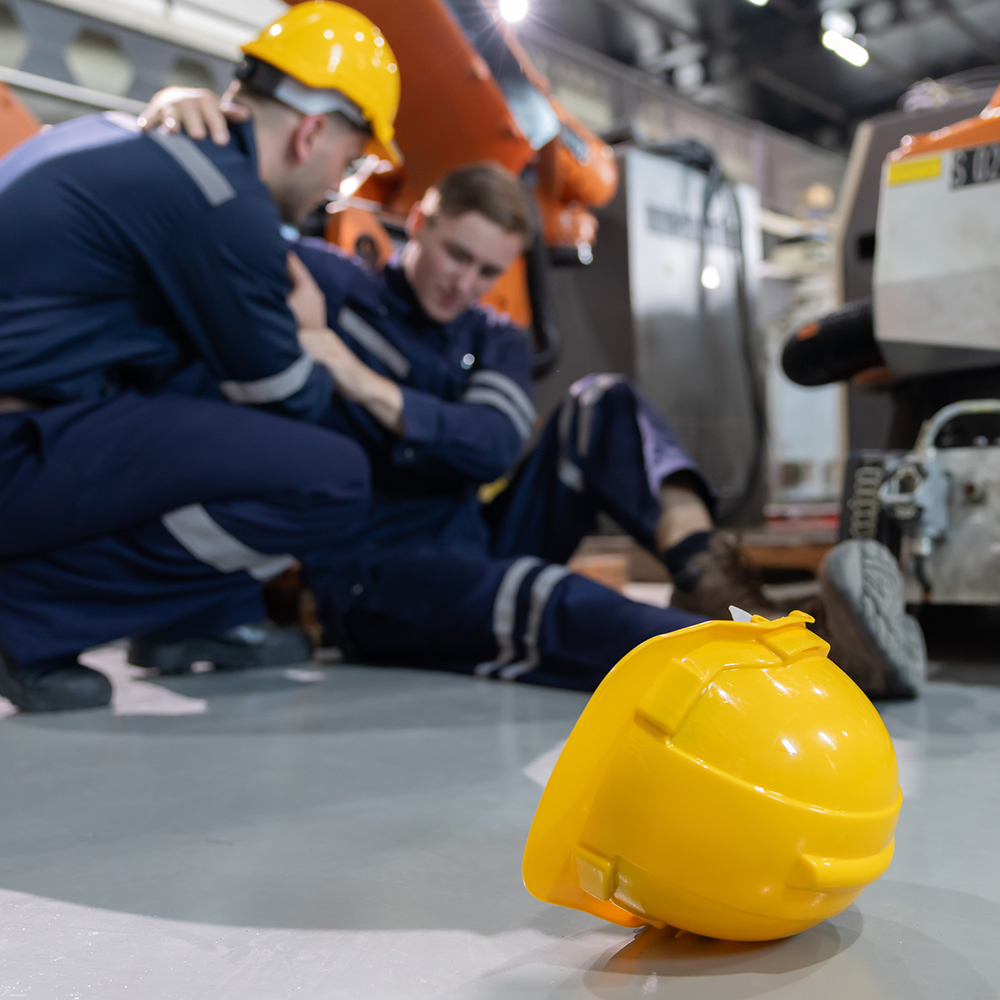
A helmet that has absorbed a forceful blow should normally be removed from service even when no damage is visible.
Hidden Damage May Remain Inside the Shell
Safety helmets work by absorbing and distributing impact energy. A significant strike can produce internal stress or microscopic damage that is difficult to detect during an ordinary visual inspection.
The helmet may look unchanged while its ability to perform during another impact has been reduced.
Manufacturers commonly advise replacing both the shell and suspension after a significant impact. Bullard, for example, recommends immediate replacement when a hard hat receives a forceful blow, even when visible damage is absent.
Do Not Reissue an Impacted Helmet
A helmet involved in a falling-object incident, serious collision, or other high-energy event should not be placed back into general inventory.
Mark it as unusable and dispose of it according to the manufacturer’s instructions and the organization’s PPE procedures. Keeping damaged equipment near usable stock creates a risk that someone else will wear it.
Review the Incident
Replacing the helmet addresses the immediate equipment concern, but the employer should also investigate why the impact occurred.
The review may identify problems involving overhead storage, dropped-object controls, equipment movement, barriers, work sequencing, housekeeping, or employee positioning.
Head protection reduces injury severity. It should not become a substitute for controlling the source of the hazard.