Warehouse ergonomics is not only about comfort.
It is about injury prevention, productivity, insurance costs, and long-term operational control.
In warehouses, workers lift, push, pull, reach, bend, twist, carry, stack, unload, wrap, pick, pack, and move materials throughout the day. When those tasks rely too heavily on manual effort, the risk builds quickly. Back strains, shoulder injuries, repetitive stress conditions, forklift collisions, struck-by incidents, slips, trips, and falling objects can all become expensive safety problems.
The right material handling equipment changes that equation.
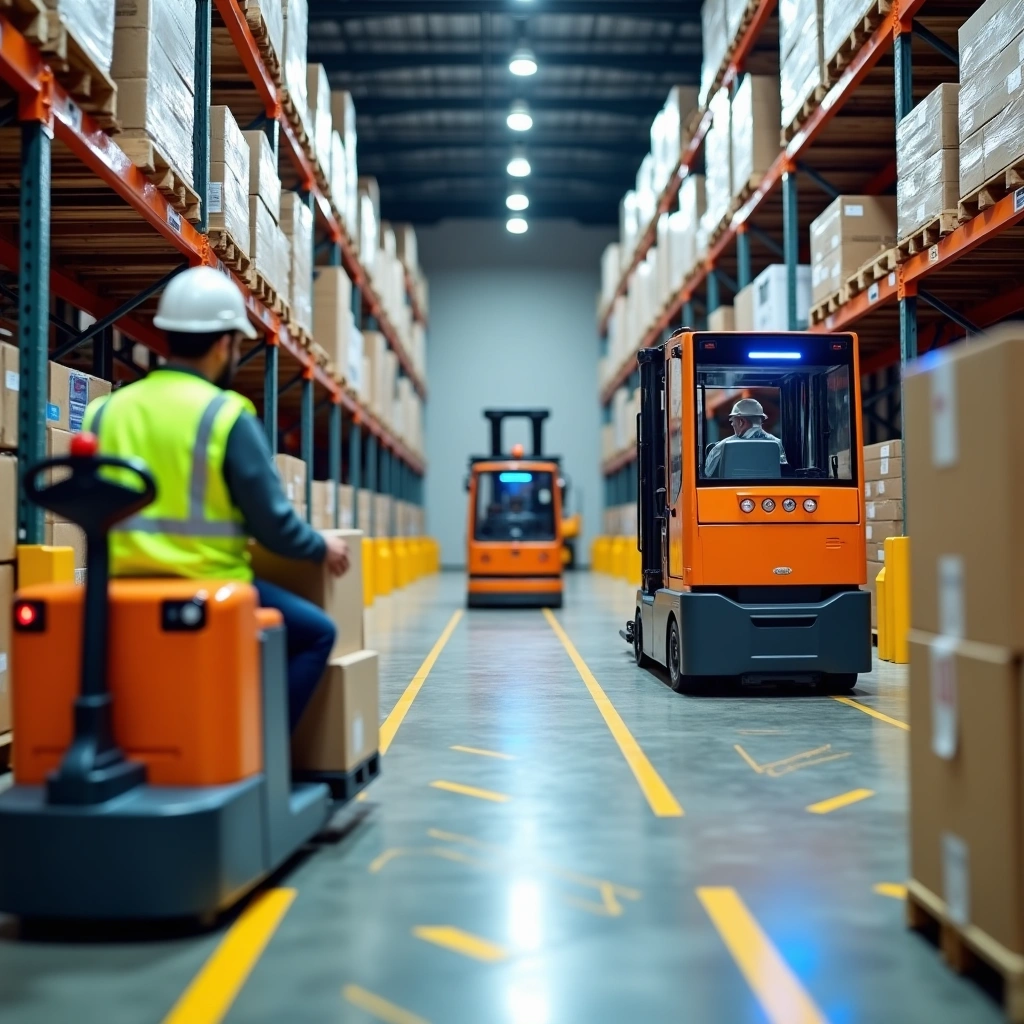
Powered pallet jacks, forklifts with safety technology, lift tables, conveyors, dock levelers, automated vehicles, guards, and ergonomic workstation designs reduce the physical strain placed on workers. They also help lower the frequency of claims that drive workers’ compensation costs and insurance premiums.
For warehouse leaders, the question is not whether ergonomic equipment costs money. The question is how much preventable injury is already costing the operation.
Why Warehouse Ergonomics Matters
Warehouse work is physically demanding.
Workers may lift from the floor, reach above shoulder height, carry uneven loads, push heavy carts, pull manual pallet jacks, twist while handling boxes, or repeat the same motion hundreds of times in a shift. Even when each task seems manageable, the combined exposure can create musculoskeletal disorders over time.
The uploaded draft explains that warehouse injuries from manual lifting, forklift accidents, and equipment collisions can cost businesses thousands in workers’ compensation claims and higher insurance rates. It also notes that many of these incidents are preventable with proper equipment investments.
A strong ergonomics program looks at the way work is performed and asks:
- Can the load be moved mechanically?
- Can the worker avoid lifting from the floor?
- Can the task be brought closer to waist height?
- Can pushing and pulling be reduced?
- Can travel distance be shortened?
- Can repetitive reaching be limited?
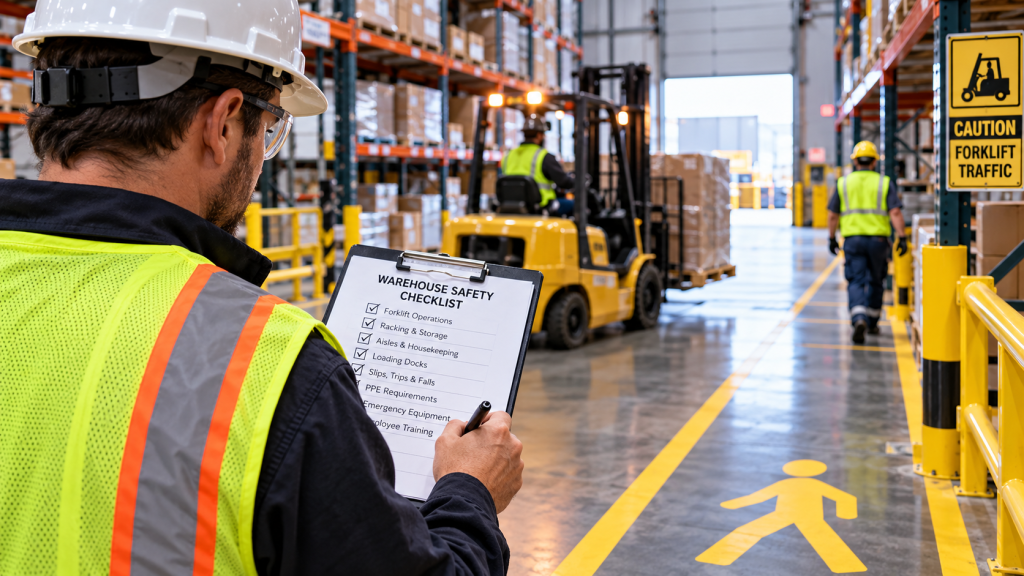
- Can equipment and pedestrians be separated?
- Can workers move materials without awkward posture?
- Can safety technology reduce collision risk?
Ergonomics is not about slowing the warehouse down. It is about designing work so people can perform it safely and consistently.
Common Warehouse Injuries Linked to Material Handling
Material handling injuries tend to follow predictable patterns.
The uploaded draft identifies several common injury categories: forklift-related accidents, manual lifting injuries, equipment tip-overs and collisions, and falling object incidents.
Common injuries include:
- Back strains
- Shoulder injuries
- Herniated disks
- Knee strain
- Wrist and hand injuries
- Repetitive stress injuries
- Crush injuries
- Struck-by injuries
- Slip and trip injuries
- Falls from elevated work areas
- Injuries from falling products
- Collision-related trauma
These injuries are expensive because they affect both the worker and the operation. A back injury may require medical treatment, restricted duty, lost time, replacement labor, overtime, and claim administration. A forklift collision may damage equipment, products, racking, and facility infrastructure in addition to injuring workers.
When the same types of injuries repeat, the issue is usually not bad luck. It is a system problem.
Manual Lifting Is a Major Cost Driver
Manual lifting is one of the most common ergonomic risk areas in warehouses.
Workers may lift cases from floor-level pallets, unload trucks, reach deep into bins, stack products above shoulder height, or twist while placing items onto conveyors or racks. Over time, these tasks create stress on the back, shoulders, knees, and hands.
The uploaded draft notes that back strains, herniated disks, and repetitive stress injuries dominate workers’ compensation claims in warehouses that rely heavily on manual material handling. It also explains that lifting above shoulder height or below knee level places exceptional strain on the spine and supporting muscles.
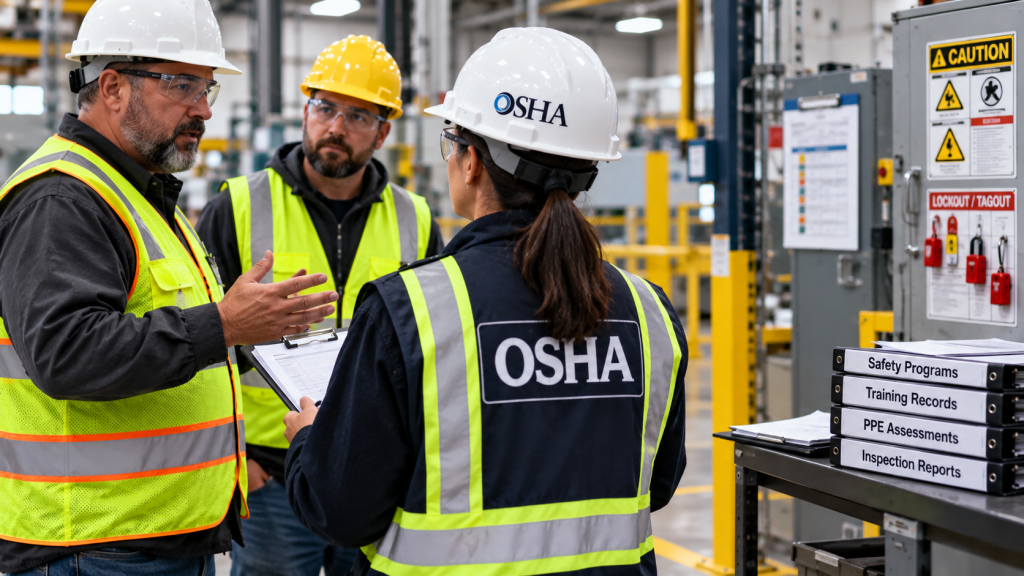
OSHA’s technical guidance on ergonomics notes that manual handling tasks should be designed to minimize weight, range of motion, and frequency, and that conveyors or carts should be used for horizontal movement whenever possible. OSHA also states that platforms and conveyors should be built around waist height to reduce awkward postures.
This is where equipment can make an immediate difference.
Lift tables, height-adjustable workstations, conveyors, carts, powered pallet jacks, and mechanical assists reduce the need for workers to repeatedly lift from poor positions.