June offers EHS leaders a built-in opportunity that comes with a calendar anchor, a national framework, and workers who already know the month means something. For facilities still working through gaps in their safety programs, this is the right moment to act. National Safety Month, marking its 30th anniversary in 2026, is the National Safety Council’s annual call for organizations to bring focused attention to the safety issues their people face every day. For safety professionals, the month is less about the event itself and more about what it makes possible: a structured prompt to deepen worker engagement, close program gaps, and build a safety culture that endures beyond June 30.

Many EHS leaders struggle to make the most of this window. Handled with intention, National Safety Month builds real momentum across your facility and your team. Without focus, it instead produces a week of posters and a forgettable all-hands email. The difference lies in how you structure the month, what activities you connect to real hazards, and whether you follow through on what surfaces.

If your safety program has gaps you have been meaning to address, the weekly themes below offer a useful framework for deciding where to focus first.

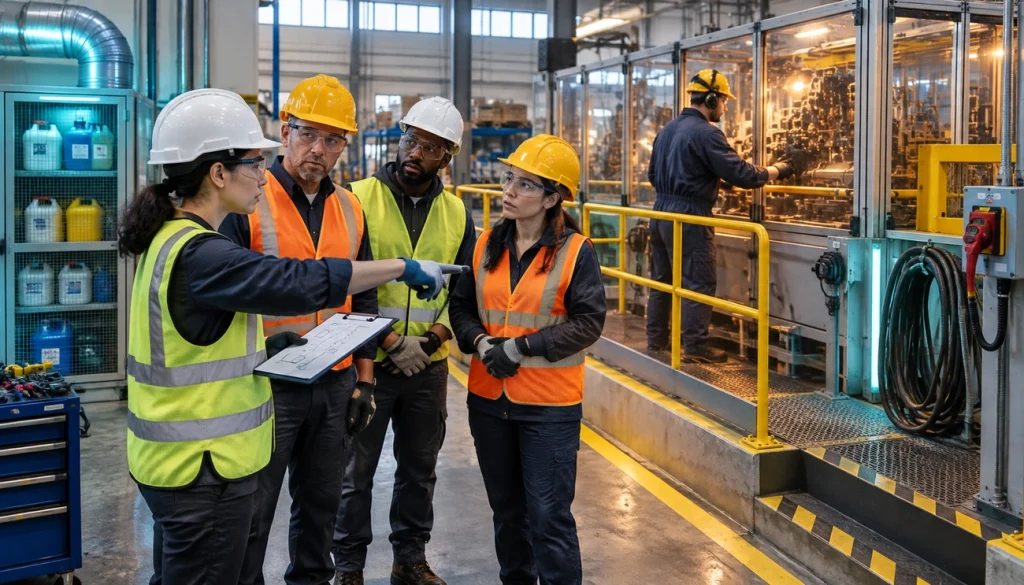
The 2026 Weekly Themes and What They Mean for Your Facility

The NSC has organized National Safety Month 2026 around four weekly themes, each mapping directly onto areas where industrial and manufacturing facilities carry their greatest exposure.

Week 1, June 1–6: Moving Safety Forward

This week focuses on advancing safety culture through forward-thinking strategies and tools. For EHS leaders, this is the right moment to open an honest conversation with workers and management about where the safety program currently stands, where the gaps are, and what investments or process changes would close them. A structured assessment at the start of the month sets a tone of seriousness that carries through the remaining three weeks.

Assess Your Safety Program

Week 2, June 7–13: Staying Safe on the Roads

Fleet safety and driving behavior are frequently underweighted in industrial safety programs, particularly in facilities where workers commute long distances or operate vehicles as part of their role. Use this week to address distracted driving, fatigue behind the wheel, and defensive driving habits. Connecting workplace safety to life outside the facility reaches workers across every department.

Week 3, June 14–20: Promoting Holistic Worker Health

Mental health, fatigue, and overall worker well-being directly impact safety outcomes. Workers managing elevated stress, disrupted sleep, or untreated mental health challenges are more likely to experience incidents. This week creates space to have those conversations without stigma and to connect workers with available resources.

Week 4, June 21–30: Preventing Slips, Trips, and Falls

Falls remain the second leading cause of preventable workplace deaths in the United States, and fall protection has held the top position on OSHA’s most cited violations list for 15 consecutive years. For industrial and manufacturing facilities, this week is a natural opportunity to walk the floor, identify uncontrolled fall exposures, and reinforce protective measures already in place. Arbill’s guide on preventing slips, trips, and falls covers the specific hazard types most likely to surface during that walkthrough.

Find a Training Program

How to Structure the Month for Maximum Impact

Facilities that get the most out of National Safety Month treat it as a program review and engagement campaign running in parallel, rather than a series of standalone awareness events. Arbill’s safety advisors work with EHS teams year-round on exactly this kind of structured approach.

  • Start with a gap assessment. Before June begins, take stock of where your safety program stands across all four theme areas. Identify where near-miss rates are elevated, which hazards keep recurring in toolbox talks, and where workers have the most concerns. Those answers shape your priorities for each week.
  • Build engagement into the structure. Toolbox talks that open with genuine questions, near-miss reporting campaigns that reward transparency, and floor walks that include frontline workers in hazard identification all create two-way engagement that builds lasting safety culture. If your program has gaps that predate June, reviewing the warning signs before the month begins gives you a clearer picture of where to focus.
  • Tie each week to real hazards in your facility. Generic safety content has a limited impact on workers navigating specific machines and job tasks every day. A week focused on slips, trips, and falls should include a walkthrough of the real fall hazards in your facility, not a general video about ladder safety.
  • Document and act on everything that surfaces. Every toolbox talk, near-miss report, and hazard identified during June is an opportunity to update safety records and demonstrate that the organization takes worker input seriously. Workers who see their contributions lead to real changes stay engaged with safety year-round.

What to Do Now

EHS leaders can take concrete steps before June 1 to make National Safety Month as productive as possible:

  • Complete a gap assessment across all four theme areas. Review near-miss rates, recurring toolbox talk hazards, and worker concerns before the month begins. The answers determine where to focus each week rather than defaulting to generic content.
  • Schedule toolbox talks for each week in advance. Tie each session to a real hazard in your facility. A Week 4 toolbox talk on slips, trips, and falls should include a floor walkthrough rather than a general slide deck.
  • Launch a near-miss reporting campaign. Use the month to reinforce that reporting is valued, not punished. Set a visible goal, communicate it to workers, and share results before the month ends.
  • Identify one concrete change to commit to before June 30. Workers who see their input lead to a real, visible change during National Safety Month are more likely to stay engaged with safety the rest of the year.
  • Plan your July follow-through now. Decide in advance how you will act on what surfaces during June so the momentum does not stop on June 30.

About Arbill

Arbill is America’s largest women-owned, safety-only distributor, with nearly 80 years of experience protecting workers across manufacturing, warehousing, utilities, construction, and logistics. Arbill provides PPE, safety equipment, technology solutions, and EHS advisory services to high-risk industries nationwide.

If National Safety Month reveals gaps in your fall protection program, PPE compliance, or near-miss reporting culture, schedule a conversation with Arbill’s safety advisors before those gaps show up in other ways. Safer. Every Day.

How to Structure the Month for Maximum Impact

Facilities that get the most out of National Safety Month treat it as a program review and engagement campaign running in parallel, rather than a series of standalone awareness events. Arbill’s safety advisors work with EHS teams year-round on exactly this kind of structured approach.

  • Start with a gap assessment. Before June begins, take stock of where your safety program stands across all four theme areas. Identify where near-miss rates are elevated, which hazards keep recurring in toolbox talks, and where workers have the most concerns. Those answers shape your priorities for each week.
  • Build engagement into the structure. Toolbox talks that open with genuine questions, near-miss reporting campaigns that reward transparency, and floor walks that include frontline workers in hazard identification all create two-way engagement that builds lasting safety culture. If your program has gaps that predate June, reviewing the warning signs before the month begins gives you a clearer picture of where to focus.
  • Tie each week to real hazards in your facility. Generic safety content has a limited impact on workers navigating specific machines and job tasks every day. A week focused on slips, trips, and falls should include a walkthrough of the real fall hazards in your facility, not a general video about ladder safety.
  • Document and act on everything that surfaces. Every toolbox talk, near-miss report, and hazard identified during June is an opportunity to update safety records and demonstrate that the organization takes worker input seriously. Workers who see their contributions lead to real changes stay engaged with safety year-round.

What to Do Now

EHS leaders can take concrete steps before June 1 to make National Safety Month as productive as possible:

  • Complete a gap assessment across all four theme areas. Review near-miss rates, recurring toolbox talk hazards, and worker concerns before the month begins. The answers determine where to focus each week rather than defaulting to generic content.
  • Schedule toolbox talks for each week in advance. Tie each session to a real hazard in your facility. A Week 4 toolbox talk on slips, trips, and falls should include a floor walkthrough rather than a general slide deck.
  • Launch a near-miss reporting campaign. Use the month to reinforce that reporting is valued, not punished. Set a visible goal, communicate it to workers, and share results before the month ends.
  • Identify one concrete change to commit to before June 30. Workers who see their input lead to a real, visible change during National Safety Month are more likely to stay engaged with safety the rest of the year.
  • Plan your July follow-through now. Decide in advance how you will act on what surfaces during June so the momentum does not stop on June 30.

About Arbill

Arbill is America’s largest women-owned, safety-only distributor, with nearly 80 years of experience protecting workers across manufacturing, warehousing, utilities, construction, and logistics. Arbill provides PPE, safety equipment, technology solutions, and EHS advisory services to high-risk industries nationwide.

If National Safety Month reveals gaps in your fall protection program, PPE compliance, or near-miss reporting culture, schedule a conversation with Arbill’s safety advisors before those gaps show up in other ways. Safer. Every Day.


Making the Momentum Last Beyond June

The most important thing National Safety Month can accomplish is creating a foundation for sustained engagement rather than a one-month spike. The weekly themes provide structure, the NSC materials provide support, and Arbill’s team is available to help close what June uncovers. What happens in July and beyond depends on whether June’s activities produced lasting changes in how hazards are identified, reported, and addressed.

If June surfaces gaps in your fall protection program, PPE compliance, or near-miss reporting culture, those are exactly the areas worth addressing before they surface in other ways. Safer. Every Day.

Frequently Asked Questions

What is National Safety Month 2026? 

National Safety Month is an annual observance led by the National Safety Council each June. In 2026, it marks its 30th anniversary and focuses on four weekly themes: Moving Safety Forward, Staying Safe on the Roads, Promoting Holistic Worker Health, and Preventing Slips, Trips, and Falls.

When is National Safety Month? 

National Safety Month is observed every June. The 2026 observance runs from June 1 through June 30.

How should EHS leaders use National Safety Month?

The most effective approach treats the month as both a program review and a worker engagement campaign. EHS leaders should assess existing safety gaps before June begins, connect each weekly theme to real hazards in their facility, and follow up on every near-miss or hazard surfaced during the month.

What are the 2026 National Safety Month weekly themes?

Week 1 (June 1–6): Moving Safety Forward. Week 2 (June 7–13): Staying Safe on the Roads. Week 3 (June 14–20): Promoting Holistic Worker Health. Week 4 (June 21–30): Preventing Slips, Trips, and Falls.


Request a Safety Assessment

Recent Posts

National Safety Month
National Safety Month 2026: A Practical Guide for EHS Leaders

National Safety Month 2026: A Practical Guide for EHS Leaders

Worker with Fall Protection Equipment
Fall Protection on Rigs and Elevated Platforms: The Compliance Standards That Can’t Be Cut With the Budget

Fall Protection on Rigs and Elevated Platforms: The Compliance Standards That Can’t Be Cut With the Budget

Worker Use Portable Gas Monitors Before Entering Confined Spaces
Gas Detection in the Field: What Your Oilfield Workers Need to Know Before Entering Any Confined Space

Gas Detection in the Field: What Your Oilfield Workers Need to Know Before Entering Any Confined Space

PPE for Utility Field Workers
From Substations to Stormwork: Building a Weather-Ready PPE Program for Utility Field Workers

From Substations to Stormwork: Building a Weather-Ready PPE Program for Utility Field Workers

Electrical Glove Testing During Work
Electrical Glove Testing Programs: The OSHA Requirement Most Utility Safety Managers Are Quietly Ignoring

Electrical Glove Testing Programs: The OSHA Requirement Most Utility Safety Managers Are Quietly Ignoring