Industrial facilities operate with risks that can change from one department, shift, or task to another. Moving machinery, hazardous energy, powered industrial trucks, chemicals, elevated work, electrical systems, noise, heat, confined spaces, and material handling may all exist within the same operation.

Even organizations with established safety programs can develop gaps over time.

A machine guard may be removed during maintenance and never replaced correctly. Training records may fall behind after staffing changes. New chemicals may arrive without the written program being updated. Workers may begin using informal shortcuts that supervisors no longer notice. Corrective actions from an earlier inspection may remain open because responsibility was never clearly assigned.

Safety assessment and audit services give industrial operations a structured way to identify these weaknesses before they contribute to an injury, regulatory citation, equipment loss, or production interruption.

For organizations seeking a more complete view of workplace risk, Arbill supports industrial teams with professional safety assessments, EHS expertise, software, PPE, training, and practical solutions built around actual operating conditions.

What Is an Industrial Safety Assessment?

A safety assessment is a structured evaluation of workplace hazards, safety practices, written programs, records, equipment, PPE, and employee understanding.

More Than a Facility Walkthrough

A walkthrough is an important part of the process, but visual observations alone do not provide a complete picture.

A comprehensive assessment may include:

  • Facility and equipment inspections
  • Employee and supervisor interviews
  • Written safety program reviews
  • Training and certification records
  • Incident and near-miss history
  • PPE selection and usage
  • Emergency preparedness
  • Regulatory documentation
  • Environmental compliance
  • Corrective-action performance

This broader review helps determine whether written policies, field conditions, and employee behavior are aligned.

Assessment Versus Audit

The terms assessment and audit are often used together, but they may have slightly different purposes.

An assessment typically focuses on understanding current conditions, identifying risks, and recommending improvements. An audit may place greater emphasis on comparing practices and records against regulatory requirements, company standards, or established program criteria.

In practice, many industrial reviews combine both approaches. They evaluate hazards while also checking whether required programs, procedures, training, and documentation are in place.

The Objective Is Prevention

The value of an assessment is not the number of deficiencies listed in the final report. Its value comes from finding hazards before an incident exposes them.

A useful review should help the organization understand:

  • What can cause serious harm
  • Which controls are missing or ineffective
  • Where compliance gaps exist
  • Why unsafe conditions developed
  • Which findings require immediate correction
  • What can be improved over time

This turns an inspection into a practical risk-management process.

Why Industrial Operations Need Regular Assessments

Industrial facilities change continuously, even when the overall business appears stable.

Equipment and Processes Change

New equipment, production lines, chemicals, tools, and automation can introduce hazards that were not included in earlier assessments.

A machine replacement may change guarding requirements. A faster production process may increase noise or repetitive-motion exposure. A new coating may require different gloves, respiratory protection, or ventilation.

Assessments help safety teams verify that programs and controls remain appropriate after these changes.

Work Practices Drift

Employees often find faster or easier ways to complete a task. Some improvements are useful, but others bypass safeguards or create exposure.

A temporary workaround may become a permanent routine. A guard may be left open because it slows material feeding. Workers may stop following a documented inspection step because it appears unnecessary.

Regular observations help identify where daily practices have moved away from approved procedures.

Staffing and Experience Levels Shift

New employees, temporary workers, contractors, transfers, and leadership changes can affect safety performance.

Experienced workers may understand hazards that are not fully documented. When those employees leave, the organization can lose practical knowledge. New supervisors may interpret requirements differently or enforce them inconsistently.

Assessments reveal where training, procedures, and oversight need to be strengthened.

Documentation Can Become Outdated

Written programs may still refer to equipment, chemicals, locations, or responsibilities that have changed.

Training records may be incomplete. Inspection logs may not be maintained consistently. Corrective actions may be listed without evidence that they were closed.

An audit compares documentation with actual operations and identifies where the two no longer match.


Explore Our Solutions!
Safety Assessment & Audit Services for Industrial Operations

Types of Safety Assessments

The appropriate assessment depends on the facility’s risks, objectives, available resources, and program maturity.

Rapid Assessment

A rapid assessment provides a focused review of current workplace conditions.

It may be appropriate when an organization needs to:

  • Identify immediate safety concerns
  • Evaluate a newly acquired location
  • Review conditions after a significant change
  • Prepare for a broader assessment
  • Obtain an outside perspective quickly

The review may concentrate on visual hazards, PPE use, housekeeping, emergency access, machine guarding, material storage, and obvious procedural gaps.

A rapid assessment can establish priorities, but it may not include the detailed record and program analysis of a broader audit.

Discovery Assessment

A discovery assessment examines both workplace conditions and the systems supporting safety performance.

It may include:

  • Regulatory record review
  • Written program evaluation
  • Training record analysis
  • PPE assessment
  • Employee interviews
  • Incident history
  • Compliance-gap identification
  • Corrective-action recommendations

This level is useful for organizations that need a structured roadmap for improving compliance and reducing risk.

Expansive Assessment

An expansive assessment evaluates the wider safety program and culture across the organization.

The review may examine leadership involvement, worker participation, field execution, documentation, communication, multi-site consistency, and continuous-improvement systems.

It can help determine whether safety is integrated into business decisions or treated mainly as a compliance function.

Arbill’s EHS safety assessment services can support different evaluation levels based on the organization’s immediate needs, operational complexity, and long-term safety objectives.

Core Areas of an Industrial Safety Audit

A comprehensive audit should be customized to the operation, but several areas commonly require review.

Workplace Hazard Identification

The physical inspection begins with observing work under representative conditions.

Auditors may examine:

  • Walking and working surfaces
  • Emergency exits and access routes
  • Housekeeping
  • Lighting and visibility
  • Noise
  • Ventilation
  • Material storage
  • Electrical conditions
  • Traffic flow
  • Ergonomic exposures
  • Elevated work
  • Chemical handling

The purpose is to identify existing hazards and conditions that could reasonably develop during routine, nonroutine, or emergency work.

Machine Guarding and Equipment Safety

Industrial machinery can expose workers to rotating parts, points of operation, nip points, cutting surfaces, flying material, heat, and stored energy.

The audit should evaluate whether:

  • Required guards are installed
  • Guards remain secure and functional
  • Interlocks operate properly
  • Emergency stops are accessible
  • Employees bypass safeguards
  • Maintenance procedures control hazardous energy
  • Equipment inspections are documented
  • Operators have appropriate training

Auditors should observe actual machine use rather than evaluating equipment only while it is shut down.

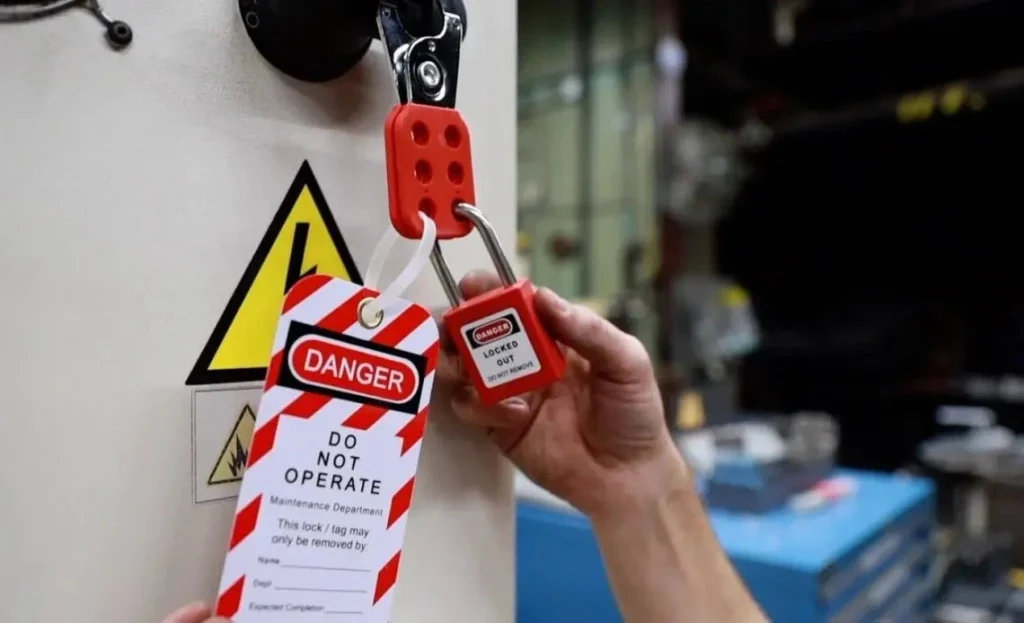
Lockout/Tagout

Hazardous-energy control is a major concern in manufacturing, processing, utilities, warehousing, and maintenance operations.

The assessment may review:

  • Written energy-control programs
  • Equipment-specific procedures
  • Authorized and affected employee training
  • Annual procedure inspections
  • Lock and tag availability
  • Group lockout methods
  • Shift-transfer procedures
  • Contractor coordination
  • Stored-energy controls
  • Isolation verification

A procedure may appear complete on paper while failing to identify every energy source on the equipment.

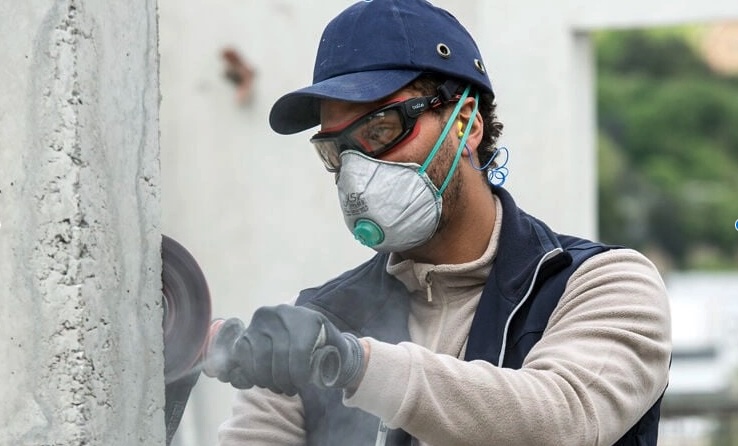
Personal Protective Equipment

OSHA requires employers to assess workplaces for hazards that may require PPE and document that the assessment was performed. The selected PPE must protect against identified hazards and properly fit affected employees.

An industrial PPE assessment should review:

  • Hazard-assessment documentation
  • Product selection
  • Fit and sizing
  • Worker training
  • Inspection and replacement
  • Storage and sanitation
  • Compatibility between equipment
  • Actual employee use
  • Availability across shifts
  • Standardization between departments

The review should also determine whether the operation is relying on PPE where engineering or administrative controls would provide stronger protection.

Chemical Safety and Hazard Communication

Industrial facilities may use process chemicals, cleaning products, coatings, solvents, fuels, lubricants, gases, maintenance materials, and laboratory substances.

The audit may examine:

  • Hazardous chemical inventories
  • Safety Data Sheet access
  • Original and secondary-container labels
  • Chemical storage compatibility
  • Spill containment
  • Employee training
  • Emergency equipment
  • Respiratory protection
  • Waste labeling and accumulation
  • Contractor-supplied chemicals

The chemical inventory should reflect the materials actually present in the workplace.

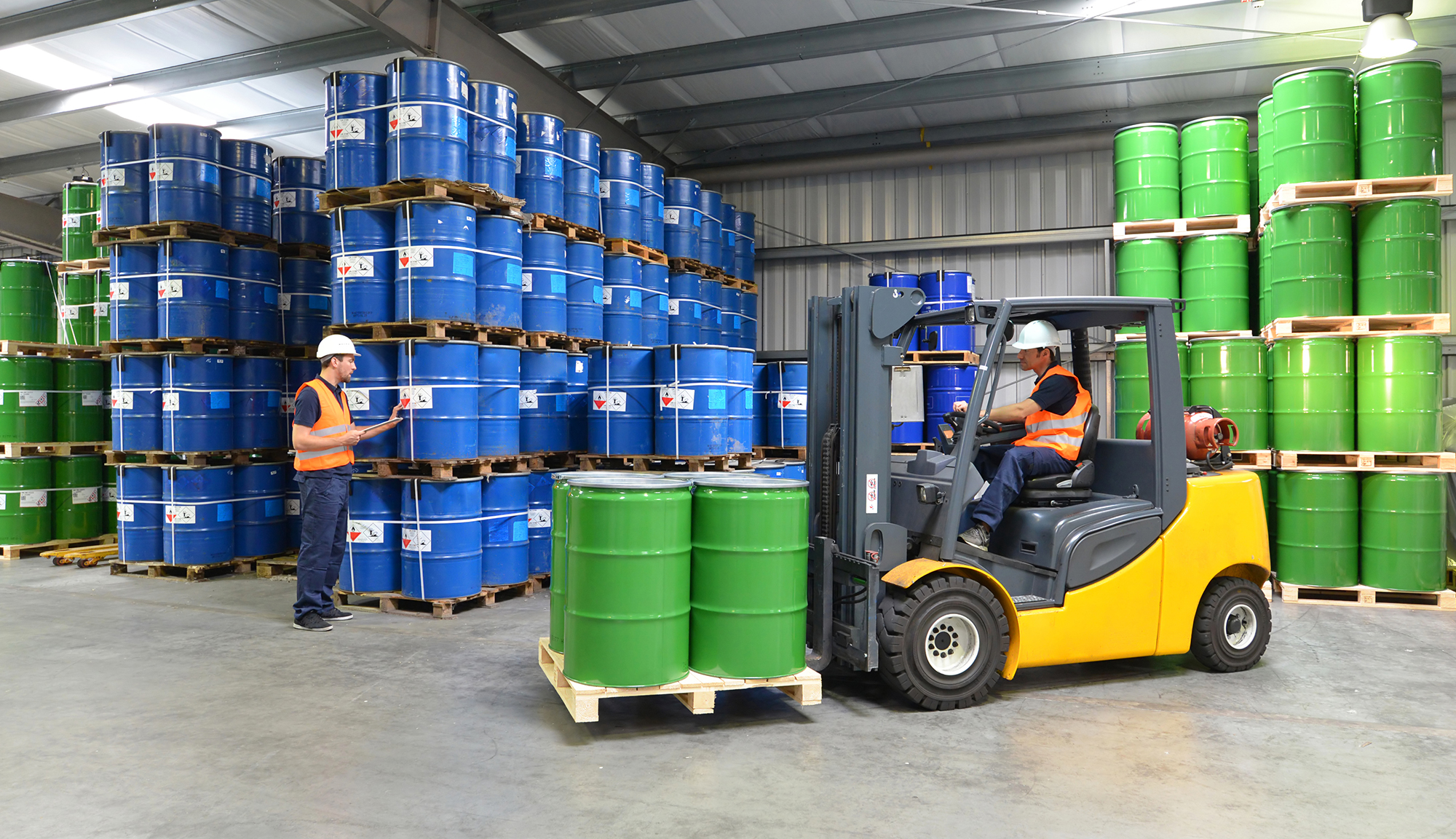
Powered Industrial Trucks and Mobile Equipment

Forklifts, trucks, loaders, carts, cranes, and pedestrians may share operating space.

The assessment should consider:

  • Operator training and evaluation
  • Pre-use inspections
  • Traffic routes
  • Pedestrian crossings
  • Blind corners
  • Speed expectations
  • Dock and trailer safety
  • Parking and charging areas
  • Load visibility
  • Barriers and signage
  • Near-miss history

Worker interviews may reveal recurring close calls that have never been formally documented.

Emergency Preparedness

An emergency plan must work under actual facility conditions.

Auditors may review:

  • Emergency action plans
  • Evacuation maps
  • Alarm systems
  • Assembly areas
  • Fire extinguishers
  • Eyewash stations and showers
  • First aid supplies
  • AEDs
  • Spill response resources
  • Emergency communication
  • Employee assignments
  • Drill records

Plans should also account for night shifts, weekends, contractors, visitors, and employees who may need assistance during evacuation.

Fall Protection

Audits should identify exposure on platforms, mezzanines, roofs, ladders, aerial lifts, loading areas, pits, and elevated machinery.

Review areas may include:

  • Guardrail systems
  • Floor openings
  • Ladder condition
  • Anchor points
  • Harness and lanyard inspection
  • Fall clearance
  • Training
  • Rescue procedures
  • Aerial-lift practices
  • Equipment storage

The assessment should verify that fall protection fits the specific access and work method.

Confined Spaces

Facilities may contain tanks, vessels, pits, silos, vaults, tunnels, and other spaces with restricted entry or hazardous conditions.

The audit may evaluate:

  • Space identification and inventory
  • Permit-required classifications
  • Warning signs
  • Entry permits
  • Atmospheric testing
  • Ventilation
  • Isolation methods
  • Entrant and attendant training
  • Communication
  • Rescue arrangements
  • Contractor entry coordination

A rescue statement in a written program is not enough. The facility should confirm that the planned rescue method is realistic and available.

Environmental Compliance

Industrial assessments may also include environmental responsibilities connected to worker and operational risk.

Potential review areas include:

  • Hazardous waste identification
  • Accumulation areas
  • Container management
  • Waste labels
  • Inspection records
  • Universal waste
  • Spill prevention
  • Stormwater controls
  • Chemical storage
  • Permits and reporting
  • Contractor and vendor documentation

Environmental findings can create both regulatory and safety consequences when not addressed.

As long as people go to work, we have an opportunity to help protect them.

Julie Copeland
Arbill CEO

Julie Copeland Arbill CEO

Reviewing Safety Programs and Records

Physical conditions show only part of the safety program.

Written Program Review

Written programs should reflect current equipment, processes, responsibilities, and work practices.

Auditors may review programs covering:

  • Hazard communication
  • Lockout/tagout
  • Respiratory protection
  • Confined spaces
  • Emergency action
  • PPE
  • Fall protection
  • Powered industrial trucks
  • Hearing conservation
  • Exposure control
  • Contractor safety

The review should determine whether required procedures exist and whether they are being followed.

Training Records

Training records can help show whether employees received required instruction, but attendance alone does not prove competency.

An audit should consider:

  • Training subjects
  • Employee roles
  • Completion dates
  • Instructor qualifications
  • Practical evaluations
  • Refresher requirements
  • Certification expiration
  • Retraining after changes
  • Missing employee groups

The auditor may also ask workers questions to determine whether they understand the procedures.

Incident and Near-Miss Data

Incident records can reveal patterns involving departments, tasks, equipment, injuries, or time periods.

Near-miss reports are especially useful because they can identify conditions before serious harm occurs.

The review should look beyond immediate causes and consider:

  • Procedure design
  • Training
  • Equipment condition
  • Staffing
  • Supervision
  • Production pressure
  • Communication
  • Maintenance
  • Management decisions

Inspection and Maintenance Records

Equipment inspections, preventive maintenance, emergency-system tests, and PPE checks should be current and complete.

Repeated overdue tasks may show that the organization lacks sufficient resources, ownership, or tracking systems.

Regulatory and Environmental Records

Depending on the operation, an audit may review OSHA logs, injury reports, exposure records, permits, waste records, inspections, and regulatory correspondence.

The goal is to verify that documentation accurately represents workplace conditions and required activities.

Employee and Supervisor Interviews

Workers often recognize hazards that are not visible during a brief inspection.

Frontline Worker Input

Employees can explain:

  • Which tasks feel most dangerous
  • Where close calls happen
  • Which procedures are hard to follow
  • Which equipment frequently fails
  • Where PPE does not fit or perform
  • Which hazards appear during certain shifts
  • Whether concerns receive follow-up

Questions should encourage honest input rather than make employees feel they are being tested.

Supervisor Perspective

Supervisors may provide insight into staffing, scheduling, production pressure, corrective actions, maintenance delays, and training gaps.

They can also explain where written requirements conflict with operational realities.

Contractor Feedback

Contractors may experience hazards that permanent employees do not encounter. Their work may involve shutdowns, maintenance, construction, confined spaces, energized systems, or chemicals.

Audit interviews can help determine whether contractor onboarding and coordination are effective.

See Our Safety Services!
Site Safety Assessments

Turning Audit Findings Into Corrective Actions

An audit report is useful only when findings lead to improvements.

Prioritize by Risk

Findings should be ranked according to the potential severity and likelihood of harm.

Immediate priorities may include:

  • Missing machine guards
  • Exposed electrical hazards
  • Blocked emergency exits
  • Uncontrolled hazardous energy
  • Serious chemical storage problems
  • Fall exposures
  • Defective critical PPE

Lower-risk administrative or standardization improvements may follow a longer schedule.

Risk ranking prevents urgent hazards from becoming buried in a large report.

Identify Root Causes

Simply correcting the visible condition may not prevent recurrence.

For example, replacing a missing label does not address why labels repeatedly disappear. Reinstalling a guard does not explain why operators remove it.

Root causes may involve purchasing, design, training, supervision, workload, maintenance, communication, or unrealistic procedures.

Assign Clear Ownership

Each corrective action should have a named owner, deadline, priority, and verification method.

Assigning an item to a general department can allow accountability to disappear.

Verify Completion

Closing an action should require evidence that the correction was implemented and remains effective.

Verification may involve:

  • Photographs
  • Updated procedures
  • Training records
  • Purchase documentation
  • Follow-up inspection
  • Equipment testing
  • Employee interviews
  • Exposure monitoring

Completion should not be based only on an email stating that the item was addressed.

Using Safety Software to Manage Findings

Spreadsheets and paper reports may be sufficient for a small number of findings, but they become difficult to manage across multiple departments or facilities.

Centralized Corrective-Action Tracking

EHS safety software can help organizations centralize assessments, findings, responsibilities, deadlines, supporting documents, and completion status.

This gives safety leaders clearer visibility into open actions across locations.

Automatic Notifications

Automated reminders can alert owners before deadlines pass and notify leaders when high-risk actions remain unresolved.

This reduces the need for safety personnel to chase updates manually.

Documentation and Audit Trails

Digital systems can retain photographs, forms, inspection records, notes, and evidence of completion.

A clear audit trail helps show what was found, when it was assigned, how it was corrected, and who verified the result.

Trend Analysis

Data from multiple assessments can reveal repeated problems.

Examples may include:

  • Frequent machine-guard findings
  • PPE issues in one department
  • Repeated training gaps
  • Overdue inspections
  • Chemical-labeling problems
  • Similar hazards across multiple sites

Trend analysis helps leadership address broader system weaknesses instead of correcting the same individual condition repeatedly.

Common Audit Findings in Industrial Facilities

Certain deficiencies appear regularly across industrial operations.

Outdated Written Programs

Programs may not reflect new equipment, chemicals, roles, or regulatory requirements.

Incomplete Training Records

Workers may have received training, but records do not show content, dates, evaluation, or refresher status.

Inconsistent PPE Use

Employees may wear protection in some areas but remove it during inconvenient or uncomfortable tasks.

Poor Machine Guarding

Guards may be missing, damaged, bypassed, or unsuitable for the way equipment is operated.

Weak Corrective-Action Follow-Up

Findings may be documented repeatedly without permanent correction.

Chemical-Labeling Gaps

Secondary containers, process vessels, or waste containers may lack clear identification.

Blocked Emergency Equipment

Exit routes, eyewash stations, extinguishers, panels, or first aid supplies may be obstructed.

Documentation That Does Not Match Reality

Written procedures may describe controls that workers do not use or equipment that is no longer present.

How Often Should Safety Audits Be Conducted?

There is no single frequency that fits every industrial operation.

Consider Risk and Change

Higher-risk operations may require more frequent inspections and program reviews.

Assessments should also follow significant events such as:

  • New equipment installation
  • Process changes
  • Facility expansion
  • Acquisition
  • Serious incidents
  • Recurring near misses
  • Regulatory findings
  • New chemical introduction
  • Major staffing changes

Use Multiple Review Levels

Organizations may conduct frequent supervisor inspections, periodic internal audits, and broader external assessments at longer intervals.

This creates ongoing visibility without relying on one annual event.

Follow Up on Previous Findings

A follow-up review should confirm that corrective actions remain effective.

The goal is not simply to complete another checklist but to determine whether the program improved.

Choosing a Safety Assessment Provider

An outside provider should add expertise and objectivity while respecting the realities of the operation.

Relevant Industrial Experience

Assessors should understand the hazards, processes, equipment, and regulatory requirements affecting the facility.

Qualified EHS Professionals

The team should be capable of evaluating physical conditions, written programs, records, PPE, worker behavior, and compliance systems.

Practical Reporting

The final report should explain findings clearly, rank them by risk, and provide actionable recommendations.

Implementation Support

The provider should be able to help the organization move from assessment to corrective action, program development, training, or longer-term improvement where needed.

Multi-Site Capability

Organizations with multiple locations may benefit from a provider that can establish a consistent assessment framework and compare performance across facilities.

Building a Continuous Improvement Cycle

Safety assessments should support an ongoing process rather than a one-time compliance event.

Assess

Identify hazards, program gaps, and compliance weaknesses.

Prioritize

Rank findings according to risk and operational importance.

Correct

Implement engineering, administrative, training, PPE, or program improvements.

Verify

Confirm that the correction works and remains in place.

Monitor

Track performance, incidents, near misses, and recurring findings.

Reassess

Review the workplace again as operations change.

OSHA’s recommended safety and health practices emphasize this proactive approach—finding and fixing hazards before they cause injuries or illnesses, evaluating whether controls are effective, and continuously improving the program.

Conclusion

Safety assessment and audit services give industrial operations a structured way to understand risk, verify compliance, and improve workplace performance.

A complete assessment examines more than visible conditions. It connects facility inspections with written programs, training records, PPE practices, employee input, incidents, environmental responsibilities, and corrective-action systems.

The assessment report is only the beginning.

Organizations must prioritize findings, identify root causes, assign ownership, establish deadlines, and verify that corrections remain effective. Safety software can strengthen this process by improving visibility, documentation, reminders, and trend analysis across departments and locations.

When assessments become part of an ongoing improvement cycle, industrial facilities can identify hazards earlier, reduce recurring deficiencies, improve audit readiness, and create safer conditions across every shift.

Request a Safety Assessment

Recent Posts

Hydration Programs for Industrial Warehouses

Hydration Programs for Industrial Warehouses

SmartCompliance Cabinet Solutions for Industrial Facilities

SmartCompliance Cabinet Solutions for Industrial Facilities

PPE Program Management for Multi-Site Industrial Operations

PPE Program Management for Multi-Site Industrial Operations

Safety Assessment & Audit Services for Industrial Operations

Safety Assessment & Audit Services for Industrial Operations

Workplace Safety Motivation
Safety Training Programs for Manufacturing Facilities

Safety Training Programs for Manufacturing Facilities

  • Previous ProjectPPE Program Management for Multi-Site Industrial Operations

  • Next ProjectSafety Training Programs for Manufacturing Facilities

CUSTOMER SERVICE

800-523-5367

CONTACT US

Complete the short form below and an Arbill representative will get back to you within 24 hours.
* Required Fields

    ARBILL RESPECTS YOUR PRIVACY AND YOUR INFORMATION: By submitting the form above you agree to receiving emails from Arbill. Your submitted information is NEVER shared. You may unsubscribe at any time via the "unsubscribe" link in our emails. You can view our Privacy Policy HERE.