Workplace safety equipment can be the difference between routine exposure and a serious injury, but simply purchasing PPE does not guarantee that employees are adequately protected.

A high-rated glove may still be wrong for the chemical being handled. Safety glasses designed for impact hazards may not provide sufficient protection from chemical splash. A respirator may have the correct filter but fail to provide reliable protection when it does not fit the employee properly. Even equipment with strong technical specifications can create problems when it interferes with another piece of PPE or makes the task difficult to perform safely.

Choosing the right workplace safety equipment therefore starts with understanding the hazard rather than choosing the product.

Employers need to evaluate the work, determine which exposures remain after other controls are considered, match equipment to those hazards, verify applicable standards, test fit and compatibility, train employees, and establish inspection and replacement procedures.

When those steps work together, workplace safety equipment becomes part of a structured protection program rather than simply a purchasing decision.

Step 1: Assess Workplace Hazards Before Choosing Safety Equipment

The strongest PPE programs begin with a workplace hazard assessment.

OSHA requires employers covered by its general-industry PPE requirements to assess the workplace to determine whether hazards are present, or likely to be present, that require personal protective equipment. Employers must then select PPE that protects affected employees from the identified hazards, communicate those selection decisions, and make sure the equipment properly fits each affected employee. (OSHA 1910.132)

This means equipment selection should follow the assessment, not the other way around.

Review Tasks, Not Just Job Titles

A job title rarely tells the complete safety story.

Two employees with the same title may perform very different tasks during the day, while employees from different departments may encounter similar hazards.

Walk through each work area and observe what employees actually do.

Review routine production, setup, cleaning, maintenance, material handling, equipment jams, shutdowns, and nonroutine work.

Consider what can:

Strike, cut, crush, burn, splash, penetrate, irritate, expose, or otherwise harm the worker.

A maintenance technician, for example, may move between mechanical repairs, electrical troubleshooting, chemical exposure, grinding, and elevated work during a single shift.

Assigning one generic PPE package to that employee may leave important exposures unaddressed.

Observe the Work While It Is Happening

Written job descriptions can miss important details.

Watch employees perform the task under normal operating conditions.

Look at:

Body position, tools, materials, nearby equipment, vehicle movement, visibility, temperature, noise, chemicals, and the amount of physical movement involved.

Ask workers which parts of the task are difficult to perform while wearing their current PPE.

Employees may identify issues that are not obvious during a short safety walkthrough.

For example, workers may report that a certain glove provides good cut protection but becomes too slippery when oil is present. Another employee may explain that safety glasses fog whenever respiratory protection is worn.

Those details should influence selection.

Review Incident and Near-Miss History

Previous incidents can show where current safety controls are not working well enough.

Review:

Injury reports, first aid cases, near misses, equipment damage, inspection findings, and employee concerns.

Look for patterns involving the same task, department, body part, equipment, or exposure.

Repeated hand injuries may indicate inadequate glove selection.

Recurring eye irritation may point toward insufficient splash protection, dust control, or ventilation.

Frequent near misses around mobile equipment may show that PPE alone cannot solve the problem.

The objective is not only to count incidents. It is to use them to improve the hazard assessment.

Include Temporary and Nonroutine Work

Temporary employees, contractors working under your direction, and employees who occasionally perform unfamiliar jobs may encounter hazards outside their normal assignment.

Maintenance shutdowns, emergency repairs, equipment installation, chemical transfers, and temporary construction can create exposures that do not exist during ordinary operations.

The PPE program should account for these activities rather than limiting assessments to routine production.

Use Other Controls Before Relying on PPE

Personal protective equipment is essential, but it generally does not remove the hazard itself.

A worker can still be exposed to the sharp edge, chemical, noise, moving equipment, or fall potential even while wearing protection.

That is why employers should consider stronger controls first.

Eliminate or Reduce the Hazard Where Possible

Ask whether the hazardous step can be removed entirely.

Could a dangerous chemical be replaced with a less hazardous alternative?

Could maintenance be performed from ground level instead of at height?

Could a manual process be automated?

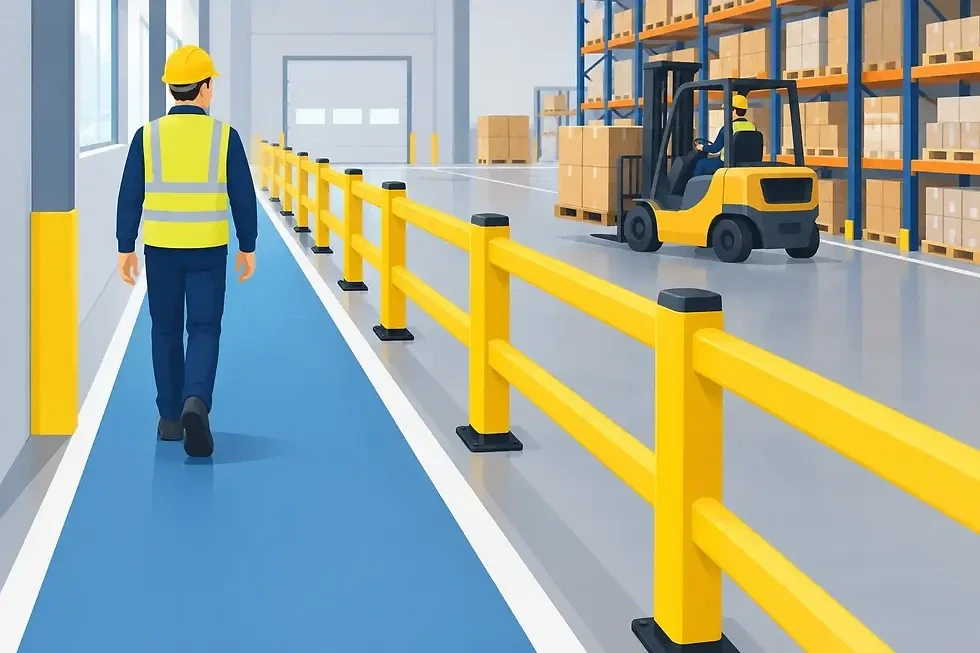
Could pedestrian traffic be routed away from forklift lanes?

Eliminating the exposure reduces dependence on worker behavior and PPE.

Use Engineering Controls

Engineering controls physically reduce or separate employees from hazards.

Examples include:

Machine guarding, ventilation, barriers, enclosures, traffic separation, local exhaust systems, or automated material handling.

These controls can substantially reduce exposure before PPE becomes necessary.

Use Work-Practice and Administrative Controls

Where the hazard cannot be engineered out completely, procedures can further reduce exposure.

Examples include:

Restricted access, safe work procedures, permit systems, traffic rules, maintenance schedules, or work-rest practices.

The PPE requirement should address the risk that remains after these other measures are considered.

Explore Our Solutions!
How to Choose Personal Protective Equipment for Your Employees

Document the Remaining Exposure

Once existing controls have been reviewed, document what protection employees still need.

A useful assessment should connect the task directly with the PPE requirement.

Record the Hazard and Body Area at Risk

Do not simply write:

Maintenance requires PPE.

Instead, identify the exposure.

For example:

Grinding produces flying metal particles that can strike the eyes and face.

or:

Handling unfinished sheet metal creates cut exposure to the hands and forearms.

The clearer the hazard description, the easier it becomes to select appropriate equipment.

Identify Who Needs Protection

Document which employees, shifts, work areas, and tasks are affected.

Some requirements may apply to an entire department.

Others may apply only while a particular operation is performed.

This distinction prevents employees from wearing unnecessary equipment while ensuring the correct PPE is available when exposure occurs.

Keep Assessments Current

The assessment should be reviewed when:

Equipment changes, chemicals change, work locations change, job duties change, incidents occur, new hazards are identified, or new PPE is introduced.

Digital systems can help organizations track these updates.

Arbill’s EHS safety software can help centralize safety information such as incidents, inspections, permits, corrective actions, and other program records so changes are easier to track across the organization.

Step 2: Match Safety Equipment to Each Hazard

Once the workplace hazards are documented, employers can begin matching protection to each exposure.

One employee may need several different forms of PPE depending on the task.

The equipment also needs to work together.

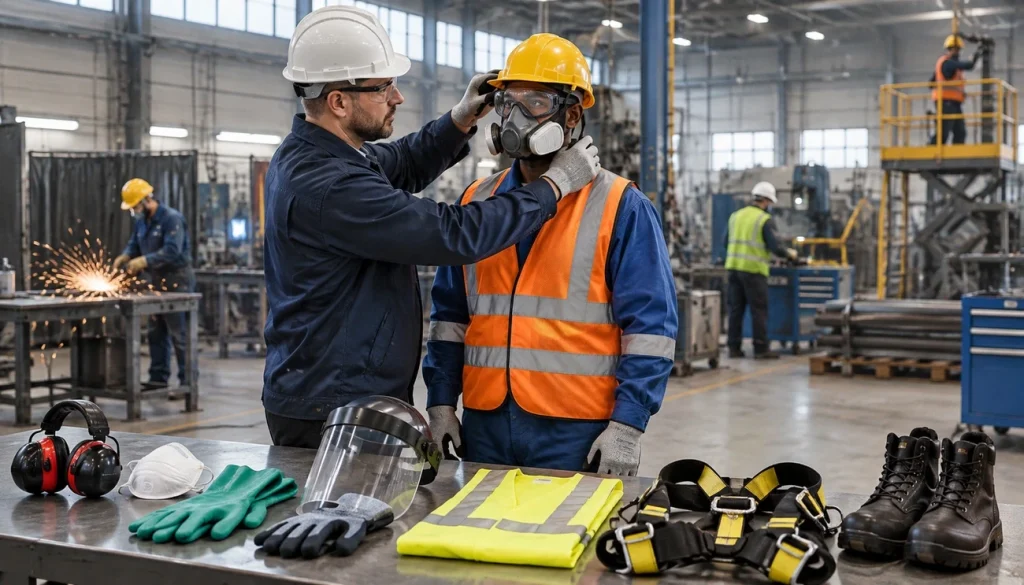
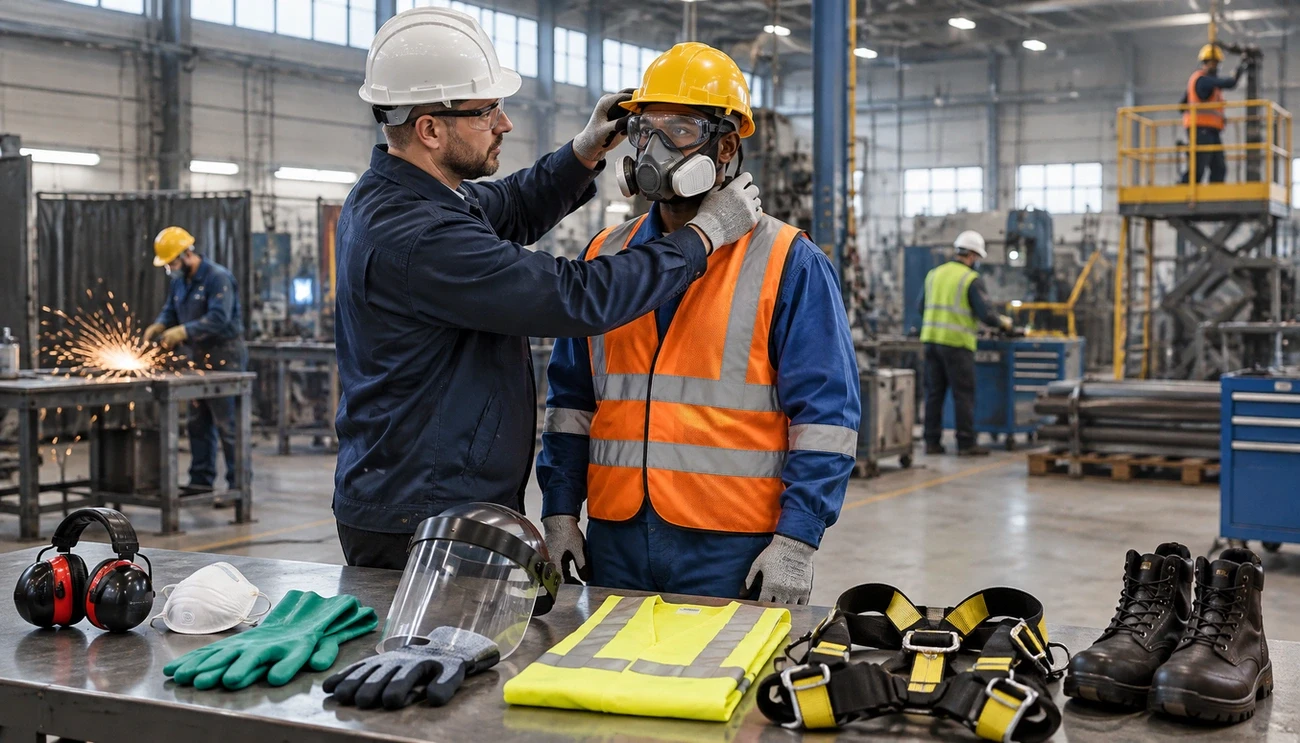
Head, Eye, and Face Protection

Impact hazards are among the most visible workplace exposures, but different hazards require different equipment.

Head Protection

Head protection may be necessary where workers face:

Falling objects, overhead materials, fixed structures, or certain electrical exposures.

Do not choose a hard hat or safety helmet based only on appearance.

Review its impact type, electrical class, fit, retention features, and compatibility with accessories.

Workers exposed mainly to overhead impacts may have different requirements from employees exposed to lateral impacts or work at height.

Eye Protection

Safety glasses should be matched to the exposure.

Impact-rated eyewear may be appropriate for flying particles produced by:

Grinding, drilling, cutting, or machining.

However, ordinary safety glasses do not automatically provide suitable protection against every liquid chemical splash or fine particulate exposure.

Face Protection

A face shield can provide additional coverage for the face, but employers should determine whether primary eye protection is also required beneath it.

The equipment needs to fit together correctly.

A face shield that prevents safety glasses from sitting properly creates a different protection problem.

Hearing Protection

Noise exposure requires more than handing employees disposable earplugs.

Start With Exposure

Determine where harmful noise exists and which workers are exposed.

The correct hearing protection should provide suitable attenuation while still allowing employees to work safely.

Overprotection can also create communication challenges where workers need to hear alarms, instructions, or approaching equipment.

Consider Fit and Worker Preference

Earplugs and earmuffs do not work equally well for every employee.

Some workers may struggle to insert certain earplug styles correctly.

Others may find earmuffs interfere with helmets or eyewear.

Giving workers appropriate options can improve consistent use as long as each option provides the required protection.

Respiratory Protection

Respiratory protection deserves particularly careful selection because an incorrect respirator can create a false sense of security.

Identify the Airborne Hazard

Start by determining what employees may inhale.

Possible exposures include:

Dust, fumes, mist, gases, vapors, or combinations of contaminants.

A particulate filtering respirator does not automatically protect against chemical gases or vapors.

Likewise, a cartridge that protects against one substance may not provide appropriate protection against another.

Determine Exposure Conditions

Respirator selection should account for concentration, work duration, oxygen conditions, and the physical demands of the task.

Unknown or immediately dangerous atmospheres require very different protection from ordinary particulate exposure.

Where exposure evaluation becomes complex, employers may need industrial hygiene or respiratory expertise.

Arbill’s EHS safety consulting can support organizations evaluating respiratory, industrial hygiene, compliance, and other workplace safety needs.

Consider Compatibility With Other PPE

Respirators may interact with:

Safety glasses, goggles, face shields, helmets, hearing protection, and protective clothing.

For tight-fitting respirators, anything that interferes with the sealing surface can compromise protection.

The complete PPE combination should therefore be evaluated together.

Hand and Arm Protection

Hand protection is one of the most task-specific PPE categories.

Match Gloves to the Exposure

Workers may need protection from:

Cuts, punctures, abrasion, chemicals, heat, cold, vibration, or impact.

These protective characteristics are not interchangeable.

A glove with excellent cut resistance may provide inadequate protection against a chemical.

A chemical glove may offer poor protection around sharp material.

Start with the hazard, then compare glove performance.

Check Dexterity and Grip

Employees need to maintain control of tools and materials.

A glove that is excessively bulky may reduce grip, increase fatigue, or encourage workers to remove it during precision work.

Worker trials can reveal whether a glove actually works for the task.

Consider Coverage Beyond the Hand

Some exposures extend to the wrist or forearm.

Chemical handling, sharp sheet metal, welding, and hot material may require longer cuffs or protective sleeves.

The equipment should cover the full exposed area.

”As long as people go to work, we have an opportunity to help protect them.

Julie Copeland
Arbill CEO

Julie Copeland Arbill CEO

Body Protection

Protective clothing can address several different hazards.

Chemical and Liquid Exposure

Aprons, coveralls, suits, or other protective garments may be necessary where chemicals can contact the torso or legs.

Material selection should reflect the chemical and duration of exposure.

Heat and Flame

Hot work or thermal hazards may require heat-resistant, flame-resistant, or arc-rated clothing depending on the exposure.

These terms should not be treated as interchangeable.

Visibility

Workers operating near vehicles or powered equipment may require high-visibility apparel.

The garment should remain visible as the outermost layer where visibility is necessary.

Foot and Leg Protection

Footwear should be selected around the actual workplace conditions.

Impact and Compression

Safety-toe footwear may protect against falling or rolling objects.

Puncture Hazards

Construction, manufacturing, and maintenance areas may contain nails, sharp metal, or other materials that require additional sole protection.

Traction

Wet, oily, icy, or uneven surfaces can increase slip risk.

Suitable tread and footwear design should support the walking conditions employees encounter.

Electrical Exposure

Certain jobs may require footwear with specific electrical characteristics.

The complete electrical safety assessment should determine what protection is appropriate.

Fall Protection

Work at height requires more than choosing a harness.

Evaluate the Complete System

Fall protection may involve:

Harnesses, connectors, anchors, lifelines, guardrails, or other systems depending on the task.

Personal fall protection needs to be selected around the work location, clearance, anchor configuration, and potential fall path.

Check Compatibility

A harness needs to work with:

Protective clothing, tool belts, high-visibility garments, head protection, and other required PPE.

Employees should perform normal job movements while wearing the complete system before the equipment is approved broadly.

Emergency Safety Equipment

Employee protection also extends beyond wearable PPE.

First Aid and Emergency Response

Depending on the facility, employers may need:

First aid supplies, eyewash stations, emergency showers, AEDs, spill-response equipment, or rescue equipment.

These products should reflect the hazards identified during the assessment.

Accessibility Matters

Safety equipment cannot protect anyone if it is blocked, empty, damaged, or located too far from the exposure.

Emergency equipment should therefore be incorporated into routine workplace inspections.

Step 3: Verify Rules, Standards, and Product Performance

Once candidate safety equipment has been identified, employers need to verify that the product actually meets the requirements for the work.

A product that looks similar to the approved model may perform differently.

Check Applicable OSHA Requirements

OSHA requirements vary according to the type of PPE and workplace exposure.

General PPE Requirements

Under 29 CFR 1910.132, employers must assess workplace hazards, select suitable PPE, ensure proper fit, and train affected employees in areas covered by the standard.

That hazard-based approach should guide purchasing decisions.

Product-Specific Requirements

Certain forms of PPE have additional requirements.

Respiratory protection, electrical protective equipment, hearing protection, fall protection, and other categories may fall under more specific standards.

Employers should confirm the requirements for each hazard instead of relying only on a general PPE checklist.

Check ANSI, NIOSH, and Other Applicable Documentation

Many products carry performance markings based on standards or approvals.

Verify the Exact Model

Record:

Manufacturer, model, size range, rating, approval information, and limitations.

Do not assume that every product within the same brand or category performs identically.

NIOSH Respirator Approvals

Respiratory equipment should be evaluated using the correct NIOSH approval and configuration where required.

Mixing unapproved components can compromise the approved respirator assembly.

ANSI Performance Standards

Eye protection, head protection, footwear, gloves, and other PPE may reference applicable ANSI or ANSI/ISEA standards.

The relevant standard depends on the product and hazard.

Compare Ratings Against the Actual Exposure

A product can meet a recognized standard while still being unsuitable for a specific task.

The rating must match the hazard.

Do Not Buy by Category Alone

Examples include:

A chemical-resistant glove that is incompatible with the chemical being handled.

A safety helmet with no electrical rating used around electrical hazards.

Safety glasses suitable for impact but not chemical splash.

A fall-protection component incompatible with the selected system.

The product category tells you what type of equipment it is.

The technical documentation tells you what it can actually protect against.

Control Product Substitutions

Purchasing departments sometimes receive a substitute when the specified model is unavailable.

That replacement should not automatically be issued.

Reassess Equivalent Products

Verify that the substitute provides:

The same required rating, appropriate fit, compatible accessories, and equivalent protection for the hazard.

A lower-cost alternative may be acceptable, but only after it has been reviewed against the same criteria used for the original selection.

Step 4: Test Fit, Comfort, and PPE Compatibility

Technical specifications tell employers what a product has been tested to do.

Worker trials show whether employees can actually use it during the job.

Both matter.

Run Worker Trials Before Large Purchases

Select a representative group of employees and let them test candidate equipment during controlled work conditions.

Include Different Employees

Workers vary in:

Head size, hand size, body shape, facial structure, job duties, and personal comfort.

A product that fits one worker well may be unsuitable for another.

Maintain multiple sizes or approved models where necessary.

Use Real Job Movements

Employees should not evaluate PPE while simply standing in a conference room.

Have them:

Reach, bend, climb, grip tools, communicate, walk, and perform normal task movements.

Watch for shifting, pressure points, restricted movement, reduced visibility, and poor grip.

Test the Entire PPE Combination

PPE is often worn as a system.

Check Head and Eye Protection

Make sure eyewear remains properly positioned when worn with the selected helmet.

Check Respirators and Eyewear

Eyewear should not interfere with respirator fit or sealing surfaces.

Check Hearing and Head Protection

Earmuffs or other hearing devices should remain compatible with the selected head protection.

Check Clothing and Fall Protection

Bulky clothing should not prevent proper harness adjustment.

Testing the combination helps identify conflicts before equipment is issued to an entire workforce.

Comfort Matters Because Compliance Matters

Comfort should never override necessary protection, but uncomfortable PPE often leads to poor use.

Employees may:

Loosen straps, remove glasses, roll sleeves, alter gloves, or avoid wearing the equipment entirely.

When several products provide the required protection, choosing the option employees can wear consistently can improve real-world effectiveness.

Choose a Supplier That Supports the Program

The supplier relationship can affect whether PPE remains available and consistent after the original purchase.

Verify Product Availability

The supplier should be able to provide:

Approved models, correct sizes, compatible accessories, and appropriate replacement components.

Repeated stock shortages can push employees toward unapproved substitutes.

Review Technical Support

A reliable supplier should be able to provide documentation and help resolve questions about:

Sizing, product ratings, compatibility, substitutions, and replacement parts.

Consider Broader Safety Support

Organizations managing multiple hazards may benefit from a provider capable of connecting PPE with assessments, technology, training, and safety-program support.

Arbill’s broader workplace safety solutions bring together products and services that can help organizations manage employee protection as part of a larger safety strategy.

Plan for Total Cost, Not Purchase Price Alone

The cheapest product is not automatically the least expensive solution.

Include Replacement and Maintenance

Consider:

Cleaning, inspection, spare components, service life, replacement, and administrative management.

Consider Worker Acceptance

Equipment that employees consistently reject may create greater costs through repeated purchasing, noncompliance, or reduced productivity.

Consider Durability

A more durable product may have a higher initial price but lower long-term usage when it remains appropriate for the hazard.

The best value comes from the combination of verified protection, usability, availability, and lifecycle cost.

Step 5: Put the Safety Equipment Program Into Practice

Selecting the correct equipment does not complete the PPE program.

Employees need to understand when the equipment is necessary and how to use it correctly.

Train Employees on the PPE They Actually Use

OSHA requires affected employees covered by 1910.132 to understand when PPE is necessary, what PPE is necessary, how to put it on and remove it, its limitations, and its proper care, maintenance, useful life, and disposal.

Use the Actual Equipment During Training

Generic demonstrations are less useful than hands-on practice with the products employees will wear.

Workers should practice:

Putting equipment on, adjusting it, inspecting it, removing it, and recognizing damage.

Explain the Hazard

Employees should understand why the PPE is required.

Instead of saying:

“Wear these gloves.”

explain:

“These gloves were selected because this task exposes your hands to sharp metal edges and requires this level of cut protection.”

Understanding the reason helps workers recognize when conditions change.

Explain PPE Limitations

Safety equipment does not provide unlimited protection.

Teach Employees What the Product Cannot Do

Workers need to understand issues such as:

Chemical compatibility, filter limitations, impact ratings, electrical class, fall-clearance requirements, and replacement conditions.

This prevents employees from taking PPE into situations it was never designed to handle.

Complete Required Respirator Program Steps

Respiratory protection requires additional program elements.

Medical Evaluation

Where required respirator use applies, employees need appropriate medical evaluation before use under OSHA’s respiratory protection requirements.

Fit Testing

Tight-fitting respirators require proper fit testing where applicable.

Ongoing Program Management

Cartridge changes, cleaning, inspection, storage, and training need to remain part of the program after the respirator is issued.

Establish Inspection Rules

Employees should know what they need to check before using equipment.

Pre-Use Inspections

Depending on the PPE, employees may need to check:

Straps, lenses, seals, shells, buckles, webbing, closures, soles, filters, or material condition.

Remove Damaged PPE From Service

Damaged equipment should not remain available for another employee to use.

The program needs a clear method for:

Reporting the problem, removing the item, obtaining replacement equipment, and documenting the issue where appropriate.

Establish Cleaning and Storage Procedures

PPE can become damaged or contaminated while it is not being worn.

Keep Equipment Clean

Cleaning methods should follow manufacturer guidance.

Unapproved solvents or chemicals can damage certain materials.

Store PPE Properly

Equipment should be protected from:

Contamination, moisture, UV exposure, excessive heat, crushing, or other conditions that may affect performance.

Respirators, eyewear, fall protection, and reusable chemical PPE deserve particular attention.

See Our Safety Services!
Workplace Safety

Define Replacement Criteria

Not every product needs to be replaced on the same schedule.

Condition-Based Replacement

Some PPE should be replaced when it shows:

Damage, excessive wear, contamination, or loss of protective performance.

Event-Based Replacement

Certain equipment may require removal after a significant event such as:

Impact, fall arrest, or chemical contamination.

Manufacturer Guidance

Follow relevant manufacturer inspection and replacement recommendations.

Avoid creating universal replacement timelines that ignore actual equipment condition or specific product requirements.

Track Equipment and Safety Actions

Organizations with large workforces or multiple locations can quickly accumulate substantial PPE and safety data.

Centralize Important Information

Tracking may include:

Equipment assignments, inspections, training, incidents, corrective actions, permits, and replacement status.

Digital systems can help safety teams identify overdue actions and recurring problems more efficiently.

Use Data to Improve Selection

PPE usage patterns can reveal useful information.

A department consuming unusually large numbers of gloves may be using the wrong model.

Repeated eyewear replacement may reveal poor storage.

Frequent respirator fit failures may indicate that additional models or sizes are needed.

Data should support investigation rather than simply inventory control.

Review Safety Equipment Whenever Work Changes

PPE selection should never become permanent simply because a product was approved years ago.

Changes That Should Trigger Review

Reevaluate equipment when:

New machinery is introduced, chemicals change, processes change, work areas move, employees perform new tasks, incidents occur, or new PPE becomes available.

Listen to Worker Feedback

Employees often identify equipment problems first.

They know when:

Gloves lose grip, glasses fog, helmets shift, hearing protection interferes with communication, or clothing restricts movement.

These reports should feed back into the equipment-selection process.

Build the Program Around Continuous Improvement

Workplace safety equipment should be part of a broader cycle:

Assess the hazard.

Control what can be controlled at the source.

Select PPE for the remaining exposure.

Test it.

Train employees.

Inspect and maintain it.

Track results.

Reassess when conditions change.

Arbill provides PPE, safety technology, EHS services, training, and workplace safety support that can help organizations manage these activities as part of a more complete employee protection strategy.

A Practical Workplace Safety Equipment Checklist

Before approving equipment for employees, confirm that:

  • The workplace hazard assessment reflects current tasks.
  • Engineering and work-practice controls were considered first.
  • PPE is matched to the actual remaining exposure.
  • Applicable OSHA requirements have been reviewed.
  • Relevant ratings or approvals have been verified.
  • The exact product and model have been documented.
  • Multiple sizes are available where needed.
  • Workers have tested fit and comfort.
  • Different PPE items work together correctly.
  • The supplier can provide approved replacements and accessories.
  • Employees receive hands-on training.
  • Inspection, cleaning, and storage procedures are established.
  • Replacement criteria are clear.
  • Equipment requirements are reviewed whenever the work changes.

The checklist should support—not replace—a task-specific hazard assessment.

Conclusion

Choosing the right workplace safety equipment starts with the hazard, not the catalog.

Employers should first evaluate what employees actually do, identify where exposure occurs, review past incidents and near misses, and determine whether stronger engineering or work-practice controls can reduce the risk.

The remaining exposure should then be matched with properly rated PPE.

Head, eye, face, hearing, respiratory, hand, body, foot, and fall protection each require different selection criteria. Fit, compatibility, worker movement, technical ratings, and product limitations all matter.

The process continues after purchasing.

Workers need practical training. Equipment needs inspection, cleaning, storage, and replacement procedures. Suppliers need to provide the exact approved products and sizes. Records need to remain current when jobs, equipment, chemicals, or work conditions change.

Most importantly, PPE should be treated as a system.

The right product is not necessarily the strongest, most expensive, or most familiar option. It is the equipment that provides appropriate protection for the identified hazard, fits the employee properly, works with other required PPE, and can be used consistently throughout the job.

When employers connect hazard assessment, product selection, worker trials, training, maintenance, and ongoing review, workplace safety equipment becomes a reliable part of a stronger employee protection program.

Request a Safety Assessment

Recent Posts

What Are Comprehensive Workplace Safety Solutions and Why Do Businesses Need Them
What Are Comprehensive Workplace Safety Solutions and Why Do Businesses Need Them?

What Are Comprehensive Workplace Safety Solutions and Why Do Businesses Need Them?

How to Choose Personal Protective Equipment for Your Employees
How to Choose the Right Workplace Safety Equipment for Your Employees

How to Choose the Right Workplace Safety Equipment for Your Employees

How Smart Sensors Are Changing Warehouse Operations
Forklift Safety Technology: How Smart Sensors Are Changing Warehouse Operations

Forklift Safety Technology: How Smart Sensors Are Changing Warehouse Operations

The Ultimate Warehouse Safety Guide for Busy Operations
Forklift Pedestrian Safety: How to Reduce Collisions in Busy Warehouses

Forklift Pedestrian Safety: How to Reduce Collisions in Busy Warehouses

How Forklift Proximity Detection Systems Help Prevent Workplace Accidents

How Forklift Proximity Detection Systems Help Prevent Workplace Accidents

  • Previous ProjectWhat Are Comprehensive Workplace Safety Solutions and Why Do Businesses Need Them?

  • Next ProjectForklift Safety Technology: How Smart Sensors Are Changing Warehouse Operations

CUSTOMER SERVICE

800-523-5367

CONTACT US

Complete the short form below and an Arbill representative will get back to you within 24 hours.
* Required Fields

    ARBILL RESPECTS YOUR PRIVACY AND YOUR INFORMATION: By submitting the form above you agree to receiving emails from Arbill. Your submitted information is NEVER shared. You may unsubscribe at any time via the "unsubscribe" link in our emails. You can view our Privacy Policy HERE.