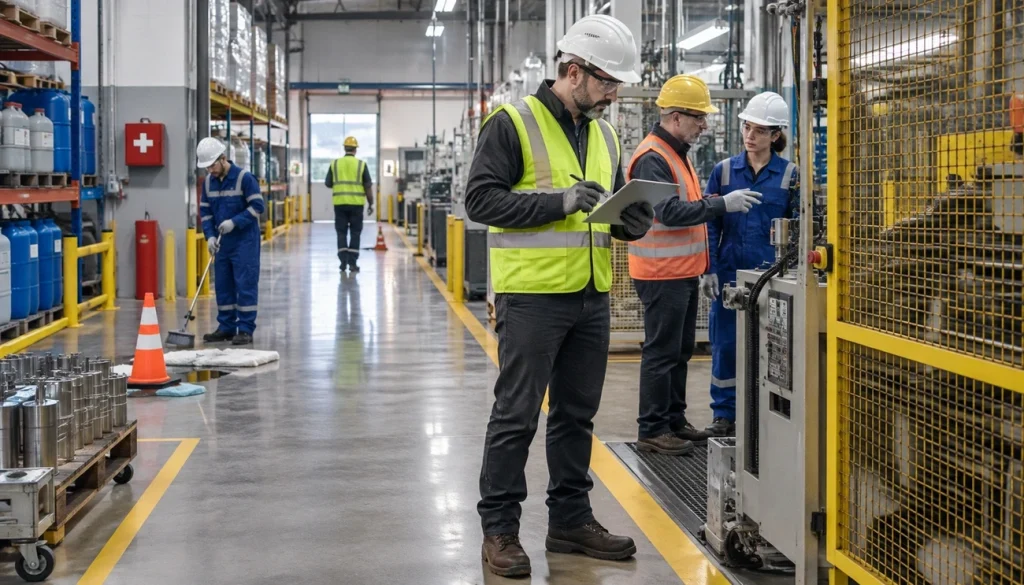
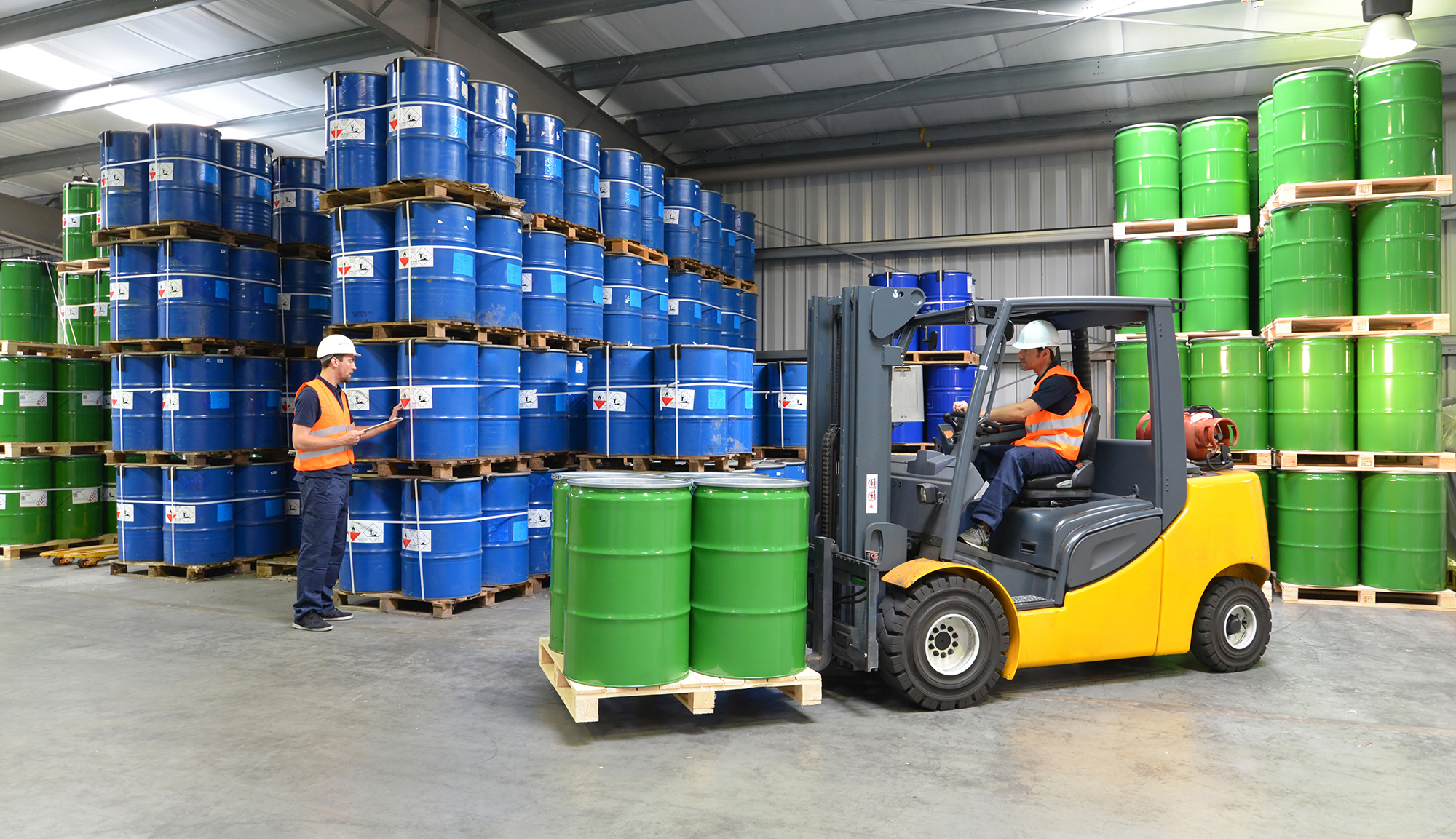
A busy warehouse can change from orderly to dangerous in seconds when a forklift and a pedestrian enter the same space.
Tall storage racks create blind intersections. Pallets temporarily block sightlines. Workers move between picking, packing, and staging areas while forklifts transport loads through the same aisles. At loading docks, pedestrians, lift trucks, trailers, and freight may all converge within a relatively small area.
Even an experienced operator cannot react to a pedestrian they cannot see, and a pedestrian may not recognize how quickly a forklift can approach, stop, turn, or swing at the rear.
Preventing collisions therefore requires more than telling employees to “watch for forklifts.”
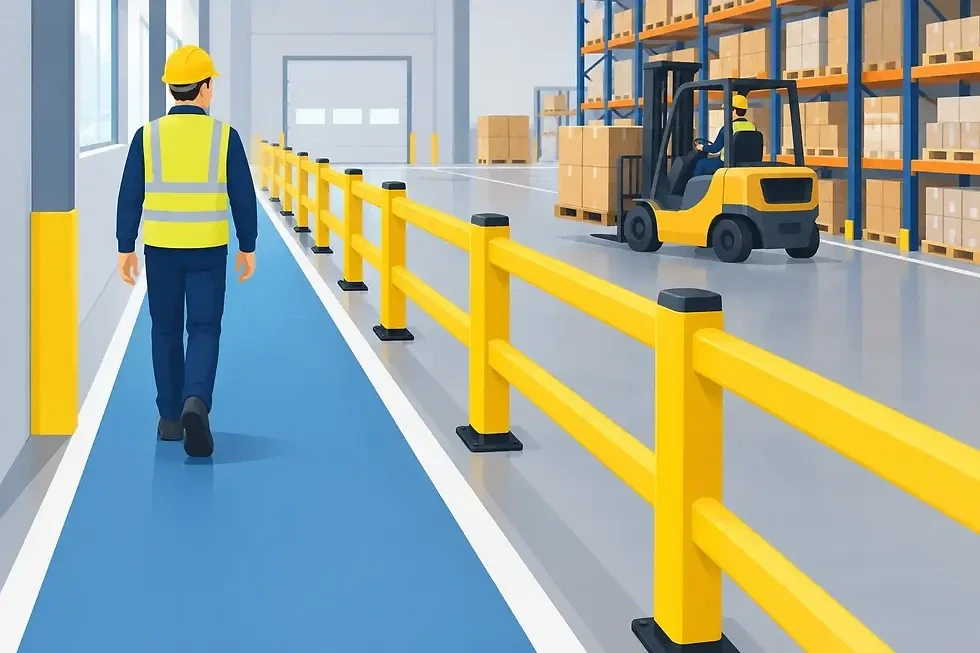
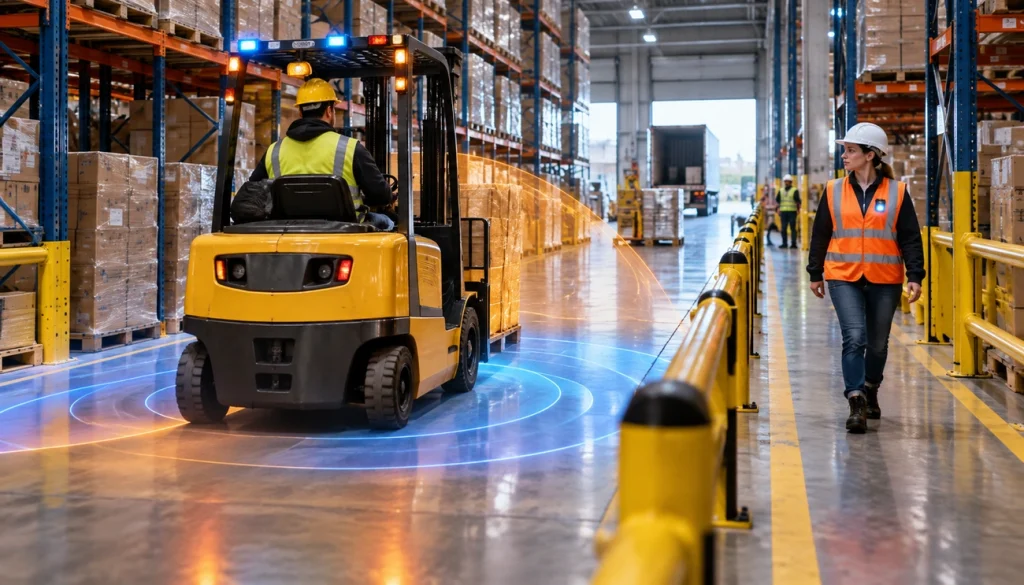
Warehouses need traffic routes designed to separate people from equipment, properly trained operators, clear intersections, effective housekeeping, safe dock procedures, worker awareness, and additional technology where physical controls still leave significant interaction.
The strongest forklift-pedestrian safety programs treat the warehouse as a complete traffic system.
Why Forklift-Pedestrian Collisions Are a Serious Warehouse Hazard
Forklifts are designed to move heavy loads efficiently, but their operating characteristics create hazards that are very different from ordinary road vehicles.
The operator may have reduced forward visibility because of the load. Rear-wheel steering creates a wide tail swing during turns. A loaded forklift cannot necessarily stop quickly, and narrow aisles may leave little room for pedestrians to move away.
At the same time, warehouse employees often work close to active vehicle routes.
Pickers retrieve inventory from rack aisles. Shipping employees cross lanes to check freight. Maintenance personnel enter production areas. Contractors and visitors may be unfamiliar with established traffic patterns.
OSHA recommends separating forklift traffic from pedestrians where possible and using controls such as pedestrian walkways, barriers, mirrors, signs, speed controls, horns, and adequate clearance where shared areas cannot be eliminated. (OSHA Forklift Pedestrian Traffic Guidance)
The goal should be to reduce how often people and forklifts need to depend on last-second awareness.
Start by Mapping Forklift and Pedestrian Traffic
One of the best ways to understand warehouse collision risk is to observe the facility while it is operating.
A floor plan may show where aisles are supposed to be, but it does not necessarily show how employees actually move during a busy shift.
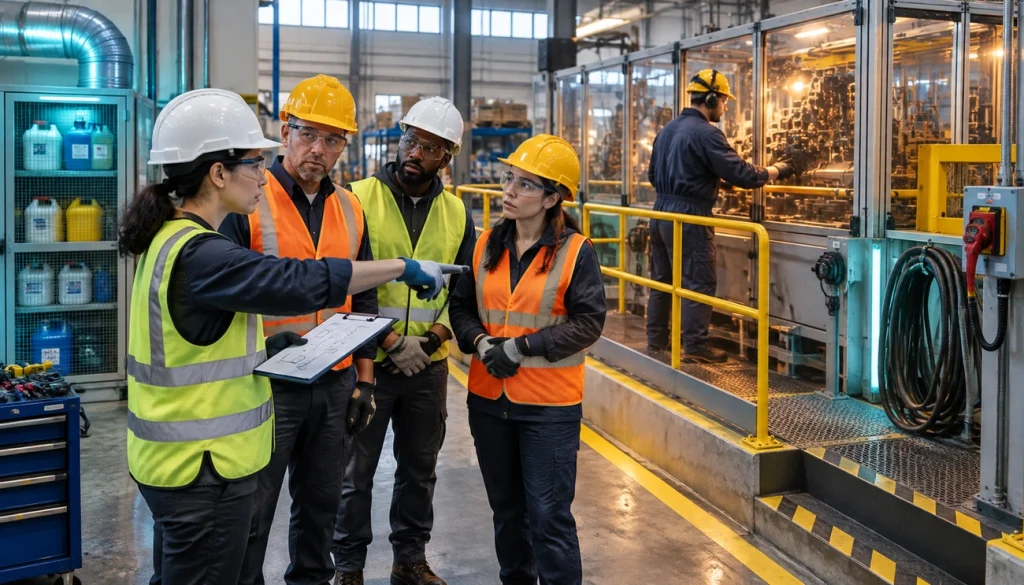
Walk through the warehouse during receiving, picking, replenishment, packing, and shipping. Observe both forklifts and pedestrians.
Look for places where routes overlap naturally.
These often include rack ends, cross aisles, loading docks, battery areas, packing stations, pedestrian doors, staging areas, break-room routes, and entrances to offices or maintenance spaces.
Look at Timing as Well as Location
A crossing that seems quiet at 10:00 a.m. may become heavily congested during shift change or outbound loading.
Traffic studies should therefore consider when interactions occur.
A worker leaving a picking aisle at the same time a forklift enters the cross aisle creates a different risk from two routes that are occupied at different times.
Mapping high-traffic periods helps supervisors understand where additional controls may be needed during specific parts of the shift.
Identify Blind Corners
Warehouse racks can create long, narrow aisles with little visibility at intersections.
A pedestrian may walk toward the end of a rack while a forklift approaches from the cross aisle.
Neither person may see the other until both are very close to the intersection.
Other visibility problems may come from:
Temporary pallets, machinery, walls, doors, stacked product, trailers, containers, or recently added workstations.
The traffic review should consider both permanent and temporary obstructions.
Test the Actual Sightline
Stand where the forklift operator would approach the intersection.
Then stand where the pedestrian would approach.
Ask how early each person can realistically see the other.
If both must enter the intersection before visibility becomes clear, the area deserves stronger controls.
Convex mirrors, signs, horns, reduced speed, and improved lighting can help, but physical separation or redesign may provide stronger protection.
Watch for Obstructed Forklift Views
Loads can create significant forward blind spots.
An operator transporting tall or bulky material may not be able to see clearly in the direction of travel.
Safe operating procedures should account for these conditions rather than assuming the operator always has an unobstructed view.
Pedestrians should also understand an important point:
Seeing the forklift does not mean the operator sees you.
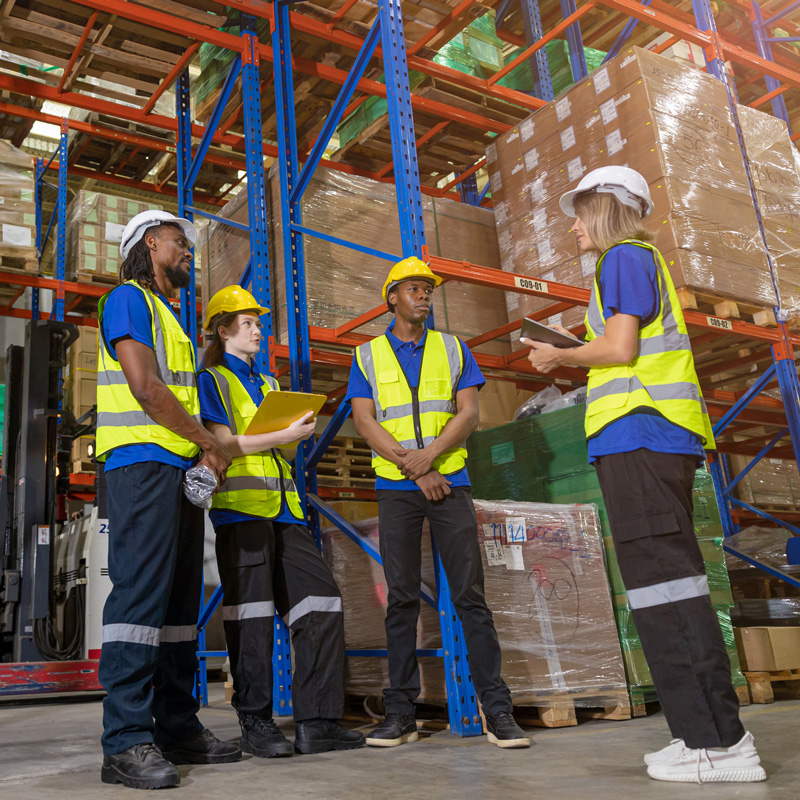
This message should be reinforced during pedestrian safety training.