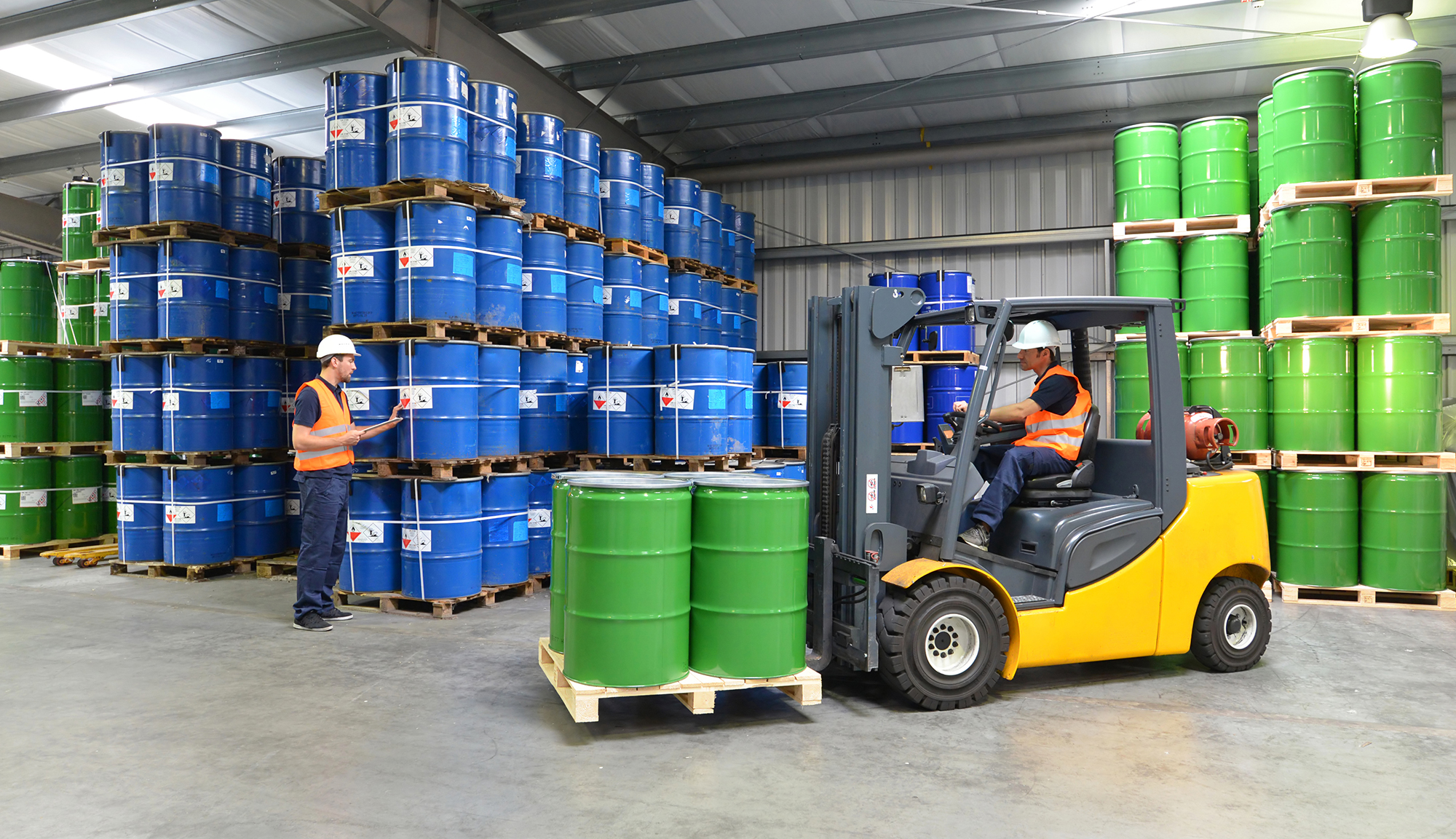
Warehouses are fast-moving environments where people, forklifts, conveyors, storage racks, loading docks, chemicals, and materials all operate in close proximity.

That combination can create serious safety risks if hazards are not identified and controlled consistently.

A blocked aisle can create a trip hazard. A damaged rack can become a falling-object risk. A distracted forklift operator can endanger pedestrians. Poor lifting practices can lead to musculoskeletal injuries, while inadequate housekeeping can contribute to slips, fires, and emergency-access problems.

That is why warehouse safety should be managed as an ongoing system rather than a once-a-year inspection.

A practical warehouse safety checklist helps employers review the areas most likely to create injuries, equipment damage, or operational disruption.

Start With a Warehouse Hazard Assessment

Before building a checklist, employers should understand what hazards actually exist in the facility.

OSHA identifies powered industrial trucks, material handling, slips and falls, ergonomics, hazardous chemicals, and other workplace conditions as common warehousing concerns.

The assessment should consider the entire operation, including:

Receiving, storage, picking, packing, loading docks, forklift routes, battery charging, conveyors, maintenance areas, pedestrian walkways, emergency exits, and outdoor yard operations.

The goal is not simply to create a list of regulations.

It is to identify where employees are most likely to be injured and whether existing controls are working.

Arbill’s EHS safety assessments can help employers evaluate physical hazards, PPE, training, written programs, and operational safety practices across warehouse environments.

Check Forklift Operations

Powered industrial trucks are one of the most important warehouse safety areas.

Forklifts may operate within a few feet of pedestrians, storage racks, loading docks, doors, and other equipment.

That means safe operation requires more than simply having licensed operators.

Verify Operator Training

Only trained and authorized employees should operate forklifts.

Operators need training on both the vehicle and the workplace conditions where they will use it.

A worker who understands a forklift in an open yard may still need additional instruction before operating safely in narrow aisles or congested indoor areas.

Inspect Forklifts Before Use

Operators should examine the truck before operation and identify conditions that could make it unsafe.

Check items such as:

Tires, forks, controls, brakes, steering, warning devices, lights, seat belts, and visible damage.

Unsafe equipment should be removed from service until it is repaired.

Control Speed

Warehouse forklifts should operate at a speed appropriate for visibility, traffic, surface conditions, and congestion.

Operators should slow down around corners, cross aisles, slippery surfaces, doorways, and pedestrian areas.

A production target should never encourage drivers to move faster than conditions allow.

Separate Pedestrians From Forklifts

Pedestrian interaction is one of the largest risks in many warehouses.

Whenever practical, employers should create separation between people and powered equipment.

This may include:

Marked pedestrian lanes, physical barriers, designated crossings, mirrors, warning lights, stop signs, and speed controls.

Improve Visibility

Blind corners and rack intersections deserve extra attention.

Forklift operators should use horns where visibility is obstructed.

Pedestrians should avoid walking directly behind parked or moving equipment.

Where workers need greater conspicuity, high-visibility apparel may also support pedestrian safety.

Arbill’s guide to high-visibility clothing and when it is required explains how visibility PPE can be selected around traffic exposure and workplace conditions.


Explore Our Solutions!
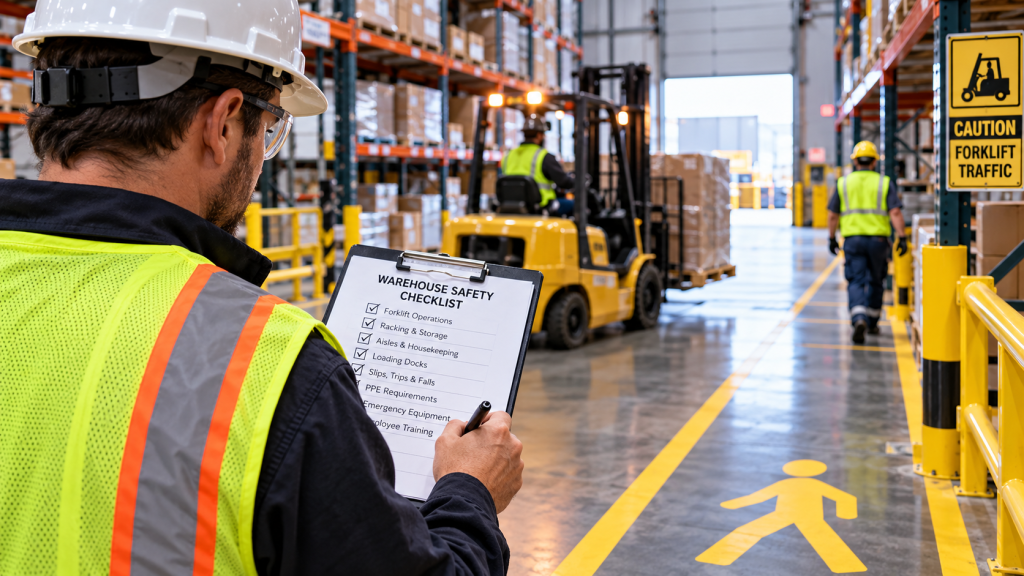
Warehouse safety inspection with a supervisor reviewing a checklist near forklifts, storage racks, marked walkways, and workers in high-visibility PPE

Inspect Storage Racks

Warehouse racking carries significant loads.

Damage from forklift contact, overloading, corrosion, or improper installation can create collapse hazards.

Employers should inspect racks routinely for:

Bent uprights, damaged beams, missing connectors, unstable loads, impact damage, and overloaded shelving.

OSHA recommends isolating affected areas immediately when storage racks are damaged.

Protect Rack Uprights

Rack guards can help reduce damage from incidental forklift contact.

However, they do not eliminate the need for safe driving.

If one section is struck repeatedly, review the aisle layout and traffic pattern rather than simply replacing damaged components over and over.

Store Materials Safely

Unstable materials can fall onto employees or damage equipment.

Products should be stacked evenly and securely.

Heavier items should generally be placed on lower or middle shelves when practical.

Loose materials should be arranged so they cannot slide or collapse.

Employees should also respect rack load capacities.

Overloading shelves can create serious structural hazards even if the rack looks stable.

Keep Aisles Clear

Warehouse aisles serve several purposes.

They allow pedestrians and material-handling equipment to move safely while also providing emergency access.

Pallets, boxes, shrink wrap, carts, tools, and temporary inventory should not reduce aisle clearance unnecessarily.

Permanent aisles should remain clearly defined where powered equipment operates.

Blocked walkways can create trip hazards while forcing employees into forklift traffic lanes.

Control Slips, Trips, and Falls

Warehouse environments change constantly.

Products are loaded and unloaded.

Plastic wrap and packaging fall to the floor.

Water is tracked through entrances.

Leaks develop beneath equipment.

These small changes can quickly create slip or trip hazards.

Maintain Floors

Floors should be kept in safe condition.

Repair potholes, broken concrete, damaged transitions, and other irregularities that can affect both pedestrians and material-handling equipment.

Clean Spills Promptly

Water, oil, chemicals, or other liquids should be removed as quickly as practical.

If a leak repeatedly creates the same hazard, investigate and correct the source.

Control Packaging Waste

Plastic wrap, straps, cardboard, and pallet debris are common warehouse trip hazards.

Waste containers should be positioned close enough to work areas that employees can dispose of materials without leaving them on the floor.

Arbill’s guide to workplace slips, trips, and falls provides additional prevention strategies for walking-working surfaces.

Review Loading Dock Safety

Loading docks combine elevation changes, trailers, forklifts, pedestrians, dock plates, and moving vehicles.

That makes them one of the highest-risk areas in many warehouses.

Inspect Dock Plates

Dock plates should be appropriate for the load and properly positioned.

Damaged or unstable plates can create fall and equipment hazards.

Protect Dock Edges

Workers and forklift operators should stay clear of unprotected edges.

Visual markings, barriers, and safe operating practices can help reduce the risk of equipment moving off the dock.

Prevent Trailer Movement

Trailers should be secured appropriately before loading or unloading begins.

Facilities should use established procedures to prevent premature trailer movement.

”As long as people go to work, we have an opportunity to help protect them.

Julie Copeland
Arbill CEO

Julie Copeland Arbill CEO

Evaluate Manual Material Handling

Warehouse workers may repeatedly lift, lower, carry, push, and pull materials throughout the shift.

Over time, poor handling methods can contribute to back, shoulder, hand, and other musculoskeletal injuries.

Reduce Manual Lifting Where Possible

Use:

Conveyors, lift tables, pallet jacks, carts, hoists, or other mechanical aids where practical.

The best ergonomic control often removes the need for workers to perform the highest-risk movement in the first place.

Review Load Weight and Size

A relatively light box can still create ergonomic problems if it is awkward, oversized, or lifted repeatedly.

The assessment should consider frequency, reach distance, twisting, posture, and carrying distance rather than weight alone.

Train Employees on Safe Lifting

Employees should understand how to approach loads safely.

They should avoid twisting while carrying materials and ask for assistance when loads cannot be handled safely by one person.

Training should reflect actual warehouse tasks rather than generic lifting demonstrations.

Supervisors should also watch for workflow problems that encourage employees to rush or take shortcuts.

Inspect Conveyors

Conveyors can create pinch points, entanglement hazards, and unexpected movement.

Guards should remain in place around dangerous moving components.

Employees should not reach into operating conveyors to clear jams or retrieve fallen products.

Use Lockout/Tagout When Required

When servicing or clearing equipment exposes workers to hazardous energy, appropriate energy-control procedures must be followed.

Arbill’s guide to lockout/tagout best practices for manufacturing facilities provides a useful framework for identifying energy sources, isolating equipment, and verifying safe conditions.

Review Battery-Charging Areas

Forklift battery charging introduces additional hazards.

These areas may involve electrical energy, chemical exposure, lifting hazards, and fire risk.

Employers should make sure charging stations are positioned properly and kept free from ignition hazards.

Appropriate fire protection equipment should remain available.

Employees servicing batteries may also need suitable eye, face, hand, or other PPE depending on the task.

Evaluate Chemical Storage

Warehouses may store cleaning chemicals, maintenance products, batteries, fuels, aerosols, or other hazardous materials.

Where hazardous chemicals are present, employers need an effective hazard communication program.

Safety Data Sheets should be accessible, containers should be properly labeled, and employees should understand the hazards associated with chemicals in their work area.

Spill-response procedures should also reflect the substances stored in the facility.

Maintain Emergency Eyewash Where Required

If employees can be exposed to injurious corrosive materials, emergency flushing equipment may be necessary.

Battery servicing and chemical handling are common warehouse activities where employers should evaluate this need.

Eyewash equipment must remain accessible and functional.

It should never become blocked by pallets, boxes, or stored inventory.

Review PPE Requirements

Different warehouse tasks may require different protective equipment.

Possible PPE includes:

Safety glasses, gloves, hearing protection, protective footwear, high-visibility apparel, chemical PPE, and respiratory protection.

A single warehouse employee may perform several different tasks during the day.

PPE selection should therefore be based on actual job hazards rather than job title alone.

Inspect Emergency Exits

Emergency exits must remain accessible.

Warehouses can quickly accumulate products and pallets near doors, electrical panels, fire extinguishers, or emergency routes.

Storage should never block escape paths.

Employees should know how to reach exits even when their normal work area is in the center of a large facility.

Maintain Fire Protection Equipment

Warehouses often contain large quantities of combustible material.

Cardboard, wooden pallets, packaging, plastics, and stored products can contribute to fire load.

Fire extinguishers, sprinkler systems, alarms, and emergency exits should remain accessible and properly maintained.

Storage height and arrangement should also avoid interfering with sprinkler performance or emergency equipment.

Control Heat Exposure

Warehouses can become extremely hot during warmer months, particularly in facilities without air conditioning.

Loading docks, trailers, mezzanines, and outdoor yards may create additional exposure.

Employers should evaluate heat conditions and provide appropriate controls such as:

Water, rest, cooling areas, ventilation, and acclimatization.

Heat safety should be included in seasonal warehouse planning rather than addressed only after workers begin reporting symptoms.

Review Cold Storage Hazards

Refrigerated warehouses create a different environmental challenge.

Workers may need insulated clothing and scheduled warm-up periods.

Condensation can also create slippery floors when workers move between temperature zones.

PPE should allow workers to remain warm without preventing safe movement or interfering with other required equipment.

Inspect Ladders and Elevated Access

Warehouse employees sometimes need to access products or equipment above floor level.

Chairs, pallets, boxes, or forklift forks should never be treated as substitutes for appropriate access equipment.

Ladders should be inspected before use and removed from service when damaged.

Mezzanines, platforms, and elevated work areas also need appropriate fall protection.

Never Lift Workers on Forklift Forks

Forklift forks are designed to handle materials, not serve as improvised personnel platforms.

Workers should not stand directly on forks or pallets to reach elevated storage.

Use equipment specifically designed and approved for personnel elevation when work must be performed at height.

Improve Warehouse Lighting

Lighting affects both productivity and safety.

Poor visibility can make it difficult for employees to identify:

Pedestrians, damaged racks, spills, floor hazards, labels, and vehicle movement.

Lighting should be adequate throughout aisles, storage areas, loading docks, stairways, maintenance areas, and outdoor yards.

Burned-out fixtures should be addressed promptly.

Check Dock and Yard Traffic

Warehouse safety does not end at the building door.

Trucks, trailers, delivery vehicles, forklifts, and employees may interact in outdoor yards.

Traffic routes should be clearly defined.

Drivers should know where to stop, park, load, unload, and wait.

Pedestrian walking areas should be separated from vehicle traffic wherever practical.

Include Temporary Workers

Temporary and seasonal employees are common in warehouse operations.

They may have less familiarity with the facility, equipment, and traffic patterns.

Employers should ensure that temporary workers receive relevant safety training before exposure to hazards.

Training should not be reduced simply because the worker will be at the facility for a short period.

Inspect Automated and Robotic Systems

Modern warehouses increasingly rely on robotics, automated storage systems, conveyors, and autonomous equipment.

Automation can reduce some manual hazards while introducing new interaction risks.

Employers should evaluate:

Restricted zones, guarding, sensors, maintenance procedures, lockout/tagout requirements, and pedestrian interaction.

Employees should understand where automated equipment may move and how to respond when it malfunctions.

Review Noise Exposure

Conveyors, forklifts, compressors, dock operations, packaging equipment, and other machinery can create elevated noise levels.

If employees regularly need to raise their voices to communicate, the workplace may need additional noise evaluation.

Noise monitoring should determine whether hearing protection or a formal hearing conservation program is necessary.

Keep Safety Equipment Accessible

Emergency and safety equipment can become hidden behind inventory.

Routine inspections should confirm clear access to:

Fire extinguishers, first aid supplies, eyewash stations, emergency showers, electrical panels, spill kits, and exits.

A warehouse may have all the required equipment and still be unprepared if workers cannot reach it quickly.

Review First Aid Readiness

First aid supplies should match the workforce and warehouse hazards.

Kits should be regularly inspected and restocked.

High-use items may need more frequent monitoring.

Employers should also confirm that workers know where first aid supplies are located and how to summon emergency assistance.

See Our Safety Services!
Warehouse Safety Equipment & PPE for 3PL Operations

Use Near Misses as Safety Data

A forklift does not need to strike someone for the event to matter.

A falling box does not need to cause injury before storage practices are reviewed.

A worker who almost slips on shrink wrap has identified a hazard.

Near-miss reporting can help employers detect problems before a more serious incident occurs.

Workers should feel comfortable reporting these events without assuming they will automatically be blamed.

Review Safety Culture

Warehouse safety depends on daily decisions.

Employees notice whether supervisors correct hazards or ignore them when production is busy.

If workers are expected to move faster than conditions allow, they may take shortcuts.

If reported hazards are never fixed, reporting will eventually stop.

Arbill’s guide on how to improve safety culture in industrial workplaces explains how leadership, employee participation, hazard reporting, and corrective action influence workplace safety performance.

Use the Checklist as an Operating Tool

A warehouse safety checklist should not exist only for audits.

Supervisors can use shorter daily or weekly inspections to identify changing conditions.

More detailed periodic assessments can evaluate larger program issues.

The checklist should reflect the actual warehouse.

A small distribution facility may have different priorities from a highly automated fulfillment center or refrigerated warehouse.

A Practical Warehouse Safety Checklist

Employers should be able to answer yes to questions such as:

Are forklift operators properly trained and authorized?

Are forklifts inspected before operation?

Are pedestrians separated from material-handling equipment where practical?

Are storage racks undamaged and within capacity?

Are materials stacked securely?

Are aisles and emergency exits clear?

Are floors clean and free of trip hazards?

Are loading docks protected?

Are conveyors guarded and maintained?

Are lockout/tagout procedures available where required?

Are chemicals labeled and SDSs accessible?

Are appropriate PPE and first aid supplies available?

Are emergency equipment and fire protection systems accessible?

Are ladders and elevated work areas safe?

Are temporary workers trained?

Are reported hazards corrected promptly?

The exact checklist should be customized to the facility.

Conclusion

A safe warehouse depends on much more than forklift rules.

Warehouse operations combine material handling, storage, pedestrian traffic, lifting, conveyors, loading docks, chemicals, environmental conditions, and changing inventory.

That creates a workplace where hazards can appear quickly.

Effective employers manage those risks through regular inspections, trained workers, safe equipment, clear traffic routes, stable storage, good housekeeping, appropriate PPE, and fast corrective action.

OSHA’s current warehousing guidance identifies powered industrial trucks, material handling, slips and falls, chemical hazards, ergonomics, and other operational risks as major areas for employers to address.

A warehouse safety checklist helps turn those responsibilities into routine action.

When employers use the checklist to identify and correct hazards instead of simply completing paperwork, it becomes a practical tool for protecting workers and keeping warehouse operations moving safely.

Request a Safety Assessment

Recent Posts

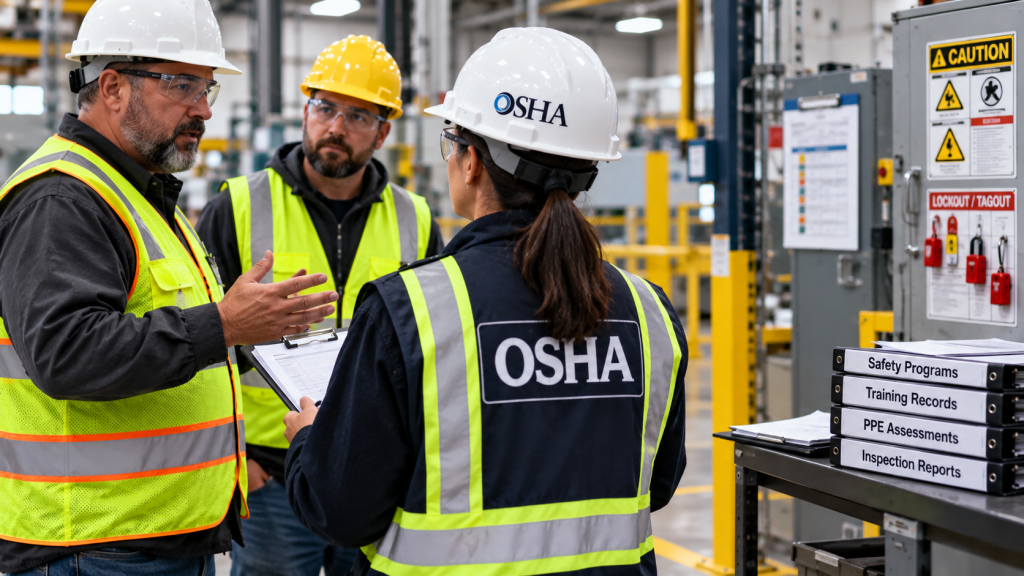
OSHA safety inspection with an inspector reviewing workplace conditions, safety records, lockout:tagout procedures, and employee compliance in an industrial facility
How to Prepare for an OSHA Safety Inspection

How to Prepare for an OSHA Safety Inspection

Warehouse safety inspection with a supervisor reviewing a checklist near forklifts, storage racks, marked walkways, and workers in high-visibility PPE
Warehouse Safety Checklist for Employers

Warehouse Safety Checklist for Employers

Flame Resistant Clothing
Everything You Need to Know About FR (Flame-Resistant) Clothing

Everything You Need to Know About FR (Flame-Resistant) Clothing

Lockout Tagout Electrical Consulting
Workplace Slips, Trips, and Falls: Prevention Strategies That Work

Workplace Slips, Trips, and Falls: Prevention Strategies That Work

Winter job site safety with workers in high-visibility clothing walking through snow and ice near heavy construction equipment
How Winter Weather Impacts Job Site Safety

How Winter Weather Impacts Job Site Safety

  • Previous ProjectHow to Prepare for an OSHA Safety Inspection

  • Next ProjectEverything You Need to Know About FR (Flame-Resistant) Clothing

CUSTOMER SERVICE

800-523-5367

CONTACT US

Complete the short form below and an Arbill representative will get back to you within 24 hours.
* Required Fields

    ARBILL RESPECTS YOUR PRIVACY AND YOUR INFORMATION: By submitting the form above you agree to receiving emails from Arbill. Your submitted information is NEVER shared. You may unsubscribe at any time via the "unsubscribe" link in our emails. You can view our Privacy Policy HERE.