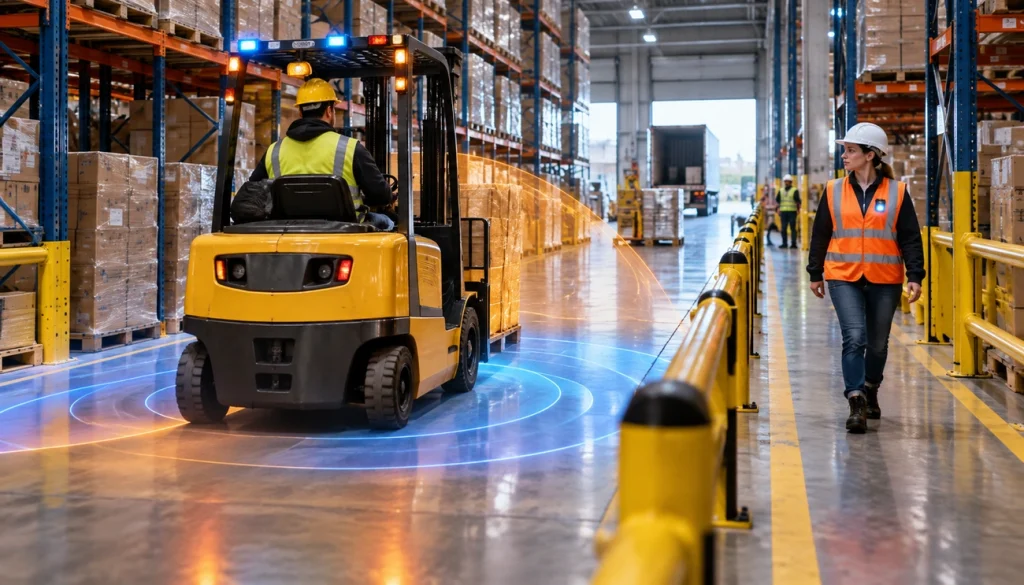
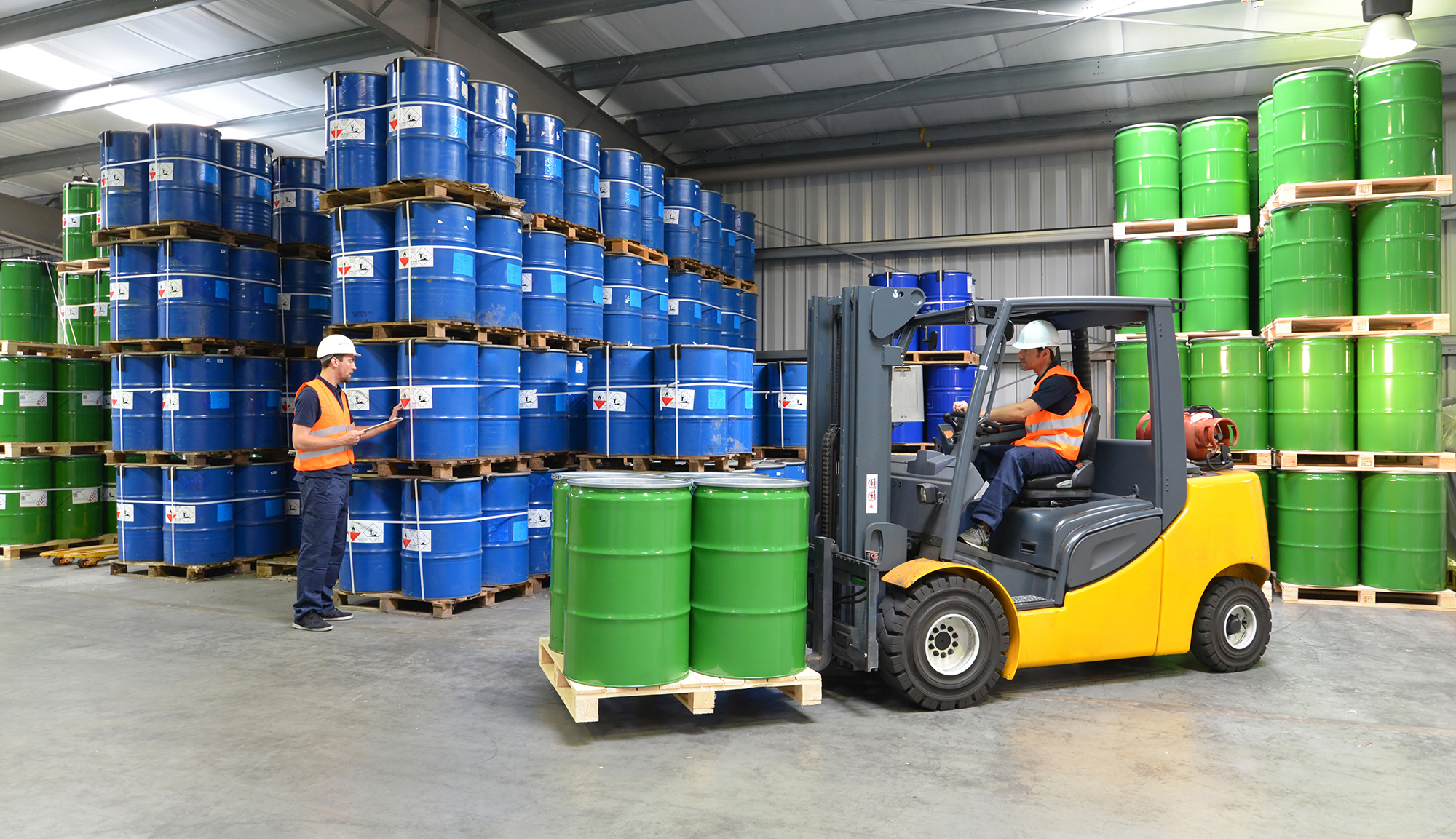
Forklifts are essential to warehouses, manufacturing plants, distribution centers, loading docks, and other industrial facilities.

They are also large, heavy pieces of mobile equipment that frequently operate only a few feet from people on foot.

That combination creates a difficult safety challenge.

An operator may have limited visibility around a load. A pedestrian may step into an aisle without seeing an approaching truck. Storage racks can create blind intersections. Noise from production equipment can make horns harder to hear, while temporary pallets or materials can change traffic patterns that normally feel familiar.

Traditional controls such as training, marked walkways, barriers, warning lights, mirrors, horns, and speed limits remain fundamental.

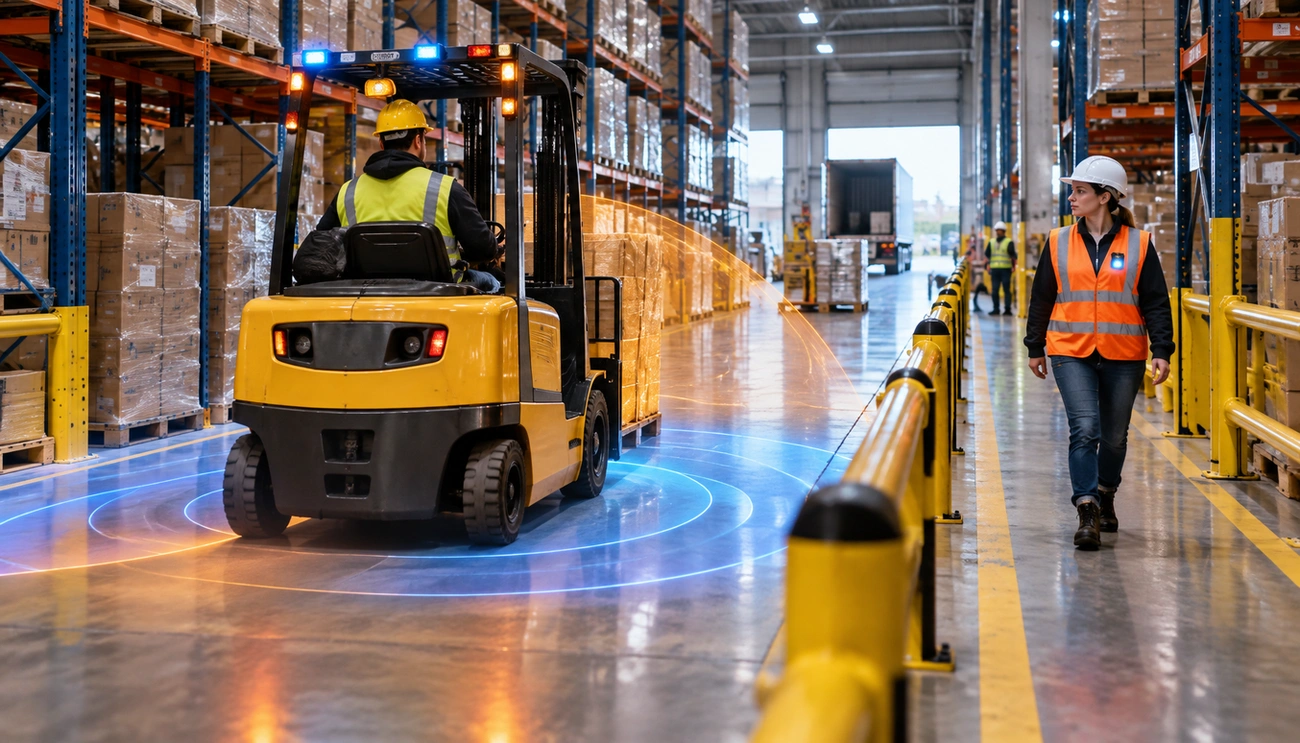
Forklift proximity detection systems add another layer by providing real-time warnings when pedestrians and powered equipment move dangerously close to one another.

Rather than relying solely on a worker seeing or hearing a forklift, these systems can actively detect proximity and alert the people involved before contact occurs.

Why Forklift and Pedestrian Interaction Is So Dangerous

Forklifts operate differently from passenger vehicles.

They may have limited forward visibility when carrying loads, rear steering that creates a wide tail swing, and stopping characteristics that depend on speed, load, surface conditions, and truck design.

Pedestrians may also underestimate how quickly a forklift can enter their path.

A worker may step out from behind storage racks, cross an aisle while focused on another task, or assume the operator has already seen them.

OSHA’s powered industrial truck guidance emphasizes that forklift traffic should be separated from pedestrians where possible and recommends controls such as designated walkways, barriers, horns, mirrors, signs, and reduced speeds in obstructed areas. (OSHA Forklift Pedestrian Safety)

Proximity detection does not replace those controls.

It strengthens them by adding a warning that responds to what is actually happening in the work area.

What Is a Forklift Proximity Detection System?

A forklift proximity detection system uses sensors or wearable devices to recognize when a pedestrian, another vehicle, or another tagged object enters a defined area around powered equipment.

Depending on the technology, the system may alert:

The forklift operator, the pedestrian, or both.

Warnings may be delivered through:

Vibration, lights, sound, or a combination of alert methods.

Some systems can also help safety teams understand where proximity events occur repeatedly.

The purpose is to give people additional time to recognize the hazard and respond before a collision.

How Proximity Detection Adds Another Layer of Awareness

Traditional forklift safety depends heavily on human attention.

Operators are trained to look in the direction of travel, slow down at intersections, sound horns around blind corners, and maintain safe clearance from pedestrians.

Pedestrians are expected to remain alert and stay within designated walking areas.

These practices remain necessary.

The challenge is that people can become distracted, visibility can change, and environmental conditions can make traditional warnings less effective.

A proximity system adds a technology-based warning that does not depend exclusively on eye contact.

Blind Corners Are a Major Use Case

Warehouses and manufacturing facilities frequently contain:

Tall storage racks, production machinery, stacked material, walls, doors, and temporary inventory.

Any of these can block the operator’s view.

A forklift may approach one side of a rack intersection at the same time a pedestrian approaches the other.

Neither person may see the other until they enter the intersection.

Mirrors and horns can help, but proximity detection can provide another warning before direct visual contact occurs.

This is especially valuable where traffic patterns are busy or frequently change.
Explore Our Solutions!
How Forklift Proximity Detection Systems Help Prevent Workplace Accidents

Forklift Loads Can Reduce Visibility

Operators sometimes travel with loads that partially block their forward view.

The operator may need to travel in reverse or reposition to maintain visibility.

Even with proper operating practices, the load can create additional blind areas.

Pedestrians may also assume the operator sees them because they can see the forklift.

That assumption is dangerous.

A proximity system can supplement the operator’s visual awareness by detecting a tagged pedestrian even when the worker is difficult to see.

Noise Can Make Audible Warnings Less Effective

Industrial environments are often loud.

Conveyors, machinery, compressors, impact tools, ventilation systems, vehicles, and production equipment can create constant background noise.

A pedestrian may not hear a forklift horn clearly.

An operator may also have hearing protection that reduces the ability to identify certain environmental sounds.

This is one reason proximity systems often use multiple warning methods.

A vibration or light alert can supplement an audible warning rather than depending only on sound.

TruSense Forklift Adds Real-Time Proximity Alerts

Arbill’s TruSense™ Forklift is designed to increase awareness between forklifts and pedestrians through real-time proximity sensing.

Arbill describes the system as using small wearable devices for pedestrians together with sensors on powered equipment. When the system detects a pedestrian entering the defined proximity zone, it can provide immediate alerts to increase awareness before a potential collision. Arbill’s current safety materials describe alerts at approximately six feet and note that the technology distinguishes pedestrian and forklift movement when determining warnings.

The system is intended to work alongside existing forklift safety procedures rather than replace them.

Wearable Alerts Help the Pedestrian Too

Traditional forklift warning systems are often centered on the vehicle.

Horns, flashing lights, backup alarms, and mirrors help the operator communicate or improve awareness.

A wearable proximity device changes the model by giving the pedestrian a direct warning.

If the worker receives a vibration or other alert, they can stop, look for the approaching equipment, and move away from the traffic path.

This creates an additional opportunity for action before the operator and pedestrian reach the same point.

Operators Also Benefit From Additional Warning

The operator may be focused on:

The load, turning clearance, storage racks, dock edges, or another piece of mobile equipment.

A proximity warning can draw attention to a pedestrian who may otherwise be outside the operator’s immediate field of view.

This does not give the driver permission to rely on technology instead of proper observation.

The operator must still follow safe driving practices.

The system simply adds another source of information.

Proximity Detection Is Particularly Useful in High-Traffic Areas

Not every part of a facility carries the same forklift-pedestrian risk.

The strongest applications often occur where traffic repeatedly overlaps.

These areas may include:

Loading docks, cross aisles, production entrances, shipping areas, blind rack intersections, staging locations, and pedestrian crossings.

Employers should identify where forklift and pedestrian interaction occurs most frequently before deciding where to deploy technology.

Arbill’s guide to forklift and pedestrian safety provides additional guidance on traffic separation, visibility, safe operating practices, and technology.

”As long as people go to work, we have an opportunity to help protect them.

Julie Copeland
Arbill CEO

Julie Copeland Arbill CEO

Temporary Storage Can Change the Risk

Facility traffic plans can look excellent on paper but change quickly in real operations.

A pallet placed near an intersection can block visibility.

Seasonal inventory may extend beyond normal storage areas.

Maintenance equipment may temporarily narrow an aisle.

Construction activity may reroute pedestrians.

These changes can create blind spots that were not present when the original traffic plan was developed.

Proximity detection can provide an additional layer during these changing conditions, although the underlying layout problem should still be corrected where practical.

Technology Does Not Replace Pedestrian Separation

Physical separation remains one of the strongest controls for forklift-pedestrian interaction.

Where practical, facilities should use:

Dedicated pedestrian walkways, barriers, railings, controlled crossings, and restricted equipment zones.

A sensor alert is not a reason to allow unnecessary pedestrian traffic through active forklift routes.

The stronger approach is to reduce the interaction first and then use proximity technology to address remaining exposure.

Proximity Detection Does Not Replace Operator Training

Forklift operators still need proper training and evaluation.

They must understand:

Truck characteristics, load handling, stability, visibility, steering, pedestrian interaction, workplace conditions, and applicable operating rules.

Drivers should still slow down around blind intersections, use warning devices appropriately, maintain clear visibility, and yield where required.

Technology should support trained behavior.

It should never become a shortcut around it.

Horns, Mirrors, and Warning Lights Still Matter

Proximity detection is only one part of forklift safety.

Traditional safety devices remain useful because each addresses a different part of the risk.

Mirrors improve visibility at intersections.

Horns communicate approach.

Warning lights increase vehicle conspicuity.

Barriers separate traffic.

Floor markings define routes.

Proximity sensors provide real-time warning when people and vehicles become close.

The strongest program combines these controls rather than choosing only one.

Detection Can Help With Human Attention Gaps

Even experienced employees can miss hazards.

Repetitive work can lead to familiarity.

A worker may cross the same forklift aisle hundreds of times without incident and gradually pay less attention to the risk.

Operators may also become accustomed to specific routes and assume pedestrian traffic will behave predictably.

Proximity detection provides an active warning when conditions depart from that expectation.

This can help interrupt routine behavior before it becomes an incident.

Alert Quality Matters

A system that generates constant unnecessary warnings may quickly lose effectiveness.

Workers may begin ignoring alerts if they occur too frequently in situations that do not require action.

This phenomenon is often called alarm fatigue.

Employers should therefore evaluate how the system behaves in the actual facility.

Consider:

Aisle width, forklift speed, pedestrian density, detection range, traffic patterns, and frequency of alerts.

A pilot can help determine whether settings and deployment provide useful warnings without overwhelming workers.

Worker Training Is Still Necessary

Employees need to understand what each alert means.

A proximity system should not simply be installed without communication.

Pedestrians should know:

What causes the alert, what they should do when it activates, where high-risk traffic zones are, and whether different alert patterns represent different conditions.

Operators need similar instruction.

Training should make clear that the technology is an additional safety layer—not proof that the path is clear.

Employees Should Know the Limitations

Every technology has operating limits.

Workers should understand how:

Device placement, battery condition, charging, signal range, damage, or incorrect use may affect system performance.

Employees also need to know what to do when a device is unavailable or malfunctioning.

Forklift operations should not suddenly become unsafe because one electronic device loses power.

Existing traffic controls and safe operating procedures must remain functional independently.

Proximity Systems Should Be Inspected

Technology-based safety equipment needs routine checks just like physical safety equipment.

Employers should establish procedures for verifying:

Device condition, battery status, attachment, alert function, and any other manufacturer-recommended checks.

Damaged or malfunctioning devices should be reported promptly.

Responsibility should also be clear.

Workers need to know who replaces equipment, who handles charging, and who investigates repeated system failures.

Deployment Should Start With the Highest-Risk Areas

Facilities do not necessarily need to introduce proximity technology across every forklift and worker simultaneously.

A focused pilot can provide useful information first.

Start by identifying areas where:

Pedestrians and forklifts frequently intersect, visibility is limited, near misses have occurred, or physical separation is difficult.

Deploying the system in these locations can help the organization understand worker response and operational fit before scaling.

Arbill’s broader safety technology solutions show how real-time sensing can be incorporated into a larger workplace safety strategy.

Near-Miss Data Can Guide Deployment

Incident records alone may not reveal the facility’s highest forklift risk.

A site may have no recent pedestrian injuries while employees report frequent close calls.

Those near misses deserve attention.

Review:

Driver reports, employee concerns, rack strikes, equipment damage, traffic conflicts, and supervisor observations.

This information can help employers identify locations where proximity sensing could provide the greatest value.

Repeated Alerts Can Reveal Layout Problems

One of the most useful aspects of connected safety technology is the possibility of identifying patterns.

If the same intersection repeatedly creates proximity alerts, the issue may not simply be employee behavior.

The facility may need to examine:

Rack placement, pedestrian routes, aisle width, mirror positioning, speed limits, barriers, or traffic flow.

Technology becomes more valuable when it leads to physical workplace improvement rather than simply warning employees about the same hazard indefinitely.

See Our Safety Services!
Forklift Safety

Use Data as a Leading Safety Indicator

Traditional injury metrics are lagging indicators.

They tell employers that an incident has already occurred.

Proximity events can provide a more proactive measure.

A facility can examine whether certain zones produce repeated close interactions before those interactions become injuries.

Arbill’s guide to leading vs. lagging safety indicators explains why proactive measures such as hazard observations, corrective actions, and near-miss information can provide earlier warning than injury rates alone.

Do Not Judge Success Only by Alert Counts

A declining number of proximity alerts can be encouraging, but the number needs context.

Alerts could decline because:

Traffic controls improved, pedestrian routes changed, forklift speeds decreased, or workers changed behavior.

Those are positive outcomes.

But alerts could also decline because employees are not wearing devices consistently or equipment is not functioning properly.

Safety teams should examine alert trends alongside observations, device compliance, near-miss reports, and workplace changes.

Proximity Technology Can Support Safety Culture

Employees often respond positively when safety improvements address risks they encounter every day.

A worker who frequently crosses an active forklift area understands the exposure directly.

Introducing an additional warning system can demonstrate that management takes that concern seriously.

However, worker involvement should begin before deployment.

Ask employees where they experience close calls and which traffic areas feel most difficult.

Their knowledge can help determine where the technology will provide the greatest benefit.

Avoid Using the System as a Substitute for Reporting

Workers should still report:

Near misses, blocked walkways, damaged barriers, speeding, visibility problems, and unsafe traffic patterns.

The sensor should not become the only source of forklift safety information.

Employee observations provide context that electronic alerts may not capture.

For example, a worker may explain that repeated close interactions occur because a temporary storage area forces pedestrians into the forklift lane.

That information supports a stronger corrective action.

Smart Safety Technology Is Becoming More Common

Forklift proximity systems are part of a broader shift toward connected workplace safety.

Wearable devices, heat monitoring, connected gas detection, smart PPE, and sensor-based equipment are increasingly being used to provide safety information in real time.

Arbill’s article on how smart PPE is changing workplace safety explains how connected systems can help employers recognize certain hazards earlier rather than relying only on events that have already happened.

The same principle applies to forklifts.

The goal is earlier awareness.

Forklift Technology Is Part of a Larger 2026 Safety Trend

Industrial workplaces are increasingly combining physical controls with real-time data and connected technology.

Arbill’s 2026 industrial safety trends identify real-time forklift and pedestrian technology as part of this broader movement toward proactive safety.

The technology is most effective when it strengthens an existing safety program.

It should support—not compete with—training, traffic engineering, inspections, worker feedback, and corrective action.

How to Evaluate a Proximity Detection System

Before adopting a system, employers should first define the problem they want to solve.

Ask:

Where are forklift-pedestrian interactions most frequent?

Where are visibility problems greatest?

Where have near misses occurred?

Can pedestrians be physically separated instead?

Will the system work with the existing forklift fleet?

How will workers receive alerts?

Who will maintain the devices?

How will employees be trained?

How will effectiveness be measured?

These questions help employers avoid purchasing technology without a clear safety objective.

Run a Pilot Before Expanding

A controlled pilot can show how the technology performs in the real workplace.

Choose one or two higher-risk areas.

Include representative operators and pedestrians.

Monitor alert frequency, worker response, device reliability, and any operational issues.

Ask workers whether alerts are noticeable and understandable.

Then review whether the system identified risks the existing program had missed.

This information can guide broader deployment.

Measure What Changes After Deployment

The goal is not simply to count how many sensors were installed.

Look at safety performance before and after implementation.

Useful information may include:

Near-miss patterns, proximity alerts, pedestrian route compliance, forklift speed concerns, traffic-control findings, and employee feedback.

The organization should also verify whether repeated alerts lead to actual corrective actions.

A proximity system that repeatedly identifies the same hazard without prompting improvement is not being used to its full potential.

A Practical Forklift Proximity Safety Program

A strong program begins with the workplace layout.

Separate pedestrians and forklifts wherever practical.

Mark routes clearly.

Control speed.

Use appropriate barriers, mirrors, horns, lights, and warning signs.

Train operators and pedestrians.

Review near misses.

Then determine where remaining interaction creates risk that proximity technology could help address.

Introduce the system in those areas and train workers on how to respond.

Monitor alerts, investigate recurring patterns, and update traffic controls as needed.

This approach makes proximity sensing part of an integrated safety program rather than a standalone device.

Conclusion

Forklift proximity detection systems can help prevent workplace accidents by adding real-time awareness to environments where pedestrians and powered equipment operate close together.

They can help address blind corners, obstructed visibility, noisy work areas, changing traffic patterns, and moments when operators or pedestrians may not immediately recognize that they are entering the same space.

Systems such as TruSense™ Forklift add another layer by providing proximity alerts designed to give workers and operators additional awareness before a potential collision.

But technology does not replace the fundamentals.

Forklift safety still depends on trained operators, pedestrian separation, speed control, clear travel routes, horns, mirrors, warning devices, inspections, and effective supervision.

The strongest approach combines those controls with proximity sensing where meaningful interaction remains.

When employers use the technology to identify high-risk locations, respond to alerts, involve workers, and improve facility design, proximity detection becomes more than a warning device.

It becomes another tool for finding risk before a close call becomes a serious accident.

Request a Safety Assessment

Recent Posts

How Forklift Proximity Detection Systems Help Prevent Workplace Accidents

How Forklift Proximity Detection Systems Help Prevent Workplace Accidents

Safety Training
Leading vs. Lagging Safety Indicators: What Should You Track?

Leading vs. Lagging Safety Indicators: What Should You Track?

How to Conduct a Job Hazard Analysis - Your Complete Risk Assessment
What Is a Job Hazard Analysis (JHA) and How Do You Conduct One?

What Is a Job Hazard Analysis (JHA) and How Do You Conduct One?

How to Conduct a Workplace Safety Audit

How to Conduct a Workplace Safety Audit

Hard Hats vs. Safety Helmets
Safety Helmets vs. Hard Hats: What Employers Need to Know

Safety Helmets vs. Hard Hats: What Employers Need to Know

  • Next ProjectLeading vs. Lagging Safety Indicators: What Should You Track?

CUSTOMER SERVICE

800-523-5367

CONTACT US

Complete the short form below and an Arbill representative will get back to you within 24 hours.
* Required Fields

    ARBILL RESPECTS YOUR PRIVACY AND YOUR INFORMATION: By submitting the form above you agree to receiving emails from Arbill. Your submitted information is NEVER shared. You may unsubscribe at any time via the "unsubscribe" link in our emails. You can view our Privacy Policy HERE.