Workplace safety is much more than purchasing personal protective equipment or completing an annual compliance checklist.

A company may provide high-quality gloves and safety glasses while overlooking machine guarding. Another facility may have detailed written programs but inconsistent employee training. A warehouse may maintain strong forklift procedures while failing to address heat stress, emergency readiness, or recurring near misses.

Each individual safety measure can be valuable, but gaps remain when these pieces operate separately.

Comprehensive workplace safety solutions take a broader approach. They connect hazard assessment, risk reduction, PPE, employee training, written programs, emergency preparedness, safety technology, incident reporting, corrective action, and continuous review into one coordinated system.

For businesses, this approach helps move safety from a reactive function that responds after incidents occur toward an ongoing process for finding and controlling hazards before workers are injured.

What Are Comprehensive Workplace Safety Solutions?

Comprehensive workplace safety solutions bring multiple elements of worker protection together instead of treating each safety problem independently.

The exact combination varies by industry and workplace, but a complete program may include safety assessments, PPE selection, training, written procedures, environmental health and safety support, emergency equipment, industrial hygiene, technology, compliance management, and ongoing program evaluation.

The purpose is not to add as many safety products as possible.

It is to identify the organization’s actual hazards and build the right combination of controls around them.

Safety Begins With Understanding the Workplace

Every facility has a different risk profile.

Manufacturing employees may encounter machinery, sharp materials, noise, heat, chemicals, and hazardous energy. Warehouse employees may work around forklifts, storage racks, loading docks, and repetitive material handling. Utility workers may face electrical exposure, work at height, traffic, and environmental conditions.

A comprehensive safety solution starts by identifying these exposures instead of assuming one standard program will fit every operation.

The Different Parts Need to Work Together

Safety programs become stronger when each component supports the others.

A hazard assessment identifies the exposure.

Engineering controls reduce the hazard.

PPE addresses remaining risk.

Training teaches employees how to work safely.

Technology makes reporting and tracking easier.

Audits and assessments show whether the controls continue to work.

When one element changes, the others may need review as well.

That connection is what makes the approach comprehensive.

Why Businesses Need More Than PPE

PPE is one of the most visible parts of workplace safety, but it should not be mistaken for the complete safety system.

A glove can protect a worker’s hand, but it cannot eliminate an exposed machine hazard. A respirator can reduce inhalation exposure, but it does not repair inadequate ventilation. A harness can protect an employee during certain fall exposures, but a guardrail may prevent the fall from occurring in the first place.

OSHA’s Recommended Practices for Safety and Health Programs emphasize proactive identification and control of hazards, worker participation, training, program evaluation, and continuous improvement rather than relying on one protective measure alone. (OSHA Recommended Practices)

PPE Addresses the Remaining Risk

Employers should first consider whether hazards can be eliminated, substituted, isolated, engineered out, or reduced through safer work practices.

PPE then protects employees from exposure that remains.

This approach results in more effective protection and can reduce the need to place excessive responsibility on workers to protect themselves from hazards the organization could control at the source.

Equipment Still Needs to Be Selected Correctly

Even where PPE is necessary, the product must match the hazard.

Different tasks may require different:

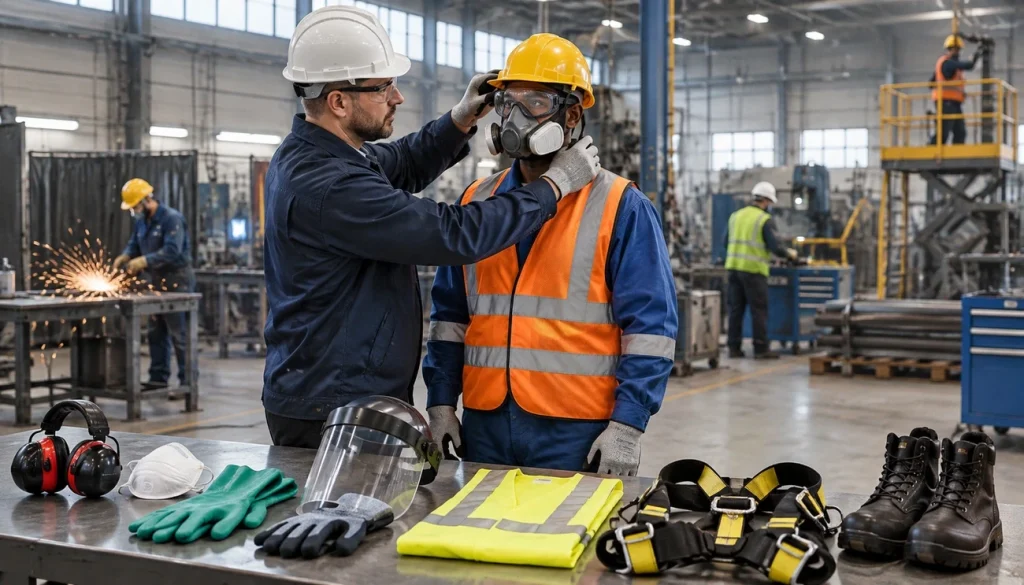
Gloves, respirators, head protection, eye protection, protective clothing, footwear, hearing protection, or fall protection.

Arbill’s guide on how to choose the right workplace safety equipment for employees explains how hazard assessment, PPE ratings, fit, compatibility, worker trials, and maintenance should guide equipment selection.


Explore Our Solutions!
What Are Comprehensive Workplace Safety Solutions and Why Do Businesses Need Them

Start With a Workplace Safety Assessment

A comprehensive safety program should begin with evidence rather than assumptions.

A workplace assessment allows employers to evaluate physical hazards, written programs, employee practices, training, PPE, and regulatory documentation.

Inspect Routine Work

Walk through the workplace while employees are performing normal activities.

Observe:

Equipment operation, material handling, pedestrian movement, chemical use, maintenance activities, PPE use, housekeeping, and emergency access.

Conditions that seem acceptable during a quiet inspection may look very different during full production.

Review Nonroutine Work

Some of the highest-risk activities occur outside normal production.

Maintenance, shutdowns, equipment installation, contractor work, spill response, confined-space entry, and emergency repairs may introduce hazards employees do not encounter every day.

A comprehensive assessment includes those activities.

Review Past Incidents and Near Misses

Injury reports provide information about where failures have already occurred.

Near misses can provide earlier warning.

A forklift that narrowly misses a pedestrian, a chemical splash stopped by a face shield, or a tool falling beside an employee should all trigger questions about whether the underlying hazard can be reduced.

Use Assessments to Prioritize Improvements

Not every finding carries the same risk.

Employers should consider both likelihood and potential severity.

A damaged machine guard capable of exposing employees to serious injury may need immediate attention, while a lower-risk documentation improvement may follow on a planned timeline.

Arbill’s EHS safety assessments can help organizations identify safety gaps and develop more structured priorities for corrective action.

Build Safety Around the Hierarchy of Controls

Comprehensive safety solutions should address hazards at the strongest practical level.

Eliminate Hazards Where Possible

The most effective hazard is one employees no longer encounter.

A process may be redesigned so workers do not need to work at height. A hazardous chemical may be replaced. Maintenance may be performed after equipment is completely isolated rather than while it remains operational.

Elimination reduces dependence on individual behavior.

Add Engineering Controls

Engineering controls physically reduce exposure.

Examples include:

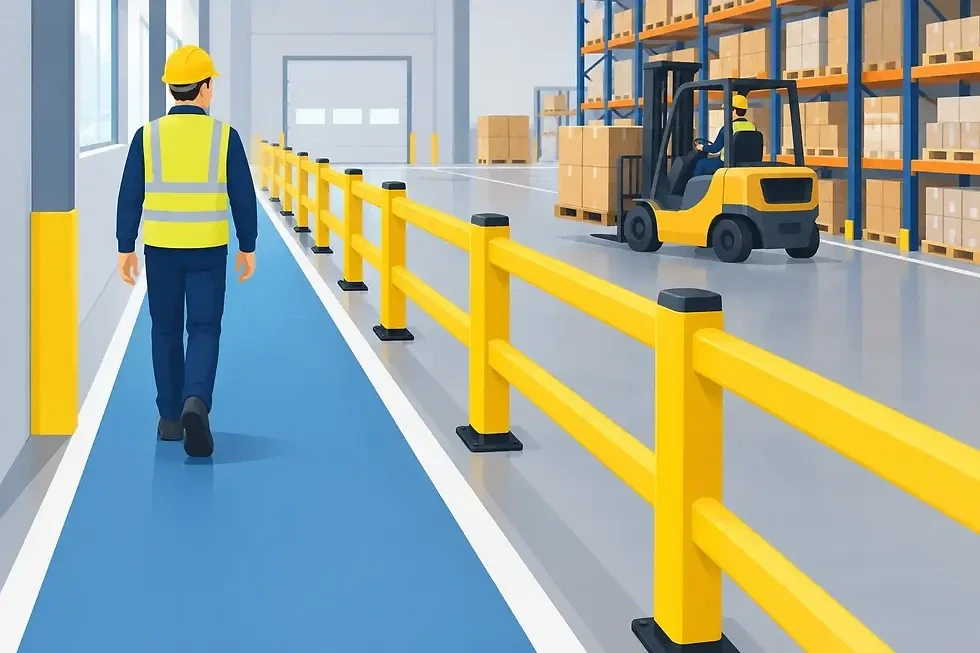
Machine guards, barriers, ventilation, noise enclosures, automated handling, traffic separation, interlocks, and local exhaust systems.

These controls often provide more consistent protection than warnings or instructions alone.

Use Administrative Controls Where Needed

Procedures can reduce exposure where engineering solutions do not completely address the risk.

Examples include:

Restricted access, traffic rules, work schedules, permits, inspections, preventive maintenance, and job-specific procedures.

Administrative controls need clear ownership and consistent enforcement.

Use PPE for Remaining Exposure

Once higher-level controls are considered, appropriate PPE provides another protective layer.

The equipment should be selected according to the task, exposure, fit, and compatibility with other required protection.

Choose Task-Specific Safety Equipment

Comprehensive safety does not mean issuing more PPE.

It means issuing the right PPE.

Head, Eye, and Face Protection

Employees exposed to falling objects, flying particles, chemical splash, electrical hazards, or optical radiation may require different combinations of head, eye, and face protection.

The selected equipment should address the specific exposure rather than relying on a generic product category.

Hand and Arm Protection

Glove selection can depend on:

Cut risk, chemical contact, heat, abrasion, impact, puncture, and dexterity requirements.

One glove rarely provides ideal protection for every task.

Respiratory and Hearing Protection

Respiratory protection should be selected according to the airborne contaminant and exposure conditions.

Hearing protection should reflect measured or evaluated noise exposure while remaining practical for the job.

These programs may also require additional medical, testing, training, or monitoring elements depending on the exposure and applicable requirements.

Fall Protection

Work at height may require guardrails, personal fall protection systems, safe access equipment, or other controls.

A comprehensive program evaluates both how the fall can be prevented and how employees will be protected if residual exposure remains.

Training Connects the Program to the Worker

Safety procedures and equipment cannot work effectively when employees do not understand them.

Training translates program requirements into actions workers can perform on the job.

Make Training Specific to the Task

Generic orientation has a place, but it should not replace task-specific instruction.

A forklift operator needs training that reflects powered industrial truck operation and workplace conditions.

An employee using a respirator needs to understand the respirator program.

A maintenance employee performing lockout/tagout needs to know the actual isolation procedures for the equipment.

Use Hands-On Demonstrations

Employees should demonstrate important safety skills where appropriate.

That may include:

Inspecting PPE, adjusting a harness, performing a respirator seal check, following an energy-isolation procedure, or demonstrating safe equipment operation.

Attendance records alone cannot show whether an employee understands the task.

Retrain When Conditions Change

Training should be updated when:

Equipment changes, procedures change, new hazards are introduced, PPE changes, or employee performance indicates that previous knowledge has not been retained.

Arbill’s EHS safety training can support organizations with structured instruction across workplace safety and compliance topics.

Employee Participation Makes Safety Programs Stronger

Workers often understand job-level hazards better than anyone else in the organization.

They see how equipment behaves throughout the shift, which procedures are difficult to apply, where close calls happen, and which PPE creates practical problems.

Encourage Hazard Reporting

Employees should have a simple way to report:

Unsafe conditions, damaged equipment, PPE problems, near misses, or concerns about procedures.

Reporting should lead to action.

When workers repeatedly raise concerns without receiving a response, participation usually declines.

Avoid Blame-Based Reporting Systems

Employees should not feel pressured to hide injuries or hazards to protect safety statistics.

The goal should be identifying risk early.

A reported near miss is valuable information because the organization has an opportunity to correct the problem before an injury occurs.

”As long as people go to work, we have an opportunity to help protect them.

Julie Copeland
Arbill CEO

Julie Copeland Arbill CEO

Written Safety Programs Create Consistency

Verbal expectations can change between supervisors and shifts.

Written safety programs help establish consistent responsibilities and procedures.

Programs Should Match Actual Work

A written document that no longer reflects workplace practices provides limited value.

Programs should be reviewed when:

Equipment, staffing, chemicals, processes, facilities, or responsibilities change.

Define Ownership

Each program should identify who is responsible for activities such as:

Training, inspections, recordkeeping, PPE, corrective actions, and periodic review.

Without clear ownership, critical tasks can easily be assumed to be someone else’s responsibility.

Emergency Preparedness Is Part of Comprehensive Safety

Safety programs need to consider what happens when prevention controls fail or an unexpected event occurs.

Prepare for Medical Emergencies

First aid supplies should reflect the workplace and remain accessible.

Depending on operations, employers may also evaluate:

AEDs, emergency medical response, eyewash stations, showers, and trained responders.

Plan for Fire and Evacuation

Employees should know:

How to report an emergency, where exits are located, where they should assemble, and what their responsibilities are during an evacuation.

Routes and exits need to remain clear as workplace layouts change.

Consider Site-Specific Emergencies

Chemical releases, severe weather, workplace violence, electrical incidents, equipment failures, and confined-space emergencies may require additional planning.

The emergency program should reflect realistic workplace scenarios rather than generic templates alone.

Technology Is Expanding Workplace Safety Capabilities

Modern safety programs increasingly use technology to improve visibility into hazards and corrective actions.

Technology should not replace basic safety controls, but it can make information available faster.

Digital EHS Systems

Software can centralize:

Incident reporting, inspections, permits, corrective actions, training records, compliance information, and safety metrics.

This can make recurring trends easier to identify and responsibilities easier to track.

Wearables and Sensors

Connected technology may help detect:

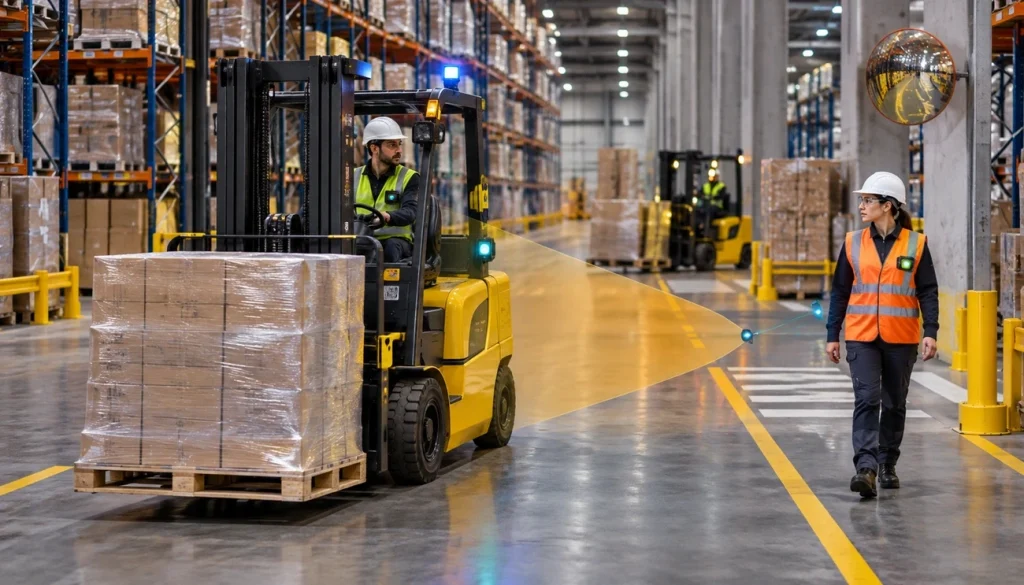
Vehicle proximity, gas exposure, heat conditions, worker movement, or other selected hazards.

The technology should address a clearly identified risk rather than being deployed simply because it is new.

Real-Time Alerts

An alert can give workers or supervisors additional time to respond to a developing hazard.

Examples include:

Forklift proximity warnings, connected gas detection, or heat-related monitoring.

The warning is most useful when the organization has already decided what employees should do when it occurs.

Arbill’s safety innovations demonstrate how emerging technologies can add real-time awareness and additional protective layers to traditional workplace safety practices.

Safety Technology Needs Appropriate Oversight

Connected tools create new management responsibilities.

Check Alert Accuracy

A system that triggers unnecessary alerts constantly can create alarm fatigue.

Technology should be tested under real workplace conditions and adjusted where appropriate.

Protect Employee Privacy

Wearables and connected systems may collect information about location, movement, or exposure.

Employers should explain:

What information is collected, why it is collected, who can access it, and how it will be used.

Safety technology should support worker protection rather than create unnecessary surveillance concerns.

Maintain the Technology

Sensors, batteries, software, and connected equipment require maintenance.

Employers should establish responsibility for:

Charging, inspection, calibration where needed, replacement, and reporting failures.

Comprehensive Safety Solutions Include Regular Audits

Workplaces change constantly.

An effective system therefore needs periodic review.

Inspect Physical Conditions

Look for new or recurring hazards involving:

Equipment, walkways, storage, chemicals, emergency equipment, traffic routes, and PPE.

Review Program Records

Training records, written programs, incident logs, inspections, and corrective actions can reveal gaps that are not visible during a walkthrough.

Verify Corrective Actions

Closing an action item is not the same as fixing the hazard.

Return to the area and verify that the control works.

If the same problem appears again, investigate whether the organization addressed the underlying cause or merely treated the symptom.

Measure Leading and Lagging Safety Indicators

A comprehensive safety program also needs meaningful performance information.

Lagging Indicators Show Outcomes

These can include:

Recordable injuries, lost workdays, restricted-duty cases, claims, and other incident data.

They show what has already happened.

Leading Indicators Show Prevention Activity

Examples can include:

Hazard reports, corrective-action completion, assessment findings, training competency, inspection quality, and near-miss reporting.

These indicators help identify weaknesses before an injury occurs.

Use Both Together

Low injury numbers do not automatically mean controls are strong.

A workplace may simply have been fortunate.

Likewise, a high number of reported hazards may actually indicate strong employee participation when those hazards are being corrected promptly.

Safety metrics need interpretation rather than simple scorekeeping.

Comprehensive Safety Supports Compliance Readiness

Businesses have different safety obligations depending on their industry, activities, location, and hazards.

A comprehensive approach helps organizations keep the supporting pieces organized.

Maintain Current Programs

Written procedures should reflect applicable requirements and workplace conditions.

Maintain Training Records

Required training should be documented and updated where necessary.

Track Corrective Actions

Safety assessments, inspections, and incidents should lead to documented follow-up.

Prepare for Inspections

An organization that maintains its safety program throughout the year is better prepared for a regulatory inspection than one that attempts to organize everything after an inspector arrives.

See Our Safety Services!
Safety and productivity go hand in hand.

Comprehensive Safety Can Improve Operational Reliability

Safety is not separate from operations.

A serious injury can affect staffing, production, equipment availability, schedules, and management time.

Preventing incidents helps maintain continuity.

Fewer Disruptions

A safer process is less likely to be interrupted by an injury investigation or emergency response.

Better Equipment Management

Inspections and preventive maintenance can identify equipment problems before failure causes either an injury or an operational shutdown.

More Consistent Work Practices

Clear procedures and training reduce uncertainty between shifts and locations.

This is particularly valuable for organizations operating multiple facilities.

Comprehensive Programs Can Reduce Hidden Safety Costs

The direct medical cost of an injury is only part of the business impact.

Incidents may also involve:

Overtime, replacement labor, training, investigations, damaged equipment, production delays, administrative work, and reduced morale.

Safety investment should therefore be evaluated against the broader cost of uncontrolled risk rather than simply the purchase price of PPE or training.

Safety Solutions Should Scale With the Business

A small organization and a national multi-site company do not need identical systems.

Start With the Highest Risks

Businesses beginning a formal safety program can start with:

Hazard identification, critical controls, essential training, emergency preparedness, and basic documentation.

Add Structure as Operations Grow

As the organization expands, it may need:

Centralized EHS systems, standardized PPE programs, multiple facility assessments, formal compliance calendars, advanced training, and connected technology.

Maintain Local Flexibility

Standardization should not mean ignoring site-specific hazards.

A multi-site organization can standardize the method used to assess risk while allowing individual facilities to select controls suited to local operations.

When Should Businesses Consider Outside Safety Support?

Internal teams understand their operations, but outside expertise can provide additional perspective.

When Regulations Are Complex

Specialized activities involving:

Respiratory protection, industrial hygiene, fall protection, chemicals, environmental programs, or electrical hazards may require technical expertise.

When Internal Resources Are Limited

Smaller organizations may not have a full-time EHS team.

Outside support can help develop programs and provide assessments without requiring the business to immediately build a large internal department.

When Repeated Problems Continue

If the same audit findings, incidents, or PPE issues continue appearing, an outside review may help identify root causes that have become normalized internally.

Arbill brings together workplace safety products, services, technology, assessments, and training to help organizations build safety systems around their actual operational needs.

What a Comprehensive Workplace Safety Program Should Include

While every business is different, a well-rounded approach should normally address several core areas.

These include:

  • Hazard identification and risk assessment
  • Engineering and work-practice controls
  • Task-specific PPE
  • Written safety procedures
  • Employee and supervisor training
  • Worker participation and reporting
  • Emergency preparedness
  • Inspections and audits
  • Incident and near-miss investigation
  • Corrective-action tracking
  • Safety technology where appropriate
  • Performance measurement and continuous improvement

The goal is not to make the program complicated.

It is to make sure important safety responsibilities do not fall between disconnected systems.

How to Start Building a Comprehensive Safety Program

Businesses do not need to overhaul everything at once.

Begin With an Assessment

Understand the current state.

Identify the highest-risk hazards, existing controls, documentation gaps, and employee concerns.

Prioritize Critical Exposure

Address hazards capable of producing serious injury first.

Do not allow low-cost administrative improvements to distract from significant physical risks.

Build a Corrective-Action Roadmap

Some problems can be fixed immediately.

Others require:

Engineering, equipment purchases, training, policy changes, or capital investment.

Assign owners and realistic deadlines.

Train the Workforce

Employees need to understand both the hazards and the new controls.

Review Progress

Revisit the program regularly and verify that improvements remain effective.

Comprehensive safety is a cycle rather than a one-time project.

Why Businesses Need Comprehensive Workplace Safety Solutions

The central benefit is integration.

A company can purchase excellent PPE and still have an inadequate safety system.

It can conduct extensive training while leaving employees exposed to preventable machine hazards.

It can install advanced technology while ignoring worker feedback.

Comprehensive safety connects these activities so each one supports the others.

That creates a stronger foundation for protecting employees, improving compliance readiness, reducing operational disruption, and responding to workplace changes more effectively.

Conclusion

Comprehensive workplace safety solutions bring together the different activities required to protect employees effectively.

They begin with identifying workplace hazards and understanding which risks deserve the greatest attention.

From there, employers can apply stronger controls, select appropriate safety equipment, train workers, establish emergency procedures, use technology where it adds value, and track whether corrective actions remain effective.

The most important distinction is that comprehensive safety is not a collection of unrelated products.

It is a coordinated management approach.

Assessments identify the problem.

Engineering and administrative controls reduce the exposure.

PPE protects against remaining hazards.

Training helps employees apply procedures correctly.

Technology improves visibility and tracking.

Audits and performance data show where the system needs to improve.

When these components work together, businesses are better positioned to prevent incidents rather than react to them.

That is why comprehensive workplace safety solutions matter: they transform safety from a series of isolated requirements into an ongoing system for protecting people and supporting reliable operations.

Request a Safety Assessment

Recent Posts

What Are Comprehensive Workplace Safety Solutions and Why Do Businesses Need Them
What Are Comprehensive Workplace Safety Solutions and Why Do Businesses Need Them?

What Are Comprehensive Workplace Safety Solutions and Why Do Businesses Need Them?

How to Choose Personal Protective Equipment for Your Employees
How to Choose the Right Workplace Safety Equipment for Your Employees

How to Choose the Right Workplace Safety Equipment for Your Employees

How Smart Sensors Are Changing Warehouse Operations
Forklift Safety Technology: How Smart Sensors Are Changing Warehouse Operations

Forklift Safety Technology: How Smart Sensors Are Changing Warehouse Operations

The Ultimate Warehouse Safety Guide for Busy Operations
Forklift Pedestrian Safety: How to Reduce Collisions in Busy Warehouses

Forklift Pedestrian Safety: How to Reduce Collisions in Busy Warehouses

How Forklift Proximity Detection Systems Help Prevent Workplace Accidents

How Forklift Proximity Detection Systems Help Prevent Workplace Accidents

  • Next ProjectHow to Choose the Right Workplace Safety Equipment for Your Employees

CUSTOMER SERVICE

800-523-5367

CONTACT US

Complete the short form below and an Arbill representative will get back to you within 24 hours.
* Required Fields

    ARBILL RESPECTS YOUR PRIVACY AND YOUR INFORMATION: By submitting the form above you agree to receiving emails from Arbill. Your submitted information is NEVER shared. You may unsubscribe at any time via the "unsubscribe" link in our emails. You can view our Privacy Policy HERE.