Workplace hazards do not always announce themselves with a broken machine, visible spill, or obvious unsafe act. Many develop gradually as equipment wears, work areas become crowded, employees create shortcuts, production demands change, or procedures no longer reflect the way a job is actually performed.
That is why waiting for an injury to reveal a safety problem is a weak approach. By the time someone is hurt, the warning signs may have existed for weeks or months through near misses, recurring equipment problems, employee concerns, housekeeping issues, or small departures from established procedures.
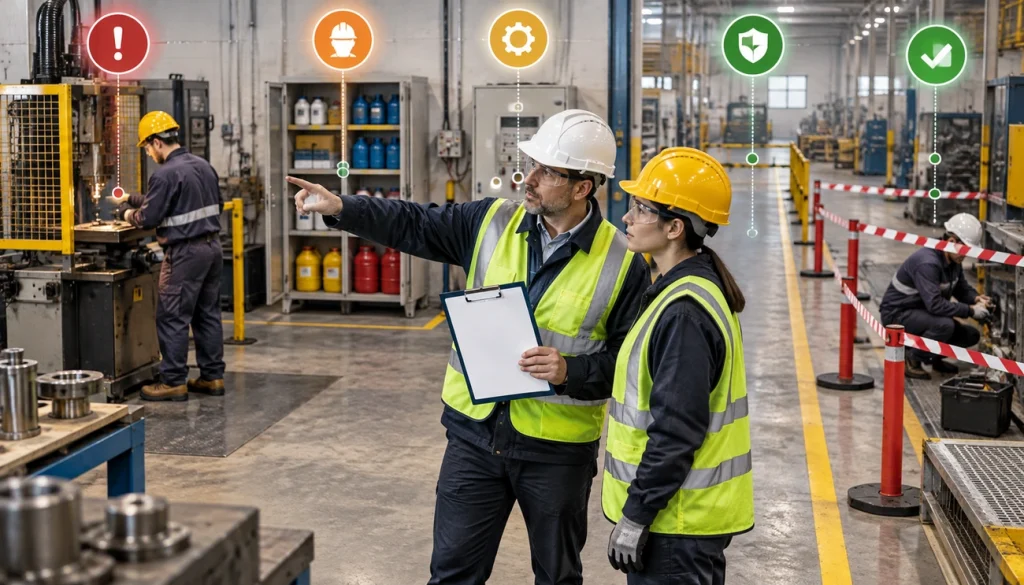
Effective hazard identification gives businesses an opportunity to recognize these signals earlier. It combines workplace inspections, worker participation, incident history, maintenance information, safety records, and task observations to understand where exposure exists and which conditions require action first.
When this process becomes part of normal operations rather than an occasional inspection, employers can address hazards before they develop into serious injuries, compliance problems, equipment damage, or operational disruptions.
What Is a Workplace Hazard?
A workplace hazard is any condition, activity, material, equipment, or work practice that has the potential to cause injury, illness, property damage, or another harmful outcome. Hazards can be obvious, such as an unguarded machine, but they can also be less visible, including excessive noise, poor ergonomics, airborne contaminants, inadequate training, or an outdated procedure.
Understanding hazards requires more than looking for conditions that appear dangerous. Employers also need to understand when workers are exposed, how often the exposure occurs, what controls are already in place, and how serious the potential outcome could be.
Understand the Difference Between a Hazard and Risk
A hazard is the source of potential harm. Risk describes how likely that hazard is to cause harm and how serious the outcome could be.
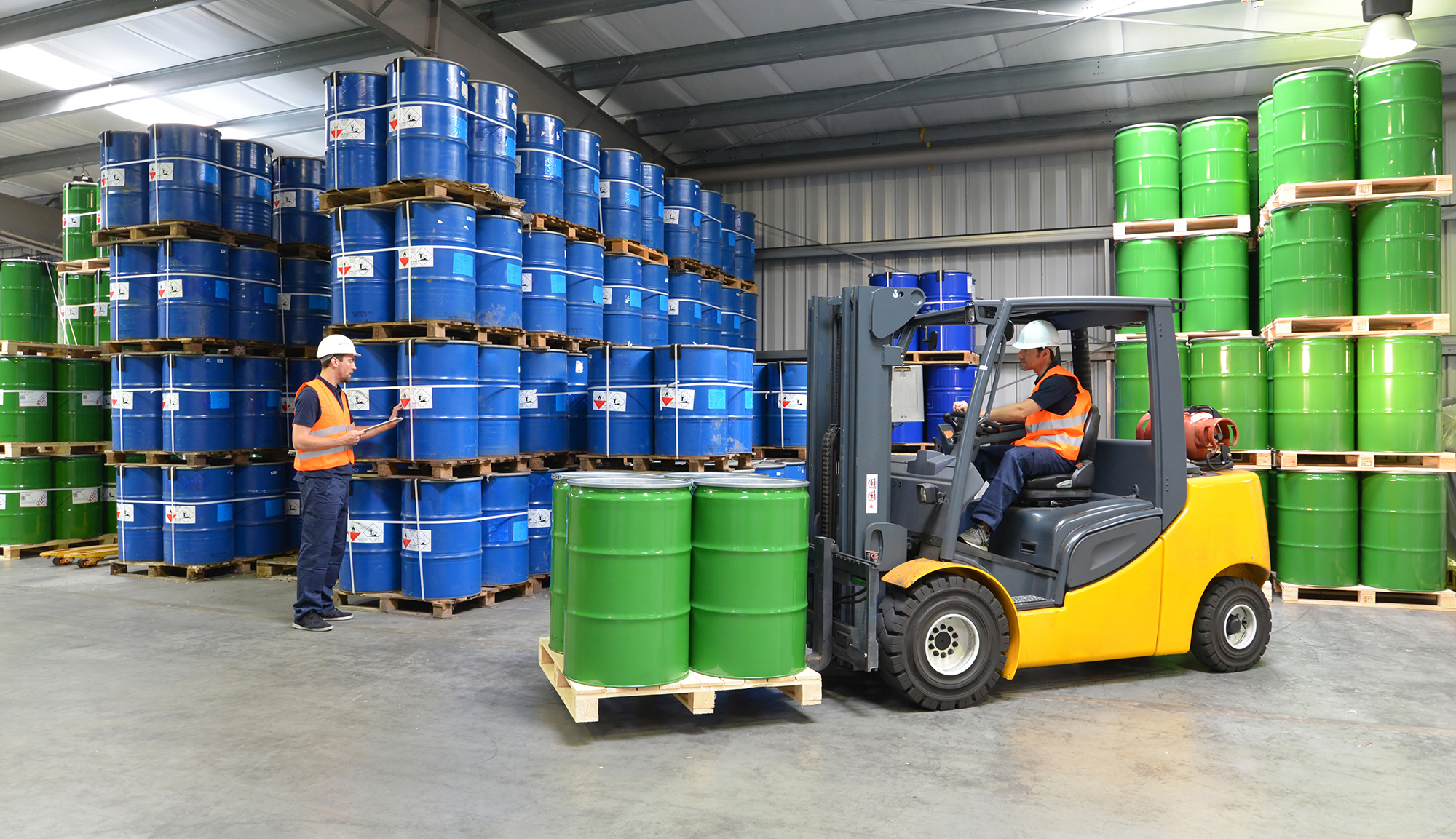
For example, forklift traffic is a hazard in a warehouse. The level of risk increases when pedestrians and forklifts share narrow aisles, sightlines are blocked by storage racks, traffic is heavy, and physical separation is limited.
The same principle applies across industries. A chemical, electrical source, elevated work platform, rotating machine component, hot surface, or noisy piece of equipment may always represent a hazard, but the risk depends on how employees interact with it and what safeguards exist.
Do Not Assume a Lack of Injuries Means the Hazard Is Controlled
A workplace can go months or years without an injury while serious exposure remains. Luck, employee experience, low exposure frequency, or last-second avoidance can prevent an incident without eliminating the underlying problem.
Near misses are particularly important for this reason. When an employee narrowly avoids a forklift, an object falls without striking anyone, or a chemical splash misses exposed skin, the absence of injury should not be interpreted as proof that the system worked.
The event may instead show that a control is close to failing.
Start With the Work Employees Actually Perform
One of the strongest ways to identify hazards is to observe work as it happens rather than relying exclusively on written procedures, job descriptions, or facility diagrams.
Conditions on the floor often change faster than documentation. New equipment may be added, temporary storage may alter traffic patterns, staffing levels may change, or employees may develop different ways to complete a task when the original method becomes difficult.
Observe Complete Tasks From Start to Finish
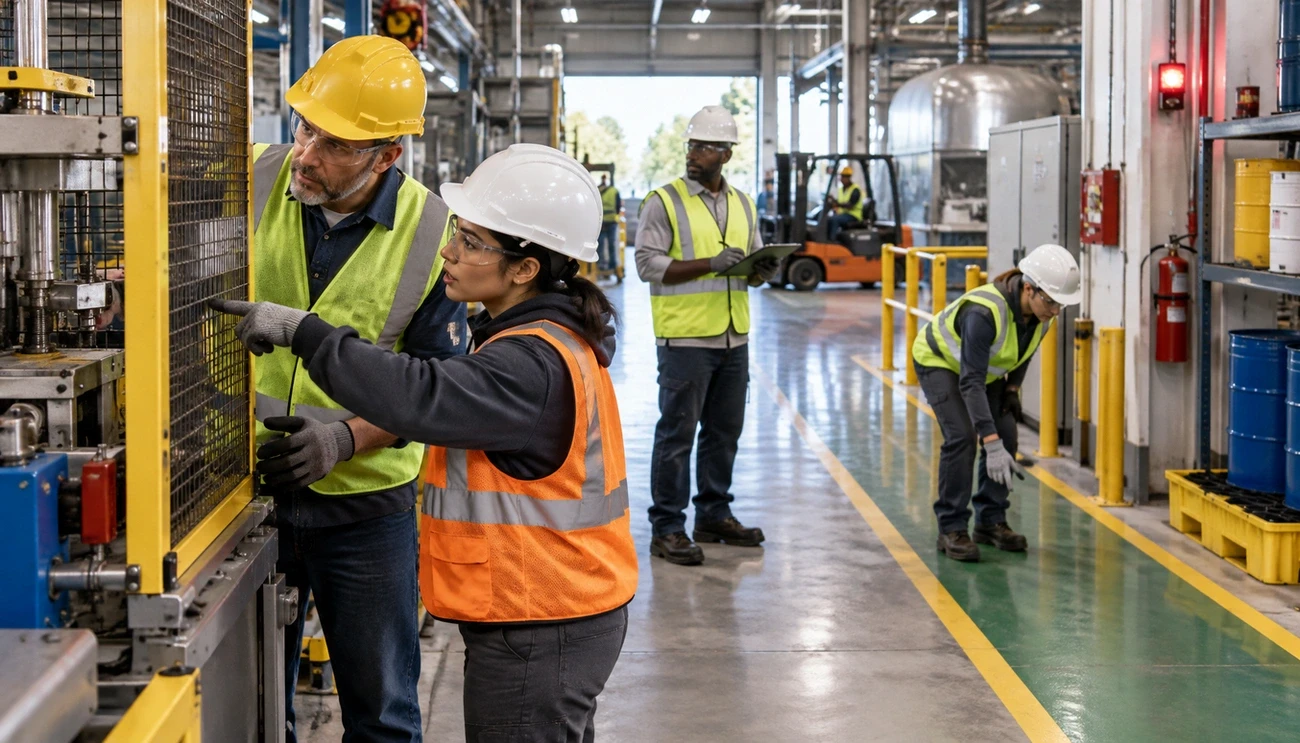
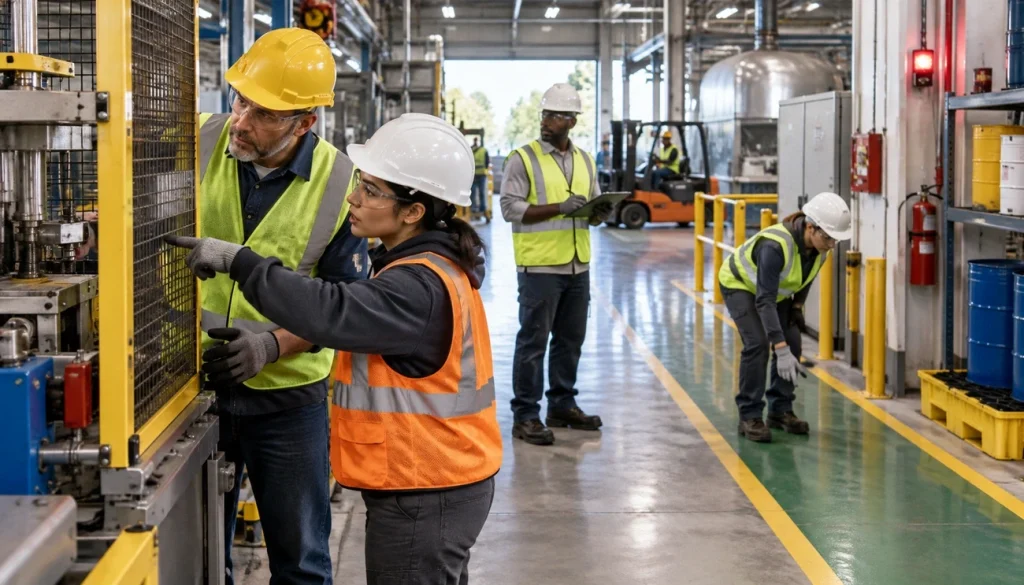
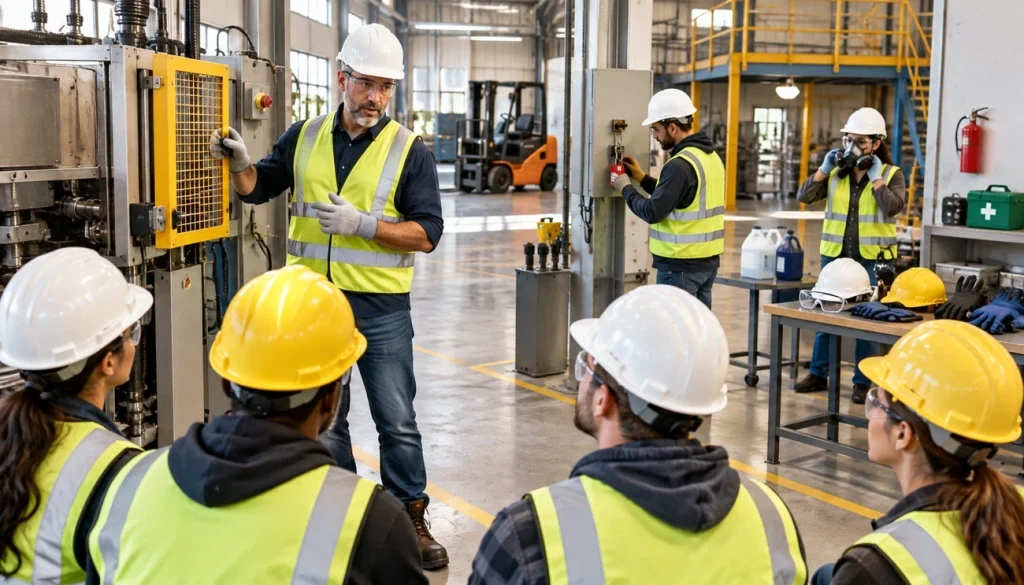
Watch employees perform a job from preparation through cleanup. Look at how materials arrive, where workers stand, which tools they use, how equipment is accessed, and what happens when the task does not proceed normally.
An operation that looks safe during production may create a different exposure during setup, cleaning, adjustment, troubleshooting, or shutdown. Observing the full work cycle helps reveal hazards that a short walkthrough could miss.
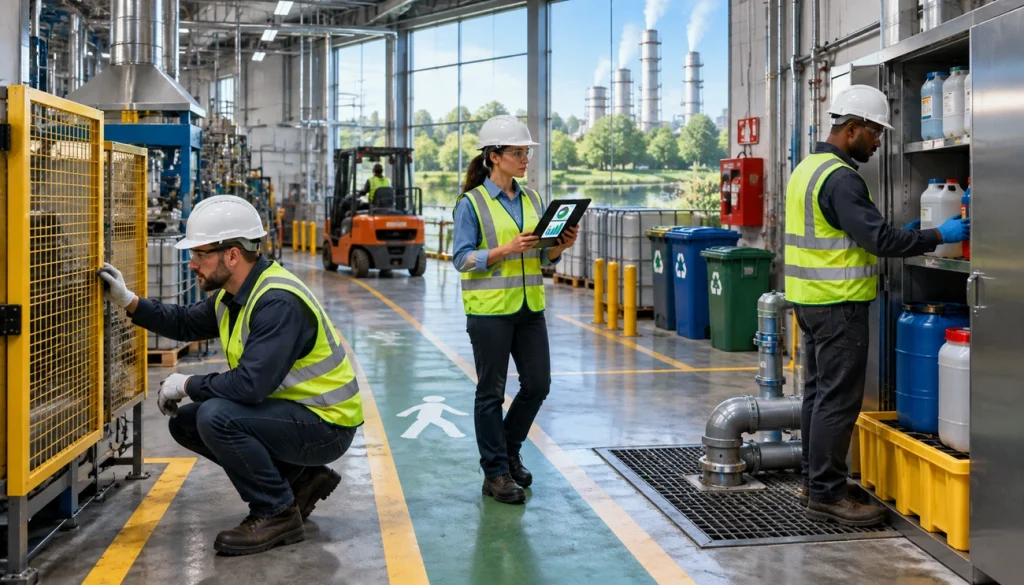
This is particularly important in industrial environments where equipment, materials, vehicles, and employees interact throughout a shift. Arbill’s industry safety solutions reflect how different sectors can face very different combinations of machinery, traffic, chemicals, heat, noise, material handling, and other workplace risks.
Include Nonroutine Work
Maintenance, emergency repairs, contractor work, equipment installation, shutdowns, and temporary production changes often create exposures that are not present during normal operation.
A machine may remain fully guarded during production but require employees to enter a hazardous area during servicing. A chemical may normally remain in a closed system but need to be transferred manually during maintenance.
These activities should be included in hazard-identification efforts even when they occur only occasionally.
Inspect Every Shift, Not Just the Most Convenient One
Workplace conditions can vary considerably between shifts. Staffing levels, supervision, lighting, production volume, maintenance activity, and material storage may all change during the day.
An assessment completed only during a quiet first shift may therefore miss risks faced by employees working nights, weekends, or peak production periods.
Compare Traffic and Workflow Patterns
Warehouses and manufacturing facilities may experience significantly more congestion during shipping deadlines or shift changes. Additional forklifts may operate, staging areas may expand, and pedestrians may take different routes when normal walkways become crowded.
Observe these periods directly rather than assuming the traffic plan remains consistent throughout the day.
Look for Differences in Supervision and Housekeeping
Night or weekend shifts may have fewer supervisors or maintenance personnel available. Housekeeping conditions can also deteriorate as materials accumulate between scheduled cleaning periods.
Comparing shifts can reveal whether a safety control works consistently or depends too heavily on one particular supervisor, team, or operating condition.