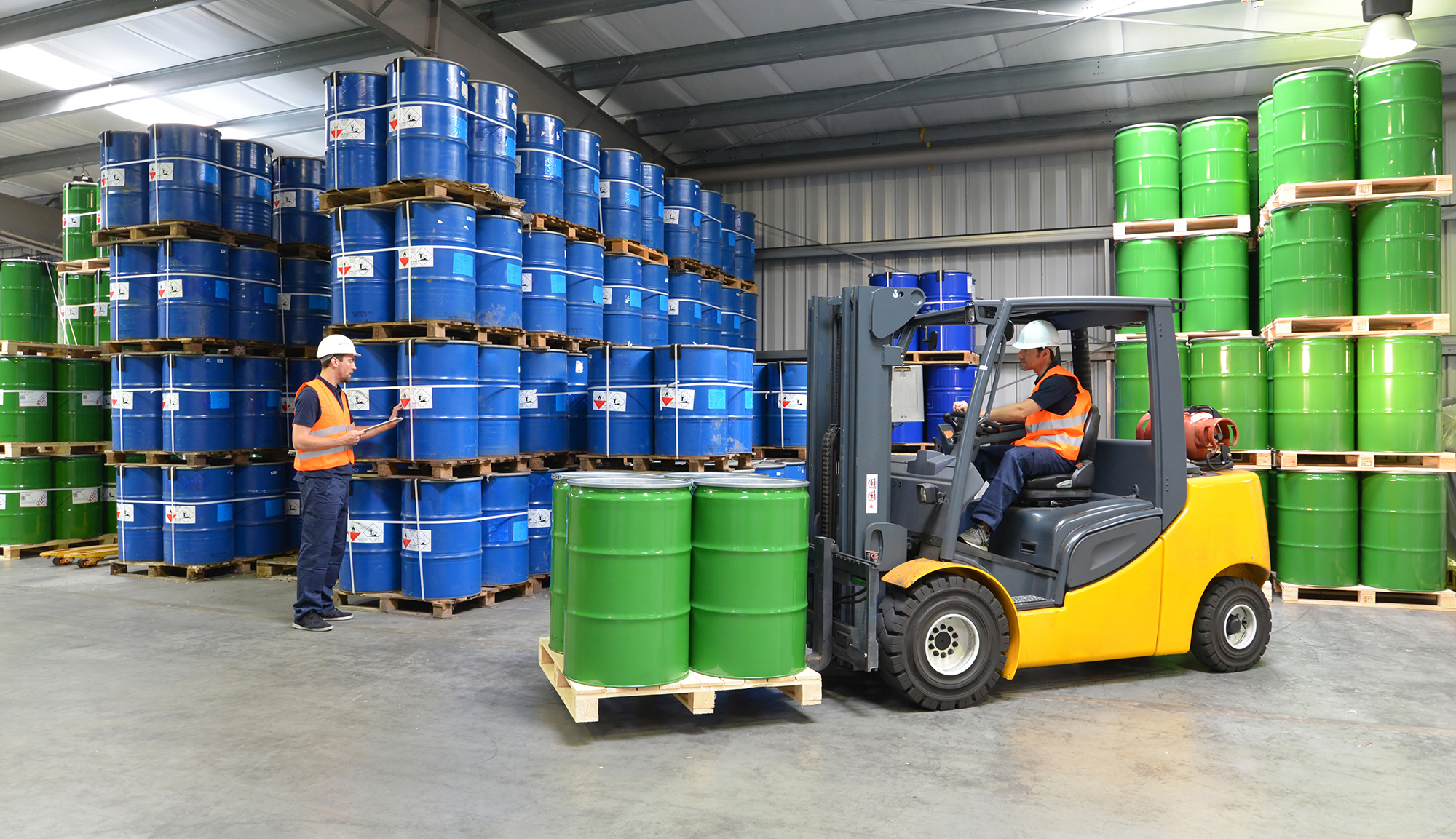
A workplace can appear safe during normal operations while still carrying significant environmental, health, and safety risks. A machine guard may be deteriorating, training records may no longer match the work employees actually perform, or chemical containers may be stored in ways that create both worker exposure and environmental concerns. Near misses may also be increasing without appearing in traditional injury statistics, leaving management with an incomplete picture of the facility’s actual risk.

Environmental Health and Safety assessments help businesses uncover these gaps before they contribute to an injury, environmental release, regulatory problem, or operational disruption. An effective EHS assessment goes beyond walking through a facility with a checklist. It combines workplace observations with written programs, training records, PPE, environmental practices, incident history, worker feedback, compliance documentation, and corrective-action planning to determine how well safety systems actually function.

What Is an Environmental Health and Safety Assessment?

An Environmental Health and Safety assessment is a structured review of workplace conditions, safety programs, environmental practices, and potential employee exposures. The goal is to identify hazards and compliance gaps, evaluate the risks they create, and determine which issues require the most urgent action.

Rather than treating machinery, PPE, chemical handling, training, waste management, and environmental responsibilities as unrelated topics, an EHS assessment looks at how these areas interact. This broader perspective helps businesses understand whether the controls they already have in place are adequate and where additional protection or program improvements may be needed.

EHS Assessments Look at More Than Physical Hazards

Visible workplace hazards are important, but they represent only part of an EHS program. An assessment may examine machinery, forklifts, walking surfaces, storage areas, emergency equipment, workstations, and other physical conditions while also reviewing written programs, employee training, PPE requirements, regulatory records, and corrective actions.

The purpose is to compare what the organization says should happen with what actually happens during normal work. A written procedure may look complete while employees use a different process because equipment, staffing, or workflow has changed. An assessment helps identify these differences before they become accepted as normal practice.

Safety and Environmental Risks Often Overlap

A single condition can create both occupational and environmental risk. Poor chemical storage, for example, may expose employees to splash, vapor, or skin contact while also increasing the possibility of a spill reaching a drain, soil, or nearby waterway.

For this reason, EHS assessments should consider how worker safety and environmental responsibilities overlap. Chemical storage, hazardous waste, secondary containment, tanks, spill response, and stormwater practices can all affect both compliance and day-to-day operations.

How Is an EHS Assessment Different From a Workplace Inspection?

Routine inspections and EHS assessments are closely related, but they generally serve different purposes. A workplace inspection often focuses on visible conditions that require attention, while an EHS assessment takes a broader look at the systems supporting safety and environmental performance.

Workplace Inspections Focus on Current Conditions

An inspection may identify blocked exits, damaged equipment, missing machine guards, poor housekeeping, improper PPE use, or unsafe storage. These inspections are valuable because they provide regular visibility into conditions that can change quickly.

However, an inspection may not reveal why the same problem continues to return. A blocked aisle could be caused by poor housekeeping, but it could also reflect inadequate storage capacity, production pressure, or a workflow that forces employees to place materials in the wrong location.

EHS Assessments Look at the Larger System

A broader assessment asks whether written programs reflect current operations, whether employees are trained appropriately, whether PPE matches the exposure, and whether regulatory or environmental records remain current. It also examines whether previous corrective actions actually solved the problems they were intended to address.

This larger view makes EHS assessment an important part of a broader safety-management system. Arbill’s guide on comprehensive workplace safety solutions explains how assessments, hazard controls, PPE, training, technology, and continuous improvement can work together instead of operating as separate safety activities.

Why Environmental Health and Safety Assessments Matter

Businesses often discover safety weaknesses only after an incident, environmental release, employee complaint, or regulatory inspection. EHS assessments create an opportunity to reverse that sequence by looking for weaknesses proactively and addressing them before the consequences become more serious.

The assessment process also helps management decide where to direct resources. Instead of treating every issue as equally urgent, businesses can evaluate the likelihood and potential severity of each hazard and prioritize the findings that present the greatest risk.

Assessments Help Find Hidden Hazards

Some hazards are obvious, such as a missing guard or blocked emergency exit. Others are more difficult to identify because they involve outdated procedures, incomplete training, poor chemical segregation, ineffective ventilation, or recurring near misses that have not yet resulted in injuries.

A thorough assessment combines multiple sources of information rather than relying on one walkthrough. Incident history, worker feedback, written records, equipment condition, environmental practices, and actual work observations together provide a more accurate picture of risk.

Assessments Improve Compliance Readiness

Businesses need to maintain more than safe physical conditions. Written programs, training records, regulatory documentation, inspections, environmental records, and corrective actions may all become important during a regulatory review.

Regular EHS assessments help identify missing or outdated information before an outside inspection exposes the gap. They also make it easier for managers to understand which program areas are operating effectively and which need additional attention.


Explore Our Solutions!
Risk Assessment for Environmental Health and Safety

Start With the Purpose and Scope

A useful EHS assessment begins by defining what the organization wants to learn. Without a clear scope, the review can become too narrow to identify important risks or so broad that the findings become difficult to prioritize.

The scope should reflect the facility’s operations, hazards, and immediate goals. Some businesses may need a quick high-level review, while others require a deeper evaluation of regulatory programs, environmental responsibilities, training, PPE, and long-term safety performance.

Determine Why the Assessment Is Being Conducted

Common reasons may include evaluating current workplace conditions, identifying compliance gaps, preparing for a regulatory inspection, investigating recurring incidents, reviewing environmental practices, supporting an expansion, or developing a long-term safety roadmap.

Defining the purpose helps determine how much documentation, observation, employee involvement, and technical review will be required. It also gives management a clearer way to evaluate whether the assessment answered the questions it was intended to address.

Decide Which Locations and Activities Are Included

The scope may cover one department, a single facility, several locations, or an entire organization. Businesses should document which operations, shifts, work areas, equipment, records, environmental programs, and employee groups are included.

Nonroutine activities should also be considered where relevant. Maintenance shutdowns, contractor work, equipment installation, chemical transfer, spill response, and emergency repairs may create hazards that are not present during normal production but still deserve assessment.

Understand Different Levels of EHS Assessment

Not every organization needs the same depth of review. Arbill’s EHS safety assessments are structured around different levels so businesses can match the assessment to their immediate needs and longer-term goals.

Rapid Assessment

A Rapid Assessment provides a high-level review of current conditions and can be useful when a business needs to identify obvious concerns quickly. It may begin with an initial walkthrough and visual inspection designed to highlight immediate areas requiring attention.

This type of review can serve as a starting point for an organization that does not yet have a clear picture of its safety performance. Findings may also indicate where a deeper assessment is justified.

Discovery Assessment

A Discovery Assessment takes a closer look at safety systems and protocols. The review may include regulatory records, written programs, employee training, PPE, facility conditions, and other compliance-related elements.

This level can help organizations identify gaps that are not visible during a walkthrough alone. It can also provide a more structured roadmap for correcting program weaknesses and improving day-to-day safety management.

Expansive Assessment

An Expansive Assessment examines the organization from a wider perspective, including safety culture, program maturity, compliance performance, and longer-term opportunities for improvement. It may be appropriate for businesses trying to transform their safety program rather than simply correct individual deficiencies.

The broader view can help leadership understand how safety responsibilities, employee participation, training, compliance, and operational practices work together across the organization.

Review Physical Workplace Hazards

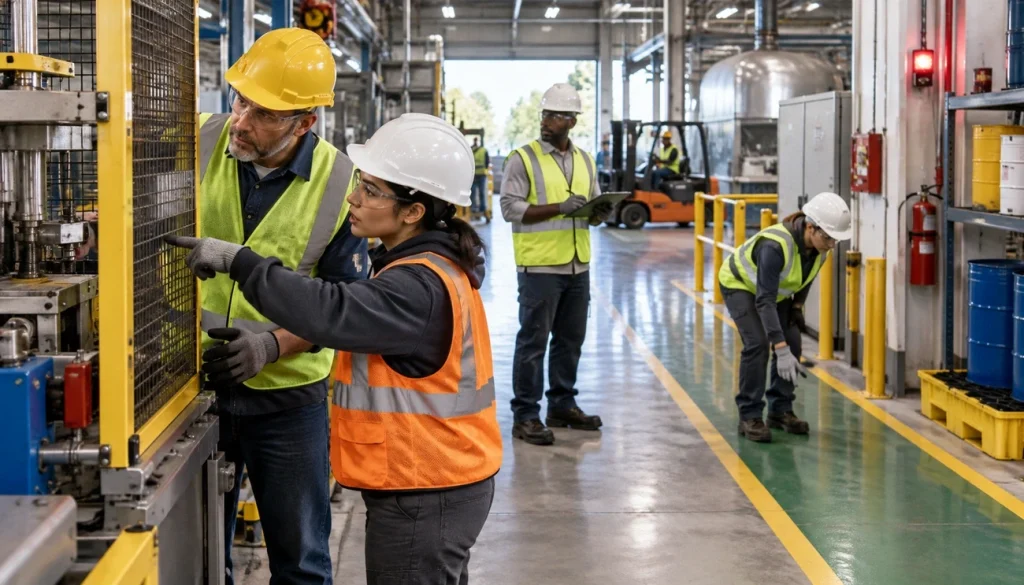
The physical walkthrough remains a fundamental part of an EHS assessment because it shows how people, equipment, materials, and workplace conditions interact during actual operations. The review should occur while work is taking place whenever possible so assessors can compare written procedures with real practices.

Different industries will require different areas of emphasis. Manufacturing may involve machinery and hazardous energy, while warehouses may focus more heavily on forklifts, loading docks, material storage, and pedestrian traffic.

Inspect Machinery and Equipment

Review machinery for issues involving guarding, maintenance, hazardous energy, access, controls, and overall condition. Observe how employees operate, clean, adjust, and maintain equipment because hazards may appear during these less routine stages rather than during normal production.

A procedure may require a particular safety step, but employees may have developed a shortcut because the equipment is difficult to access or the process has changed. Identifying these differences allows the organization to address the reason behind the unsafe practice rather than relying only on reminders.

Review Mobile Equipment and Traffic

Warehouses, manufacturing facilities, and other industrial operations may have forklifts, trucks, loaders, or other powered equipment operating close to pedestrians. The assessment should examine travel routes, crossings, visibility, speed controls, loading areas, barriers, and pedestrian separation.

Near-miss reports can provide important additional information because a short walkthrough may not capture the busiest periods. If employees repeatedly report close forklift-pedestrian interactions at the same intersection, that location deserves attention even when no injury has occurred.

Inspect Walking and Working Surfaces

Walking areas should be reviewed for spills, uneven flooring, loose materials, cords, blocked aisles, inadequate lighting, damaged stairs, and other conditions that could contribute to slips or falls.

The assessment should also consider how employees use the area. A relatively minor trip hazard may create greater risk where workers regularly carry heavy materials or where mobile equipment operates nearby.

”As long as people go to work, we have an opportunity to help protect them.

Julie Copeland
Arbill CEO

Julie Copeland Arbill CEO

Assess Chemical and Occupational Health Exposures

Health hazards can be more difficult to recognize than visible physical hazards because exposure may occur gradually. Chemicals, noise, dust, heat, fumes, and repetitive physical strain may affect workers long before the consequences become obvious.

A strong EHS assessment therefore looks beyond what can be seen during a visual walkthrough and considers where additional monitoring or technical review may be necessary.

Review Chemical Storage and Handling

Assess container condition, labeling, chemical compatibility, storage location, secondary containment, and access to Safety Data Sheets. The review should also consider how employees transfer, use, and dispose of the materials rather than examining storage alone.

Improper chemical management can create several types of exposure at the same time. A poorly stored chemical may present inhalation, splash, fire, spill, and environmental risks depending on the material and facility conditions.

Evaluate Airborne Exposure, Noise, and Heat

Dust, fumes, vapors, gases, and other airborne contaminants may require further evaluation when employees work close to the source. Review ventilation, task duration, worker location, and whether respiratory protection is currently part of the control strategy.

Noise and heat deserve similar attention. Employees may become accustomed to loud equipment or hot environments, but familiarity does not eliminate the exposure. Where conditions are uncertain, additional industrial hygiene monitoring may be appropriate.

Review Ergonomic Stress

Heavy lifting, repetitive motion, awkward postures, prolonged reaching, and sustained physical effort can contribute to musculoskeletal injuries over time. These hazards may not produce an immediate incident but can still have a significant impact on employee health and operational performance.

Observe the actual work and ask employees which tasks create physical strain. Mechanical lifting equipment, workstation redesign, material-placement changes, or other engineering improvements may reduce the need to rely solely on training.

Review Personal Protective Equipment

PPE should be evaluated in relation to the hazard rather than simply confirming that employees have safety equipment available. The assessment needs to determine whether each item provides the appropriate type and level of protection and whether employees can use it correctly throughout the task.

A glove, respirator, helmet, or pair of safety glasses may be high quality but still be inappropriate for a particular exposure. The product has to match the work.

Confirm PPE Matches the Exposure

A glove may provide excellent cut resistance but inadequate chemical protection. Safety glasses may protect against flying particles while offering insufficient coverage for liquid splash. A safety helmet may have impact or electrical characteristics that do not match the work environment.

The assessment should connect each PPE requirement to the specific hazard identified. Generic instructions such as “wear proper PPE” provide little useful guidance unless the organization defines what protection is actually required.

Check Fit and Compatibility

Employees may require different sizes or approved models to achieve proper fit. PPE also needs to remain compatible when several items are worn together.

Respirators, eyewear, hearing protection, helmets, protective clothing, and fall-protection equipment can interfere with one another if they are selected independently. Worker trials can help identify these conflicts before they reduce protection in the field.

Review Written Safety Programs

A written program can exist without accurately describing current operations. One of the important functions of an EHS assessment is determining whether documented procedures still match the way employees perform the work.

Programs should also define responsibilities clearly. When ownership is vague, training, inspections, recordkeeping, and corrective actions can easily become inconsistent.

Compare Procedures With Actual Work

Review written procedures beside the work they govern. Look for differences involving equipment, responsibilities, PPE, emergency actions, maintenance practices, and employee behavior.

If workers consistently do something differently from the documented process, the assessment should investigate why. The problem may involve inadequate training, but it could also mean the procedure is outdated or impractical under current conditions.

Confirm Program Ownership

Each important program should identify who is responsible for implementation and review. Supervisors and employees should know who manages training, inspections, documentation, corrective actions, and updates.

Clear ownership helps prevent important responsibilities from being overlooked when staff change or operations become more complex.

Review Employee Training Records

Training records help show whether employees have received required instruction, but attendance alone does not prove that workers can apply what they learned. The assessment should compare training with the equipment, hazards, and tasks employees actually encounter.

When responsibilities change, older training records may no longer reflect current needs. A worker who takes on a new maintenance task or begins using different PPE may require additional instruction even when their general safety training is current.

Match Training to Job Duties

Review whether employees have training that reflects the specific activities they perform. This may include equipment operation, hazardous energy control, chemical handling, PPE use, emergency procedures, or other task-specific requirements.

If a job differs between departments or shifts, the training program should account for those differences rather than relying on one generic course.

Consider Practical Competency

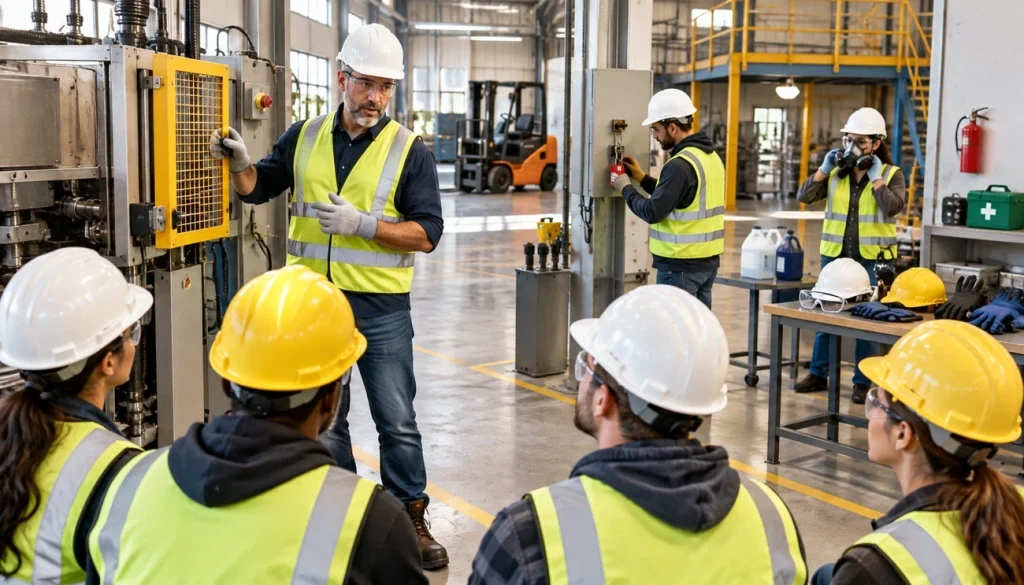
Where appropriate, observe whether employees can demonstrate important skills rather than relying only on certificates or attendance sheets. Practical checks may involve equipment operation, energy isolation, PPE inspection, respirator procedures, or emergency response.

Arbill’s EHS safety training can support organizations that identify training gaps during assessments and need more structured instruction for employees and supervisors.

Review Incident and Near-Miss History

Past events provide important information about where controls may already have failed. Injury records, first-aid cases, property damage, and near misses should be reviewed alongside physical conditions and written programs.

The purpose is not only to count incidents but to identify patterns that point toward deeper weaknesses.

Look for Recurring Patterns

Group reports by location, task, equipment, department, injury type, or hazard category. Multiple events involving the same machine, traffic route, chemical, or body part may indicate that the underlying control needs improvement.

Repeated low-level incidents should not be dismissed simply because each event appears minor. Together, they may show that exposure is persistent.

Do Not Ignore Near Misses

Near misses can provide valuable warning before someone is injured. A forklift that narrowly misses a pedestrian, a chemical splash stopped by PPE, or an object that falls beside a worker all reveal conditions worth investigating.

These events can help businesses identify where current controls are close to failing and where corrective action may be most useful.

Include Environmental Compliance in the Review

A complete EHS assessment may include environmental responsibilities in addition to occupational safety. The exact scope will depend on the facility, processes, materials, and applicable requirements.

Environmental review often requires more than visual inspection because important information may exist in records, waste-management practices, containment systems, and spill-prevention procedures.

Review Environmental Records and Programs

Environmental assessment activities may include reviewing regulatory records, environmental programs, chemical documentation, waste procedures, and site conditions. The objective is to determine whether actual practices align with applicable responsibilities and internal expectations.

Documentation should also be compared with physical conditions. A procedure may describe one waste-handling method while employees follow another because storage areas or operational needs have changed.

Evaluate Hazardous and Universal Waste

Review how hazardous waste is identified, stored, labeled, handled, and documented. Container condition, storage practices, employee responsibilities, and the movement of waste through the facility may all be relevant.

Universal waste should also be reviewed where applicable. Businesses need to understand how these materials are collected, labeled, stored, and managed rather than allowing them to accumulate without clear responsibility.

Review Tanks, Containment, and Spill Prevention

Where tanks or liquid-storage systems are present, examine their condition, surrounding areas, secondary containment, and potential release pathways. The presence of containment alone does not automatically mean the system is adequate.

Outdoor operations may also require review of drainage, stormwater exposure, chemical storage, response equipment, and spill-prevention procedures. These areas help connect environmental risk with broader EHS planning.

Rate Risks and Decide What Needs Action First

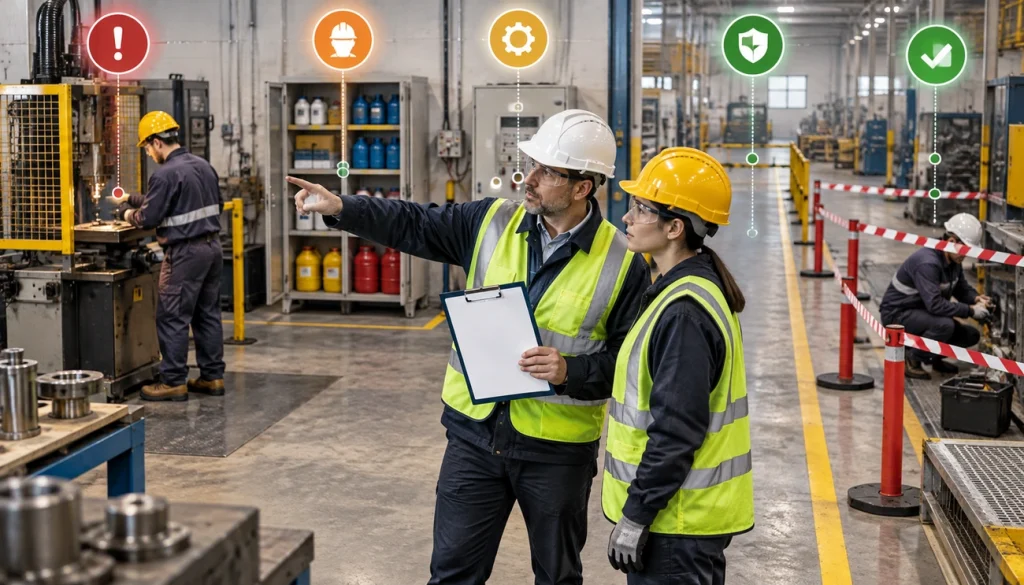
An assessment can generate a long list of findings, but not every issue carries the same level of urgency. Risk ranking helps management focus resources on hazards that have the greatest potential to cause serious harm or environmental impact.

The process should consider likelihood, severity, existing controls, and the number of people or assets potentially exposed.

Evaluate Likelihood and Severity

Likelihood considers how often exposure may occur and how probable an incident is under current conditions. Severity considers the potential outcome if the event occurs.

A hazard that occurs rarely may still deserve significant attention when the possible consequence is catastrophic. Likewise, a frequent low-level exposure may become important because employees encounter it repeatedly.

Evaluate Existing Controls

A hazard rating should account for the protections already in place, but only when those controls actually work. A written procedure, guardrail, ventilation system, or training program should not automatically reduce the risk score simply because it exists.

The assessment should determine whether employees use the control correctly and whether it performs effectively under normal work conditions.

Use a Consistent Risk Matrix

Many organizations use a matrix that combines likelihood and severity into categories such as low, moderate, high, or critical. The exact scoring system may vary, but the method should remain consistent across the assessment.

Document the reason behind each significant rating instead of recording only a number. This makes priorities easier to understand and provides a useful reference when the risk is reassessed after corrective action.

Turn Findings Into Corrective Actions

An EHS assessment only creates value when findings lead to improvement. A detailed report that sits unused after the assessment does not reduce employee exposure or environmental risk.

Each significant finding should therefore be converted into a specific corrective action with clear responsibility.

Write Findings That Explain the Problem

Avoid vague observations such as “poor chemical storage” or “unsafe machine.” A useful finding identifies the location, condition, activity, exposure, and supporting evidence.

Specific findings allow managers to understand what needs to change and make verification easier after the work is completed.

Choose Controls That Address the Cause

Corrective actions should address the underlying hazard whenever practical. Elimination, substitution, engineering controls, administrative measures, and PPE can all play a role depending on the exposure.

Training should not become the automatic solution to every finding. If a machine hazard can be physically guarded, another reminder to “work carefully” is unlikely to be the strongest response.

Assign Owners, Deadlines, and Resources

Every corrective action should have an accountable owner. Assigning an item vaguely to “operations” or “maintenance” makes it easier for responsibility to become unclear.

Deadlines should reflect the seriousness of the risk as well as the resources required to complete the correction.

Set Priorities According to Risk

Higher-risk findings should generally receive greater urgency. Some conditions may require immediate correction or temporary controls before work continues.

Other improvements may require engineering design, capital approval, contractor support, equipment procurement, or planned downtime. These actions can take longer, but they should still remain visible on the corrective-action plan.

Identify What the Action Requires

Document whether the correction needs budget, equipment, training, outside expertise, written-program development, or additional monitoring. Doing so helps management understand the real scope of the improvement and reduces the likelihood of repeated deadline extensions.

Verify That Corrective Actions Work

Closing an action administratively is not the same as confirming the hazard has been controlled. Follow-up should return to the workplace and verify that the correction performs as intended.

This step is essential because a completed action may still leave residual risk or create a new issue.

Return to the Work Area

If guarding was installed, inspect the guard. If chemical storage changed, review the new arrangement. If training was delivered, observe whether employees understand and use the updated procedure.

Evidence should support closure rather than relying only on a status change in a tracking system.

Reassess Remaining Risk

Corrective action may reduce risk without eliminating it completely. Review the likelihood and severity again after the control is implemented.

If the remaining risk is still too high or the control works inconsistently, additional action may be necessary.

Build a Long-Term EHS Roadmap

Some findings can be corrected quickly, while others require longer-term planning. A roadmap helps management distinguish between immediate corrections and strategic improvements that may involve significant resources.

It also prevents important lower-priority issues from disappearing after the urgent findings are addressed.

Separate Immediate and Strategic Actions

Immediate actions might include clearing exits, replacing damaged PPE, correcting labels, or repairing guards. Longer-term improvements may involve ventilation upgrades, facility modifications, program development, environmental projects, or capital equipment.

Both categories should remain part of the same improvement system so management can see how short-term corrections support broader safety objectives.

Connect Findings to Broader Programs

Assessment results may reveal the need for new written procedures, updated employee training, different PPE, additional environmental controls, or more specialized technical support.

Arbill’s assessment process can support this transition from identifying problems to building a longer-term safety roadmap through follow-up services, training, PPE support, and program development.

Use Outside EHS Expertise Where Appropriate

Not every organization has the internal resources to evaluate every environmental, health, and safety issue independently. Outside expertise can provide additional technical knowledge or an objective perspective when the organization faces complex or recurring problems.

This can be particularly useful for multi-site operations, specialized hazards, or businesses without a full-time EHS team.

Complex Technical or Compliance Issues

Respiratory protection, industrial hygiene, fall protection, environmental programs, chemical management, and other specialized areas may require deeper technical review.

Outside support can help organizations understand where additional monitoring, program development, or corrective action may be needed.

Repeated Problems

When the same incident, audit finding, or compliance gap continues to return, an independent review can help identify whether previous actions addressed the true cause.

Arbill’s EHS safety consulting can support businesses that need help strengthening programs, responding to assessment findings, and developing practical long-term improvements.

See Our Safety Services!
ISO Certification

How Often Should EHS Assessments Be Conducted?

There is no single universal schedule that applies to every organization. Assessment frequency should reflect the workplace’s hazards, compliance responsibilities, operational complexity, and rate of change.

Regular review is important because facilities rarely remain static.

Use Periodic Assessments

Equipment ages, storage practices change, new employees arrive, workflows shift, and written procedures can gradually become outdated. Periodic assessments provide an opportunity to identify these changes before they become permanent safety gaps.

Businesses should choose a review schedule that reflects their operations rather than treating the assessment as a one-time project.

Reassess After Significant Changes

Additional review may be appropriate after new equipment, facility modifications, process changes, new chemicals, serious incidents, environmental releases, or repeated near misses.

The assessment should also be revisited when an existing control fails or new information shows that the previous risk evaluation is no longer accurate.

What Should an EHS Assessment Report Include?

A useful assessment report should help management take action. It should not simply provide a long list of observations without indicating what deserves attention first.

The report should connect evidence, risk, recommendations, and ownership so findings can move into the corrective-action process.

Clear Findings and Evidence

Each finding should describe what was observed, where it occurred, and why it matters. Photos, records, interview notes, or other evidence may support the observation where appropriate.

Risk Priorities

The report should distinguish immediate concerns from lower-priority improvements. This helps management decide how to allocate budget and operational resources.

Corrective Recommendations

Recommendations should be specific enough to guide action without relying on vague statements such as “improve safety” or “retrain employees.”

A Practical Roadmap

Where possible, the report should connect individual findings with broader program needs such as training, PPE, engineering improvements, environmental controls, or written-program development.

Questions to Ask Before Choosing an EHS Assessment Provider

Businesses considering outside support should evaluate more than the price of the assessment. The scope, expertise, reporting quality, and follow-up support can significantly affect how useful the final results become.

A clear conversation before the assessment can also prevent misunderstandings about what will and will not be reviewed.

What Is Included in the Scope?

Clarify whether the assessment includes physical walkthroughs, written programs, regulatory records, training, PPE, environmental practices, waste, chemical storage, tanks, spill prevention, or other areas relevant to the facility.

What Type of Report Will Be Provided?

Understand whether the final deliverable provides observations only or includes risk rankings, corrective recommendations, compliance findings, and a structured improvement roadmap.

Is Follow-Up Support Available?

Assessment findings may create additional needs such as training, written procedures, PPE changes, environmental assistance, or consulting. Knowing whether that support is available can help the business move more efficiently from assessment to implementation.

EHS Assessments Are Part of a Comprehensive Safety Strategy

An assessment should not exist separately from the rest of the safety program. Its findings should guide decisions about hazard controls, PPE, training, technology, emergency preparedness, environmental practices, and future investment.

This is why EHS assessment fits naturally into a broader system of comprehensive workplace safety solutions. The assessment establishes where the organization stands, while the larger safety program determines how the company will address the gaps and continue improving.

A Practical EHS Assessment Checklist

Before closing an EHS assessment, confirm that the review has addressed the areas relevant to the facility:

  • Physical workplace and equipment conditions
  • Employee work practices
  • Written safety programs
  • Training records
  • PPE selection, fit, and use
  • Incident and near-miss history
  • Chemical storage and SDS management
  • Hazardous and universal waste where applicable
  • Waste streams
  • Tanks and secondary containment
  • Stormwater and spill-prevention practices
  • Emergency readiness
  • Regulatory records
  • Risk ranking
  • Corrective-action ownership
  • Follow-up verification

Not every facility will require the same scope, but the assessment should be broad enough to reflect the real environmental, health, and safety risks associated with its operations.

Conclusion

Environmental Health and Safety assessments give businesses a structured way to understand workplace and environmental risks before hidden weaknesses become serious incidents. The process begins by defining the scope and reviewing physical conditions, equipment, work practices, written programs, training, PPE, incidents, near misses, and the environmental responsibilities relevant to the facility.

Where environmental concerns apply, the assessment may also examine hazardous waste, chemical storage, waste streams, universal waste, tanks, secondary containment, stormwater, spill prevention, and regulatory records. These findings can then be ranked according to likelihood and severity so management knows which hazards require the most urgent attention.

Identifying problems, however, is only the beginning. Each significant finding should lead to a corrective action with a responsible owner, realistic deadline, required resources, and follow-up verification. Longer-term issues should become part of a structured EHS roadmap that connects program development, employee training, equipment, environmental improvements, and future assessments.

Most importantly, an EHS assessment should be treated as an ongoing management process rather than a one-time compliance exercise. Facilities change, equipment ages, employee responsibilities evolve, and environmental or safety conditions shift over time. Regular reassessment helps businesses identify those changes earlier, strengthen compliance readiness, protect workers and the environment, and make better decisions about where future safety investments should go.

Request a Safety Assessment

Recent Posts

How to Conduct a Risk Assessment That Actually Prevents Workplace Injuries
How to Identify Workplace Hazards Before They Lead to Injuries

How to Identify Workplace Hazards Before They Lead to Injuries

How Managed Personal Protective Equipment Programs Cut Costs While Keeping You Compliant
How Managed PPE Programs Help Businesses Reduce Costs and Improve Compliance

How Managed PPE Programs Help Businesses Reduce Costs and Improve Compliance

How to Build an Effective Workplace Safety Program for Your Business

How to Build an Effective Workplace Safety Program for Your Business

Workplace Safety Training Requirements Every Employer Must Follow
Workplace Safety Training Requirements: What Employers Need to Know

Workplace Safety Training Requirements: What Employers Need to Know

Risk Assessment for Environmental Health and Safety
Environmental Health and Safety Assessments: What Businesses Need to Know

Environmental Health and Safety Assessments: What Businesses Need to Know

  • Previous ProjectWorkplace Safety Training Requirements: What Employers Need to Know

  • Next ProjectWhat Are Comprehensive Workplace Safety Solutions and Why Do Businesses Need Them?

CUSTOMER SERVICE

800-523-5367

CONTACT US

Complete the short form below and an Arbill representative will get back to you within 24 hours.
* Required Fields

    ARBILL RESPECTS YOUR PRIVACY AND YOUR INFORMATION: By submitting the form above you agree to receiving emails from Arbill. Your submitted information is NEVER shared. You may unsubscribe at any time via the "unsubscribe" link in our emails. You can view our Privacy Policy HERE.