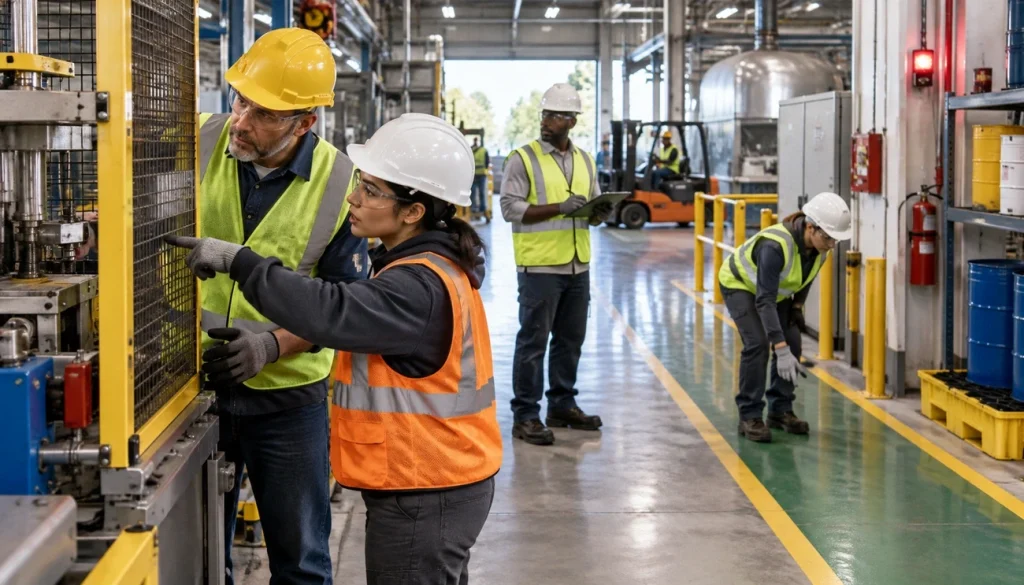
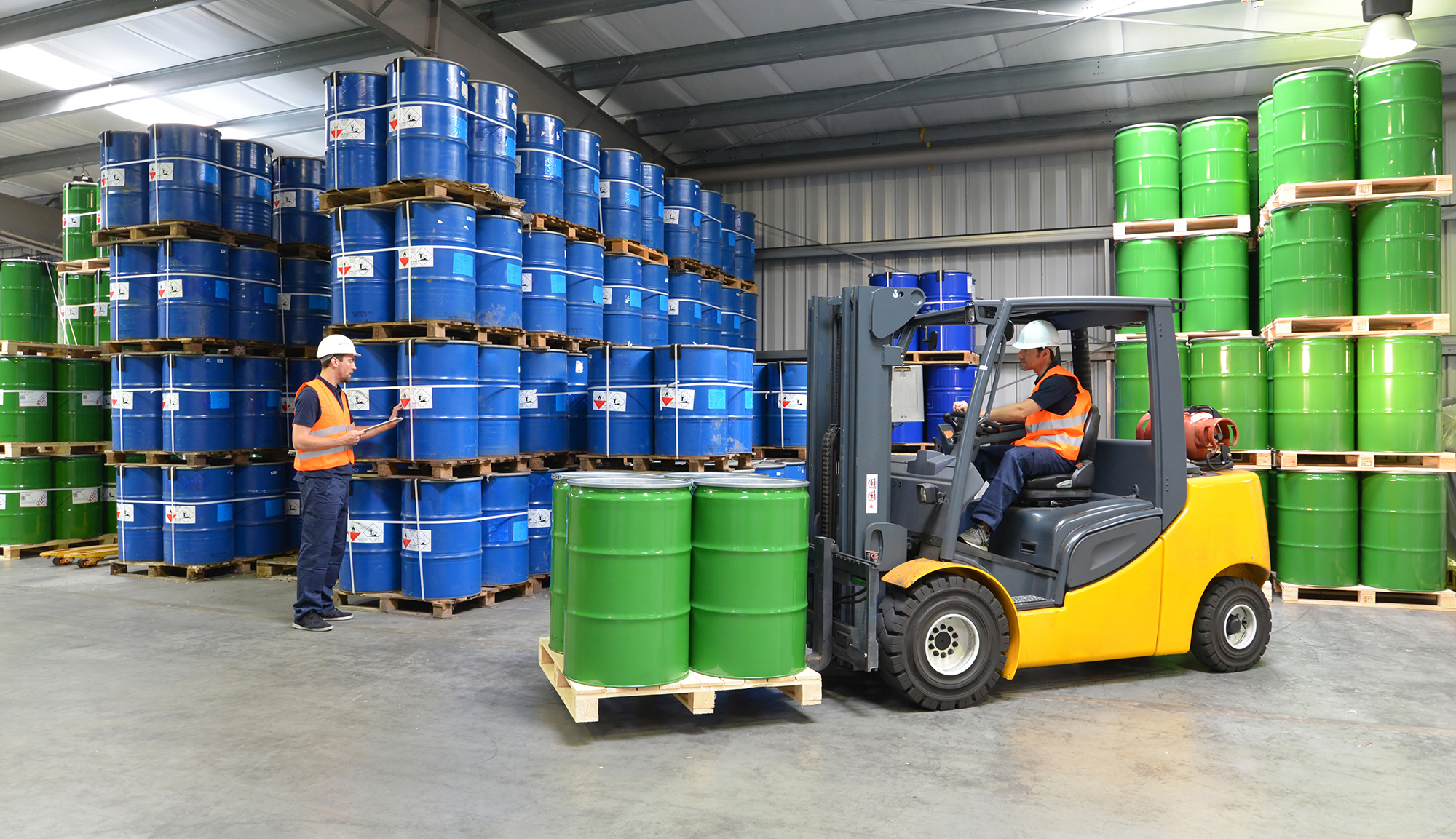
An effective workplace safety program is more than a binder of policies, an annual training session, or a collection of personal protective equipment. It is a working system that helps a business identify hazards, control risks, prepare employees, respond to problems, and improve safety as operations change.

Without that structure, safety can easily become reactive. A company may correct a damaged machine guard after an inspection, retrain an employee after an injury, or update a procedure after a near miss without addressing why the problem developed in the first place. Over time, the same weaknesses can return in different forms.

A stronger approach connects management responsibility, employee participation, hazard assessment, engineering controls, written procedures, training, inspections, incident investigation, corrective actions, emergency preparedness, and ongoing program evaluation. When these elements work together, safety becomes part of normal business operations rather than something addressed only after an incident or regulatory concern.

What Is a Workplace Safety Program?

A workplace safety program is an organized system for identifying hazards, preventing injuries and illnesses, defining responsibilities, and continually improving working conditions. The exact program will look different depending on the organization’s industry, size, workforce, equipment, processes, and regulatory responsibilities.

A manufacturing facility may need substantial attention to machine guarding, hazardous energy, chemicals, noise, and PPE. A warehouse may concentrate more heavily on forklifts, pedestrian traffic, loading docks, material handling, and storage. Other organizations may need specialized programs for fall protection, confined spaces, respiratory protection, electrical work, environmental responsibilities, or emergency response.

The purpose is not to make every company use the same safety checklist. The purpose is to create a repeatable process for recognizing risk and acting on it before employees are injured.

A Safety Program Should Be Proactive

Traditional safety management can become reactive when problems are addressed only after an injury, inspection, or complaint. A proactive program looks for hazards before they produce those outcomes.

That means regularly examining workplace conditions, work practices, incidents, near misses, employee concerns, training records, and changing operations. Each source provides information about where the safety system may be weakening.

The program then turns that information into corrective action instead of allowing findings to remain in inspection reports or meeting notes.

The Program Should Grow With the Business

A small business does not need to build an extremely complicated safety-management system on the first day. It can begin with clear responsibilities, basic hazard identification, essential procedures, employee training, and a reliable process for correcting problems.

As operations become more complex, the program can expand. New equipment, facilities, employees, contractors, chemicals, technologies, and regulatory responsibilities may require more formal assessments, specialized programs, additional training, or centralized tracking.

Step 1: Establish Management Leadership

Safety programs struggle when responsibility exists only within the safety department. Business owners, senior leaders, managers, and supervisors need to demonstrate that employee protection is an operational priority alongside productivity, quality, and customer service.

Management leadership does not mean attending one annual safety meeting. It means providing resources, defining responsibilities, supporting corrective actions, and making expectations consistent across the organization.

Create a Clear Safety Policy

A written safety policy gives employees and managers a common understanding of what the organization expects. It should communicate that preventing injuries and controlling hazards are organizational responsibilities rather than optional activities performed only when time permits.

The policy should also establish that employees can report hazards, injuries, and near misses without being discouraged from speaking up. A safety program becomes much weaker when workers believe reporting a problem will cause blame, discipline, or pressure from management.

Define Roles and Responsibilities

Everyone involved in the program should understand what they are responsible for. Senior management may provide resources and set expectations, while supervisors may be responsible for inspections, training follow-up, and correcting conditions in their departments.

Employees also need defined responsibilities, such as following procedures, using required PPE, reporting unsafe conditions, and stopping work when appropriate. Clear roles reduce the risk that an important task is overlooked because everyone assumes someone else is handling it.

Provide Adequate Resources

Corrective actions often require more than encouragement. A facility may need machine guarding, ventilation, training, additional PPE, engineering assistance, software, contractor support, or capital improvements.

Management should be prepared to allocate the time, personnel, and budget needed to address significant hazards. A safety program cannot perform effectively when supervisors identify serious problems but lack authority or resources to correct them.

Step 2: Understand the Hazards in Your Workplace

An effective program needs an accurate picture of workplace risk. This begins with structured hazard identification and risk assessment rather than relying only on past injury statistics.

A low injury rate can be encouraging, but it does not prove that every hazard is adequately controlled. Serious exposures may exist for months or years without producing an injury simply because the right combination of circumstances has not occurred yet.

Define the Scope of the Assessment

Begin by deciding which departments, tasks, equipment, materials, and employee groups will be reviewed. Include normal operations as well as maintenance, cleaning, equipment setup, shutdowns, contractor activities, and other nonroutine work.

The assessment should reflect how jobs actually occur rather than relying only on organizational charts or old job descriptions. Work conditions can vary between shifts, locations, seasons, and production levels.

Review Safety Records

Before walking the workplace, review information that may reveal existing problems. Incident reports, near misses, inspection findings, equipment records, employee concerns, training records, written programs, and previous corrective actions can all provide useful evidence.

A repeated near miss at the same loading dock may reveal a traffic-control weakness. Several hand injuries around one production process may indicate a guarding, work-practice, or PPE issue. Training records may show that employees have completed courses while workplace observations reveal that the actual procedures have changed.

Observe Work as It Is Actually Performed

Watch employees complete routine and nonroutine tasks rather than assessing conditions only when equipment is idle. Observe where people stand, what tools they use, how materials move, which safety devices are present, and how employees respond when something does not go according to plan.

The differences between written procedures and actual work can be especially important. Employees may have developed workarounds because equipment is difficult to access, storage space is inadequate, staffing changed, or production demands increased.

Include Worker Feedback

Workers often understand task-level hazards better than anyone else in the organization because they experience those conditions every day. Ask employees where close calls occur, which procedures are difficult to follow, what equipment creates problems, and where existing controls interfere with the job.

Their input should be treated as assessment evidence rather than informal conversation. Repeated concerns can reveal a developing risk before it produces an injury.

Arbill’s EHS Safety Assessments can support organizations that need a more structured evaluation of workplace conditions, programs, PPE, training, compliance gaps, and environmental responsibilities.


Explore Our Solutions!
How to Build an Effective Workplace Safety Program for Your Business

Step 3: Evaluate and Prioritize Risk

Identifying a hazard is only part of the process. Businesses also need a consistent method for determining which findings require attention first.

Risk ranking helps organizations direct resources toward the conditions with the greatest potential for serious harm instead of treating every observation as equally urgent.

Separate Hazards From Risks

A hazard is the source of potential harm, while risk considers how likely that hazard is to cause harm and how serious the outcome could be.

A forklift, chemical, machine blade, elevated platform, or electrical source can all be hazards. The risk changes depending on employee exposure, frequency, existing controls, workplace conditions, and potential consequences.

Describing the exposure clearly makes it easier to select the right corrective action.

Evaluate Likelihood and Severity

Many organizations use a risk matrix that compares likelihood with potential severity. The exact scoring system can vary, but the method should remain consistent so similar hazards receive comparable treatment.

A low-frequency hazard can still deserve immediate attention when the possible outcome is catastrophic. Likewise, a less severe exposure may become important when employees encounter it repeatedly throughout every shift.

Consider Existing Controls

A control should reduce the risk score only when it actually works. A written procedure that employees cannot follow, a damaged machine guard, or training that no longer matches the task should not be treated as effective simply because it exists.

The assessment should examine whether controls are available, functional, understood, and consistently used under normal workplace conditions.

Step 4: Control Hazards Using the Strongest Practical Measures

Once risks are prioritized, employers need to decide how those hazards will be controlled. The strongest safety programs do not respond to every problem with another warning sign, training session, or piece of PPE.

Instead, they consider the hierarchy of controls and address the hazard as close to its source as practical.

Eliminate or Substitute Hazards

The strongest option is eliminating the exposure altogether. A hazardous task may be redesigned, a dangerous chemical may be replaced, or maintenance may be performed from ground level rather than requiring elevated work.

Substitution can also reduce risk when elimination is not practical. A less hazardous material, safer tool, or different work process may significantly reduce employee exposure.

Use Engineering Controls

Engineering controls physically separate employees from the hazard or reduce the exposure through equipment or workplace design. Examples include machine guards, barriers, ventilation, local exhaust, automated material handling, sound enclosures, and pedestrian separation.

These controls are often more reliable than administrative measures because they do not depend entirely on an employee remembering the correct action every time.

Establish Safe Work Practices

Administrative controls and work practices help manage exposure that cannot be completely eliminated through engineering. Procedures may address restricted access, equipment operation, permits, work scheduling, inspections, maintenance, traffic rules, or job-specific safety steps.

These controls need to be realistic. A procedure that conflicts with actual production requirements will eventually encourage shortcuts, which is why employee feedback should be part of developing and reviewing safe work practices.

Use PPE for Remaining Exposure

Personal protective equipment provides another layer of protection when hazards remain. Gloves, respirators, eye protection, safety helmets, hearing protection, protective clothing, footwear, and fall protection should be selected according to the specific exposure rather than issued as generic equipment.

PPE also needs to fit employees properly and remain compatible with other equipment used during the task. Selection, inspection, maintenance, storage, and replacement should all be incorporated into the broader safety program.

Step 5: Develop the Written Programs Your Workplace Needs

Written safety procedures help create consistency across employees, departments, and shifts. They establish responsibilities and provide a reference for how specific hazards should be managed.

However, businesses should avoid building a large library of generic safety documents that nobody uses. The written program should reflect actual workplace conditions and applicable requirements.

Prioritize Programs Based on Hazard Exposure

Depending on operations, a business may need written programs or procedures involving hazard communication, lockout/tagout, respiratory protection, PPE, emergency response, confined spaces, fall protection, hearing conservation, powered equipment, or other workplace risks.

The appropriate programs should be determined through hazard assessment and applicable regulations rather than copied from another company.

Keep Written Procedures Current

Written programs should be reviewed when equipment, materials, work methods, staffing, or regulatory requirements change. An old procedure may create additional risk when employees follow steps developed for equipment or conditions that no longer exist.

Program owners should be clearly identified so revisions do not depend on someone remembering to update a document after a workplace change.

Make Procedures Accessible

Employees and supervisors need access to the procedures relevant to their work. Documents should be written clearly enough that workers can understand the expected actions and know where to go with questions.

A safety procedure that exists only in a management file may satisfy an administrative purpose but provide little support during actual work.

Step 6: Build Safety Training Around Actual Job Duties

Training connects written requirements and hazard controls with the employees expected to use them. It should reflect the worker’s real equipment, materials, procedures, and workplace conditions rather than relying solely on generic awareness courses.

Different hazards can also carry different regulatory training requirements, timing rules, and evaluation expectations.

Determine Which Training Each Role Needs

Create a training matrix that connects job roles with relevant hazards and responsibilities. A warehouse employee may need forklift-pedestrian awareness, while an operator requires powered industrial truck training and evaluation. Maintenance personnel may need lockout/tagout instruction, while employees using respirators have different program requirements.

This role-based approach helps avoid both missing necessary instruction and assigning large amounts of irrelevant training.

Include Hands-On Practice Where Appropriate

Some safety skills cannot be verified through slides or online quizzes alone. Employees may need to demonstrate equipment operation, PPE inspection, respirator procedures, fall-protection use, energy isolation, or emergency actions.

Practical evaluation allows trainers to identify mistakes before employees perform the task independently.

Follow Topic-Specific Retraining Rules

Employers should not assume every safety topic requires the same annual refresher schedule. Some standards establish recurring requirements, while others require retraining after workplace changes, incidents, poor performance, or other defined triggers.

Arbill’s guide to workplace safety training requirements explains how employers can distinguish task-specific instruction, refresher requirements, competency checks, and training documentation.

Step 7: Make Worker Participation Part of the Program

Employees should not be treated only as recipients of safety rules. Their involvement can improve hazard identification, procedure development, incident investigation, training, and program evaluation.

Workers often know when a control looks good on paper but fails during real operations.

Make Reporting Easy

Employees should have a simple method for reporting hazards, near misses, injuries, damaged equipment, PPE problems, or safety concerns. Reporting systems can range from direct supervisor communication to digital platforms, depending on the organization.

The important part is that reports receive a response. Employees are less likely to continue reporting when concerns repeatedly disappear without explanation or corrective action.

Avoid Creating Pressure to Hide Incidents

Programs built around zero-injury competitions or punitive responses can unintentionally discourage reporting. A low incident count is not useful when employees are afraid to report what actually happened.

Management should focus on understanding the conditions that led to an event and correcting them rather than simply protecting safety statistics.

Include Workers in Solutions

Employees can contribute practical insight when new equipment, PPE, procedures, or controls are being evaluated. A worker trial may reveal that a glove reduces grip, a barrier blocks an important access route, or a revised procedure creates a different hazard.

Participation makes it easier to build controls that employees can actually use.

”As long as people go to work, we have an opportunity to help protect them.

Julie Copeland
Arbill CEO

Julie Copeland Arbill CEO

Step 8: Prepare for Emergencies

Even strong preventive controls cannot eliminate every possibility of an emergency. Businesses need procedures for responding when injuries, fires, chemical releases, severe weather, equipment failures, or other serious events occur.

Emergency planning should reflect the facility rather than rely entirely on generic templates.

Define Emergency Responsibilities

Employees need to understand alarms, evacuation routes, assembly locations, reporting methods, and any shutdown or response responsibilities assigned to them.

Specialized roles should also be defined clearly. Employees expected to provide first aid, use emergency equipment, participate in spill response, or perform other duties need appropriate preparation.

Keep Emergency Equipment Accessible

First aid supplies, AEDs, fire extinguishers, eyewash stations, emergency showers, spill kits, and other equipment need to remain accessible and maintained where applicable.

Routine inspections should verify that emergency equipment is not blocked, damaged, depleted, or otherwise unavailable when needed.

Practice the Plan

Emergency drills and practical exercises can reveal problems that are difficult to identify on paper. Employees may discover that an exit is difficult to access, communication is unclear, or an assembly area creates another risk.

Those findings should be treated as opportunities to improve the emergency program before a real event occurs.

Step 9: Coordinate Contractors and Temporary Workers

Many workplaces include employees from several organizations working in the same facility. Contractors and staffing-agency workers may encounter hazards they do not normally face and may introduce new hazards through their own work.

A safety program should clearly address how information and responsibilities are coordinated.

Share Site-Specific Hazard Information

Contractors and temporary employees should understand traffic routes, restricted areas, emergency procedures, chemicals, equipment hazards, and other conditions relevant to their assignments.

General training from their employer does not automatically provide knowledge of the host site’s conditions.

Define Responsibilities Before Work Begins

Host employers, contractors, and staffing agencies should understand who is responsible for training, PPE, permits, inspections, supervision, communication, and incident reporting.

Clear coordination becomes particularly important during shutdowns or projects where several employers may work around the same equipment or hazardous area.

Step 10: Inspect the Workplace Regularly

A safety program needs ongoing visibility into workplace conditions. Regular inspections provide a structured way to find deterioration, changes, and unsafe practices before they produce incidents.

The inspection process should reflect the facility’s hazards rather than using only a generic checklist.

Inspect Under Normal Operating Conditions

Whenever possible, observe the workplace while employees are performing actual work. A machine may look perfectly safe while shut down but create significant exposure during adjustments or cleaning.

Busy periods, shift changes, and nonroutine work may also reveal hazards that are not visible during a scheduled quiet walkthrough.

Track Repeat Findings

Recurring findings are particularly important. If the same blocked aisle, damaged guard, PPE problem, or storage issue appears repeatedly, the previous corrective action may have addressed only the visible symptom.

Repeated findings should trigger a deeper review of workflow, supervision, resources, or system design.

Step 11: Investigate Incidents and Near Misses

Incident investigations should focus on learning why the event occurred and what controls need to improve.

Stopping at the employee’s immediate action rarely provides enough information to prevent recurrence.

Look Beyond the Immediate Cause

Suppose an employee bypasses a machine guard. The investigation should determine why that occurred. Was the guard difficult to use? Did the process require access the guard prevented? Was production pressure contributing to the shortcut? Had supervisors observed the practice previously?

These questions can reveal system-level causes that another warning or disciplinary response would miss.

Treat Near Misses as Useful Data

A near miss provides an opportunity to learn without the human cost of an injury. A forklift conflict, dropped object, chemical splash, or equipment malfunction may expose significant risk even when no one is harmed.

Tracking and investigating these events can help organizations intervene earlier.

Step 12: Manage Corrective Actions

Identifying a hazard without correcting it does not make the workplace safer. Every significant finding should move into a corrective-action process with accountability and follow-up.

A strong action system answers who is responsible, what needs to change, when the change should be completed, and how completion will be verified.

Assign One Accountable Owner

Avoid assigning findings vaguely to “maintenance” or “management.” A specific responsible person or role should have authority to move the action forward and report on progress.

This does not mean that person must complete every part personally. It means someone is responsible for ensuring the correction happens.

Set Deadlines According to Risk

High-risk conditions should receive greater urgency. Some hazards may require immediate controls or temporary suspension of work, while others may need engineering design, procurement, scheduled downtime, or capital funding.

The corrective-action system should keep longer-term items visible until they are completed.

Verify the Result

Do not close an item simply because work was ordered or a training session occurred. Return to the workplace and verify that the control operates as intended.

If the same problem returns, reopen the issue and investigate the underlying cause.

Step 13: Measure Safety Performance

Safety programs need meaningful indicators so management can tell whether conditions are improving.

Injury statistics are important, but relying on them alone can create blind spots because they measure harm after it has already occurred.

Track Lagging Indicators

Lagging indicators may include recordable incidents, restricted-duty cases, lost workdays, or other injury and illness outcomes. They show where safety controls have already failed to prevent harm.

These measures can help identify trends but should not be treated as the only measure of safety success.

Track Leading Indicators

Leading indicators provide information about prevention activity before an incident occurs. Examples may include hazard reports, corrective-action response time, repeat inspection findings, training competency, near-miss investigations, and preventive maintenance.

The objective is not simply to collect more numbers. Each metric should help management understand whether important controls are becoming stronger or weaker.

Step 14: Evaluate and Improve the Program

A workplace safety program should never be treated as permanently complete. Business operations evolve, and the program needs to evolve with them.

Regular evaluation helps leadership determine whether policies, controls, training, and corrective-action systems remain effective.

Review the Program After Workplace Changes

New machinery, chemicals, processes, layouts, staffing arrangements, and technologies can change employee exposure. Significant changes should trigger a review of relevant assessments, procedures, PPE, and training.

Waiting for the next annual review may allow a new hazard to remain uncontrolled for months.

Review After Incidents or Control Failures

A serious incident, near miss, repeated finding, or failed control provides evidence that some part of the current program may need revision.

Use that information to update the hazard assessment, procedures, training, or engineering controls rather than treating the event as isolated.

Conduct Periodic Program Assessments

Formal assessments can provide a broader view than routine inspections. They can compare written programs, training, PPE, facility conditions, compliance records, employee practices, and corrective actions.

Arbill’s EHS Safety Consulting can support organizations that need assistance with program development, site assessments, gap analysis, specialized safety issues, or longer-term improvement planning.

See Our Safety Services!
Safety Programs

Build a Program Employees Can Actually Use

A safety program should be structured, but it should not become so complicated that employees and supervisors cannot apply it.

Procedures should be clear. Reporting should be simple. Responsibilities should be visible. Training should match the work. Corrective actions should be tracked. Employees should know where to find the information they need.

Arbill’s Safety Programs bring together products, expertise, compliance support, and targeted solutions that can help organizations address specific workplace challenges as part of a larger safety strategy.

A Practical Workplace Safety Program Checklist

Before considering the program established, businesses should confirm that the following core elements are addressed:

  • Management has communicated its commitment and assigned safety responsibilities.
  • Workplace hazards are identified through assessments, inspections, records, and worker input.
  • Risks are prioritized consistently according to likelihood and severity.
  • Hazards are controlled using the strongest practical measures before relying on PPE.
  • Written safety programs reflect current operations.
  • Employees receive training matched to their actual duties and hazards.
  • Workers have a clear way to report hazards, incidents, and near misses.
  • Emergency procedures and equipment are maintained and understood.
  • Contractors and temporary workers receive appropriate site-specific information.
  • Incidents and near misses are investigated for underlying causes.
  • Corrective actions have owners, deadlines, and follow-up verification.
  • Leading and lagging safety indicators are reviewed.
  • The overall program is reassessed after significant changes and at appropriate intervals.

The checklist should support the program rather than become the program itself. The real measure of effectiveness is whether these processes consistently identify and reduce workplace risk.

Common Mistakes When Building a Safety Program

One common mistake is focusing primarily on paperwork. Written programs are important, but a complete binder does not guarantee that employees are working safely. Procedures need to match real work, supervisors need to apply them, and employees need to understand what is expected.

Another mistake is relying too heavily on training and PPE to solve hazards that could be controlled more effectively through engineering or workplace design. Repeated training around an uncontrolled hazard can place unnecessary responsibility on employees while leaving the underlying exposure unchanged.

Businesses should also avoid judging program success only by the absence of injuries. A facility may report zero recordable incidents while carrying serious unresolved hazards. Inspections, near misses, employee feedback, corrective actions, and other leading indicators provide a more complete view.

Start With the Highest Priorities

Businesses that do not yet have a formal safety program do not need to solve everything at once. Start by identifying the hazards capable of causing the most serious harm and making sure essential controls are in place.

From there, define responsibilities, establish basic reporting and corrective-action systems, develop the written programs required by the work, and train employees on the hazards they actually encounter.

The program can become more sophisticated over time as the company gains better information about its risks and performance.

Conclusion

An effective workplace safety program is built around a continuous process of finding hazards, controlling risk, preparing workers, checking performance, and making improvements when conditions change.

Management leadership provides the direction and resources needed to keep the program active. Hazard assessments and worker participation identify where problems exist. Engineering controls, work practices, PPE, and written procedures provide protection, while training gives employees the knowledge and skills needed to apply those controls correctly.

Regular inspections, incident investigations, near-miss reporting, and corrective-action tracking help the organization recognize when controls begin to weaken. Leading and lagging indicators then provide additional information about whether the overall system is improving.

Most importantly, the program should remain connected to the work employees actually perform. Procedures, equipment, training, and assessments need to evolve as operations change.

When businesses build safety into everyday decisions rather than treating it as a separate compliance activity, they create a stronger system for preventing injuries, supporting employees, and maintaining reliable operations.

Request a Safety Assessment

Recent Posts

How to Conduct a Risk Assessment That Actually Prevents Workplace Injuries
How to Identify Workplace Hazards Before They Lead to Injuries

How to Identify Workplace Hazards Before They Lead to Injuries

How Managed Personal Protective Equipment Programs Cut Costs While Keeping You Compliant
How Managed PPE Programs Help Businesses Reduce Costs and Improve Compliance

How Managed PPE Programs Help Businesses Reduce Costs and Improve Compliance

How to Build an Effective Workplace Safety Program for Your Business

How to Build an Effective Workplace Safety Program for Your Business

Workplace Safety Training Requirements Every Employer Must Follow
Workplace Safety Training Requirements: What Employers Need to Know

Workplace Safety Training Requirements: What Employers Need to Know

Risk Assessment for Environmental Health and Safety
Environmental Health and Safety Assessments: What Businesses Need to Know

Environmental Health and Safety Assessments: What Businesses Need to Know

  • Previous ProjectHow Managed PPE Programs Help Businesses Reduce Costs and Improve Compliance

  • Next ProjectWorkplace Safety Training Requirements: What Employers Need to Know

CUSTOMER SERVICE

800-523-5367

CONTACT US

Complete the short form below and an Arbill representative will get back to you within 24 hours.
* Required Fields

    ARBILL RESPECTS YOUR PRIVACY AND YOUR INFORMATION: By submitting the form above you agree to receiving emails from Arbill. Your submitted information is NEVER shared. You may unsubscribe at any time via the "unsubscribe" link in our emails. You can view our Privacy Policy HERE.