Personal protective equipment is an essential part of many workplace safety programs, but managing that equipment can become surprisingly complicated as an organization grows.
Gloves, safety glasses, respirators, hearing protection, protective clothing, and other products may be distributed across multiple departments, shifts, facilities, or job roles. When purchasing and distribution are handled through open supply closets, spreadsheets, manual requests, and disconnected vendors, employers can lose visibility into how much equipment is being used, where shortages are developing, and whether workers are receiving the correct approved products.
Those gaps can create both financial and safety problems. Facilities may overstock products that employees rarely use while running out of high-demand items. Workers may take more PPE than necessary because there is no meaningful inventory control. Different locations may buy different products for the same task, making standardization and training more difficult.
Managed PPE programs provide a more structured approach by combining approved product selection, inventory management, point-of-use distribution, usage tracking, replenishment, and ongoing program oversight. When designed around a workplace hazard assessment, the result can give employees easier access to the equipment they need while helping employers reduce unnecessary consumption and maintain more consistent PPE practices.
What Is a Managed PPE Program?
A managed PPE program is a structured system for controlling how protective equipment is selected, stocked, distributed, replenished, and tracked across a workplace or organization. Instead of treating PPE primarily as individual purchase orders, the employer establishes an approved program around the products employees actually need for their assigned hazards and tasks.
The exact model can vary. Some organizations use PPE vending machines at the point of use, while others combine vending with lockers, central inventory, specialty programs, reporting, and supplier-managed replenishment. Multi-site employers may also standardize approved products so similar operations use consistent equipment across facilities.
Managed PPE Is More Than Automatic Dispensing
A vending machine is one useful component, but the broader program should begin with safety requirements rather than hardware. Employers still need to determine which equipment employees need, which models are approved, where different sizes are required, and how often reusable equipment must be inspected or maintained.
Once those decisions are established, managed distribution can make the program easier to operate. The system controls which products are available, where they are located, and how employees access replacements during the workday.
This distinction is important because reducing PPE cost should never mean limiting employees’ access to protection they are required to use.
Traditional PPE Purchasing Can Hide Usage Problems
In a traditional supply-room model, supervisors may order several cases of gloves, glasses, or respirators and distribute them as employees request replacements. Unless someone records every transaction, the organization may know what it purchased without knowing where the products went.
That makes several questions difficult to answer. Is one department using twice as many gloves because the task damages them quickly? Are employees taking extra items to keep in personal lockers? Is one facility purchasing a different product for the same hazard? Are shortages occurring because inventory levels are too low or because equipment is being used inefficiently?
A managed system creates better visibility into these patterns.
How PPE Vending Changes Distribution
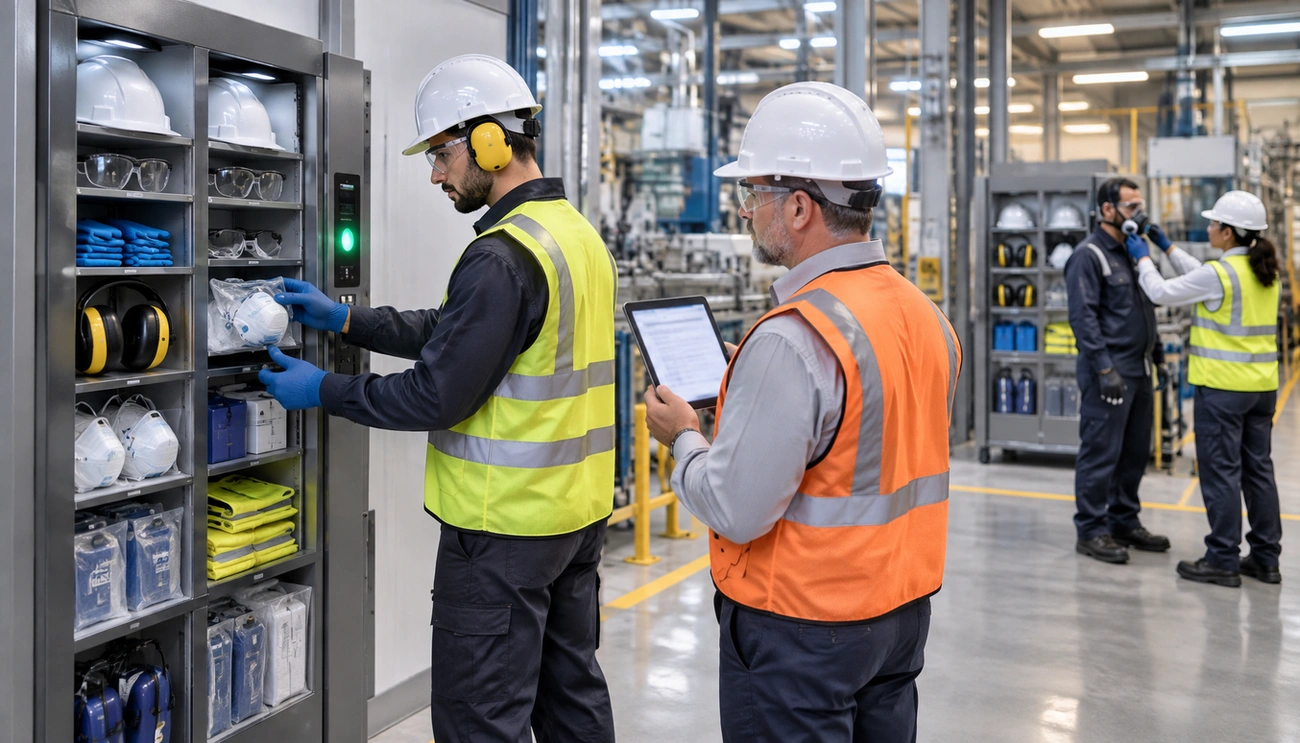
PPE vending moves commonly used safety products closer to the people who need them while adding controls around access and inventory.
Arbill’s PPE Vending Program combines vending machines, lockers, collection options, real-time usage reporting, configurable dispensing controls, and inventory monitoring. Arbill’s current system also allows employers to configure specific products or dispensing limits by employee or division while monitoring inventory and vending patterns.
The goal is not simply automation. It is creating a more predictable PPE supply process.
Point-of-Use Access Can Reduce Delays
Employees should not need to search for a supervisor every time a pair of gloves becomes damaged or safety glasses need replacement. If PPE is difficult to access, employees may delay work, leave their area to find supplies, or in a poorly managed environment, continue without suitable protection.
Placing approved PPE near the work area can reduce that friction. This can be particularly useful for facilities operating several shifts because workers maintain access even when purchasing personnel or storeroom staff are unavailable.
Point-of-use availability also allows damaged or contaminated disposable equipment to be replaced promptly without creating unnecessary administrative steps.
Controlled Dispensing Improves Accountability
Open cabinets make it difficult to know how much equipment individual departments or employees are using. Controlled dispensing provides more visibility while still keeping necessary equipment available.
The purpose should not be to penalize workers for replacing damaged PPE. Instead, usage data can help safety teams identify unusual patterns that deserve investigation.
If one operation consumes significantly more cut-resistant gloves than similar departments, for example, the employer can ask whether the selected glove is appropriate for the material being handled. High usage could indicate excessive wear, a poor product match, improper use, or simply a more demanding task.
The data creates a question worth investigating rather than automatically treating consumption as waste.
Managed PPE Programs Can Reduce Excess Inventory
One of the clearest opportunities for cost control is reducing unnecessary stock.
Organizations frequently keep large quantities of safety products in storage because they do not have reliable information about actual consumption. Managers may reorder early to avoid shortages, while another department already has several unopened cases of the same item.
A managed system can provide a more accurate picture of what employees use and how quickly inventory moves.
Better Usage Data Supports Better Reordering
When usage patterns are visible, inventory levels can be based on actual consumption rather than estimates.
Frequently used products can receive higher stocking levels, while slow-moving products can be managed more conservatively. This reduces the chance that capital remains tied up in excessive stock or that products become obsolete before they are used.
Real-time inventory monitoring can also help identify shortages earlier, giving the organization time to replenish critical PPE rather than discovering that the supply cabinet is empty during a shift.
Standardization Reduces Unnecessary Product Variation
Large organizations often accumulate multiple versions of similar PPE over time.
One facility may purchase one cut-resistant glove while another orders three alternatives. Different supervisors may select different safety glasses, earplugs, or disposable respirators even when employees perform comparable work.
Standardization can reduce this complexity.
Once the employer has evaluated the hazards and approved products for specific tasks, purchasing can concentrate on a smaller, defined selection. This can simplify ordering, training, inventory management, and replacement while giving the organization clearer visibility into overall PPE consumption.
Arbill’s guide to PPE program management for multi-site industrial operations explains how standardized selection and inventory control can help organizations manage protective equipment more consistently across locations.