Forklifts keep warehouses, distribution centers, manufacturing facilities, and loading docks moving. They also create one of the most serious hazards in industrial environments: the risk of striking a pedestrian.
The danger is not always caused by careless driving. In many facilities, forklift operators are working around stacked inventory, narrow aisles, blind corners, loading dock activity, pedestrians, noise, and fast-moving schedules. A worker can step into a travel path. A forklift can reverse near a rack. A load can block the operator’s view. In seconds, a normal shift can turn into a serious incident.
Traditional forklift safety controls still matter. Training, mirrors, horns, lights, floor markings, walkways, and barriers all play a role. But they do not eliminate every blind spot. That is why many safety leaders are looking beyond passive warning systems and adding real-time alert technology.
TruSense™ Forklift, powered by Microshare, is Arbill’s real-time forklift safety alert system designed to help prevent collisions between forklifts, pedestrians, and equipment by sensing hazards operators may not see.
Why Forklift Blind Spots Are So Dangerous
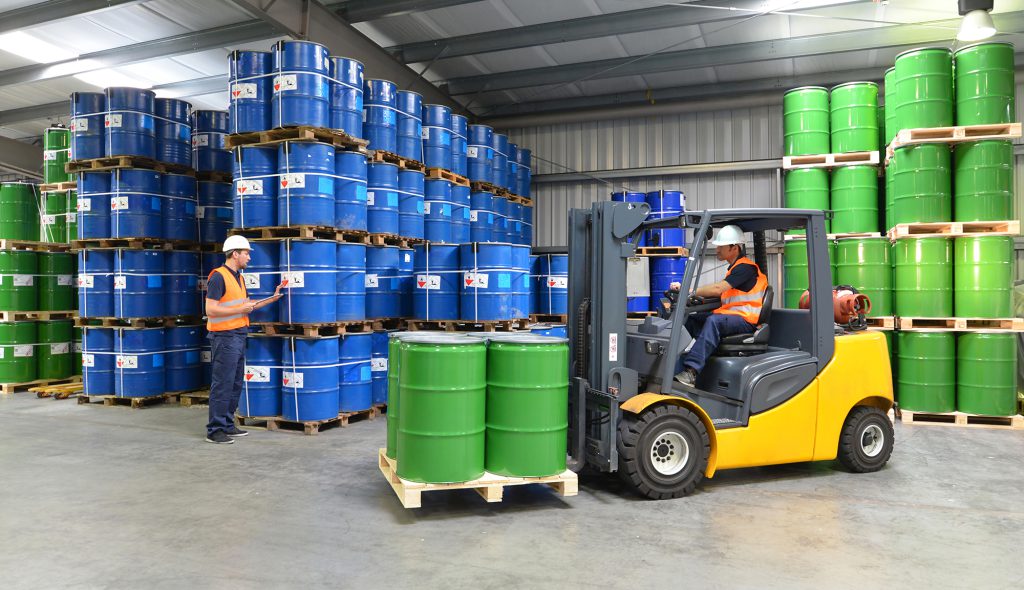
Forklift-pedestrian incidents happen because warehouses are shared spaces. Operators and pedestrians often work near each other, especially in busy aisles, staging areas, loading docks, production lines, and storage zones.
OSHA notes that many pedestrians and bystanders are injured in forklift-related accidents, including cases where forklifts strike pedestrians or falling loads strike nearby workers. OSHA also recommends separating forklift traffic from pedestrian traffic where possible, yielding to pedestrians, sounding horns at blind corners, and using alarms when backing up.
Blind spots become especially dangerous when:
- A load blocks the operator’s forward view
- High racking limits visibility at intersections
- Pedestrians cross behind or beside a forklift
- Forklifts reverse near active work zones
- Noise makes horns or backup alarms harder to hear
- Workers become used to forklift traffic and stop reacting quickly
- Congested areas make it difficult to maintain safe distance
Arbill’s forklift and pedestrian safety guidance identifies limited visibility as a key risk, noting that forklift design, heavy loads, blind spots, high shelving, narrow aisles, crowded areas, and dim lighting can all increase the chance of collision.
Why Traditional Forklift Safety Measures Are Not Always Enough
Most facilities already use some combination of training, signage, mirrors, lights, horns, alarms, marked walkways, and supervisor reminders. These controls are important, but they often depend on one thing: someone noticing the hazard in time.
That is the problem.
A mirror only helps if the operator looks at the right moment. A horn only helps if the pedestrian hears it and reacts. A floor marking only works if people stay in the marked area. A training reminder only works if workers remember it during a fast-paced shift.
Traditional controls can also lose effectiveness over time. Workers may become desensitized to alarms. Operators may assume aisles are clear. Pedestrians may rush through work zones to save time. When production pressure rises, small shortcuts can become routine.
That does not mean facilities should remove traditional controls. It means they need another layer of protection that responds in real time.
How TruSense Helps Close the Awareness Gap
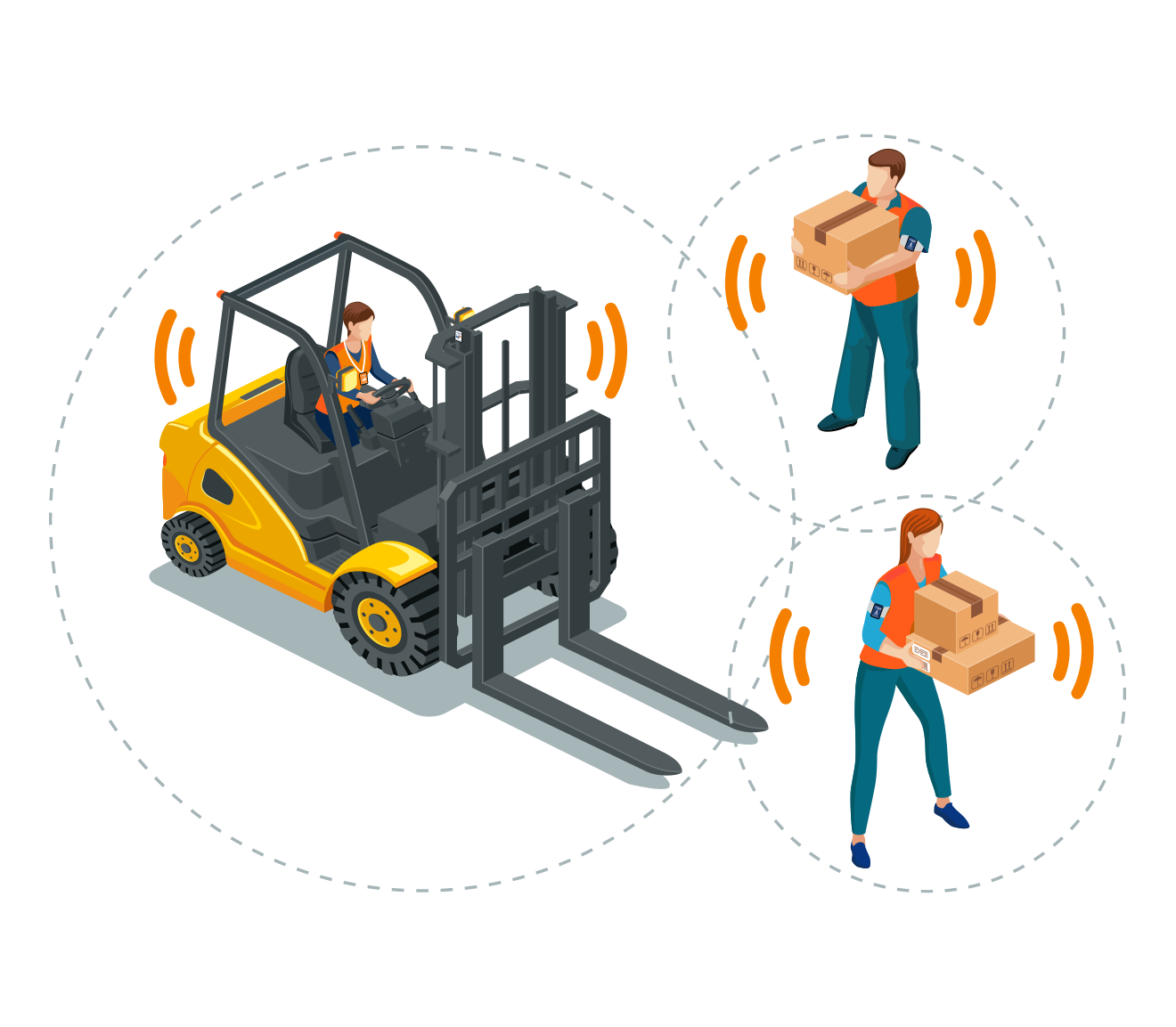
TruSense Forklift is designed to improve awareness when forklifts and pedestrians are operating near each other. According to Arbill, the system uses smart sensors to detect movement and proximity of people, objects, or other vehicles, then alerts operators and pedestrians immediately. It is designed to provide visual and audible alerts and support 360-degree awareness indoors and outdoors.
The system includes a forklift-mounted sensor and a wearable pedestrian sensor. Arbill explains that the forklift sensor is affixed to the machine and communicates with a sensor worn by the forklift operator, while the pedestrian sensor can be worn on the wrist, arm, safety vest, waistband, or lanyard.
When a pedestrian comes within the defined range, TruSense alerts workers in real time. Arbill states that TruSense vibrates and buzzes to alert forklift operators and nearby workers within six feet, giving pedestrians time to move away faster than a forklift can stop or pivot.
This makes TruSense different from passive safety tools. It does not simply mark a hazard zone or remind workers to be careful. It actively alerts people when proximity becomes a concern.