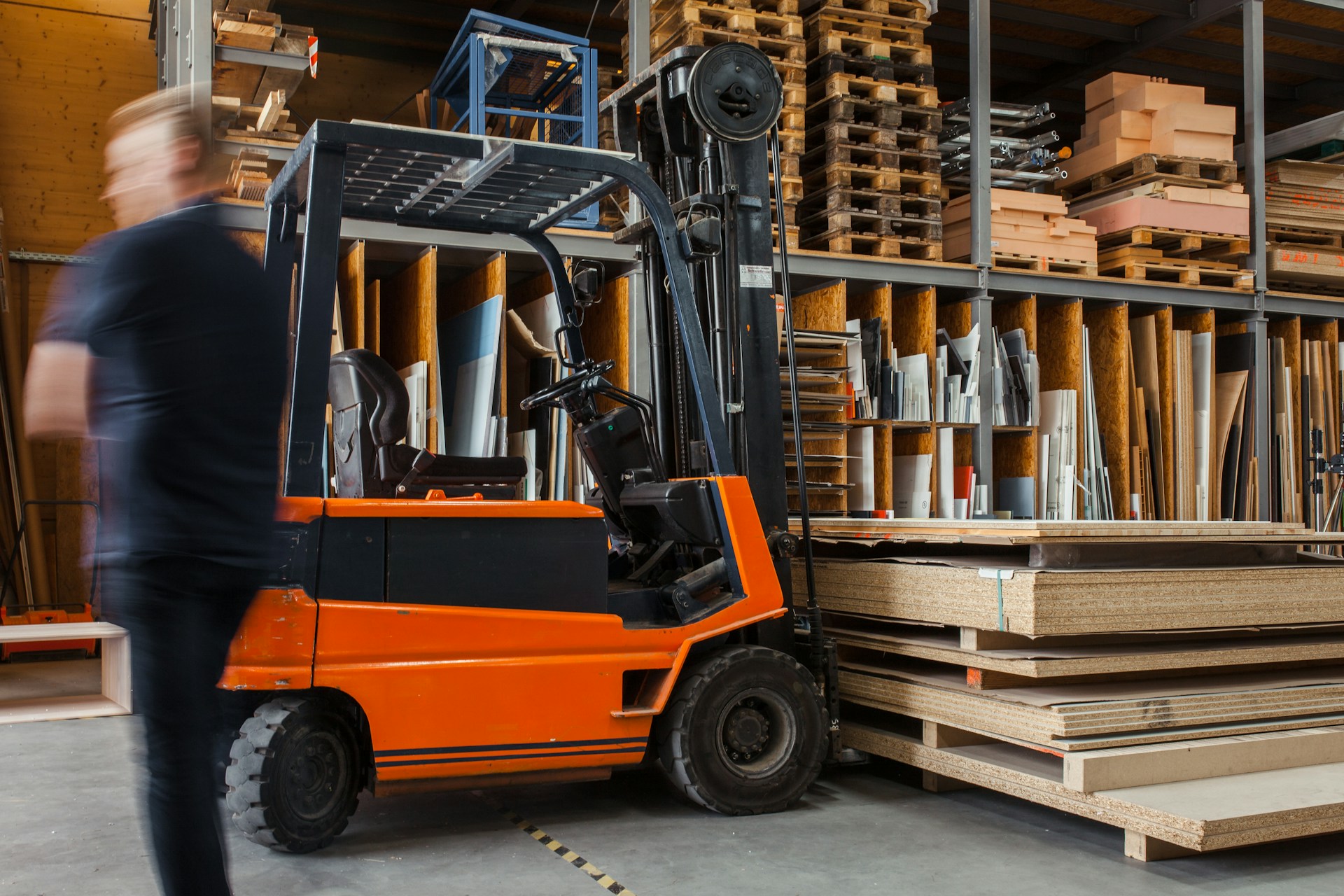
Forklifts are essential to warehouses, manufacturing plants, and distribution centers. They move product, support production, and keep supply chains on schedule. However, they are also among the most dangerous types of workplace equipment. The data supporting this is hard to ignore.
According to the National Safety Council, forklifts were the source of 84 work-related deaths in 2024, and OSHA estimates that between 35,000 and 62,000 forklift-related injuries occur every year, with serious injuries accounting for nearly 35,000 of those cases annually. Thirty-six percent of all forklift fatalities involve pedestrians, which means the greatest risk in a forklift environment is often not the operator at the wheel, but the worker on foot who never saw the vehicle coming.
These figures stem not just from carelessness but from a basic mismatch between heavy equipment operation in shared spaces and outdated risk management tools.
Why Traditional Approaches Have a Ceiling
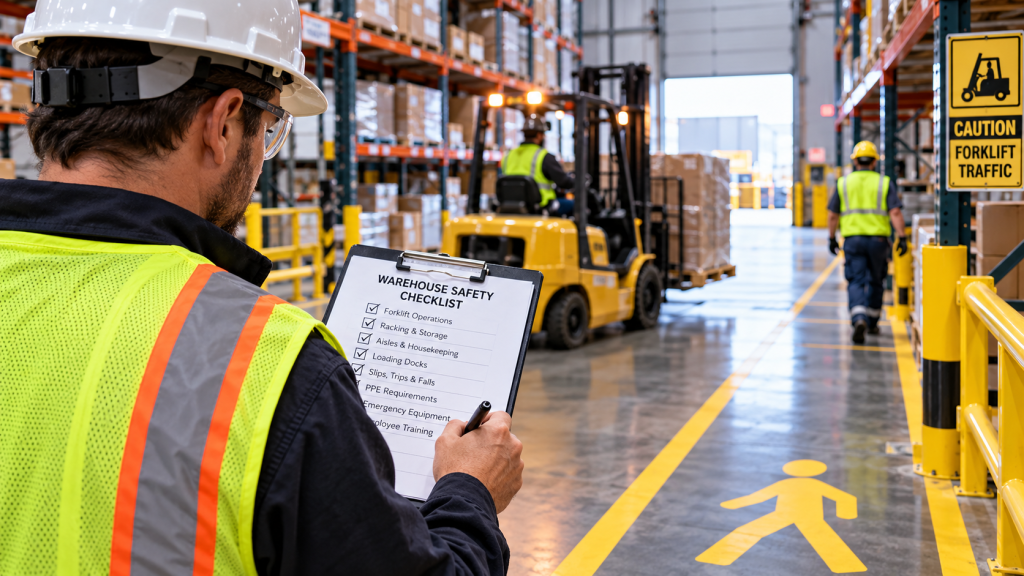
The standard forklift safety playbook includes operator training, physical separation, and administrative controls. Floor markings define pedestrian walkways. Mirrors at blind corners. Signage warns of moving equipment. Speed limits are posted. These steps have real value. OSHA’s Powered Industrial Truck Standard (29 CFR 1910.178) sets clear expectations for training, maintenance, and pedestrian protection. Every facility must meet these standards.
The problem is that all these measures rely on human awareness and behavior staying consistent across shifts and spaces. Fatigue erodes awareness. Distractions are constant in high-output environments. New workers and visitors lack the spatial familiarity of seasoned staff. The physics of a loaded forklift, even at modest speeds, leaves almost no margin for error if someone steps into its path.