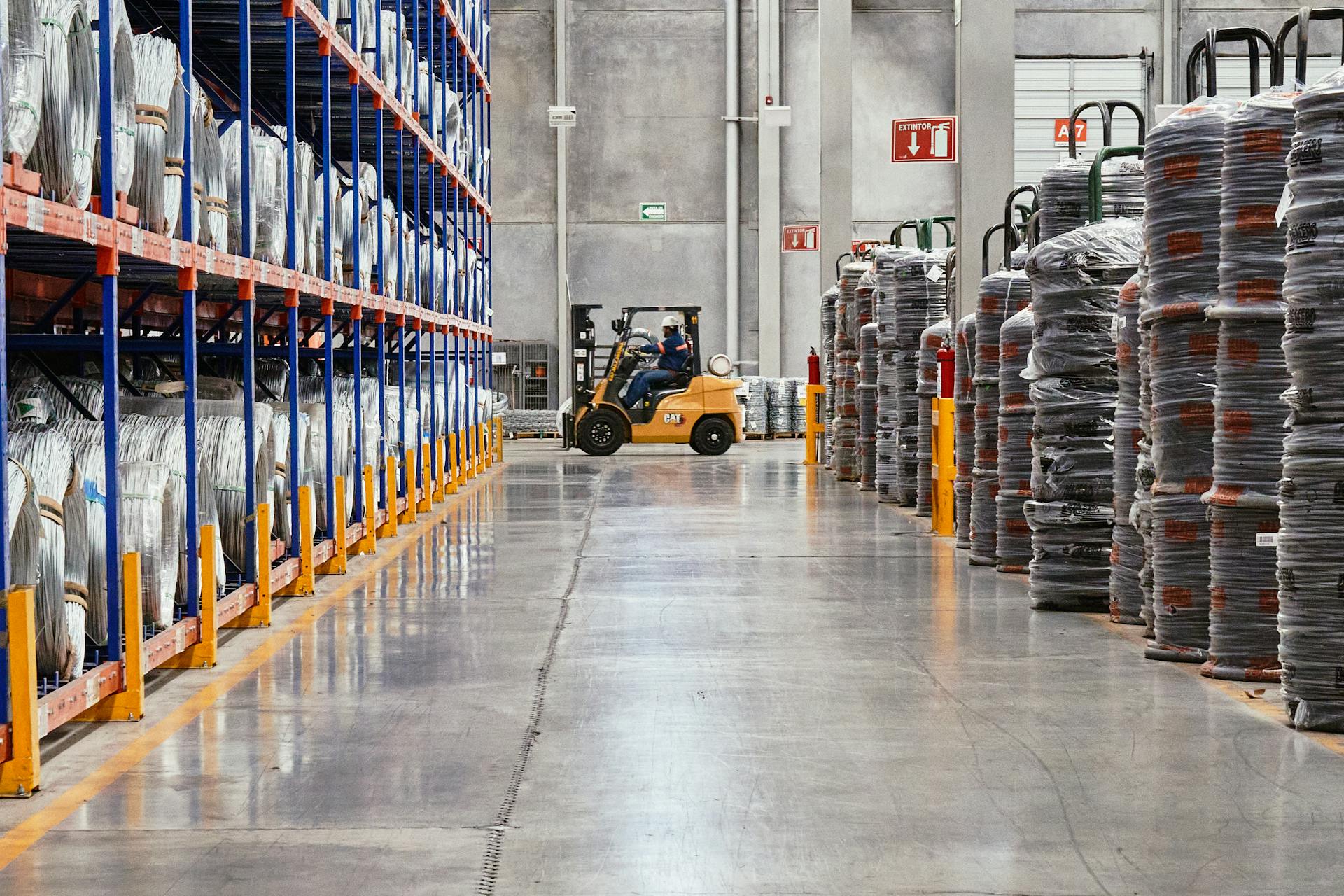
The safety manager at a high-volume distribution center had done everything right on paper. Forklift operators were certified, pedestrian walkways were marked and enforced, speed limits were posted throughout the facility, and mirrors were installed at every major intersection. A near-miss reporting system was in place, and workers were trained on how to use it.

Close calls kept happening regardless.

The issue was the challenge of physics and attention in a shared space, where forklift accidents account for 30% of warehouse incidents. Blind corners, dock areas with reduced visibility, and crowded aisles all created conditions for rapid movement of both forklifts and pedestrians. The mirrors and markings helped, but couldn’t address distractions, obstructed sightlines, or inexperienced workers. That is where serious incidents occur.


The Decision to Pilot Something Different

When the safety team evaluated TruSense Forklift, the initial conversation was straightforward. They were looking for a layer of protection that would work even when human awareness failed, because on a busy warehouse floor, human awareness always fails eventually.

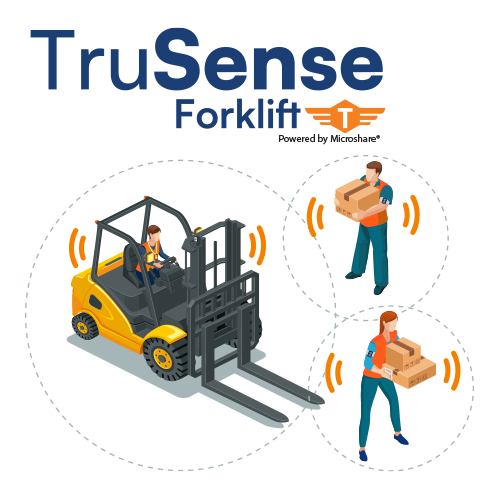
TruSense uses wearable sensors for pedestrians and mounts them on forklifts. When a forklift comes within six feet of a sensor-wearing person, both receive instant vibration and light alerts. The response is automatic, needing no action from workers, and works in real time regardless of visibility. It does not require eye contact, workers looking up, or remembering to check a mirror.

The pilot began in the two highest-risk facility areas: the inbound dock zone, where forklifts and delivery workers frequently crossed paths, and the main cross-aisle, where office pedestrians regularly crossed primary forklift lanes. Setup took under a day. Sensors were attached with Velcro, pedestrian units distributed at shift start and worn at the waist or in vest pockets, with no forklift modifications. Warranties remained intact, and operations proceeded without disruption.
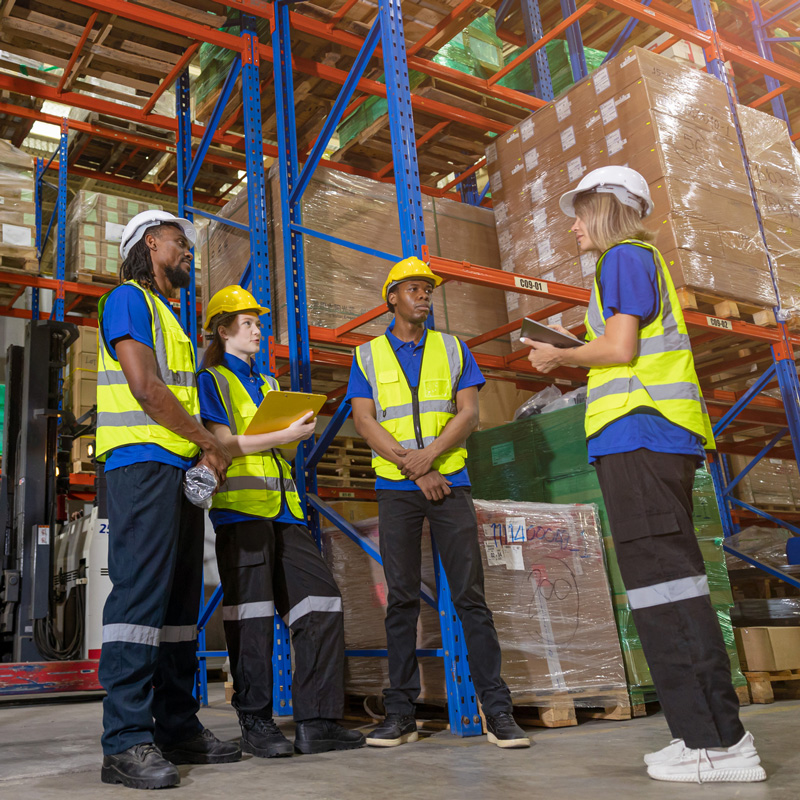
Explore Our Solutions!

What Happened in the First Weeks

The alerts began immediately, revealing an unexpected impact: workers who had operated in those areas for months were surprised by the frequency of sensor activations, which highlighted unseen risks and challenged previous expectations about safety. The dock zone, previously considered well-managed, generated multiple alerts per shift, including in locations not identified as high-risk in any hazard assessment. This made staff more aware of invisible threats, catalyzing a broader reassessment of daily practices.

Near-miss data that had previously gone unrecorded was now visible. Workers who had silently absorbed dozens of close calls over months on the floor suddenly had a system that automatically registered every proximity event, whether anyone chose to report it. The pilot’s data from its first three weeks revealed patterns that years of observation and incident tracking had not captured.

Near misses around forklifts are far more frequent than incident logs suggest, and the vast majority go unreported. Workers often fail to flag a close call because the reporting process requires them to recognize the event as reportable, stop what they are doing, and complete a form. In fast-moving environments, that sequence rarely happens for events that end without injury. Proximity sensing closes that gap by generating data on every meaningful interaction between a forklift and a person on foot, creating a complete picture of floor risk rather than the partial one that manual reporting provides.

The Shift That Followed

Within the first month, something less quantifiable began to change alongside the data collection. Workers in the pilot zones started talking about the sensors differently. The initial reaction on the first day of the pilot had been cautious acceptance, the normal skepticism that comes with any new system being introduced on a busy floor. By the third week, operators were checking that their units were paired correctly before starting their shifts without being reminded, and pedestrian workers who had initially doubted the system’s usefulness were asking whether their colleagues in other areas of the facility were receiving the same protection.

The safety manager described it as a shift in workers’ relationship with the floor itself. When workers know there is a system actively watching the space around them, their confidence changes. They are less likely to develop the slow habituation to risk that accumulates when close calls happen repeatedly without consequence or intervention, and the alerts serve as a continuous, low-friction reminder that the hazard is real and that the organization is paying attention to it.

According to the NSC, organizations with formal near-miss programs that act on findings see measurable improvements in overall safety performance and operator confidence. When operators trust their environment, they make faster and more consistent decisions.

TruSense Forklift Technology

From Pilot to Permanent

At the end of the pilot period, the decision to expand TruSense across the full facility was straightforward. The near-miss rate in the dock area had dropped measurably, and the cross-aisle events recorded in the first week were occurring less frequently as workers and operators unconsciously adjusted their behavior in response to the alerts. The cost of expanding coverage across the remaining forklift fleet was easy to justify relative to the cost of a single serious incident. The average workers’ compensation claim for a forklift-related injury runs $41,003, and that figure does not account for OSHA exposure, legal costs, or the lost productivity that follows an investigation.

The facility-wide rollout used the same setup process as the pilot: Velcro-mounted forklift sensors, pedestrian wearables distributed at shift start, and daily pairing completed by operators before their first run. The TruSense smart sensing technology automatically distinguishes between a pedestrian unit and a forklift unit based on speed differential, sending the appropriate alert to each rather than a generic signal to both. That distinction matters for worker confidence in the system, because a system that generates confusing or irrelevant alerts loses adoption quickly on a busy floor.

Arbill’s team of safety experts supported the rollout from installation through per-shift training for all workers, including temporary staff and contractors who rotated through the facility. The program includes device support and the exchange of any manufacturer-defective units, meaning the facility does not need to manage the hardware’s technical lifecycle internally.

What This Means for Your Facility

The key takeaway from this facility’s experience is that while TruSense did not replace the existing safety program, it triggered a cultural transformation. Floor markings, certifications, and mirrors remained, but now the safety program achieved its purpose even when attention lapsed, creating a lasting shift in attitudes and behaviors on the floor.

If your facility is ready to see what a TruSense pilot looks like in your highest-risk zones, Arbill’s safety team can help you identify the right areas to start, set up the system without disrupting operations, and measure results before you decide to scale. The pilot model exists for exactly this reason: to let the results make the case before committing to a facility-wide program.

Every warehouse has the equivalent of that dock zone, the area everyone on the floor knows is more dangerous than it looks. Start there, uncover hidden risks, and set a new safety standard for your facility. Protect your people and drive real, lasting change

What to Do Now

Operations and safety leaders can take concrete steps to evaluate whether proximity sensing technology fits their facility’s current exposure:

  • Identify your two highest-risk zones. Dock areas, cross-aisles, and blind corners where forklifts and pedestrians share space most frequently are the right starting point for a pilot. If those areas have not been formally assessed recently, a floor walk with workers who operate there daily will surface what maps and reports miss.
  • Review near-miss reporting rates. If your near-miss log is sparse, that shows a reporting gap rather than a safe floor. Pull the last 90 days and look for patterns that official incident tracking has not captured.
  • Assess your current separation controls. Verify that floor markings, bollards, and travel lanes still reflect how people and equipment actually move through your facility today, not how they moved when the plan was written.
  • Evaluate operator evaluation records. Confirm that every active forklift operator has been formally evaluated on the specific trucks they operate in your specific facility conditions, and that refresher records are current.
  • Consider a TruSense pilot. A pilot in your two highest-risk zones requires no equipment modification, minimal setup time, and no operational disruption. It generates data on every pedestrian-forklift interaction from the first shift, giving you a factual basis for the next decision rather than an estimate.

About Arbill

Arbill is America’s largest women-owned, safety-only distributor, with nearly 80 years of experience protecting workers across manufacturing, warehousing, utilities, construction, and logistics. Arbill provides PPE, safety equipment, technology solutions, including TruSense Forklift, and EHS advisory services to high-risk industries nationwide.

For facilities ready to evaluate TruSense or conduct a more extensive pedestrian safety assessment, schedule a conversation with Arbill’s safety team to get started. Safer. Every Day.

See Our Safety Services!

Frequently Asked Questions

What is TruSense Forklift, and how does it work? TruSense Forklift is a proximity sensing system that uses wearable sensors carried by pedestrians and mounted on forklifts. When a forklift comes within six feet of a person wearing a sensor, both units respond with immediate vibration and light alerts. The system operates automatically in real time, regardless of visibility conditions or whether either party notices the other.

How long does a TruSense pilot take to set up? 

A TruSense pilot can be operational in less than a day. Sensors attach to forklifts using Velcro adhesive without requiring equipment modification, warranty concerns, or operational downtime. Pedestrian units are distributed at shift start and require no special installation.

Does TruSense replace existing forklift safety measures? 

TruSense reinforces an existing forklift safety program rather than replacing it. Floor markings, operator certifications, speed limits, and mirror coverage remain essential. TruSense closes the gap that those measures cannot cover during lapses in human attention, distraction, and reduced visibility.

Why do forklift near misses go unreported in most warehouses? 

Near misses go unreported because the reporting process requires workers to recognize an event as reportable, stop what they are doing, and complete a form. In fast-moving warehouse environments, that sequence rarely happens for events that ended without injury. Proximity sensing systems like TruSense automatically generate data for every meaningful pedestrian-forklift interaction, rendering previously invisible close calls visible.

What does a forklift injury cost on average? 

The average workers’ compensation claim for a forklift-related injury runs $41,003 in direct compensation costs alone. That figure does not include OSHA fines, legal exposure, equipment repair, lost productivity during investigation, or the impact on workforce morale.

Request a Safety Assessment

Recent Posts

From Pilot to Permanent: How One Warehouse Operator Eliminated Pedestrian Near-Misses

From Pilot to Permanent: How One Warehouse Operator Eliminated Pedestrian Near-Misses

What Electrical Safety Month Actually Means for Industrial Facilities

What Electrical Safety Month Actually Means for Industrial Facilities

Forklift Accidents Are Preventable: How Proximity Technology Is Changing the Math

Forklift Accidents Are Preventable: How Proximity Technology Is Changing the Math

OSHA Stand-Down 2026: What Employers in Manufacturing Need to Know

OSHA Stand-Down 2026: What Employers in Manufacturing Need to Know

TruSense Forklift Safety
Forklift Blind Spots Are Killing Workers: How TruSense Is Changing Warehouse Safety in Real Time

Forklift Blind Spots Are Killing Workers: How TruSense Is Changing Warehouse Safety in Real Time