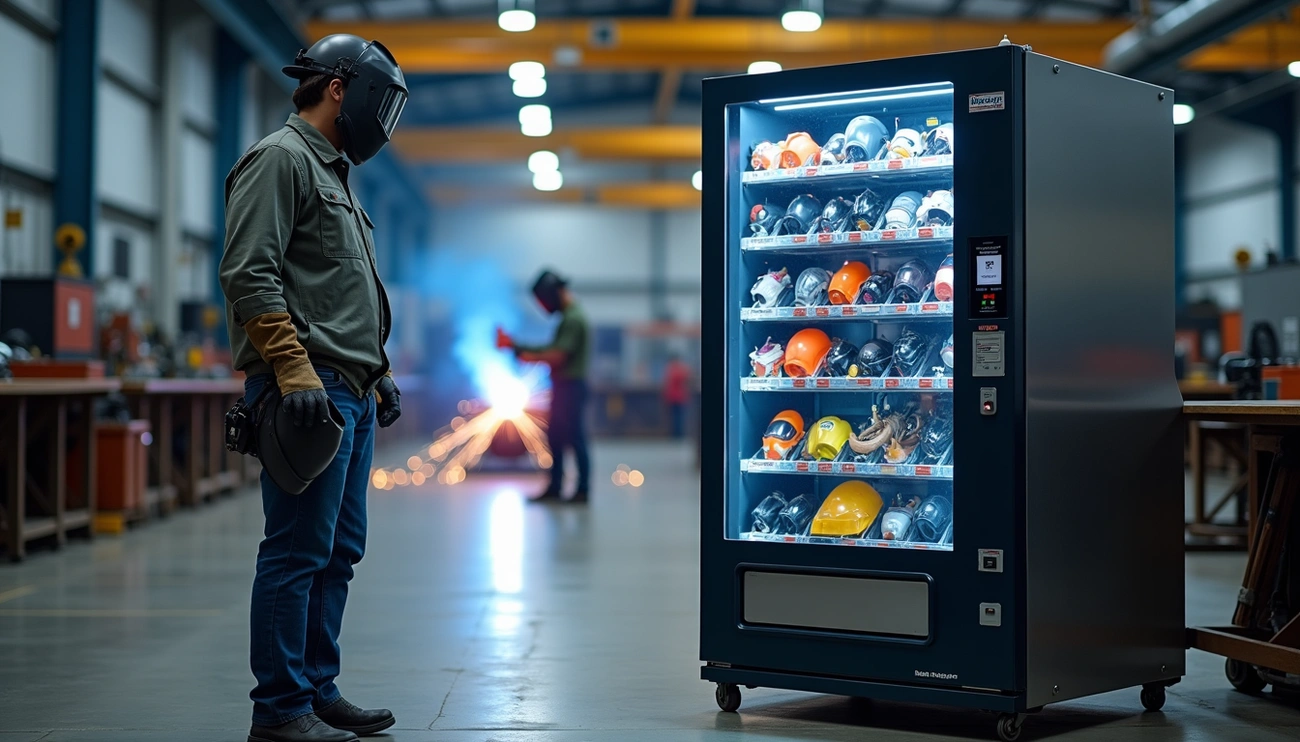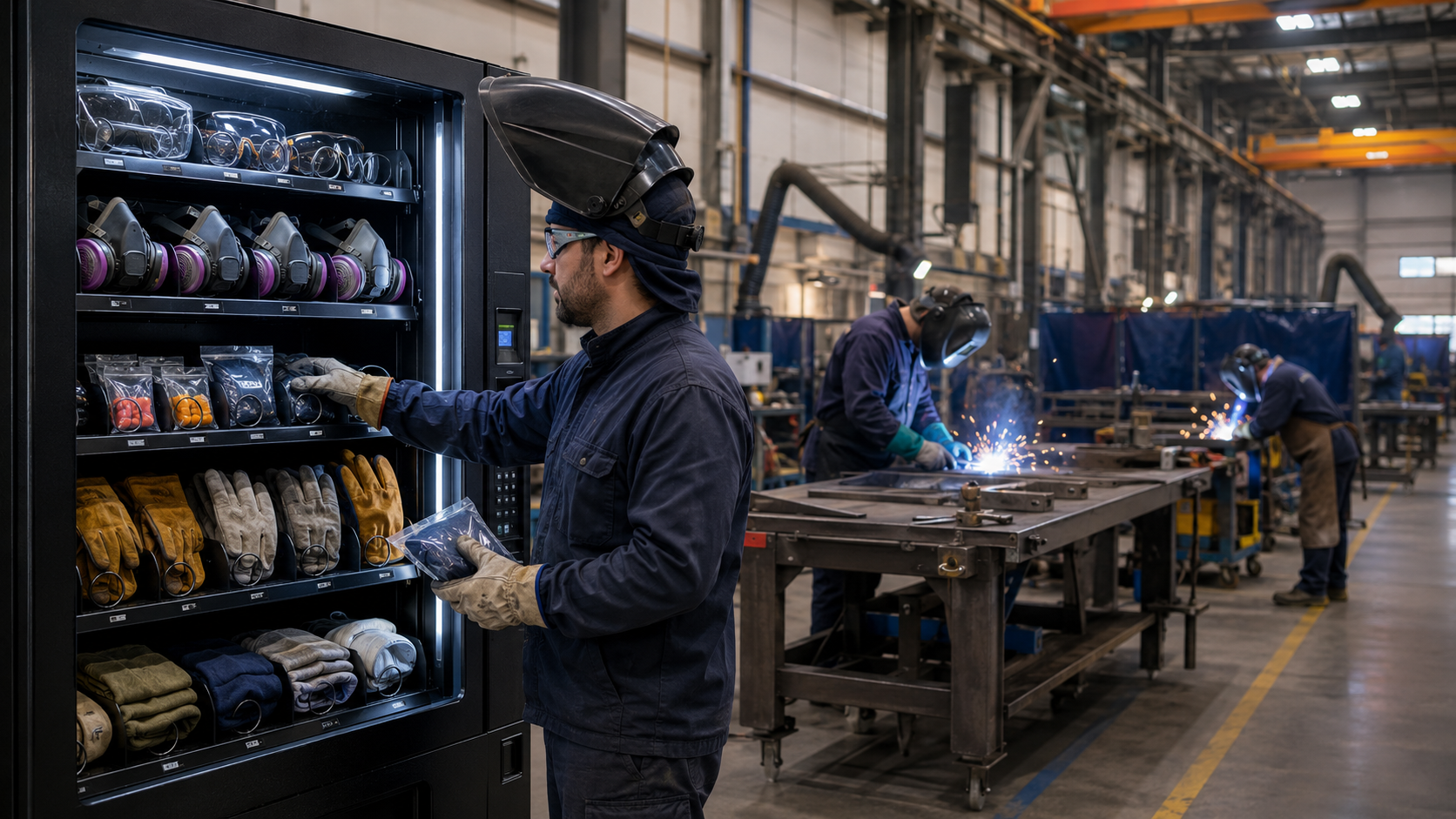
On a welding floor, PPE access is not a small operational detail. It can determine whether a worker replaces worn gloves before a burn, changes respirator cartridges before overexposure, or grabs the right face and eye protection before grinding.
Yet in many facilities, PPE is still managed through locked cabinets, storage rooms, supervisor approvals, and paper logs. The equipment may technically be available, but that does not mean it is easy to access when workers need it most.
That gap matters.
Welding environments move fast. Gloves wear out. Safety glasses get scratched. Respirator filters need replacement. Flame-resistant sleeves, earplugs, and face protection must be available at the point of work, not across the building or behind a locked door.
That is where PPE vending machines change the conversation. They are not just a convenience tool. When used correctly, they become part of a stronger safety culture by making PPE access easier, more consistent, and more accountable.
Why Traditional PPE Distribution Falls Short on Welding Floors
Welding teams rely on PPE every shift. Gloves, sleeves, jackets, respirators, safety glasses, face shields, hearing protection, and other items all play a role in protecting workers from burns, sparks, fumes, flying debris, noise, and sharp materials.
The problem is that traditional PPE distribution often creates friction.
A worker may need fresh gloves during a busy shift, but the supply cabinet is locked. A supervisor may be tied up with a production issue. The correct respirator cartridge may be stored in another area. The right glove size may be missing from the shelf. During off-hours, workers may have even fewer options.
When PPE access becomes inconvenient, workers start making risky decisions. They stretch worn gear longer than they should. They borrow equipment that does not fit. They skip replacements until the end of the shift. They use whatever is nearby instead of what the task requires.
That is not always a training problem. Often, it is a system problem.
If a facility wants workers to use PPE consistently, the facility needs to make PPE access simple, reliable, and close to the work.
The Storage Room Problem
Centralized PPE storage may seem organized, but it can become a barrier in active welding environments.
Welders may work across multiple bays, fabrication areas, elevated platforms, maintenance zones, or outdoor workspaces. If they need to stop work, walk across the facility, find someone with access, and return with replacement gear, the process wastes time and discourages quick PPE changes.
Storage areas can also become disorganized. Glove sizes get mixed together. Respirator filters sit near the wrong cartridges. Welding sleeves and safety glasses get buried behind slower-moving items. Workers may grab what is available instead of what is correct.
Over time, this creates a dangerous pattern. PPE exists, but the right PPE is not always available at the right time.