Hazardous waste handling is not just an environmental responsibility. It is a worker safety issue.

Every container, label, storage area, transfer task, spill response plan, and training record affects how well your facility protects employees from chemical exposure, fires, burns, inhalation hazards, contamination, and emergency releases. When hazardous waste is handled casually, the risk does not stay in one department. It can spread across production, maintenance, shipping, receiving, laboratories, waste accumulation areas, and emergency response teams.

That is why EHS programs need more than a disposal vendor and a few warning labels. They need a clear system that workers understand and supervisors can verify.

In 2025, OSHA expectations remain centered on worker protection: hazard communication, training, PPE, exposure control, emergency preparedness, and safe work practices. EPA and RCRA requirements also play a critical role in hazardous waste identification, storage, manifesting, and disposal. A strong EHS program connects both sides so workers are protected and waste is managed correctly from generation to final pickup.

This guide explains how to build a safer hazardous waste program that supports compliance, reduces risk, and gives employees practical steps they can follow.

Why Hazardous Waste Safety Needs a Strong EHS Program

Hazardous waste can come from many areas of an industrial facility. It may include spent solvents, used oils, contaminated absorbents, paint waste, corrosive liquids, laboratory chemicals, process residues, aerosols, batteries, sludge, or discarded materials that still contain hazardous properties.

The risk depends on the material, concentration, condition, container, storage environment, and task being performed. A sealed container in good condition presents one level of risk. A leaking drum, unlabeled bottle, incompatible chemical mixture, or spill near a drain creates a very different situation.

Workers may face hazards such as:

  • Chemical burns from corrosive substances
  • Inhalation exposure from vapors or fumes
  • Skin absorption from solvents or toxic materials
  • Fire or explosion from flammable waste
  • Eye injuries from splashes
  • Contamination during transfer or cleanup
  • Exposure during spills, leaks, or emergency response
  • Injury from damaged containers or poor storage practices

A hazardous waste EHS program should prevent these risks before workers are forced to react to them.

OSHA’s Role in Hazardous Waste Safety

OSHA’s focus is worker safety. That means employers must protect employees from recognized hazards, train workers on chemical risks, provide the right PPE, maintain safe procedures, and prepare for emergencies.

For hazardous waste operations and emergency response, OSHA’s HAZWOPER standard may apply depending on the type of operation and worker role. This can include cleanup operations, treatment, storage, and disposal facility operations, and emergency response to hazardous substance releases.

Even when HAZWOPER does not apply to every worker in the facility, other OSHA requirements may still matter. Hazard Communication, PPE, respiratory protection, emergency action planning, exposure controls, and training all play a role in keeping hazardous waste handling safe.

The key is knowing which workers are exposed, what tasks they perform, what materials they handle, and what procedures are required for their role.

EPA and RCRA Still Matter

A common mistake is treating hazardous waste compliance as “an OSHA issue” only.

OSHA protects workers. EPA and RCRA regulate how hazardous waste is identified, managed, stored, transported, and disposed of. In practice, your EHS program needs both.

That means your facility should know:

  • What hazardous waste is generated
  • Where it is generated
  • How it is classified
  • How much is generated
  • Where it is accumulated
  • How containers are labeled
  • How long waste is stored
  • Which employees handle it
  • Which vendor transports it
  • Which disposal facility receives it
  • Which records must be retained

If your hazardous waste program does not connect worker safety with waste management requirements, gaps can develop quickly.


Explore Our Solutions!
Handle Hazardous Waste Disposal - OSHA's Compliance Requirements for EHS Programs

Step 1: Identify Hazardous Waste at the Source

A safe program starts with knowing what waste your facility actually generates.

Do not wait until a container is full to decide whether it is hazardous. Waste should be evaluated at the point of generation. That helps prevent mislabeling, mixing incompatible materials, using the wrong container, or placing employees at risk during transfer and storage.

Common industrial hazardous waste streams may include:

  • Spent solvents
  • Waste paints and coatings
  • Cleaning chemicals
  • Corrosive acids or bases
  • Contaminated rags or absorbents
  • Waste aerosols
  • Used oil or oily waste
  • Battery waste
  • Laboratory chemicals
  • Metal finishing waste
  • Process sludge
  • Flammable liquids
  • Pesticides or chemical residues

Each waste stream should be documented. EHS teams should know the source, process, chemical ingredients, hazards, accumulation location, container type, and required handling method.

Safety data sheets can help identify chemical hazards, but waste classification may require additional review. Some wastes may be hazardous because they are ignitable, corrosive, reactive, toxic, listed, or contaminated with hazardous constituents.

Step 2: Build a Clear Hazard Communication System

Workers cannot handle hazardous waste safely if they do not know what they are handling.

Your EHS program should make hazard information easy to find and easy to understand. That includes clear labels, accessible safety data sheets, written procedures, and training that reflects the actual chemicals and waste streams in the facility.

A strong hazard communication system should answer these questions:

  • What is in the container?
  • What hazards does it present?
  • What PPE is required?
  • What should workers avoid mixing it with?
  • What should workers do if it spills?
  • Who should be contacted if the container is damaged or unlabeled?
  • Where should the waste be stored?
  • What emergency equipment is nearby?

Labels should not be vague. Terms like “waste,” “chemical,” or “used material” are not enough to guide safe handling. Workers need specific hazard information that helps them make safe decisions.

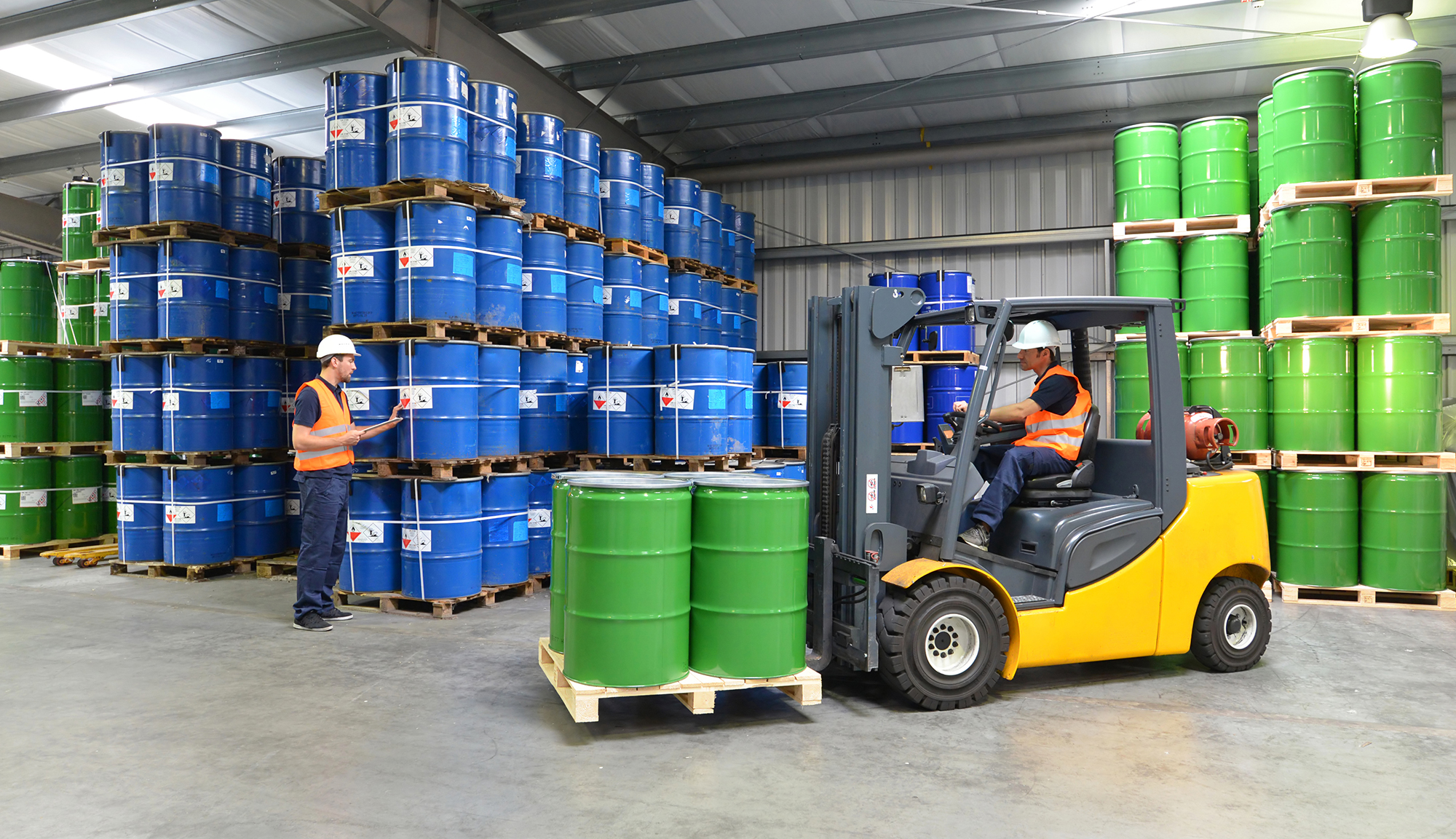
Step 3: Use the Right Containers and Keep Them Closed

Container management is one of the most visible parts of a hazardous waste program. It is also one of the easiest areas for problems to develop.

Containers should be compatible with the waste inside them. A corrosive waste may damage the wrong container material. A flammable waste may require specific storage controls. A leaking or bulging container should never be ignored.

Your program should require workers to:

  • Use compatible containers
  • Keep containers closed except when adding or removing waste
  • Avoid overfilling containers
  • Inspect containers for leaks, rust, cracks, swelling, or damage
  • Use funnels or transfer tools safely
  • Clean exterior contamination promptly
  • Report unlabeled or damaged containers immediately
  • Keep waste containers in designated accumulation areas

A container that is open, unlabeled, leaking, or stored in the wrong area creates risk for everyone nearby.

Step 4: Separate Incompatible Waste

Some hazardous wastes become more dangerous when mixed.

Incompatible chemicals can create heat, pressure, toxic gases, fire, explosion, or violent reactions. That is why segregation is critical. Workers should never combine waste streams unless the process has been reviewed and approved by qualified personnel.

Examples of compatibility concerns may include:

  • Acids stored near bases
  • Oxidizers near flammable materials
  • Reactive chemicals near water
  • Cyanide or sulfide waste near acids
  • Solvents mixed with unknown liquids
  • Aerosols stored near ignition sources
  • Contaminated absorbents placed in the wrong waste container

Your EHS program should include a compatibility review, clear storage rules, and visual organization in waste accumulation areas. Labels, signs, color coding, and designated storage zones can help workers avoid mistakes.

As long as people go to work, we have an opportunity to help protect them.

Julie Copeland
Arbill CEO

Julie Copeland Arbill CEO

Step 5: Train Employees Based on Their Actual Role

Training should match the work.

A production employee who places used solvent wipes into a waste container does not need the same training as an emergency response team member. A maintenance worker who transfers waste drums may need more detailed instruction than someone who only works near an accumulation area.

Training should cover:

  • Waste hazards found in the facility
  • How to read labels and SDS information
  • Which containers to use
  • How to keep containers closed
  • How to avoid incompatible mixing
  • What PPE is required
  • How to handle spills or releases
  • When to stop work and call EHS
  • How to report damaged containers
  • Where emergency equipment is located
  • What tasks employees are not authorized to perform

Workers should also be trained on what not to do. That includes not guessing what a waste is, not mixing unknown liquids, not moving leaking containers without proper authorization, and not entering a spill area unless trained and equipped to respond.

Step 6: Match PPE to the Hazard

PPE for hazardous waste handling should be selected based on the material, exposure route, task, and risk level.

A worker labeling a closed container may need different PPE than a worker transferring liquid waste, cleaning a spill, handling contaminated absorbents, or responding to a release. PPE selection should be tied to the hazard assessment and written procedure.

Depending on the task, PPE may include:

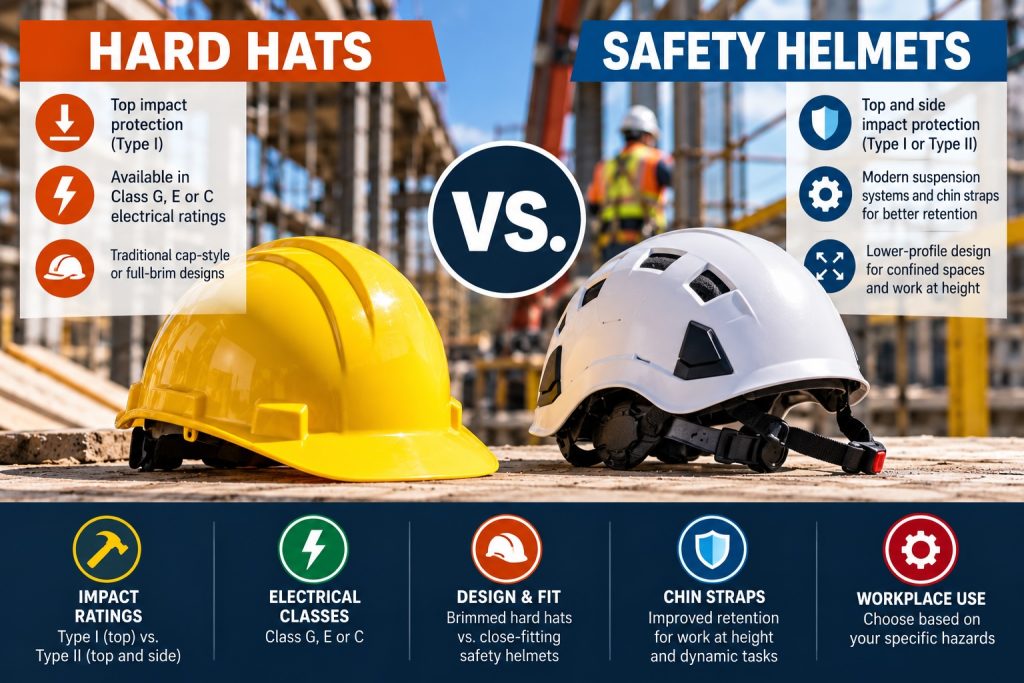
  • Chemical-resistant gloves
  • Safety glasses or chemical splash goggles
  • Face shields
  • Chemical-resistant aprons or suits
  • Protective sleeves
  • Respiratory protection
  • Chemical-resistant footwear
  • Disposable coveralls
  • Hearing protection if equipment creates noise hazards

Gloves deserve special attention. No single glove material protects against every chemical. Nitrile, neoprene, butyl, PVC, and other materials offer different levels of resistance depending on the chemical and exposure time. EHS teams should verify glove compatibility and make the right options available where work occurs.

Respirators also require careful management. If respiratory protection is required, the program must address selection, medical evaluation, fit testing, training, use, cleaning, storage, and maintenance.

Step 7: Prepare for Spills Before They Happen

A hazardous waste spill is not the time to figure out responsibilities.

Your EHS program should define what workers should do when a spill, leak, or release occurs. The plan should be simple enough for employees to follow under pressure.

At minimum, workers should know:

  • How to recognize a hazardous release
  • When to evacuate
  • Who to notify
  • How to isolate the area
  • What not to touch
  • Where spill kits are located
  • Who is trained to respond
  • What PPE is required for response
  • How contaminated cleanup materials will be managed
  • How incidents are documented and reviewed

Not every employee should respond to every spill. Some workers may only be trained to recognize a release, warn others, and leave the area. Others may be trained and equipped for limited spill response. Emergency response roles must be clear before an incident occurs.

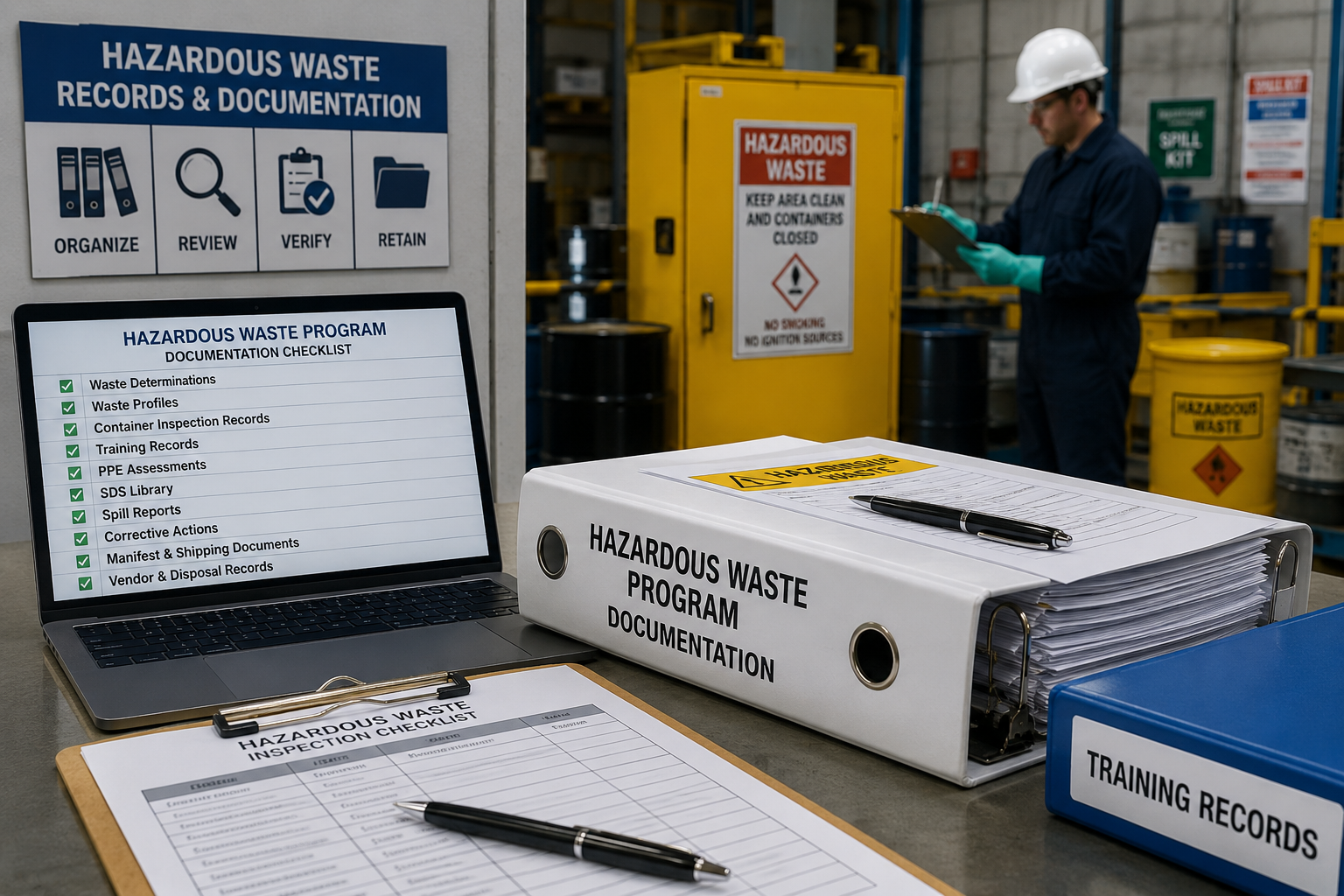
Step 8: Keep Documentation Ready and Useful

Documentation should not be treated as a paperwork exercise. Good records help prove compliance, guide training, support inspections, and identify gaps before they become incidents.

Your hazardous waste EHS documentation may include:

  • Waste determinations
  • Waste profiles
  • Container inspection records
  • Accumulation area inspections
  • Training records
  • PPE hazard assessments
  • Respirator program records, if applicable
  • Safety data sheets
  • Emergency response procedures
  • Spill reports
  • Corrective actions
  • Vendor records
  • Manifests and shipping documentation

Records should be organized, current, and accessible to the people who need them. If documentation only exists in scattered folders, old binders, or individual email threads, it becomes difficult to use during inspections or emergencies.

See Our Safety Services!
Hazardous waste program inspection workspace

Step 9: Choose Disposal Partners Carefully

A hazardous waste vendor is part of your risk management system.

Your facility should verify that disposal partners are properly licensed, experienced with your waste streams, and able to provide complete documentation. Do not choose a vendor based only on price. Poor vendor performance can create compliance problems, missed pickups, incorrect paperwork, or unsafe handling practices.

Before selecting or renewing a disposal partner, review:

  • Licensing and permits
  • Waste stream experience
  • Transportation capabilities
  • Emergency support
  • Documentation quality
  • Manifest procedures
  • Disposal facility approvals
  • Responsiveness and communication
  • Ability to support audits or compliance questions

Your EHS team should also understand the manifest process and confirm that waste shipments are tracked properly. Once hazardous waste leaves your facility, documentation still matters.

Step 10: Audit the Program Before an Inspector Does

Hazardous waste safety should be reviewed regularly.

Audits help identify issues such as missing labels, open containers, poor segregation, expired supplies, damaged drums, incomplete training, outdated procedures, unavailable PPE, or unclear emergency responsibilities.

A practical audit should review:

  • Waste generation points
  • Accumulation areas
  • Container condition
  • Labels and markings
  • Storage compatibility
  • Spill kit availability
  • PPE availability
  • Worker understanding
  • Training records
  • Inspection logs
  • Vendor documentation
  • Emergency procedures

The best audits include worker conversations. Ask employees what they do when a container is full, what PPE they use, how they report a spill, and who they contact with questions. Their answers often reveal whether the program works in real life.

Building a Program Workers Can Actually Follow

A hazardous waste EHS program should be practical. If procedures are too complicated, labels are unclear, PPE is hard to find, or workers are unsure who to call, the system will fail when it matters most.

The goal is to make safe handling the normal way work gets done.

That means:

  • Clear waste identification
  • Proper containers
  • Visible labels
  • Accessible SDS information
  • Task-based PPE
  • Simple procedures
  • Role-specific training
  • Clean and organized storage areas
  • Regular inspections
  • Reliable vendor management
  • Emergency plans that workers understand

When these pieces work together, hazardous waste handling becomes less reactive and more controlled.

Conclusion

Handling hazardous waste safely requires more than meeting a disposal deadline. It requires an EHS program that protects workers at every step, from waste generation and container handling to storage, emergency response, and final shipment.

OSHA expects employers to protect employees from hazardous exposures through training, communication, PPE, safe work practices, and emergency preparedness. EPA and RCRA requirements add the waste management structure needed for classification, storage, transportation, and disposal.

Facilities that connect both sides are better prepared for inspections, emergencies, and daily operations.

Start by reviewing your waste streams, storage areas, labels, PPE, training records, and vendor documentation. Look for gaps workers may encounter during a normal shift. Then fix those gaps before they become exposure risks, compliance problems, or costly incidents.

A strong hazardous waste program does more than avoid penalties. It protects people, strengthens accountability, and gives your facility a safer way to manage dangerous materials every day.

Request a Safety Assessment

Recent Posts

Worker with Fall Protection Equipment
Fall Protection on Rigs and Elevated Platforms: The Compliance Standards That Can\’t Be Cut With the Budget

Fall Protection on Rigs and Elevated Platforms: The Compliance Standards That Can\’t Be Cut With the Budget

Worker Use Portable Gas Monitors Before Entering Confined Spaces
Gas Detection in the Field: What Your Oilfield Workers Need to Know Before Entering Any Confined Space

Gas Detection in the Field: What Your Oilfield Workers Need to Know Before Entering Any Confined Space

PPE for Utility Field Workers
From Substations to Stormwork: Building a Weather-Ready PPE Program for Utility Field Workers

From Substations to Stormwork: Building a Weather-Ready PPE Program for Utility Field Workers

Electrical Glove Testing During Work
Electrical Glove Testing Programs: The OSHA Requirement Most Utility Safety Managers Are Quietly Ignoring

Electrical Glove Testing Programs: The OSHA Requirement Most Utility Safety Managers Are Quietly Ignoring

Arc flash protection PPE
Arc Flash, Electrical Shock, and Line Work: Why Utilities Need a Layered PPE Strategy — Not Just a Checklist

Arc Flash, Electrical Shock, and Line Work: Why Utilities Need a Layered PPE Strategy — Not Just a Checklist