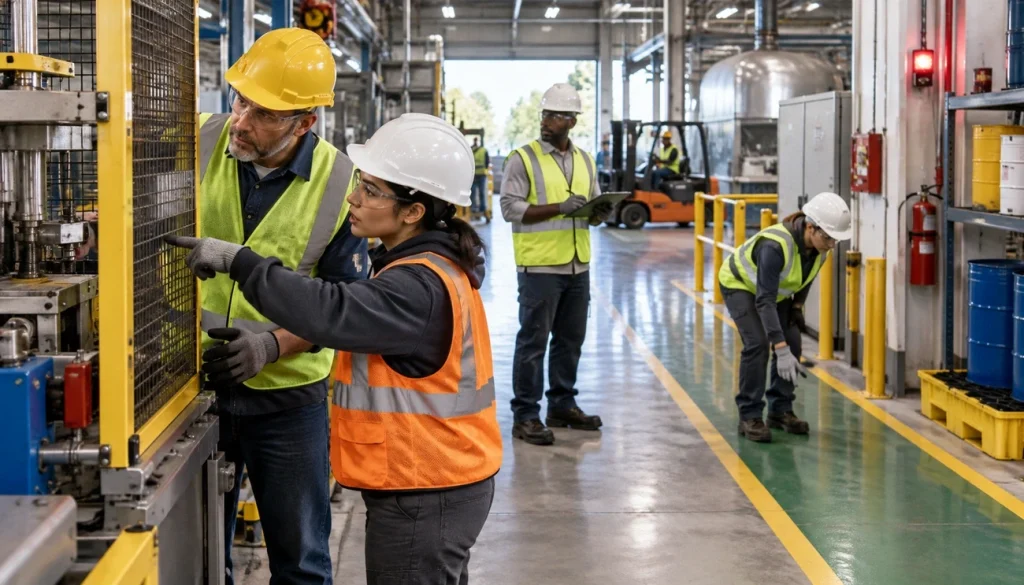

A machine operator does not notice hearing loss the way they notice a cut or a burn. It shows up as asking someone to repeat themselves, turning the truck radio up another notch, missing a warning shout on the floor. Noise-induced hearing loss in the workplace builds quietly over years, which is exactly why so many programs treat it as a lower priority than injuries that show up in an incident report the same day they happen.
That quiet accumulation is also what makes it expensive. A worker who can no longer hear a backup alarm, a coworker’s warning, or a safety briefing clearly is a productivity and safety problem long before it becomes a workers’ compensation claim. The numbers behind that quiet accumulation are worth seeing all at once.
Why it matters
- About 22 million U.S. workers are exposed to hazardous noise on the job every year, according to NIOSH.
- Occupational hearing loss is the most common work injury in the United States, and a peer-reviewed federal study found most cases are never compensated, which means workers’ comp data understates the real number.
- A NIOSH-funded 2009-2013 claims analysis put the actual annual cost of occupational hearing loss claims at roughly $60 million, a more current and better-documented figure than the older estimate still widely quoted online.
- OSHA requires a full hearing conservation program as soon as worker noise exposure reaches an 8-hour average of 85 decibels, a lower threshold than most people associate with hearing damage.