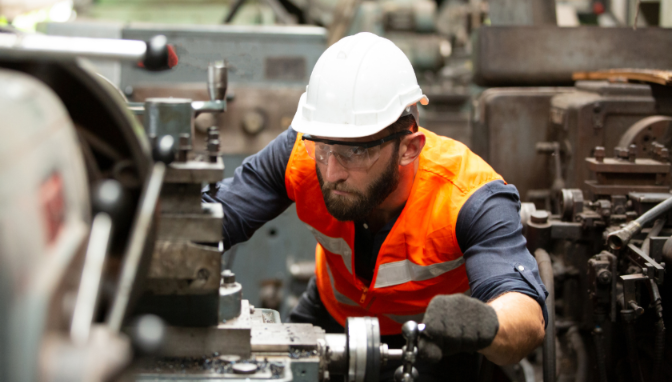
A line worker who squints at a small part for eight hours in a shift isn’t filing an incident report. Neither is the picker who reaches overhead a few hundred times a day, or the inspector who has been rubbing their eyes since lunch. Ergonomics in manufacturing rarely announces itself as an injury. It shows up as a slower shift, a mistake on the line, and eventually a claim that looks sudden but was not.
That gap between when the strain starts and when it gets reported is exactly why ergonomics programs get deprioritized. Nothing dramatic happens on the day it matters most. The scale of it only becomes clear once the numbers are laid out together.
Why it matters
- Overexertion is the costliest category of disabling injury in U.S. manufacturing, accounting for more than a fifth of the industry’s direct workers’ comp costs.
- Manufacturing is the only industry among the eight sectors in Liberty Mutual’s newly released 2026 Workplace Safety Index where repetitive-motion microtasks rank among the top five cost drivers, at $510 million and 7% of the industry’s injury costs.
- Nearly 940,000 musculoskeletal disorder cases were recorded across private industry in 2023-2024, and overexertion and repetitive motion caused more DART cases than any other single category.
- Workplace fatigue costs employers roughly $136 billion a year in lost productivity nationally, a cost that compounds with physical strain rather than replacing it.
- OSHA has no dedicated ergonomics standard, so ergonomic hazards get cited under the General Duty Clause instead, a different and less predictable enforcement path than most safety topics.