On a welding floor, PPE access is not a small operational detail. It can determine whether a worker replaces worn gloves before a burn, changes respirator cartridges before overexposure, or grabs the right face and eye protection before grinding.

Yet in many facilities, PPE is still managed through locked cabinets, storage rooms, supervisor approvals, and paper logs. The equipment may technically be available, but that does not mean it is easy to access when workers need it most.

That gap matters.

Welding environments move fast. Gloves wear out. Safety glasses get scratched. Respirator filters need replacement. Flame-resistant sleeves, earplugs, and face protection must be available at the point of work, not across the building or behind a locked door.

That is where PPE vending machines change the conversation. They are not just a convenience tool. When used correctly, they become part of a stronger safety culture by making PPE access easier, more consistent, and more accountable.

Why Traditional PPE Distribution Falls Short on Welding Floors

Welding teams rely on PPE every shift. Gloves, sleeves, jackets, respirators, safety glasses, face shields, hearing protection, and other items all play a role in protecting workers from burns, sparks, fumes, flying debris, noise, and sharp materials.

The problem is that traditional PPE distribution often creates friction.

A worker may need fresh gloves during a busy shift, but the supply cabinet is locked. A supervisor may be tied up with a production issue. The correct respirator cartridge may be stored in another area. The right glove size may be missing from the shelf. During off-hours, workers may have even fewer options.

When PPE access becomes inconvenient, workers start making risky decisions. They stretch worn gear longer than they should. They borrow equipment that does not fit. They skip replacements until the end of the shift. They use whatever is nearby instead of what the task requires.

That is not always a training problem. Often, it is a system problem.

If a facility wants workers to use PPE consistently, the facility needs to make PPE access simple, reliable, and close to the work.

The Storage Room Problem

Centralized PPE storage may seem organized, but it can become a barrier in active welding environments.

Welders may work across multiple bays, fabrication areas, elevated platforms, maintenance zones, or outdoor workspaces. If they need to stop work, walk across the facility, find someone with access, and return with replacement gear, the process wastes time and discourages quick PPE changes.

Storage areas can also become disorganized. Glove sizes get mixed together. Respirator filters sit near the wrong cartridges. Welding sleeves and safety glasses get buried behind slower-moving items. Workers may grab what is available instead of what is correct.

Over time, this creates a dangerous pattern. PPE exists, but the right PPE is not always available at the right time.

Explore Our Solutions!
A PPE Vending Machine and worker

Supervisors Should Not Have to Be PPE Gatekeepers

In many facilities, supervisors become the unofficial PPE control point. Workers ask them for gloves, cartridges, sleeves, glasses, or other items. Supervisors unlock cabinets, track usage, answer questions, and try to prevent waste.

That may work on paper, but it creates pressure on both sides.

Supervisors are pulled away from coaching, hazard identification, production support, and safety observations. Workers may feel like they have to justify basic PPE replacement. A simple request for gloves can start to feel like an interruption or interrogation.

That dynamic can damage safety culture.

Workers should not feel discouraged from replacing damaged or worn PPE. Supervisors should not have to choose between managing production issues and distributing safety equipment. A better system removes that bottleneck.

PPE Vending Machines Make the Safe Choice Easier

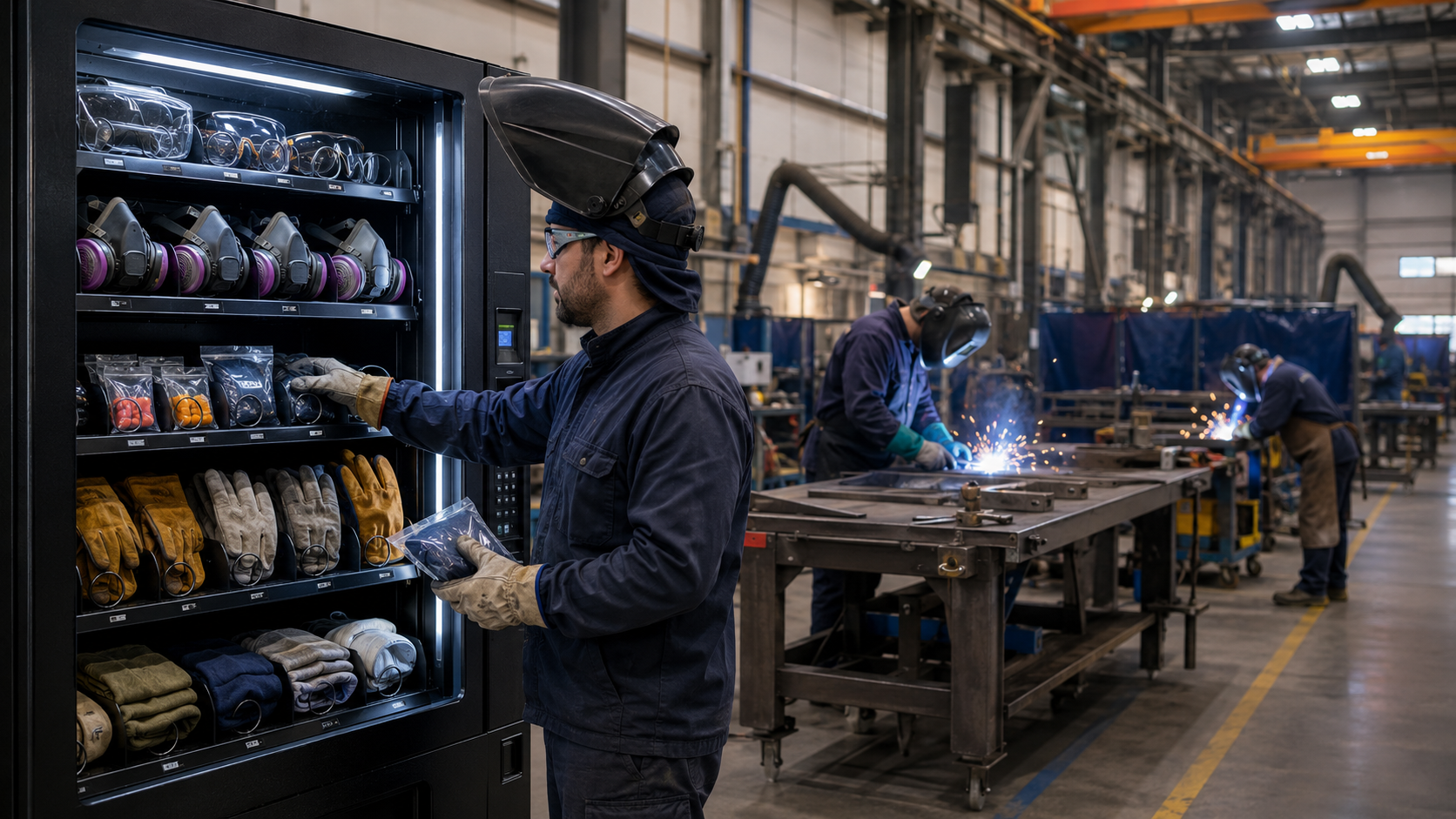
PPE vending machines place commonly used protective equipment closer to the work. Workers can access approved items using a badge, PIN, or other authorization method. The system can be configured by role, department, shift, location, or task.

Instead of waiting for a supervisor, a welder can get the PPE they need in seconds.

That convenience matters because safety behavior is shaped by friction. When PPE access is slow, workers delay replacement. When PPE access is fast, workers are more likely to act at the first sign of wear, damage, contamination, or discomfort.

A welding glove with holes should be replaced before the next arc. A clogged or expired respirator cartridge should be changed before exposure continues. Scratched safety glasses should not be used through another grinding task. PPE vending helps make those decisions easier in real time.

What Welding Floors Can Stock in PPE Vending Machines

The best vending programs focus on high-use items that workers need frequently. For welding and fabrication environments, that may include:

  • Welding gloves in multiple sizes
  • Cut-resistant gloves for material handling
  • Flame-resistant sleeves
  • Safety glasses and replacement lenses
  • Face shield components
  • Welding helmet consumables
  • Earplugs or other hearing protection
  • Respirator filters and cartridges
  • Disposable respirators where appropriate
  • Grinding and cutting PPE
  • Task-specific PPE kits

Some facilities may also create job-based kits. For example, a grinding kit may include safety glasses, hearing protection, gloves, and a face shield component. A welding fume control kit may include the specific respiratory protection accessories required for that task.

This helps reduce guesswork. Workers do not have to search multiple shelves or remember every item. The system can guide them toward approved PPE options.

Better Access Supports Better Compliance

Compliance improves when workers have fewer reasons to skip required protection.

If a worker has to track down a supervisor, wait for access, or walk across the building, PPE replacement becomes something they may postpone. If the right equipment is available nearby, replacement becomes part of the normal workflow.

PPE vending machines also help standardize what workers use. Instead of relying on random stockrooms or personal stashes, the facility can control which items are available for each role or department. That supports consistency across shifts and reduces the chance that workers use the wrong product for the hazard.

This is especially important on welding floors, where different tasks may require different protection. Welding, grinding, cutting, material handling, and cleanup can each create different hazards. A vending system helps ensure approved PPE is available for the work being performed.

As long as people go to work, we have an opportunity to help protect them.

Julie Copeland
Arbill CEO

Julie Copeland Arbill CEO

Data Turns PPE Usage Into Actionable Safety Insight

One of the biggest advantages of PPE vending is visibility.

Traditional PPE distribution often relies on paper logs, manual counts, or purchase history. Those methods do not always show what is happening on the floor. They may tell you what was ordered, but not who used it, when it was used, or where demand is increasing.

PPE vending machines can track usage automatically. Safety and operations leaders can see which items are being used, how often they are dispensed, which departments are consuming more PPE, and whether certain items need to be reordered more frequently.

That data can reveal important patterns.

If one welding area is going through respirator cartridges faster than expected, it may point to a ventilation issue, a process change, or a need for additional exposure review. If one group replaces gloves much faster than others, the task may be more abrasive than expected, or workers may need a different glove specification. If PPE usage drops unexpectedly, supervisors can check whether workers are bypassing required protection.

The goal is not to punish workers. The goal is to understand what the data is saying and use it to improve protection.

Supervisors Can Shift From Gatekeepers to Coaches

When vending machines handle routine PPE distribution, supervisors can spend less time unlocking cabinets and more time improving safety performance.

That changes the safety conversation.

Instead of asking, “Why do you need another pair of gloves?” a supervisor can look at usage patterns and ask better questions:

Are these gloves wearing out too quickly for this task?
Is the worker using the right glove for the material?
Does the job require better cut resistance, heat resistance, or dexterity?
Is a process creating more exposure than expected?
Does the team need refresher training on PPE selection or care?

This is a stronger safety culture model. Supervisors are no longer just controlling supplies. They are using real information to coach workers, improve PPE choices, and address hazards earlier.

PPE Availability Becomes More Reliable

Stockouts can quickly undermine safety. If workers cannot find the right size glove, the right respirator cartridge, or the right eye protection, they may use whatever is available or continue without proper replacement.

PPE vending machines help reduce that problem by tracking inventory levels and supporting more predictable replenishment. Safety managers can see what is moving quickly and adjust stock accordingly.

This also helps reduce hoarding. In traditional systems, workers may keep extra PPE in lockers or toolboxes because they do not trust the stockroom to have what they need later. When vending machines are consistently stocked, workers are less likely to overtake supplies “just in case.”

Reliable access builds trust. When workers know the right PPE will be available when they need it, they are more likely to follow the process.

PPE Vending Shows Workers That Safety Is a Priority

Safety culture is shaped by what workers experience every day.

A written policy says PPE matters. A training session explains PPE requirements. But a stocked, accessible PPE vending machine on the welding floor shows workers that the company has invested in making protection easier to use.

That message matters.

Workers notice when safety systems are practical. They notice when the right equipment is close by. They notice when the company removes barriers instead of only adding rules.

A PPE vending machine communicates that protection is not just a compliance requirement. It is part of how the facility operates.

How to Implement PPE Vending on a Welding Floor

A vending machine alone will not fix a weak PPE program. It needs to be implemented with a clear plan.

Start by reviewing the hazards on the welding floor. Identify the PPE workers use most often, which items wear out quickly, where stockouts happen, and which tasks create the most frequent replacement needs.

Next, choose the right location. Machines should be placed where workers actually need PPE, such as near welding bays, fabrication areas, shift entrances, maintenance zones, or high-traffic work areas. A machine that is easy to reach will get used. A machine tucked away in a low-traffic corner may not change behavior.

Then, configure access by role and need. Welders, grinders, maintenance workers, and supervisors may need different PPE options. Limits can help control waste, but they should be realistic enough to support safe replacement.

Worker training is also important. Employees should know how to access the machine, which PPE they are approved to select, when items should be replaced, and how usage data supports safety improvement.

Finally, review the data regularly. Look for usage trends, unusual spikes, low-use patterns, repeated stockouts, and opportunities to improve PPE selection. A vending system becomes more valuable when leaders use the information it provides.

See Our Safety Services!
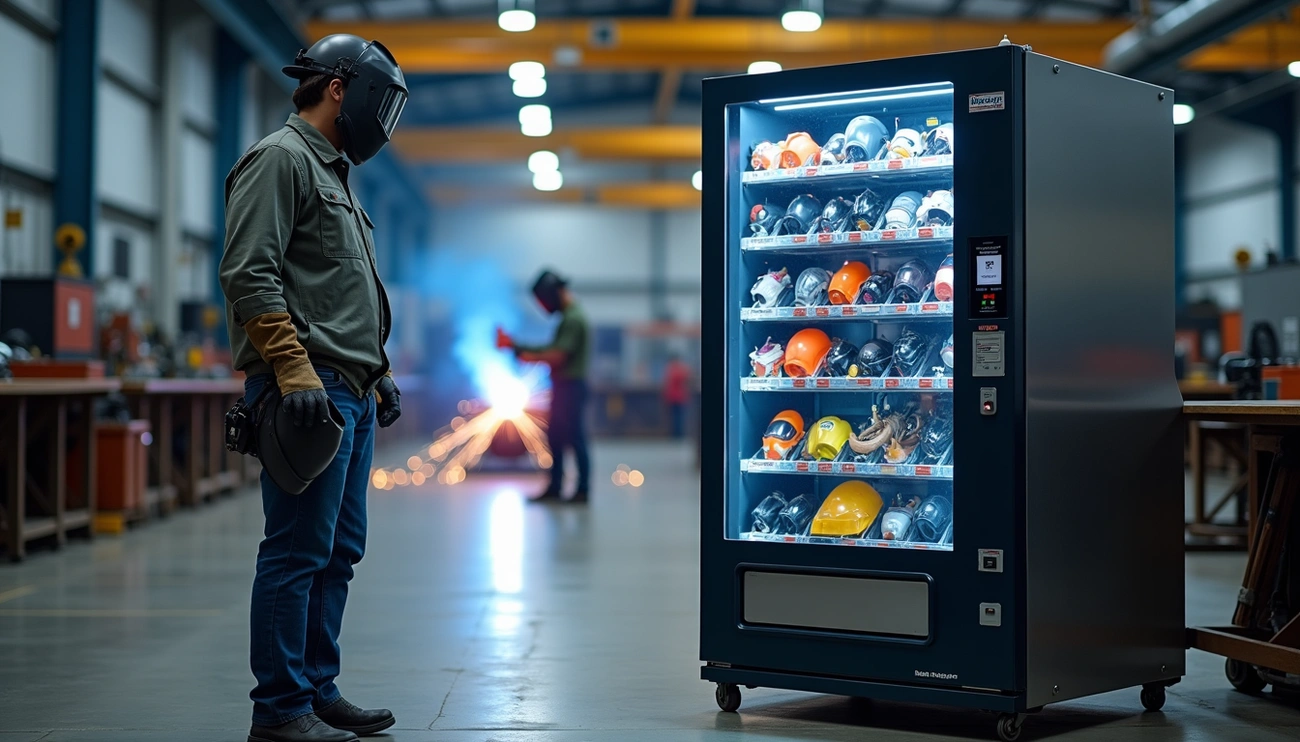
Welder retrieving PPE from a vending machine on a busy welding floor while workers fabricate metal in the background

A Safety Culture Upgrade, Not Just a Convenience

PPE vending machines make access easier, but their real value goes deeper than convenience.

They remove barriers between workers and protection. They reduce supervisor bottlenecks. They create better visibility into PPE usage. They help standardize equipment across shifts and departments. They make replacement easier when gear is worn, damaged, or no longer appropriate for the task.

Most importantly, they help make safe behavior easier to follow.

On a welding floor, that matters. Workers face heat, sparks, fumes, sharp edges, flying debris, noise, and changing job conditions every day. They need PPE systems that keep up with the pace of the work.

A PPE vending machine is not just a dispenser. It is safety infrastructure. When placed, stocked, and managed correctly, it supports a stronger culture where workers can get the right protection when they need it — and where managers have the data to keep improving the program.

Conclusion

Welding floor safety depends on more than having PPE somewhere in the building. Workers need the right protection available at the right time, in the right size, and for the right task.

Traditional PPE distribution can create delays, confusion, and accountability gaps. PPE vending machines solve those problems by bringing controlled access, real-time tracking, and reliable availability directly to the work area.

That is why PPE vending should not be viewed as a convenience upgrade alone. It is a safety culture upgrade.

When workers can access PPE quickly, supervisors can focus on coaching, and safety teams can use real data to improve protection, the entire facility benefits. The result is a stronger, smarter, and more practical approach to welding floor safety.

Request a Safety Assessment

Recent Posts

Worker with Fall Protection Equipment
Fall Protection on Rigs and Elevated Platforms: The Compliance Standards That Can\’t Be Cut With the Budget

Fall Protection on Rigs and Elevated Platforms: The Compliance Standards That Can\’t Be Cut With the Budget

Worker Use Portable Gas Monitors Before Entering Confined Spaces
Gas Detection in the Field: What Your Oilfield Workers Need to Know Before Entering Any Confined Space

Gas Detection in the Field: What Your Oilfield Workers Need to Know Before Entering Any Confined Space

PPE for Utility Field Workers
From Substations to Stormwork: Building a Weather-Ready PPE Program for Utility Field Workers

From Substations to Stormwork: Building a Weather-Ready PPE Program for Utility Field Workers

Electrical Glove Testing During Work
Electrical Glove Testing Programs: The OSHA Requirement Most Utility Safety Managers Are Quietly Ignoring

Electrical Glove Testing Programs: The OSHA Requirement Most Utility Safety Managers Are Quietly Ignoring

Arc flash protection PPE
Arc Flash, Electrical Shock, and Line Work: Why Utilities Need a Layered PPE Strategy — Not Just a Checklist

Arc Flash, Electrical Shock, and Line Work: Why Utilities Need a Layered PPE Strategy — Not Just a Checklist