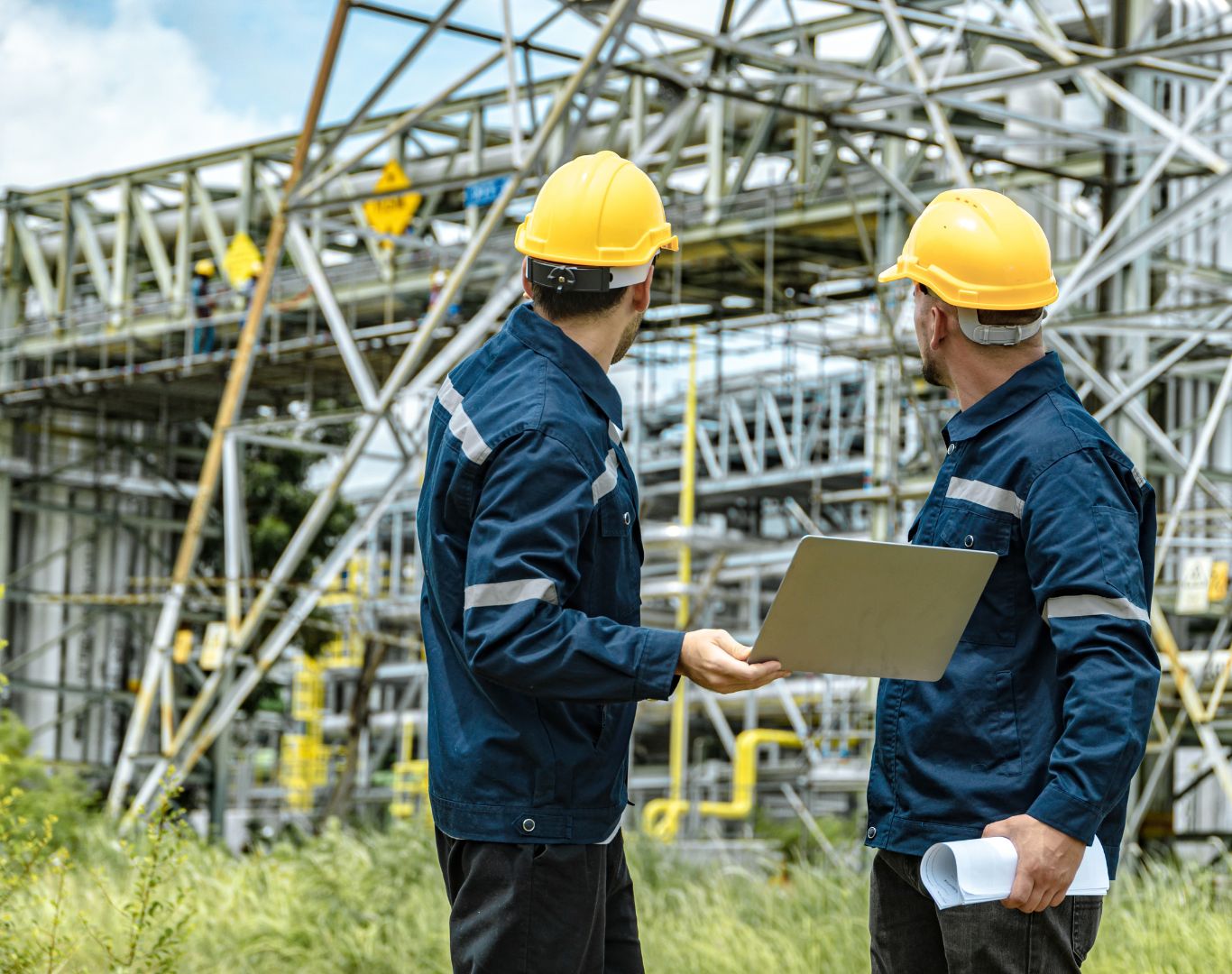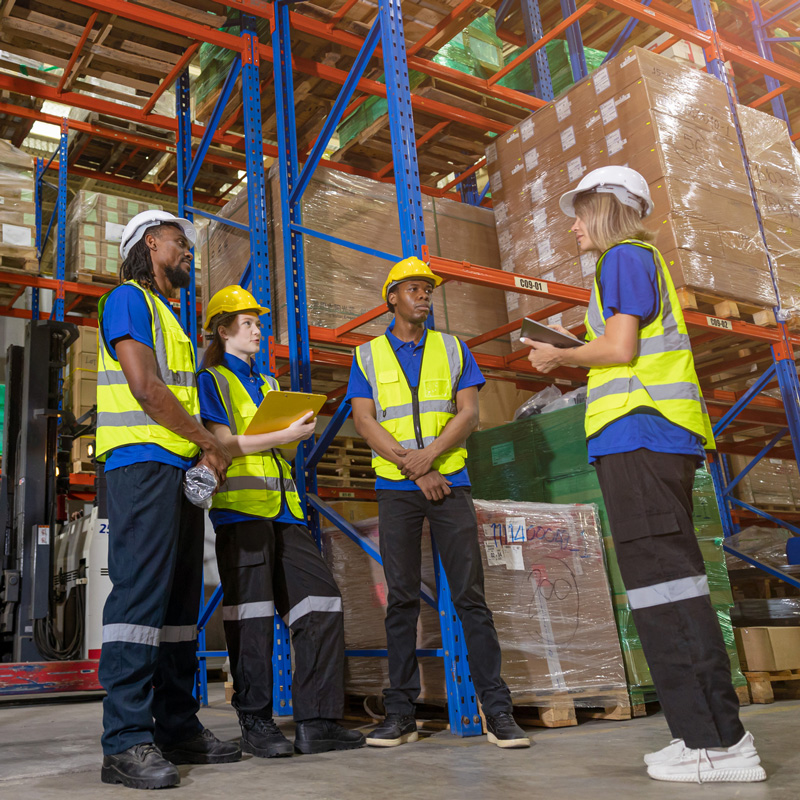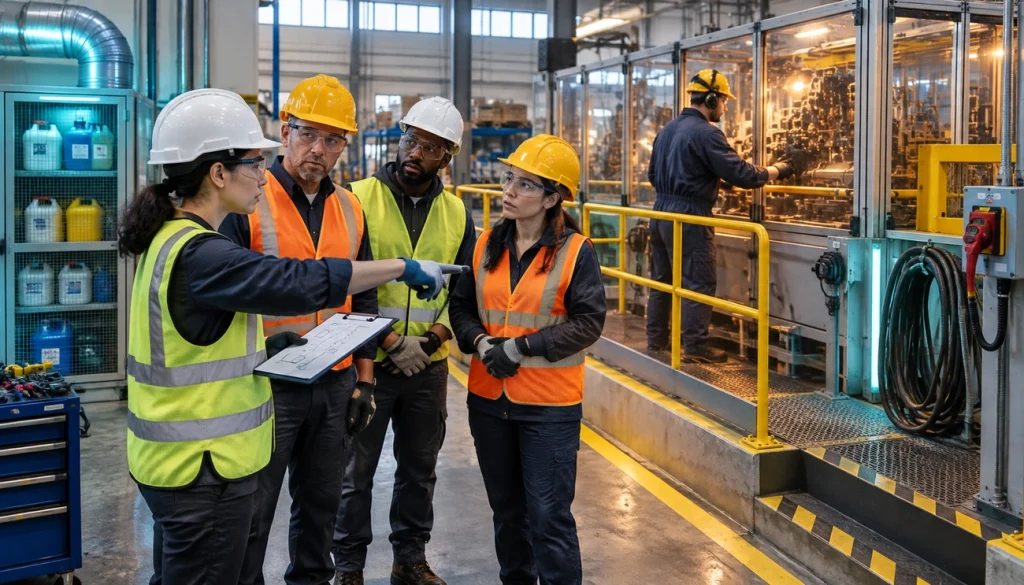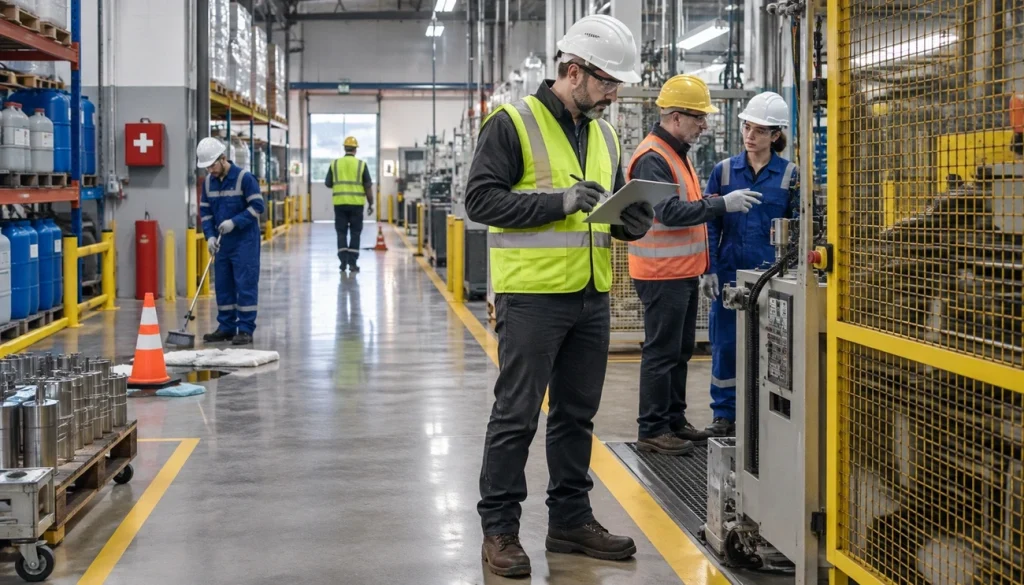
Confined space work in oil and gas can turn dangerous before a worker sees, smells, or feels anything unusual.

A tank may look empty. A pit may seem quiet. A vessel may appear ready for entry. But oxygen deficiency, hydrogen sulfide, flammable vapors, carbon monoxide, and other atmospheric hazards can be present long before workers recognize the danger.

That is why gas detection is not a formality before confined space entry. It is one of the most important layers of protection oilfield workers have.

Before any worker enters a tank, vessel, pit, vault, manhole, or process area, the atmosphere must be tested, readings must be understood, and monitoring must continue while the work is being performed. A single pre-entry reading is not enough if the atmosphere can change during cleaning, welding, cutting, agitation, or ventilation changes.

For oil and gas teams, confined space safety starts before entry — with the right equipment, the right testing process, and the discipline to stop when readings are unsafe.

Companies looking to strengthen field safety can work with Arbill for PPE, safety products, services, and practical support built around real workplace hazards.

Why Confined Spaces Are So Dangerous in Oilfield Work

Oil and gas operations create confined space hazards that are often invisible.

Storage tanks, process vessels, pits, vaults, separators, manholes, and underground spaces may have limited openings, poor ventilation, and changing atmospheric conditions. These spaces can trap gases, vapors, fumes, and oxygen-deficient air.

The uploaded draft correctly identifies oxygen deficiency, toxic gases, and explosive vapors as major risks in oilfield confined spaces. It also notes that these hazards can exist in tanks, vessels, pits, and poorly ventilated areas where conditions may shift without warning.

Common confined space hazards in oilfield work include:

  • Low oxygen levels
  • Oxygen enrichment
  • Hydrogen sulfide
  • Carbon monoxide
  • Methane and other combustible gases
  • Hydrocarbon vapors
  • Benzene, toluene, and xylene exposure
  • Chemical cleaning vapors
  • Welding and cutting fumes
  • Poor ventilation
  • Atmospheric changes during work

These hazards can disable a worker quickly. In some cases, they can also endanger would-be rescuers who enter without proper testing and rescue planning.

Oxygen Levels Must Be Checked First

Normal air contains about 20.9% oxygen. In confined spaces, oxygen can drop below safe levels because of displacement, rusting, decomposition, purging, chemical reactions, or poor ventilation.

The uploaded draft notes that oxygen levels below 19.5% indicate oxygen deficiency. In oilfield spaces, this can happen when inert gases displace breathable air, biological activity consumes oxygen, or oxidation occurs inside steel vessels.

Low oxygen can cause dizziness, confusion, loss of coordination, unconsciousness, and death. The danger is that a worker may not have enough time or awareness to self-rescue once symptoms begin.

Oxygen enrichment also creates risk. When oxygen rises above normal levels, materials can ignite more easily and fires can spread faster. That is why gas detection must check both low and high oxygen conditions before entry.

Flammable Vapors Can Build Without Warning

Oilfield confined spaces may contain methane, propane, butane, crude oil vapors, condensate vapors, and other hydrocarbons. These gases can collect inside tanks, vessels, pits, and piping systems.

The risk becomes critical when vapor concentrations approach the lower explosive limit, or LEL. The uploaded draft explains that portable gas monitors measure flammable gas readings as a percentage of LEL so workers can understand how close the atmosphere is to becoming explosive.

A low LEL reading does not mean workers can ignore the hazard. It means the atmosphere must continue to be monitored because concentrations can change during work. Agitation, cleaning, temperature changes, or disturbance of residue can increase vapor release.

No hot work, cutting, welding, grinding, or spark-producing activity should proceed unless the atmosphere has been tested, confirmed safe, and controlled according to the entry procedure.

Explore Our Solutions!
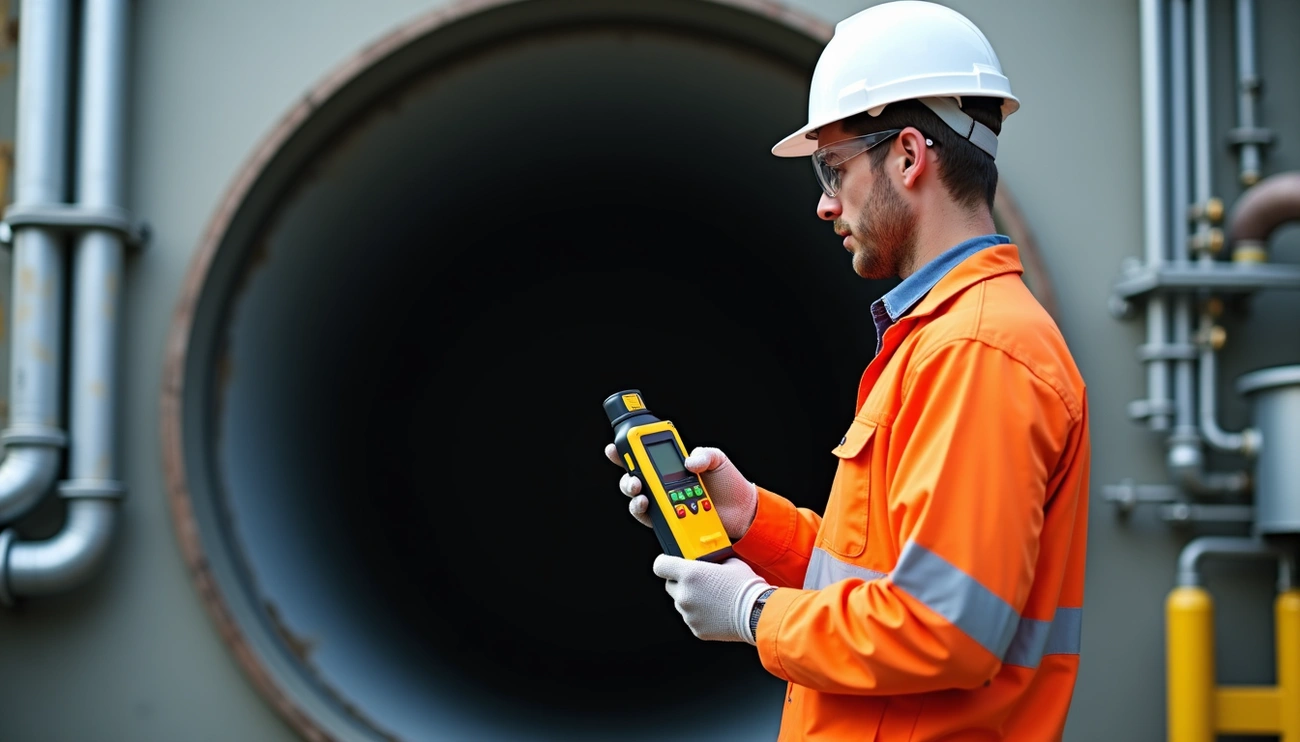
Worker Use Portable Gas Monitors Before Entering Confined Spaces

Hydrogen Sulfide Is a Critical Oilfield Hazard

Hydrogen sulfide, or H2S, is one of the most dangerous gases oilfield workers may encounter.

It can occur naturally in sour crude operations and may also be released from sludge, tank bottoms, wastewater, or decomposing organic material. The uploaded draft notes that H2S is colorless and may smell like rotten eggs at low concentrations, but at higher levels it can deaden the sense of smell, creating a false sense of safety.

That is why smell should never be used as a safety indicator.

Oilfield workers need properly selected and calibrated gas detection equipment to identify H2S before exposure occurs. Workers also need to understand alarm levels, evacuation procedures, and rescue protocols before entry begins.

Pre-Entry Gas Testing Is Not Optional

Every confined space entry should begin with atmospheric testing from outside the space.

Workers should not enter to “check the air.” Remote sampling protects the tester from exposure while identifying conditions inside the space.

The uploaded draft outlines a practical pre-entry process: inspect the monitor, bump test or calibrate the device, position the sampling probe correctly, test at multiple depths and locations, record initial readings, ventilate if needed, and retest before authorizing entry.

A strong pre-entry testing process should include:

  • Confirming the monitor is charged and functional
  • Inspecting the monitor, sensors, tubing, and probe
  • Performing a bump test according to the gas detection program
  • Sampling from outside the confined space
  • Testing the top, middle, and bottom of the space
  • Testing multiple locations in long or irregular spaces
  • Allowing enough time for readings to stabilize
  • Recording oxygen, LEL, and toxic gas readings
  • Ventilating unsafe atmospheres
  • Retesting after ventilation
  • Authorizing entry only when readings are within safe limits

If readings are unsafe, entry should not proceed until the hazard is controlled and the space is retested.

Why Testing at Multiple Levels Matters

Gases do not always mix evenly.

Some gases rise. Some settle. Some collect in pockets where air movement is poor. In tanks, pits, vaults, and vessels, one area may test safe while another area remains dangerous.

The uploaded draft emphasizes testing at multiple depths and locations because gases can stratify by density and dead spots may hold dangerous concentrations.

Testing only at the opening is not enough. A worker’s breathing zone may be deeper inside the space, and the hazard may be near the bottom or at the far end of the vessel.

Oilfield crews should use sampling probes and tubing to test the full work area before entry.

Workers Need to Understand Monitor Readings

A gas monitor is only useful if workers understand what it is telling them.

Readings such as oxygen percentage, LEL percentage, and parts per million all mean different things. Workers should know how to interpret each one and what action is required when alarms activate.

The uploaded draft explains that oxygen should remain within safe limits, flammable gas readings should remain below allowable LEL thresholds, and toxic gas readings should remain below exposure limits. It also notes that low alarms warn workers conditions are approaching danger, while high alarms signal immediate danger.

Workers should know:

  • What normal oxygen readings look like
  • What low oxygen means
  • What oxygen enrichment means
  • What LEL readings indicate
  • What ppm means for toxic gases
  • Which gases their monitor is detecting
  • What each alarm means
  • When to stop work
  • When to evacuate
  • Who to notify
  • When to ventilate and retest

Training should make these readings practical. Workers should not simply carry a monitor. They should know how to act on the information.

As long as people go to work, we have an opportunity to help protect them.

Julie Copeland
Arbill CEO

Julie Copeland Arbill CEO

Bump Testing and Calibration Keep Monitors Reliable

Gas detection equipment must be trusted before workers rely on it.

A bump test confirms that the monitor responds to a known gas concentration and that alarms activate as expected. Calibration verifies and adjusts sensor accuracy using certified gas. Both are important because sensors can drift, become contaminated, or fail.

The uploaded draft makes this point clearly: skipping bump testing or calibration creates a false sense of security with equipment that may not respond correctly.

A field gas detection program should define:

  • When bump tests are required
  • How calibration is performed
  • Who is authorized to perform checks
  • What records are kept
  • What happens if a monitor fails
  • How monitors are stored and maintained
  • How sensors, filters, tubing, and batteries are inspected
  • How replacement equipment is provided

Oilfield work is hard on equipment. Dust, moisture, impacts, chemicals, and rough handling can affect monitor performance. Testing the monitor before use is part of testing the space.

Continuous Monitoring Protects Workers During the Job

Pre-entry testing confirms conditions at one point in time. It does not guarantee the atmosphere will stay safe.

The uploaded draft emphasizes that confined space atmospheres can change during work. Welding can consume oxygen and create fumes. Cleaning can introduce vapors. Disturbing sludge can release trapped H2S. Temperature changes can increase off-gassing from residual hydrocarbons.

That is why continuous monitoring is critical.

A monitor should remain active while workers are inside the confined space. It should be placed where it can detect hazards in the breathing zone or worn by workers according to the entry plan. For larger or more complex spaces, more than one monitor may be needed.

If an alarm activates, workers should evacuate immediately. The team should investigate from outside the space, correct the hazard, ventilate if needed, and retest before re-entry.

Ventilation Must Be Verified by Testing

Ventilation can reduce atmospheric hazards, but it should not be assumed effective.

Blowers, ducting, and exhaust systems must be set up to move air through the space, not just near the opening. Dead zones, corners, baffles, tank geometry, and poor duct placement can leave hazardous pockets behind.

The uploaded draft notes that if readings are outside safe parameters, mechanical ventilation should be used, followed by a complete retesting sequence at all depths and locations.

Ventilation planning should consider:

  • Fresh air intake location
  • Exhaust discharge location
  • Duct placement
  • Airflow through the full space
  • Explosion-proof equipment where needed
  • Whether ventilation could spread contaminants
  • Whether work activity changes the atmosphere
  • Retesting after ventilation
  • Continuous monitoring during entry

Ventilation is a control. Gas detection confirms whether that control is working.

Confined Space Entry Requires More Than a Monitor

Gas detection is essential, but it is not the only part of confined space safety.

Oilfield confined space work may also require permits, trained attendants, rescue planning, communication systems, ventilation equipment, retrieval systems, respiratory protection, fall protection, lighting, PPE, and emergency procedures.

Arbill offers safety support for the industry through oil and gas safety solutions that include PPE, gas detection, training, vending, and EHS safety support.

For confined space work, teams should evaluate:

  • Entry permits
  • Atmospheric testing procedures
  • Attendant responsibilities
  • Communication methods
  • Rescue and retrieval equipment
  • Ventilation requirements
  • Respiratory protection
  • Hazard-specific PPE
  • Lockout/tagout needs
  • Hot work restrictions
  • Emergency response plans

A monitor identifies atmospheric hazards. The entry program controls how workers respond to them.

See Our Safety Services!
Oil & Gas Workplace Safety

Selecting the Right Gas Detection Equipment

Oilfield teams may use single-gas detectors, multi-gas monitors, sampling pumps, calibration equipment, docking stations, and accessories depending on the hazard.

Single-gas detectors may be useful when one hazard is dominant, such as H2S. Multi-gas monitors are often needed for confined space entry because workers must evaluate multiple atmospheric conditions at once, including oxygen, LEL, H2S, and carbon monoxide.

The uploaded draft notes that multi-gas monitors provide the atmospheric snapshot required before entry and can continue monitoring after entry.

For teams sourcing equipment, gas detection instrumentation can support monitoring needs with detectors, calibration equipment, sensors, and accessories for safety applications. Arbill’s gas detection category includes reliable detection equipment and accessories for monitoring environments.

When selecting gas detection equipment, consider:

  • Target gases
  • Sensor configuration
  • Pump and probe capability
  • Alarm types
  • Battery life
  • Data logging
  • Calibration requirements
  • Durability
  • Ease of use with gloves
  • Field serviceability
  • Compatibility with the confined space program

The right monitor should match the hazard, the task, and the field conditions.

Confined Space Equipment Supports Safer Entry and Rescue

Gas detection helps determine whether entry can begin and whether conditions remain safe. But safe confined space work also depends on the equipment surrounding the entry.

Depending on the space, workers may need tripods, davit arms, winches, retrieval systems, blowers, ducting, manhole equipment, ventilation systems, harnesses, lighting, and communication tools.

Arbill’s confined space equipment category includes entry, retrieval, ventilation, and manhole equipment that can support safer confined space operations.

A complete confined space setup should help crews:

  • Test before entry
  • Ventilate effectively
  • Maintain communication
  • Retrieve workers without unplanned entry
  • Support rescue procedures
  • Control access
  • Protect workers from atmospheric and physical hazards

Gas detection and confined space equipment should work together as one system.

What to Do When a Gas Monitor Alarms

An alarm is not a suggestion.

If a monitor alarms during pre-entry testing, no one enters. If a monitor alarms during work, workers evacuate. The team should not silence the alarm and continue.

The uploaded draft recommends immediate evacuation during confined space work when alarms activate, followed by investigation from outside the space using remote sampling. Work should only resume after the source is identified, the hazard is corrected, and stable readings are confirmed through retesting.

A clear alarm response plan should include:

  • Stop work
  • Evacuate the space
  • Account for all workers
  • Notify the attendant and supervisor
  • Keep unprotected workers out
  • Test from outside the space
  • Ventilate or control the hazard
  • Retest at all required points
  • Review whether the entry permit must be updated
  • Resume only when authorized

Workers should practice this response before an emergency occurs.

Training Workers Before Entry

Gas detection training should be practical, field-based, and repeated often enough to stay fresh.

Workers need to understand not only how to turn on a monitor, but how to use it correctly in real confined space conditions.

Training should cover:

  • Confined space atmospheric hazards
  • Oxygen deficiency and enrichment
  • LEL readings
  • Toxic gas ppm readings
  • H2S hazards
  • Pre-entry testing steps
  • Multi-level sampling
  • Bump testing and calibration basics
  • Continuous monitoring
  • Alarm response
  • Ventilation and retesting
  • Communication with attendants
  • Rescue planning
  • When to stop work

Supervisors and attendants should also be trained to recognize when entry conditions are changing and when work must pause.

Conclusion

Oilfield confined spaces can hide deadly atmospheric hazards.

Oxygen deficiency, flammable vapors, hydrogen sulfide, carbon monoxide, and chemical vapors may be present without warning. Conditions can also change during the job as workers clean, weld, disturb residue, ventilate, or expose trapped gases.

That is why gas detection must be treated as a core safety practice, not a final checkbox before entry.

Before any confined space entry, oilfield workers need properly tested equipment, correct sampling procedures, clear reading interpretation, continuous monitoring, ventilation when needed, and a disciplined alarm response plan.

The safest confined space entry is the one where workers understand the atmosphere before they enter — and keep monitoring it until the work is done.

Request a Safety Assessment

Recent Posts

Worker with Fall Protection Equipment
Fall Protection on Rigs and Elevated Platforms: The Compliance Standards That Can\’t Be Cut With the Budget

Fall Protection on Rigs and Elevated Platforms: The Compliance Standards That Can\’t Be Cut With the Budget

Worker Use Portable Gas Monitors Before Entering Confined Spaces
Gas Detection in the Field: What Your Oilfield Workers Need to Know Before Entering Any Confined Space

Gas Detection in the Field: What Your Oilfield Workers Need to Know Before Entering Any Confined Space

PPE for Utility Field Workers
From Substations to Stormwork: Building a Weather-Ready PPE Program for Utility Field Workers

From Substations to Stormwork: Building a Weather-Ready PPE Program for Utility Field Workers

Electrical Glove Testing During Work
Electrical Glove Testing Programs: The OSHA Requirement Most Utility Safety Managers Are Quietly Ignoring

Electrical Glove Testing Programs: The OSHA Requirement Most Utility Safety Managers Are Quietly Ignoring

Arc flash protection PPE
Arc Flash, Electrical Shock, and Line Work: Why Utilities Need a Layered PPE Strategy — Not Just a Checklist

Arc Flash, Electrical Shock, and Line Work: Why Utilities Need a Layered PPE Strategy — Not Just a Checklist