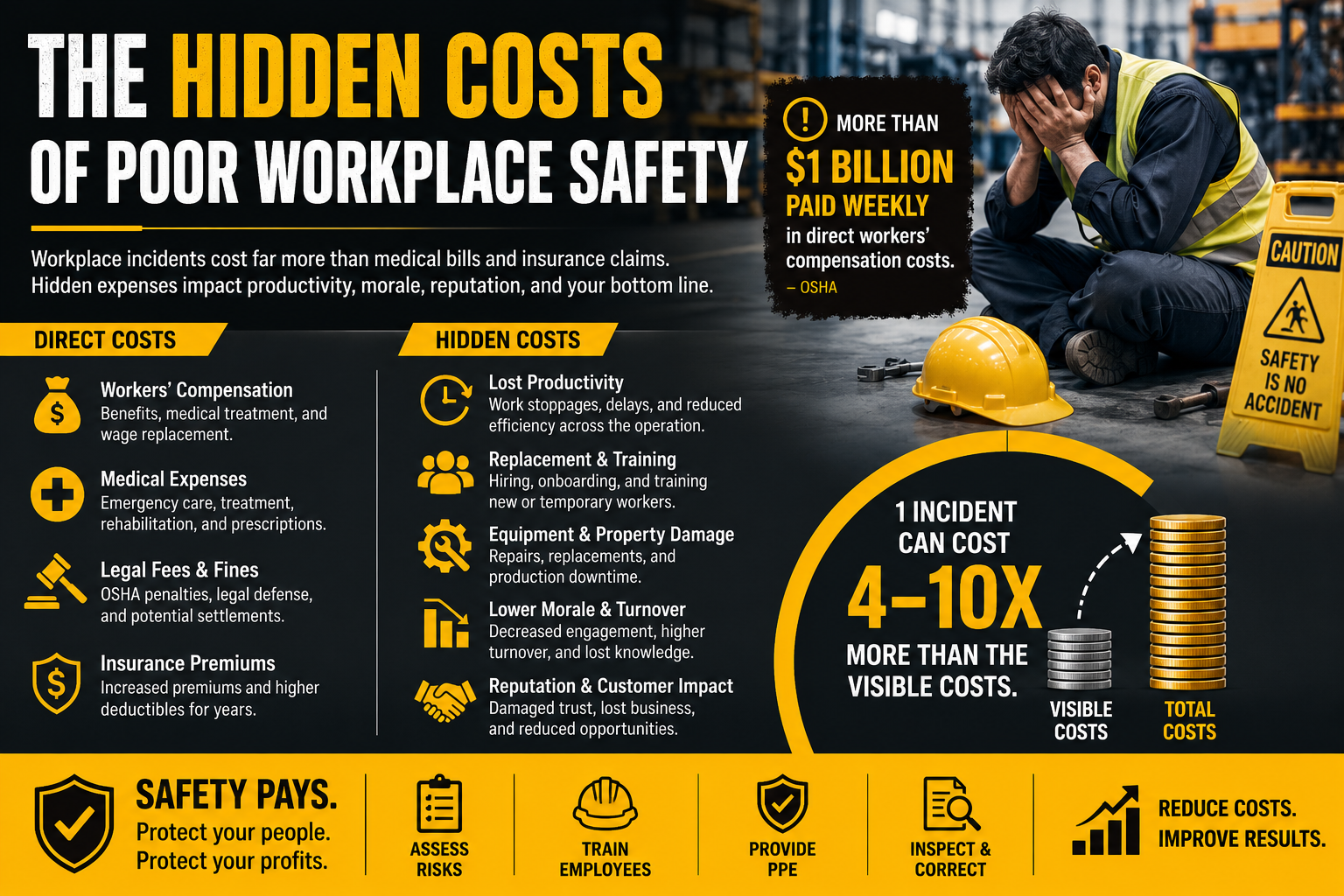
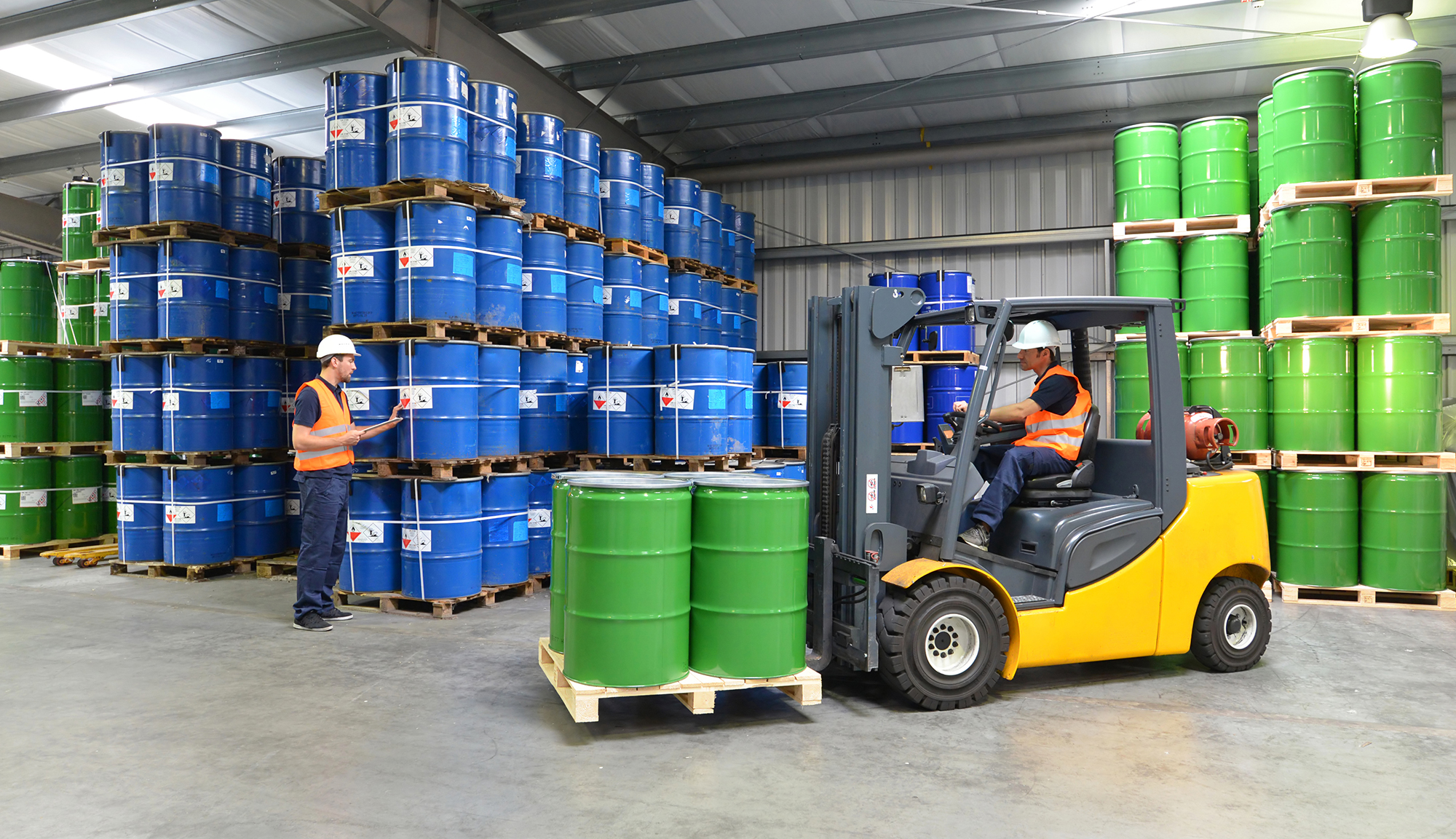
The financial impact of a workplace incident rarely ends with the employee’s medical treatment or workers’ compensation claim.

An injury can stop production, damage machinery, delay customer orders, pull supervisors away from their responsibilities, require replacement labor, increase insurance expenses, and weaken employee confidence. Investigations, regulatory responses, retraining, and corrective actions may continue long after the injured employee leaves the facility.

Some of these costs are easy to identify because they appear directly on invoices or claim reports. Others become distributed across payroll, maintenance, operations, quality control, human resources, and customer service.

That is why organizations frequently underestimate what poor workplace safety is truly costing them.

A strong safety program does more than reduce the likelihood of an OSHA citation. It protects employees while supporting productivity, workforce stability, operational continuity, equipment reliability, and long-term profitability.

For industrial organizations seeking to improve workplace protection, Arbill provides safety assessments, EHS consulting, employee training, PPE, and practical program support based on real operational risks.

Direct Incident Costs Are Only the Beginning

Direct costs are generally the most visible financial consequences of workplace injuries and illnesses.

Medical Treatment and Rehabilitation

A workplace injury may require emergency transportation, hospital care, diagnostic testing, surgery, medication, physical therapy, specialist appointments, and long-term rehabilitation.

The total expense can continue increasing as complications arise or recovery takes longer than expected. Even an incident that initially appears minor can become costly when an employee requires repeated treatment or cannot return to full duty.

The employer may also need to pay for occupational health evaluations, return-to-work assessments, ergonomic modifications, or temporary job accommodations.

Workers’ Compensation Costs

Workers’ compensation may cover medical treatment, wage replacement, rehabilitation, and other benefits depending on the injury and applicable state requirements.

OSHA reports that employers pay more than $1 billion per week in direct workers’ compensation costs for disabling, nonfatal workplace injuries.

The claim amount is not necessarily the employer’s final financial exposure. A serious claim may also affect future premiums, experience modification calculations, deductibles, and underwriting requirements.

OSHA Citations and Corrective Expenses

When an OSHA inspection identifies violations, the employer may face financial penalties and mandatory correction deadlines.

However, the citation itself may represent only a portion of the total cost. The organization may also need to update equipment, engage consultants, revise written programs, complete exposure monitoring, provide additional PPE, and retrain affected workers.

Employers that repeatedly experience the same compliance weaknesses may face increased scrutiny and more serious enforcement consequences.

Arbill’s guide to OSHA’s most frequently cited violations explains how recurring problems involving fall protection, hazard communication, lockout/tagout, respiratory protection, forklifts, and machine guarding can develop.

Legal and Administrative Costs

A serious incident may require support from attorneys, insurers, medical professionals, technical consultants, and expert witnesses.

Management and administrative teams may spend substantial time collecting records, responding to requests, reviewing policies, preparing reports, and participating in interviews or legal proceedings.

Those hours carry a real cost even when they never appear as a separate line on the incident report.

Lost Productivity Can Exceed the Visible Claim

An incident immediately changes how work is performed.

The Initial Work Stoppage

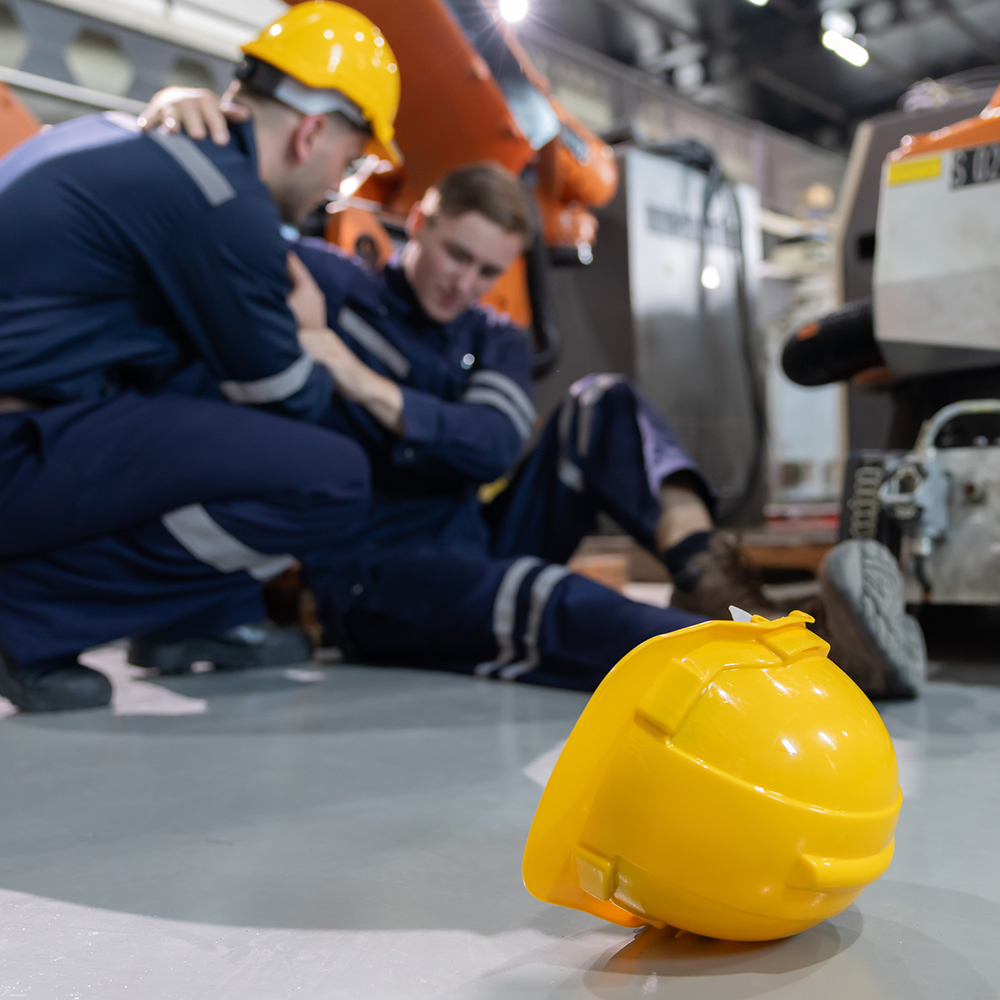
When an employee is injured, nearby work normally stops. Coworkers may assist the employee, secure machinery, contact emergency services, or help evacuate an area.

Supervisors, safety personnel, maintenance teams, security, and management may all be redirected from their normal responsibilities.

Depending on the circumstances, the interruption may last a few minutes, several hours, or multiple shifts.

Investigation Time

A meaningful investigation involves more than completing an incident form.

The organization may need to interview witnesses, examine equipment, review video, collect photographs, analyze training records, compare written procedures with actual practices, and identify root causes.

This process is essential for preventing recurrence, but it takes experienced personnel away from production, quality, maintenance, logistics, or customer-facing responsibilities.

OSHA includes accident investigation and corrective-action implementation among the indirect costs associated with workplace injuries.

Production Delays

An affected machine, department, or work area may remain unavailable until the employer confirms that operations can resume safely.

Lost production can affect downstream processes. Materials may accumulate, employees may wait for work, and orders may miss scheduled shipping dates.

The company may respond with overtime, additional shifts, expedited transportation, or temporary production transfers. These measures may restore output, but they also increase operating expenses.

Reduced Efficiency During Recovery

When an experienced worker is absent, another employee may need to take over the position.

The replacement worker may be less familiar with the equipment, process, customer requirements, or quality standards. Supervisors may need to provide closer oversight, while coworkers absorb additional responsibilities.

The operation can remain less efficient even when the position is technically covered.

Explore Our Solutions!
The Hidden Costs of Poor Workplace Safety

Replacement Labor and Turnover Add Long-Term Costs

An injured employee may miss work temporarily, require modified duties, or be unable to return to the same position.

Overtime and Temporary Staffing

Existing employees may work additional hours to cover the absence. Although overtime can maintain production, fatigue may reduce concentration and increase the risk of errors or additional incidents.

Temporary employees may provide another option, but they require orientation, task-specific training, PPE, supervision, and time to become familiar with the facility.

A replacement who does not understand local hazards or operating procedures can unintentionally create new safety risks.

Recruiting and Onboarding

When poor safety contributes to employee turnover, the organization must recruit and prepare new workers.

Recruitment expenses may include advertising, screening, interviews, background checks, medical evaluations, orientation, and job-specific training.

The new employee may need weeks or months to develop the speed, confidence, and knowledge of the person who left.

Loss of Institutional Knowledge

Experienced workers often possess practical knowledge that does not appear in manuals.

They understand equipment behavior, process variations, maintenance history, customer expectations, and early warning signs of problems.

When those employees leave because they no longer trust workplace conditions, the organization loses knowledge that can be difficult to replace.

Equipment Damage and Material Losses

Many safety incidents also involve physical damage.

Machinery and Vehicle Repairs

Forklift collisions, dropped loads, uncontrolled energy, fires, electrical incidents, and machine malfunctions can damage equipment or facility infrastructure.

The repair cost may be significant, but downtime can create an even greater financial impact.

The company may need to inspect or recertify the equipment before returning it to service. Replacement parts, technical specialists, or rental equipment may also be required.

Product Damage and Waste

An incident can damage raw materials, work in progress, finished products, packaging, storage racks, or customer property.

Chemical spills and contamination events may affect materials beyond the immediate area. Entire batches may require testing, rework, disposal, or recall.

The cost of discarded material may be compounded by cleanup, environmental reporting, and delayed replacement production.

Premature Equipment Wear

Unsafe operating practices do not always produce an immediate accident.

Overloading equipment, bypassing safeguards, neglecting inspections, or using incorrect tools can gradually damage machinery and reduce its service life.

Poor safety and poor maintenance frequently share the same underlying problems: weak procedures, inadequate training, and inconsistent supervision.

Quality and Customer Service Can Suffer

Safety problems can affect the customer even when the customer never sees the incident.

Rushed Production Creates Errors

After an interruption, teams may feel pressure to recover lost production quickly.

Employees may increase speed, postpone inspections, delay maintenance, or perform unfamiliar tasks. These decisions can contribute to defects, rework, and additional safety exposure.

A recovery plan that focuses only on output may reproduce the conditions that caused the original event.

Delivery Commitments Are Missed

Production delays can result in late orders, missed service appointments, incomplete projects, or unavailable inventory.

The company may pay for expedited freight, weekend work, or temporary outsourcing to meet customer commitments.

Repeated disruptions can weaken the customer’s confidence in the organization’s reliability.

Safety Performance Affects Contract Opportunities

Many industrial customers and prime contractors evaluate safety performance before awarding work.

They may request injury rates, OSHA history, training records, written programs, insurance information, and evidence of corrective-action management.

A poor safety record can increase bid requirements, trigger additional oversight, or disqualify an organization from valuable contracts.

As long as people go to work, we have an opportunity to help protect them.

Julie Copeland
Arbill CEO

Julie Copeland Arbill CEO

Insurance Costs May Continue for Years

The financial effect of an incident may continue after the immediate claim is closed.

Premium Increases

Insurers consider claim frequency, severity, exposure, and the organization’s overall control environment.

A serious incident or pattern of claims may contribute to higher workers’ compensation or liability premiums during future policy periods.

The company may effectively continue paying for an incident through increased insurance costs long after the employee returns to work.

Higher Deductibles and Stricter Conditions

An insurer may require a larger deductible, more detailed reporting, additional inspections, or specific safety improvements.

Organizations with repeated losses may have fewer coverage options or less negotiating power when renewing policies.

Self-Insured Exposure

Self-insured organizations retain more of the financial risk directly.

For these companies, medical costs, wage replacement, claims administration, legal expenses, and long-term obligations can affect cash flow and operating results immediately.

Employee Morale Has Financial Value

A serious incident can affect the entire workforce—not only the injured employee.

Workers Lose Confidence

Employees notice when hazards remain unresolved, damaged equipment stays in service, or reported concerns receive no meaningful response.

When workers believe production is valued more than their well-being, they may lose confidence in leadership and the company’s safety commitments.

This can reduce engagement, participation, and willingness to report hazards.

Coworkers Experience Stress

Employees who witness an injury may feel anxious, distracted, or uncomfortable returning to the same task.

Coworkers may question whether the incident could happen to them. This concern can affect concentration, attendance, and productivity.

OSHA identifies reduced morale and increased absenteeism among the indirect costs of workplace injuries and illnesses.

Hazard Reporting Declines

When workers believe their concerns will be ignored—or that reporting will create blame or additional work—they may stop speaking up.

The organization then loses access to valuable information about near misses, failing equipment, unsafe shortcuts, and operational changes.

Small problems remain hidden until they contribute to a more serious event.

Reputation Damage Can Affect Future Growth

Workplace incidents can influence how employees, applicants, customers, partners, and local communities view the organization.

Recruiting Becomes Harder

Job seekers increasingly research employers before accepting positions.

A reputation for unsafe conditions, weak management, or repeated incidents may discourage skilled candidates. The company may need to offer higher compensation or spend more on recruitment to fill positions.

Customers and Partners May Reconsider Relationships

Customers may view safety performance as an indication of broader management quality.

An organization that cannot consistently control workplace hazards may also be perceived as less capable of managing quality, environmental responsibilities, schedules, and operational risks.

Public Enforcement Information

OSHA citations and serious workplace incidents may become publicly visible.

News reports, social media, employee reviews, and industry discussions can spread information quickly. Rebuilding credibility may take far longer than correcting the physical hazard.

Poor PPE Management Creates Avoidable Costs

Personal protective equipment is often one of the final barriers between a worker and an injury.

Incorrect Selection

Employees may receive PPE that does not match the exposure, even though the organization has spent money providing it.

A glove suitable for mechanical work may not protect against a chemical. Safety glasses may not provide sufficient splash protection. A respirator may be unsuitable for the contaminant or concentration.

The organization pays for the product while receiving limited protection.

A complete workplace PPE program should connect hazard assessment, selection, fit, worker training, inspection, availability, and replacement.

Poor Fit and Comfort

Workers may remove or misuse equipment that interferes with vision, movement, communication, grip, or comfort.

Repeated noncompliance may appear to be an employee behavior problem when the product itself is unsuitable for the task or worker.

Testing approved options with employees can prevent costly organization-wide purchases of equipment that workers will not use consistently.

Limited Access

Workers may continue without proper protection when replacement PPE is stored far away, locked up, unavailable during certain shifts, or frequently out of stock.

PPE vending solutions can improve point-of-use access while giving safety and purchasing teams better visibility into inventory and consumption.

Weak Safety Training Is Expensive

Training that exists only to document attendance may create a false sense of security.

Completion Does Not Prove Competence

An employee can attend a presentation and sign a form without being able to perform the required procedure safely.

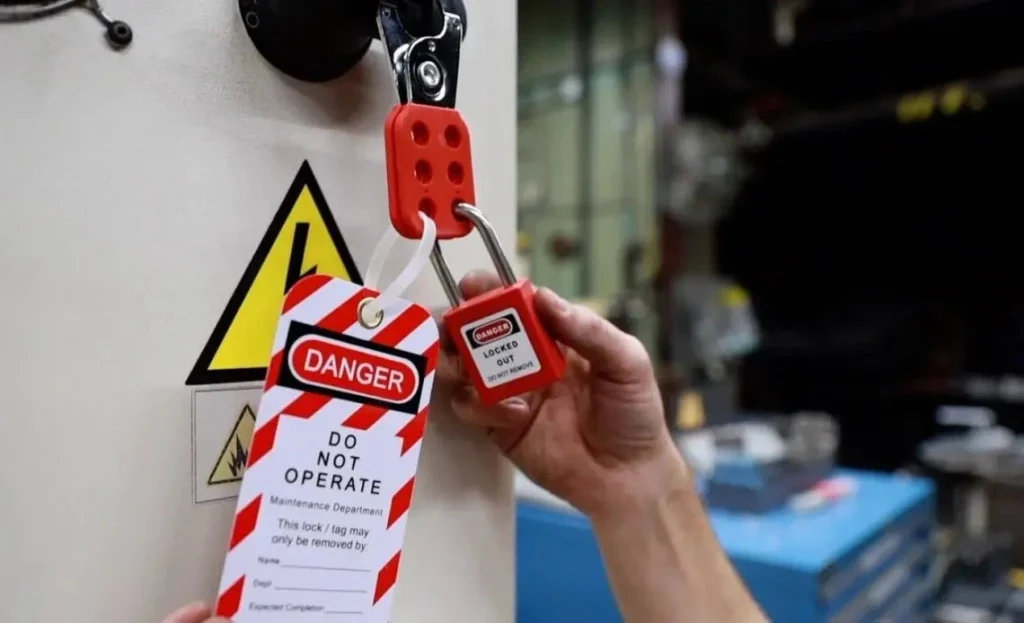
Lockout/tagout, respirator use, forklift operation, fall protection, confined space entry, and emergency response require practical understanding—not simply awareness of regulatory language.

Generic Training Misses Real Hazards

Workers need instruction that reflects the equipment, chemicals, layout, and procedures at their facility.

A general course may explain the concept but fail to prepare employees for the conditions they face during actual work.

Arbill’s EHS safety training supports practical workplace instruction across PPE, hazardous energy, electrical safety, fall prevention, confined spaces, emergency response, and other industrial risks.

Supervisors Need Preparation

Supervisors determine whether safety procedures remain in place when deadlines, staffing shortages, or production pressures arise.

They need enough training to identify unsafe conditions, coach employees, stop hazardous work, and support incident investigations.

Without supervisory involvement, classroom training may be contradicted by what employees are expected to do on the floor.

See Our Safety Services!
Hidden Costs of Poor Safety

Administrative Inefficiency Adds Cost

Poorly organized safety programs can consume substantial administrative time.

Safety teams may spend hours locating inspection records, following up on corrective actions, reconciling spreadsheets, checking training expiration dates, and searching for proof that tasks were completed.

Management may lack a clear view of which hazards remain unresolved or which sites are repeatedly experiencing the same issues.

EHS safety software can help organizations centralize assessments, inspections, corrective actions, documentation, and program visibility.

The purpose is not simply to replace paper. An effective system should help the organization identify trends, assign responsibility, and close safety gaps more efficiently.

Near Misses Are Financial Warnings

A near miss may not create immediate medical expenses, but it can reveal a weakness capable of producing a serious loss.

A forklift narrowly missing a pedestrian may expose poor traffic design. A worker reaching around a machine guard may reveal an impractical operating method. Repeated minor hand injuries may indicate unsuitable gloves or an uncontrolled sharp-edge hazard.

Treating near misses as free lessons allows the organization to correct problems before the outcome becomes more costly.

A professional EHS safety assessment can help identify unsafe conditions, program gaps, PPE concerns, training weaknesses, and documentation problems before they contribute to a major incident.

Measuring the True Cost of an Incident

The workers’ compensation claim should not be the only number used to evaluate an incident.

A more complete review may include medical expenses, wage replacement, overtime, temporary labor, investigation time, equipment damage, production losses, waste, legal support, training, corrective actions, shipping costs, insurance changes, and administrative effort.

OSHA’s Safety Pays estimator allows employers to consider direct and indirect expenses and estimate how much additional sales revenue may be needed to recover the loss based on the organization’s profit margin.

This is especially important for businesses with narrow margins. A company may need to generate many times the incident cost in additional revenue just to recover the lost profit.

The Scale of Workplace Injuries

Private industry employers reported approximately 2.49 million nonfatal workplace injuries and illnesses in 2024.

Manufacturing accounted for approximately 332,600 cases, while transportation and warehousing reported about 261,500. Construction reported approximately 167,100 cases.

These numbers represent more than regulatory statistics. Each case may involve an employee and family experiencing disruption, as well as an employer managing treatment, absence, investigation, replacement work, and corrective action.

Even when incident rates improve nationally, the financial and human consequences remain significant for every affected workplace.

Building a Cost-Effective Safety Program

The strongest way to control incident costs is to prevent incidents before they happen.

Assess Workplace Risk

Begin with a structured review of equipment, processes, chemicals, tasks, employee behavior, incident history, near misses, PPE, and written programs.

Assessments should be repeated when operations change rather than completed only once.

Follow the Hierarchy of Controls

Where feasible, eliminate the hazard or reduce it through substitution, guarding, ventilation, isolation, automation, or improved work design.

Administrative procedures, training, and PPE remain important, but they should not carry the full burden when stronger controls are available.

Prioritize Corrective Actions

Not every finding carries the same level of risk.

Missing machine guards, uncontrolled energy, fall exposures, electrical hazards, and inadequate respiratory protection require urgent attention.

Each action should have a clear owner, deadline, priority, and verification method.

Measure Leading Indicators

Injury rates describe what has already occurred.

Leading indicators such as inspections, hazard reports, preventive maintenance, training performance, worker participation, and corrective-action completion provide earlier insight into whether the program is working.

Involve Employees

Workers often recognize practical hazards before management does.

Organizations should make it easy to report concerns and demonstrate that reports lead to meaningful action. Employee involvement improves both hazard identification and trust.

Safety Is an Operational Investment

Safety spending is sometimes evaluated only as an expense.

However, an assessment may prevent costly downtime. Practical training may prevent equipment damage. Better PPE may reduce injury severity. A corrective-action system may prevent a known hazard from remaining open for months.

OSHA states that effective safety and health programs can reduce injuries, workers’ compensation payments, medical expenses, and lost productivity. Improvements made for safety may also support productivity and profitability.

The return may appear through avoided incidents, improved efficiency, lower turnover, better equipment reliability, stronger customer confidence, and more stable insurance costs.

Conclusion

The true cost of poor workplace safety extends far beyond medical treatment and regulatory fines.

Incidents can interrupt production, damage equipment, increase insurance expenses, create legal and administrative work, reduce employee morale, raise turnover, weaken quality, delay customer orders, and damage the company’s reputation.

Because these expenses are distributed across the organization, leadership may underestimate the financial value of prevention.

A stronger approach treats safety as part of operational performance.

Workplace assessments identify risks before incidents occur. Practical training helps workers apply procedures correctly. Suitable and accessible PPE provides reliable protection. Corrective-action tracking ensures hazards do not remain unresolved.

When safety becomes part of everyday planning and decision-making, organizations can protect employees while reducing preventable costs and building a more stable, productive operation.

Request a Safety Assessment

Recent Posts

The Hidden Costs of Poor Workplace Safety

The Hidden Costs of Poor Workplace Safety

ANSI Standards vs. OSHA - Which Applies to Your Workplace
ANSI vs. OSHA: What’s the Difference?

ANSI vs. OSHA: What’s the Difference?

Head Protection Webinar with MSA
When Should You Replace Your Safety Helmet?

When Should You Replace Your Safety Helmet?

Choosing the proper PPE
A Complete Guide to Building a Workplace PPE Program

A Complete Guide to Building a Workplace PPE Program

OSHA's Top 10 Most Frequently Cited Violations and How to Avoid Them
OSHA’s Top 10 Most Frequently Cited Violations and How to Avoid Them

OSHA’s Top 10 Most Frequently Cited Violations and How to Avoid Them

  • Next ProjectANSI vs. OSHA: What's the Difference?

CUSTOMER SERVICE

800-523-5367

CONTACT US

Complete the short form below and an Arbill representative will get back to you within 24 hours.
* Required Fields

    ARBILL RESPECTS YOUR PRIVACY AND YOUR INFORMATION: By submitting the form above you agree to receiving emails from Arbill. Your submitted information is NEVER shared. You may unsubscribe at any time via the "unsubscribe" link in our emails. You can view our Privacy Policy HERE.