Workplace eye injuries can happen in seconds, but the effects may last a lifetime.

A grinding particle, chemical splash, broken fragment, welding arc, dust cloud, or pressurized liquid can damage the eye before a worker has time to react. In many cases, the injury does not occur because eye protection was completely absent. The problem is that the protection being worn did not match the actual hazard.

Ordinary safety glasses may protect against some impact hazards but provide inadequate coverage during a chemical splash. A face shield may protect the face while still requiring safety glasses or goggles underneath. Prescription eyewear may correct vision but provide no occupational impact protection unless it is specifically designed for the workplace hazard.

Effective eye protection therefore begins with understanding how workers can be exposed and choosing PPE according to the task.

Why Workplace Eye Injuries Happen

Eye injuries occur across manufacturing, construction, warehousing, utilities, chemical operations, maintenance, fabrication, laboratories, and many other workplaces.

The hazards vary, but several causes appear repeatedly.

Flying Particles and Debris

Grinding, drilling, cutting, chipping, machining, sanding, and similar activities can generate small particles at high velocity.

Metal fragments, wood chips, concrete dust, wire pieces, fasteners, and broken tool components can strike the eye directly.

These hazards are especially dangerous because particles rarely travel only straight toward the employee.

They can ricochet from machinery, guards, walls, workpieces, or nearby surfaces and approach from the side or below.

OSHA therefore requires side protection when employees are exposed to flying-object hazards.

Chemical Splash

Chemical transfer, mixing, maintenance, cleaning, sampling, and process work can expose workers to liquids that irritate, burn, or permanently damage eye tissue.

Acids, caustics, solvents, cleaners, process chemicals, and other liquids may splash unexpectedly when a valve opens, a hose disconnects, a container tips, or pressure is released.

Safety glasses that leave open gaps around the face may not provide adequate splash protection.

The hazard assessment should determine whether workers need splash-rated goggles, a face shield, or a combination of protection.

Dust and Fine Particles

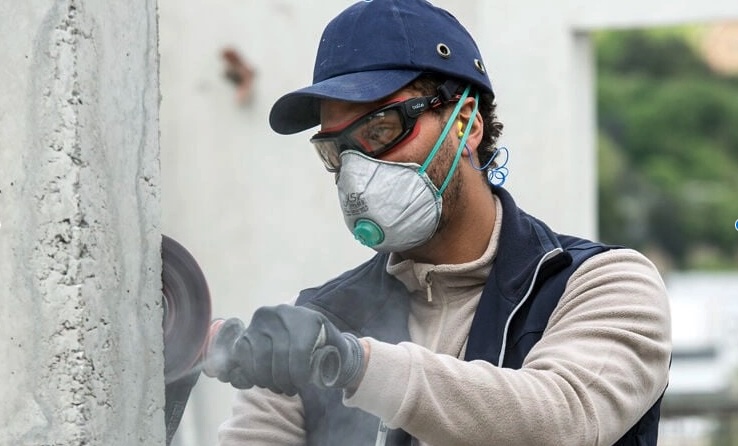
Dust exposure is common in construction, demolition, woodworking, cement handling, manufacturing, warehousing, and waste operations.

Fine particles can enter around ordinary safety glasses and cause irritation, abrasions, or other injuries.

Where airborne dust can approach from multiple directions, goggles or other closer-fitting protection may be more appropriate.

The current ANSI/ISEA Z87.1 standard includes specific markings for dust and fine-dust protection.

Optical Radiation

Welding, brazing, torch cutting, and other hot-work activities expose workers to intense light and non-ionizing radiation.

Ultraviolet and infrared radiation can damage the eyes even without a physical particle striking them.

The required protection depends on the operation, intensity, and filter shade.

Nearby employees may also need protection when they can see the arc or other radiation source.

Molten Metal and Hot Materials

Foundries, steel facilities, welding operations, and certain manufacturing processes can expose workers to sparks, hot particles, molten metal, and radiant heat.

These hazards may require more than impact-rated spectacles.

Face protection, specialized lenses, and task-specific PPE may be necessary depending on the exposure.

Explore Our Solutions!
Essential Guide to Preventing Workplace Eye Injuries

OSHA Requirements for Eye and Face Protection

OSHA’s general-industry eye and face protection standard is found in 29 CFR 1910.133.

It requires employers to ensure that employees use appropriate eye or face protection when exposed to hazards from flying particles, molten metal, liquid chemicals, acids, caustics, chemical gases or vapors, or potentially injurious light radiation.

Construction employers have similar requirements under 29 CFR 1926.102.

Protection Must Match the Hazard

Simply providing safety glasses is not enough.

The employer must determine what exposure exists and select protection designed for that exposure.

That may mean high-impact glasses for machining, splash goggles for chemical handling, filter lenses for welding, or multiple layers of protection for combined hazards.

Side Protection Is Required for Flying Objects

When flying objects create the hazard, OSHA requires eye protection that includes side protection.

Detachable side shields may be acceptable when they meet the applicable requirements.

Prescription Users Still Need Safety Protection

Workers who normally wear prescription glasses do not automatically satisfy OSHA’s eye protection requirement.

OSHA requires either protective eyewear incorporating the prescription or protective equipment that can be worn over prescription lenses without disturbing either pair.

Understanding ANSI/ISEA Z87.1-2025

The latest American National Standard for occupational eye and face protection is ANSI/ISEA Z87.1-2025.

It establishes criteria related to performance, testing, markings, selection, care, and use of eye and face protectors for hazards including impact, liquid splash, and non-ionizing radiation.

Z87 and Z87+ Markings

The markings on safety eyewear help employers identify what type of performance the product has demonstrated.

Z87 identifies equipment meeting the applicable requirements of the standard, while Z87+ is used for high-impact protection.

High-impact-rated protection is particularly relevant around machining, grinding, cutting, drilling, and other powered operations that can generate high-velocity debris.

D3, D4, and D5 Markings

ANSI/ISEA Z87.1-2025 also uses specific markings for environmental hazards.

D3 identifies splash or droplet protection.

D4 identifies dust protection.

D5 identifies fine-dust protection.

These markings help employers distinguish eyewear designed for very different exposures.

Radiation and Filter Markings

The standard also includes markings for welding filters, ultraviolet protection, infrared filtering, visible-light filtering, anti-fog performance, and prescription eyewear.

Employers should select products according to the actual hazard rather than assuming that any item carrying a Z87 mark provides every possible type of protection.

Start With a Job-Specific Eye Hazard Assessment

Eye protection should be selected at the task level whenever hazards vary across an employee’s workday.

Watch the Work Being Performed

Observe cutting, grinding, drilling, chemical handling, cleaning, welding, material transfer, maintenance, inspection, and other activities under actual operating conditions.

Look at where particles originate, how chemicals could splash, where employees position their faces, and whether nearby operations create secondary exposure.

The work often looks different in practice than it does in a written procedure.

Consider Direction of Exposure

The direction from which a hazard approaches can determine which PPE is necessary.

A particle may strike from the front, side, below, or after ricocheting from another surface.

A chemical splash may occur while opening a valve below eye level.

Dust may circulate around the head rather than move in one direction.

Coverage should match the exposure path.

Evaluate Multiple Hazards

One task may involve more than one hazard.

A maintenance worker could grind a component, use solvent during cleaning, and perform hot work during the same repair.

A single pair of glasses may not adequately protect against all three exposures.

Employees may need different protection for different stages of the job.

As long as people go to work, we have an opportunity to help protect them.

Julie Copeland
Arbill CEO

Julie Copeland Arbill CEO

Safety Glasses for Impact Hazards

Safety glasses are commonly used where employees face impact from small particles and debris.

High-Impact Protection

Where powered tools or machinery generate high-velocity particles, Z87+ eyewear may be appropriate based on the hazard assessment.

Examples include machining, drilling, cutting, chipping, and grinding.

Wraparound designs or compliant side protection can improve coverage where debris approaches from different directions.

Do Not Choose by Style Alone

Comfort and appearance matter because employees are more likely to wear PPE consistently when it fits well.

However, those considerations come after protection.

A fashionable frame that lacks the required rating or coverage is not the correct product for the job.

Arbill’s guide on how to select the best safety glasses for different job sites provides additional guidance on matching impact, splash, dust, prescription, and optical-radiation requirements to actual work environments.

Goggles for Chemical Splash

Chemical goggles provide closer protection around the eye area than ordinary spectacles.

For splash exposure, employers should look for equipment specifically designed and marked for the hazard.

Indirectly Vented vs. Non-Vented Designs

Ventilation affects comfort and fogging but can also influence chemical protection.

The correct goggle design should be based on the substance, splash potential, vapor exposure, and manufacturer specifications.

A goggle suitable for nuisance dust may not necessarily be suitable for corrosive-liquid splash.

Add a Face Shield When Necessary

Some chemical tasks expose more than the eyes.

A face shield can protect the forehead, cheeks, nose, and mouth from broader splash or spray.

However, face shields are generally considered secondary protection and should be worn over the appropriate safety glasses or goggles when primary eye protection is required.

Face Shields for High-Exposure Work

Face shields are useful during tasks where debris, liquid, or heat can affect a larger area of the face.

Grinding, chemical transfer, molten-metal work, and high-volume splash operations may justify their use.

The hazard assessment should determine whether the shield needs specific impact, heat, or chemical resistance.

A face shield should not automatically be treated as a replacement for primary eye protection.

Welding and Optical Radiation Protection

Welding eye protection requires specific filter performance.

OSHA requires employees using filter lenses to have a shade number appropriate to the work being performed.

The correct shade depends on the welding or cutting process and operating conditions.

Workers nearby may also require screening or suitable eyewear when they could be exposed to harmful radiation.

Impact protection may still be needed underneath welding helmets when grinding, chipping, or cleaning occurs before or after the weld.

Prescription Safety Eyewear

Employees who need vision correction should not have to choose between clear sight and appropriate protection.

Prescription safety eyewear can incorporate corrective lenses into an occupationally rated frame.

OSHA also allows appropriate protective eyewear worn over prescription lenses when neither the prescription nor protective device is displaced.

Dedicated prescription safety eyewear may improve comfort and make consistent use easier for employees who spend most of the workday in hazardous areas.

Fit and Comfort Influence Compliance

A technically correct product may still perform poorly if it does not fit the worker.

Glasses that slide down the nose, pinch the temples, create pressure behind the ears, or leave large gaps can encourage workers to adjust or remove them.

Employers should provide options that accommodate different facial dimensions where practical.

The eyewear should also remain stable during bending, climbing, lifting, and normal head movement.

Prevent Fogging

Fogged lenses can become a safety hazard of their own.

Employees may lift or remove protection when visibility becomes poor.

Humidity, heat, respirators, face coverings, and movement between temperature zones can all increase fogging.

ANSI/ISEA Z87.1-2025 includes an anti-fog performance marking, X, for products meeting the applicable criteria.

Anti-fog coatings, ventilation, improved fit, and better PPE compatibility can help reduce the problem.

Make Sure Eye Protection Works With Other PPE

Workers often wear several types of PPE simultaneously.

Hard hats, respirators, hearing protection, face shields, welding helmets, and protective clothing can interfere with safety glasses or goggles.

The complete PPE ensemble should be evaluated together.

A respirator should not push glasses away from the face. Helmet-mounted accessories should not create gaps. Goggles should not compromise the respirator seal.

Testing the complete configuration under real working conditions can reveal compatibility issues before employees enter hazardous areas.

Inspect Eye Protection Before Use

Safety eyewear is not permanent equipment.

Scratched lenses, loose temples, damaged shields, cracked frames, worn straps, broken side protectors, or chemical damage can reduce protection.

Workers should inspect eye and face PPE before use and replace equipment when its condition could compromise safety or visibility.

Deep scratches are particularly important because they can distort vision or increase glare.

Keep Eyewear Clean and Stored Properly

Dirty lenses can reduce visibility and encourage workers to remove their PPE.

Provide suitable cleaning materials and store eyewear where it will not become scratched, crushed, contaminated, or chemically damaged.

Chemical splash goggles should be cleaned according to manufacturer instructions after exposure.

Shared equipment may also require appropriate sanitation between users.

Train Employees on Why the PPE Changes

Employees should understand why grinding requires different protection from chemical transfer or welding.

Training should cover the hazards, required eyewear, markings, fit, inspection, cleaning, storage, and replacement.

Workers should also know when a face shield is additional protection rather than a substitute for glasses or goggles.

Understanding the reason behind the requirement makes PPE rules easier to follow consistently.

Include Visitors and Supervisors

Eye hazards do not distinguish between production employees and people passing through the area.

Supervisors, managers, contractors, visitors, and office employees entering active production zones may need the same protection as workers performing the task.

Facilities should define mandatory eye-protection areas clearly and provide suitable visitor PPE.

Learn From Eye-Injury Near Misses

A near miss can reveal a protection gap before permanent injury occurs.

If debris strikes a worker’s cheek beside their glasses, the facility may need better lateral coverage.

If chemical droplets land on a face shield, determine whether primary eye protection was also sufficient.

If employees routinely remove goggles because they fog, address the underlying product or environmental problem instead of treating removal solely as a behavior issue.

These events provide valuable information for improving PPE selection.

See Our Safety Services!
Prescription Safety Eyewear Program

Build a Complete Eye Protection Program

An effective program connects hazard assessment, product selection, employee training, inspection, replacement, and program review.

Arbill’s eye and face protection options can support different industrial applications, including impact, splash, dust, optical-radiation, and broader face-protection needs.

The final selection should always be based on the actual hazard and applicable performance requirements.

Common Eye Protection Mistakes

One frequent mistake is issuing the same safety glasses to every employee regardless of task.

Another is treating prescription street glasses as occupational safety eyewear.

Facilities may also rely on face shields without primary eye protection, overlook side protection, or use ordinary spectacles during chemical splash work.

Other problems include scratched lenses, poor fit, excessive fogging, outdated PPE assessments, and employees changing tasks without changing protection.

Most of these failures are preventable when PPE selection is tied to a documented hazard assessment.

A Practical Prevention Strategy

A strong eye-injury prevention process begins by identifying the task and exposure.

Determine whether workers face flying objects, liquid splash, dust, fine particles, heat, molten material, or optical radiation.

Select eye or face protection with the appropriate ANSI/ISEA markings and coverage.

Then verify fit and compatibility with other PPE, train workers on use and limitations, and make replacements readily available.

Finally, review incident reports, near misses, employee feedback, and workplace changes to determine whether protection remains adequate.

Conclusion

Workplace eye injuries are often preventable, but prevention requires more than handing every employee a pair of generic safety glasses.

Employers need to understand how eye hazards occur and match PPE to the specific exposure.

Flying particles may require high-impact protection and side coverage. Chemical splash may require goggles and additional face protection. Dust may require closer-fitting equipment, while welding and other optical hazards require appropriate filter lenses.

OSHA establishes the employer’s responsibility to provide suitable eye or face protection, while ANSI/ISEA Z87.1-2025 provides current performance criteria and markings that help employers select appropriate products.

When hazard assessment, correct PPE selection, fit, employee training, maintenance, and regular program review work together, organizations can significantly reduce preventable eye exposure and build a stronger workplace safety program.

Request a Safety Assessment

Recent Posts

Workplace Safety Programs
How to Improve Safety Culture in Industrial Workplaces

How to Improve Safety Culture in Industrial Workplaces

Essential Guide to Preventing Workplace Eye Injuries
Workplace Eye Injuries: Causes, Prevention, and PPE Solutions

Workplace Eye Injuries: Causes, Prevention, and PPE Solutions

First Aid SmartCompliance
How Often Should First Aid Kits Be Inspected and Restocked?

How Often Should First Aid Kits Be Inspected and Restocked?

How to Implement Lockout Tagout Procedures in Manufacturing
Lockout/Tagout Best Practices for Manufacturing Facilities

Lockout/Tagout Best Practices for Manufacturing Facilities

Safety Glasses Side Sheilds
How to Select the Best Safety Glasses for Different Job Sites

How to Select the Best Safety Glasses for Different Job Sites

  • Previous ProjectHow to Improve Safety Culture in Industrial Workplaces

  • Next ProjectHow Often Should First Aid Kits Be Inspected and Restocked?

CUSTOMER SERVICE

800-523-5367

CONTACT US

Complete the short form below and an Arbill representative will get back to you within 24 hours.
* Required Fields

    ARBILL RESPECTS YOUR PRIVACY AND YOUR INFORMATION: By submitting the form above you agree to receiving emails from Arbill. Your submitted information is NEVER shared. You may unsubscribe at any time via the "unsubscribe" link in our emails. You can view our Privacy Policy HERE.