Warehouse safety can come down to a few seconds.

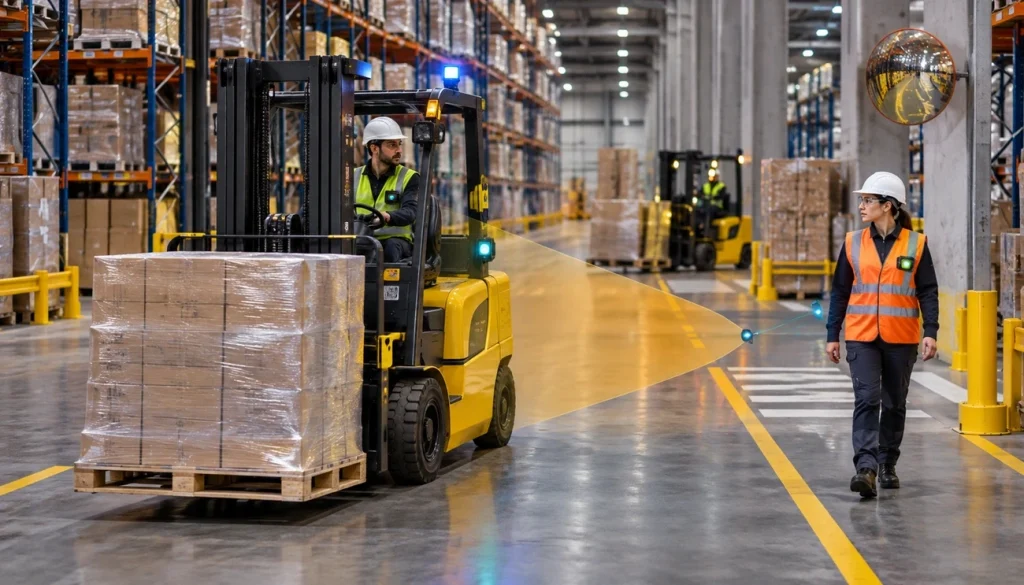
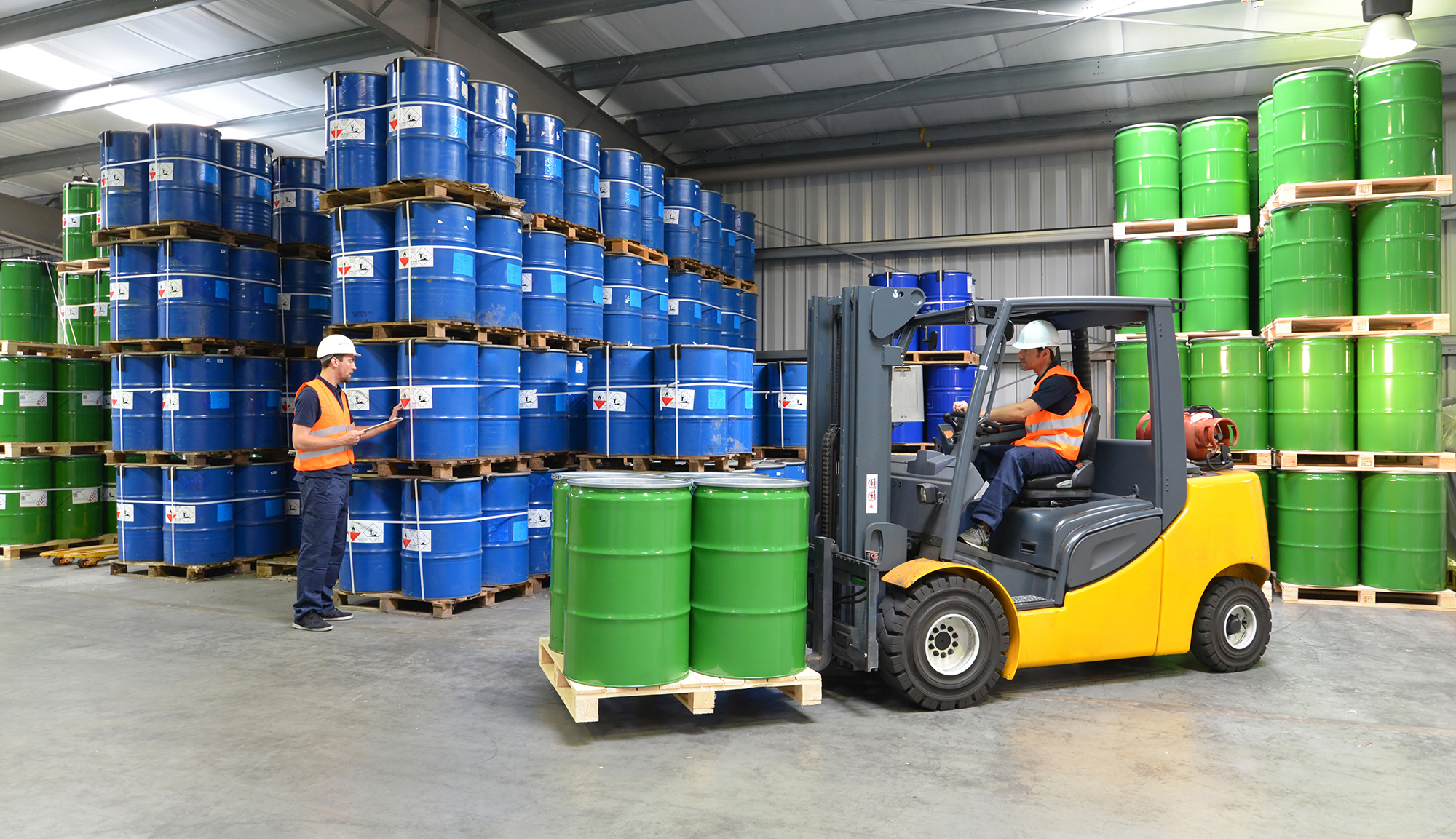
A loaded forklift approaches a blind intersection while a picker steps out from behind a rack. The operator’s view is partially blocked by the load, the pedestrian cannot see around the shelving, and production noise makes it difficult to hear the truck approaching. Traditional controls such as horns, mirrors, marked walkways, barriers, speed limits, and operator training all help, but none completely eliminate the possibility that two people will enter the same space at the wrong moment.

Smart forklift safety technology is adding another layer of protection.

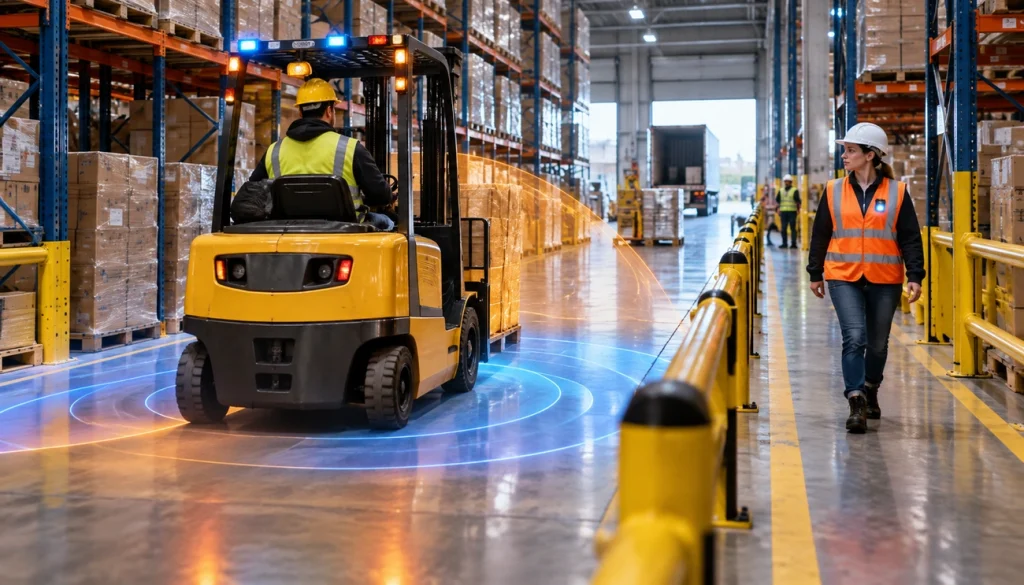
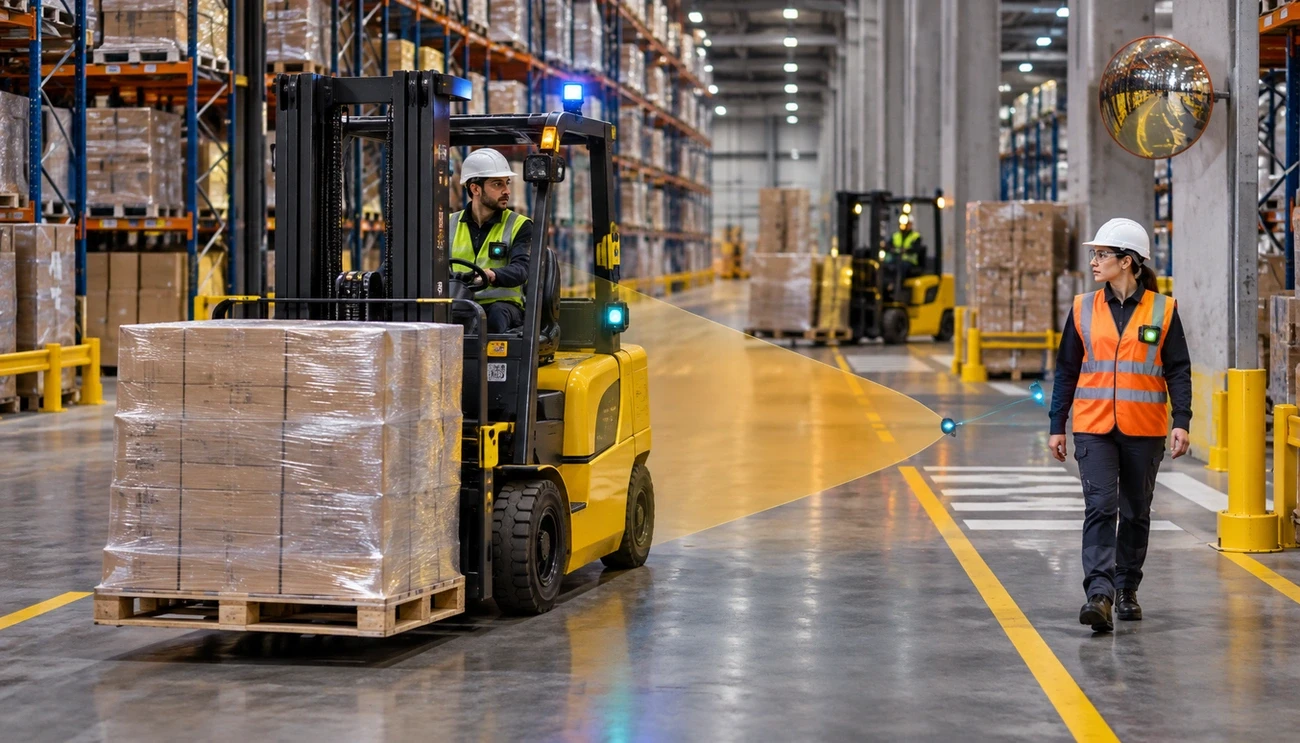
Sensors mounted on forklifts, wearable pedestrian devices, proximity alerts, and connected safety systems can detect interactions that operators and workers may not immediately see. Instead of relying exclusively on visual awareness, these systems can warn people when a pedestrian and vehicle move within a defined distance of one another.

The technology does not replace good warehouse design or trained operators. Its value comes from strengthening those controls with real-time information and helping safety teams identify patterns before a near miss becomes an injury.

Why Forklift Accidents Happen in Busy Warehouses

Forklift collisions rarely result from one issue alone. Equipment design, warehouse layout, visibility, employee movement, congestion, and production pressure can combine to create conditions where a small mistake becomes serious.

Understanding those conditions is important because smart technology works best when it is deployed around a clearly identified hazard rather than installed simply because sensors are available.

Loads Can Block the Operator’s View

A tall pallet or bulky load can significantly reduce forward visibility. Operators may need to adjust their travel method so they maintain a clear view of the path, but even proper operation can leave temporary blind areas around the vehicle.

Pedestrians sometimes make the mistake of assuming that because they can see the forklift, the operator can see them.

That assumption can be dangerous.

A worker standing beside a rack, doorway, column, or load may remain outside the operator’s direct view until the distance between them has become very small.

Rear Steering Creates a Wide Tail Swing

Forklifts are highly maneuverable partly because many use rear-wheel steering.

That design allows tight turns but also means the back of the truck swings outward in the opposite direction of the turn.

A worker who appears to be standing clear of the front of the forklift may still be inside the rear-swing area.

This becomes particularly important near rack ends, loading docks, packing stations, and other locations where pedestrians may stand close to turning equipment.

Stopping Distance Matters

Forklifts cannot necessarily stop immediately when a pedestrian appears.

Stopping performance depends on speed, load, surface conditions, truck design, and other factors. Wet or slippery floors can further reduce control, while narrow aisles may give pedestrians little room to step away.

OSHA requires operators to travel at speeds that allow the truck to be brought to a safe stop and emphasizes slowing at obstructed intersections, maintaining a clear view of travel, and accounting for pedestrian traffic. (OSHA Powered Industrial Truck Guidance)

Smart sensors can provide additional warning time, but safe speed remains fundamental.

Shared Aisles Increase Exposure

Warehouses often ask vehicles and pedestrians to operate within the same general footprint.

Pickers enter aisles to retrieve products. Shipping personnel cross routes to inspect freight. Maintenance employees work near equipment. Contractors and visitors may move through areas they do not know well.

As the number of interactions increases, the opportunity for a collision increases as well.

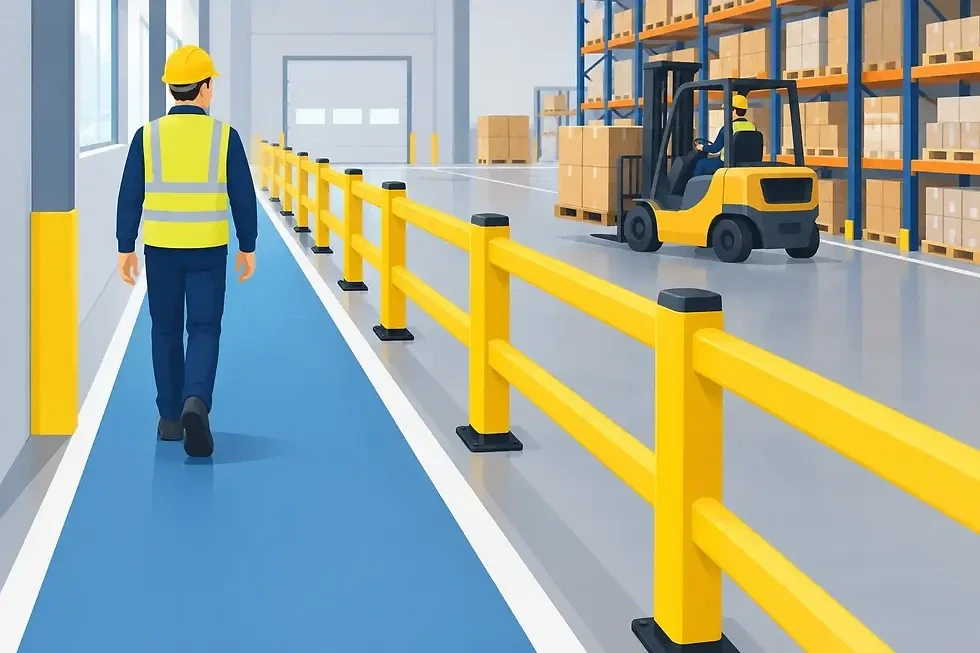
The strongest solution remains separating people and forklifts wherever practical.

Arbill’s guide to forklift pedestrian safety in busy warehouses explains how barriers, walkways, crossings, traffic controls, and operating practices reduce the amount of interaction that needs to be managed.

Smart sensors should address the exposure that remains after those controls are considered.

Map Forklift-Pedestrian Conflict Points First

Installing proximity sensors without understanding where risk occurs can produce poor results.

A warehouse should first map where people and powered equipment actually interact.

Do not rely solely on the building plan.

Observe the operation during:

Receiving, replenishment, picking, packing, shipping, breaks, and shift changes.

Look for areas where forklift and pedestrian routes overlap naturally.

These locations often include rack ends, cross aisles, loading docks, battery rooms, staging areas, packing stations, pedestrian doors, and routes leading to offices or break rooms.

Observe Different Shifts

Traffic patterns can change significantly between shifts.

One shift may have heavy inbound deliveries while another concentrates on outbound picking. Seasonal workers may increase pedestrian traffic during peak periods, while night-shift lighting can create different visibility conditions.

Sensor placement should reflect those differences.

A location that appears low risk during a quiet daytime walkthrough may become one of the facility’s busiest intersections later in the day.

Explore Our Solutions!
How Smart Sensors Are Changing Warehouse Operations

Check Blind Corners From Both Directions

Tall racks, walls, machinery, and stored materials can create blind intersections.

Test those locations from the perspective of both the operator and pedestrian.

Ask how early each person can see the other.

Also look for temporary obstructions.

Overflow pallets, carts, containers, workstations, or staged freight can turn a normally clear intersection into a blind corner without any permanent change to the building.

These areas are often strong candidates for additional warning technology.

Review Loading Docks and Staging Areas

Loading docks combine multiple hazards in a relatively small area.

Forklifts enter trailers, workers inspect freight, truck drivers move around vehicles, dockboards bridge elevation differences, and staged material may reduce available space.

Staging areas can create similar congestion.

When inventory builds up, travel routes may become narrower and sightlines shorter.

Forklift safety technology can add valuable awareness in these locations, but the first priority should still be keeping pedestrian areas clear and controlling access to active vehicle zones.

Arbill’s warehouse, 3PL, and data center safety solutions support organizations dealing with traffic management, PPE, material handling, and other high-density warehouse risks.

Use Near Misses to Find the Highest-Risk Zones

Injury history alone is not enough to identify where sensors belong.

A warehouse may have experienced no recent forklift-pedestrian injuries while employees report frequent close calls at the same intersection.

Those near misses are important.

Review:

Sudden braking events, pedestrian complaints, rack strikes, blocked crossings, vehicle conflicts, property damage, and supervisor observations.

If several reports point to the same location, the facility has received useful warning before a serious collision occurs.

How Smart Forklift Sensors Work

Forklift safety technology varies by manufacturer, but proximity systems generally use a vehicle-mounted device together with another sensor or wearable carried by workers.

When the technology determines that a tagged pedestrian has entered a defined proximity area, it triggers a warning.

Depending on the system, that warning may be:

Audible, visual, tactile, or a combination of methods.

The goal is not to make decisions for the operator.

It is to provide an additional signal that a hazard may be developing.

Vehicle-Mounted Sensors

The forklift component typically monitors for compatible pedestrian devices within the configured detection area.

Because the sensor is attached to the equipment, it moves with the truck rather than protecting only one fixed intersection.

This can provide an advantage in warehouses where forklifts travel throughout large portions of the facility.

The system can help address hazards that traditional stationary controls may miss when congestion or inventory changes.

Wearable Pedestrian Devices

Some systems provide small devices worn by employees on a vest, wrist, arm, or other approved location.

The wearable communicates with the forklift-mounted sensor.

When the pedestrian enters the programmed warning range, the device can alert the worker directly.

This is significant because traditional forklift warnings are often vehicle-centered.

A horn depends on the pedestrian hearing it.

A flashing light depends on the worker looking in the correct direction.

A wearable vibration adds another warning channel that can reach the pedestrian directly.

TruSense Forklift Uses Real-Time Proximity Alerts

Arbill’s TruSense™ Forklift uses forklift-mounted and wearable sensing technology to increase awareness around powered equipment.

Arbill describes TruSense as providing real-time hazard detection, visual and audible alerts, and 360-degree awareness. Its forklift sensor communicates with pedestrian-worn devices, which can be worn on a wrist, arm, or safety vest.

The current TruSense system is designed to vibrate and buzz when workers and forklifts come within approximately six feet of one another, giving both parties another opportunity to recognize the interaction and respond.

That warning distance is a feature of the current TruSense configuration, not a universal safe distance for every forklift operation.

Actual stopping needs still depend on equipment, speed, load, surface conditions, and workplace layout.

Sensors Help Close Blind-Spot Gaps

One of the clearest benefits of proximity detection is that it does not depend entirely on line of sight.

A pedestrian may be hidden behind a rack.

An operator may be unable to see around the load.

A doorway may open directly into an equipment route.

If the technology can detect the pedestrian before visual contact occurs, both parties receive additional warning time.

This does not eliminate the blind corner.

The warehouse should still ask whether the layout can be improved.

But the sensor can provide another protective layer while interaction remains.

”As long as people go to work, we have an opportunity to help protect them.

Julie Copeland
Arbill CEO

Julie Copeland Arbill CEO

Multiple Alert Methods Matter in Noisy Warehouses

A warehouse may contain conveyors, alarms, compressors, packaging equipment, trucks, and other constant noise.

That environment can make an audible warning less effective.

Systems that combine sound with vibration or visual signals can improve the chance that the warning will be noticed.

The specific combination should be tested in the actual work environment.

A system that performs well in a quiet demonstration room may behave differently beside active loading docks or production equipment.

Smart Sensors Can Support More Than Immediate Alerts

The value of connected forklift technology can extend beyond the moment of warning.

If the system records where interactions occur, safety teams may be able to identify patterns.

Suppose one rack intersection generates far more proximity events than any other location.

That information may reveal:

Poor sightlines, excessive speed, a badly positioned pedestrian route, inappropriate staging, or insufficient separation.

The technology then becomes a source of leading safety information rather than only an alarm device.

Sensor Data Can Guide Facility Improvements

The long-term goal should not be to generate the same alert hundreds of times.

Repeated warnings should lead to investigation.

A facility may discover that pedestrians repeatedly enter a vehicle lane because the designated walkway is blocked.

Another site may find that a rack configuration prevents operators from seeing a crossing.

The appropriate response may be:

Relocating the crossing, adding a barrier, changing traffic direction, reducing speed, improving lighting, or moving stored material.

Connected technology creates more value when it helps eliminate recurring conflicts.

What Evidence Supports the “60% Reduction” Claim?

Claims that forklift safety technology can reduce accidents or risky interactions by around 60% appear in several vendor and customer case studies.

However, employers should interpret those numbers carefully.

They are not a universal industry benchmark showing that every proximity system will reduce forklift accidents by 60%.

Different published examples measure different outcomes.

Some report reductions in overall safety incidents, others report vehicle-pedestrian interactions, near misses, alerts, or customer-specific collision results.

The work environments, technology, baseline conditions, and measurement periods also differ.

For that reason, the strongest claim for an Arbill article is not:

“Smart sensors reduce forklift accidents by 60%.”

A more defensible statement is:

Some technology deployments have reported substantial reductions in proximity events or incidents, including results around 60%, but actual outcomes depend on the workplace, implementation, controls, training, and how results are measured.

Arbill’s current TruSense information focuses on real-time detection, warnings, blind-spot awareness, and reducing forklift-related risk rather than promising a fixed percentage reduction.

Do Not Treat Case Studies as a Guarantee

A result from one warehouse does not automatically transfer to another.

A facility beginning with poor traffic separation may see significant improvement after sensors are introduced alongside stronger controls.

Another warehouse with already mature traffic management may see a smaller change.

The outcome can also depend on:

Worker compliance with wearable devices, alert settings, speed, facility layout, employee training, supervisor response, and whether repeated alerts lead to corrective action.

For this reason, employers should establish their own baseline and measure their own results.

Build a Sensor Program Around a Specific Hazard

Technology deployments work best when employers can clearly state what problem they are trying to solve.

For example:

“We have repeated forklift-pedestrian near misses at three blind rack intersections.”

is a much stronger starting point than:

“We want smart warehouse technology.”

The first statement allows the organization to measure whether the solution works.

The second risks turning the technology into an expensive feature with no clear objective.

Start With Physical Traffic Controls

Before deploying sensors, review the existing traffic plan.

Separate pedestrians from powered equipment wherever possible.

Use barriers, designated walkways, controlled crossings, mirrors, warning signs, and appropriate speed controls.

Keep routes clear and maintain adequate lighting.

Smart technology should address the remaining risk.

Arbill’s guide on forklift proximity detection systems explains how real-time alerts fit alongside these traditional controls.

Pilot the Technology Before a Large Rollout

A pilot can reveal whether the system works under actual warehouse conditions.

Choose one or more locations where risk is well understood.

Include representative operators and pedestrians from different shifts.

During the pilot, evaluate:

Detection reliability, warning distance, alert clarity, false alarms, battery performance, worker response, and operational impact.

Ask employees whether the alerts provide useful warning or occur too frequently to remain meaningful.

This feedback should be considered alongside system data.

Watch for Alarm Fatigue

Too many alerts can reduce effectiveness.

If workers receive warnings constantly when no meaningful collision risk exists, they may stop reacting to them.

Detection zones therefore need to match the workplace.

A wide alert area may be appropriate around higher-speed travel routes while becoming disruptive in a tightly packed work area where pedestrians routinely work nearby behind protective barriers.

The system should distinguish between ordinary safe proximity and interactions requiring attention as effectively as the technology allows.

Train Workers on What Alerts Mean

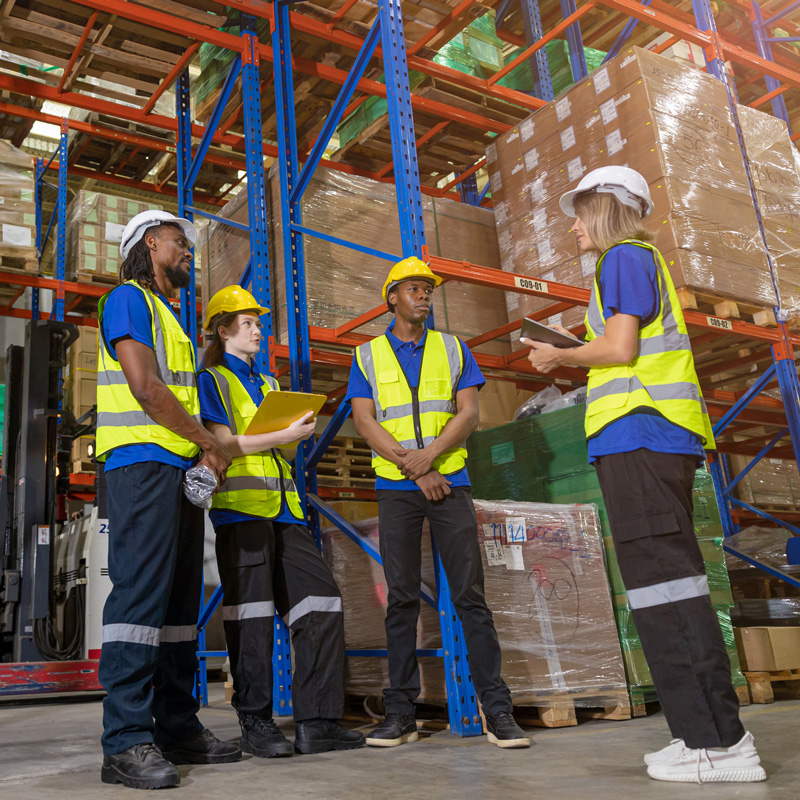
Employees should understand the technology before it becomes part of normal operations.

Pedestrians need to know:

Why they are wearing a device, what triggers it, what each alert means, and what action they should take.

Operators need similar instruction.

They should never assume that the absence of an alert proves the path is clear.

Visual checks, horns, mirrors, speed control, and established safe operating practices remain necessary.

The sensor is one layer, not the entire safety program.

Establish Device Responsibilities

Connected equipment creates maintenance needs traditional floor markings do not have.

Someone needs responsibility for:

Charging, battery replacement, device inspection, damaged units, software or configuration issues, and replacement wearables.

Workers should know how to report malfunctioning equipment.

A broken sensor should not quietly remain in service because employees assume someone else will handle it.

Make the Program Consistent Across Every Shift

A sensor program is only as strong as its least consistent shift.

If day-shift workers wear devices but night-shift temporary employees do not, the facility does not have a consistent control.

Deployment should account for:

Full-time employees, temporary workers, contractors, supervisors, and any other personnel who routinely enter monitored forklift areas.

Shift handoffs should also identify unusual conditions such as:

Changed staging, maintenance work, blocked routes, or temporary traffic patterns.

These changes can affect sensor performance and the underlying risk.

Account for Seasonal Staffing

Peak seasons can significantly increase warehouse complexity.

More employees may enter the facility.

Additional forklifts may operate.

Temporary workers may be unfamiliar with the layout.

Overflow inventory can reduce sightlines and alter travel routes.

A sensor system should be reviewed before high-demand periods to verify that enough wearable devices are available and detection zones still reflect current conditions.

Measure Results With Leading Indicators

Forklift injuries are lagging indicators.

They measure what already happened.

Sensor programs give employers an opportunity to track more proactive information.

Possible leading indicators include:

Proximity events, high-risk zones, repeat alerts, near misses, pedestrian route violations, corrective-action completion, and employee reports.

Arbill’s guide to leading vs. lagging safety indicators explains why combining preventive activity with outcome data gives employers a clearer picture of whether safety systems are actually improving.

Establish a Baseline Before Installation

To determine whether the technology is effective, understand current conditions first.

Before installation, collect information such as:

Near-miss reports, traffic observations, high-risk intersections, forklift damage, employee concerns, and any available collision data.

Then compare the same measures after implementation.

Without a baseline, employers may know that the system generates alerts without knowing whether risk has actually changed.

See Our Safety Services!
TrusSense Forklift Warning Distance

Do Not Measure Success Only by Fewer Alerts

A decline in alerts can be positive, but the reason matters.

Alerts may decrease because workers are changing behavior or traffic controls have improved.

They may also decrease because employees stopped wearing their devices or sensors are malfunctioning.

Review alert trends alongside:

Device compliance, observations, near misses, employee feedback, and changes to facility layout.

Context determines whether the number represents real improvement.

Use Repeat Alerts as a Corrective-Action Trigger

If the same location continues generating warnings, the facility should not accept the alerts as normal.

Investigate the underlying cause.

Can pedestrians be rerouted?

Can racks be repositioned?

Would a barrier help?

Should speed be reduced?

Can staging be moved?

Technology should help employers make safer decisions rather than simply document repeated exposure indefinitely.

Smart Sensors Are Part of a Larger Warehouse Technology Trend

Forklift proximity systems fit into the broader development of connected workplace safety.

Wearable devices, gas detection, heat monitoring, smart PPE, and connected inventory systems are all making safety information available more quickly.

Arbill’s guide to how smart PPE is changing workplace safety explains how sensor technology can turn traditional protective systems into more proactive tools.

The underlying principle is similar for forklifts.

The sooner a workplace can recognize developing risk, the more opportunity it has to intervene before an injury occurs.

Smart Technology Cannot Fix Poor Safety Culture

No sensor can compensate for a workplace where production pressure consistently overrides safety procedures.

Operators who are encouraged to speed will still create risk.

Pedestrians who routinely bypass designated walkways will still create unpredictable interactions.

Supervisors who ignore repeated warnings will undermine the value of the system.

Technology works best in an environment where employees can report hazards and managers act on the information.

The Future Is Better Integration, Not More Alarms

The most useful development in forklift safety technology is not simply adding more devices.

It is connecting information with action.

Proximity alerts can identify dangerous interactions.

Traffic maps can show where they occur.

Near-miss reports can provide context.

Supervisors can then redesign the workplace or operating process.

This creates a cycle:

Detect the interaction, investigate the cause, implement a control, and verify whether the risk declines.

That process turns smart sensors from warning devices into a broader risk-management tool.

A Practical Forklift Sensor Implementation Checklist

Before expanding a forklift safety technology program, employers should be able to confirm that:

  • Forklift and pedestrian conflict points have been mapped.
  • Existing physical separation has been reviewed first.
  • High-risk blind corners and dock areas are identified.
  • Operators and pedestrians understand the technology.
  • Detection zones have been tested during real operations.
  • Workers can clearly recognize the alerts.
  • False or unnecessary alerts have been evaluated.
  • Devices are inspected, charged, and maintained.
  • Temporary and seasonal employees are included.
  • Baseline near-miss and traffic data has been collected.
  • Repeat alerts trigger investigation and corrective action.
  • Sensor results are reviewed alongside injury and near-miss trends.

The technology should fit the warehouse safety program rather than the program being redesigned merely to accommodate the technology.

Conclusion

Forklift safety technology is changing warehouse operations by adding real-time awareness to one of the most difficult workplace hazards: the interaction between pedestrians and moving equipment.

Smart sensors can detect people that operators may not immediately see, warn pedestrians approaching active forklift zones, and give safety teams data about where risky interactions repeatedly occur.

But sensors work best as part of a larger system.

Warehouses should first map traffic, improve sightlines, separate pedestrians and vehicles, train operators, control speed, maintain clear routes, and review near misses. Proximity technology can then add another layer where meaningful interaction remains.

Claims of dramatic accident reductions should also be treated carefully. Some deployments have reported substantial improvements, including results around 60%, but those figures reflect individual implementations rather than a guaranteed result for every facility.

The stronger approach is to measure what happens in your own warehouse.

Establish a baseline, pilot the technology, track proximity events and near misses, involve workers, investigate repeat alerts, and verify that changes actually reduce risk.

When smart sensors are combined with good traffic design, trained workers, and consistent corrective action, they can help warehouse teams move from reacting to forklift incidents toward identifying dangerous interactions before a collision occurs.

Request a Safety Assessment

Recent Posts

How Smart Sensors Are Changing Warehouse Operations
Forklift Safety Technology: How Smart Sensors Are Changing Warehouse Operations

Forklift Safety Technology: How Smart Sensors Are Changing Warehouse Operations

The Ultimate Warehouse Safety Guide for Busy Operations
Forklift Pedestrian Safety: How to Reduce Collisions in Busy Warehouses

Forklift Pedestrian Safety: How to Reduce Collisions in Busy Warehouses

How Forklift Proximity Detection Systems Help Prevent Workplace Accidents

How Forklift Proximity Detection Systems Help Prevent Workplace Accidents

Safety Training
Leading vs. Lagging Safety Indicators: What Should You Track?

Leading vs. Lagging Safety Indicators: What Should You Track?

How to Conduct a Job Hazard Analysis - Your Complete Risk Assessment
What Is a Job Hazard Analysis (JHA) and How Do You Conduct One?

What Is a Job Hazard Analysis (JHA) and How Do You Conduct One?

  • Next ProjectForklift Pedestrian Safety: How to Reduce Collisions in Busy Warehouses

CUSTOMER SERVICE

800-523-5367

CONTACT US

Complete the short form below and an Arbill representative will get back to you within 24 hours.
* Required Fields

    ARBILL RESPECTS YOUR PRIVACY AND YOUR INFORMATION: By submitting the form above you agree to receiving emails from Arbill. Your submitted information is NEVER shared. You may unsubscribe at any time via the "unsubscribe" link in our emails. You can view our Privacy Policy HERE.