Safety posters have their place. So do written policies, annual training, floor markings, and compliance checklists.
But in a high-throughput distribution center, safety cannot live on the wall.
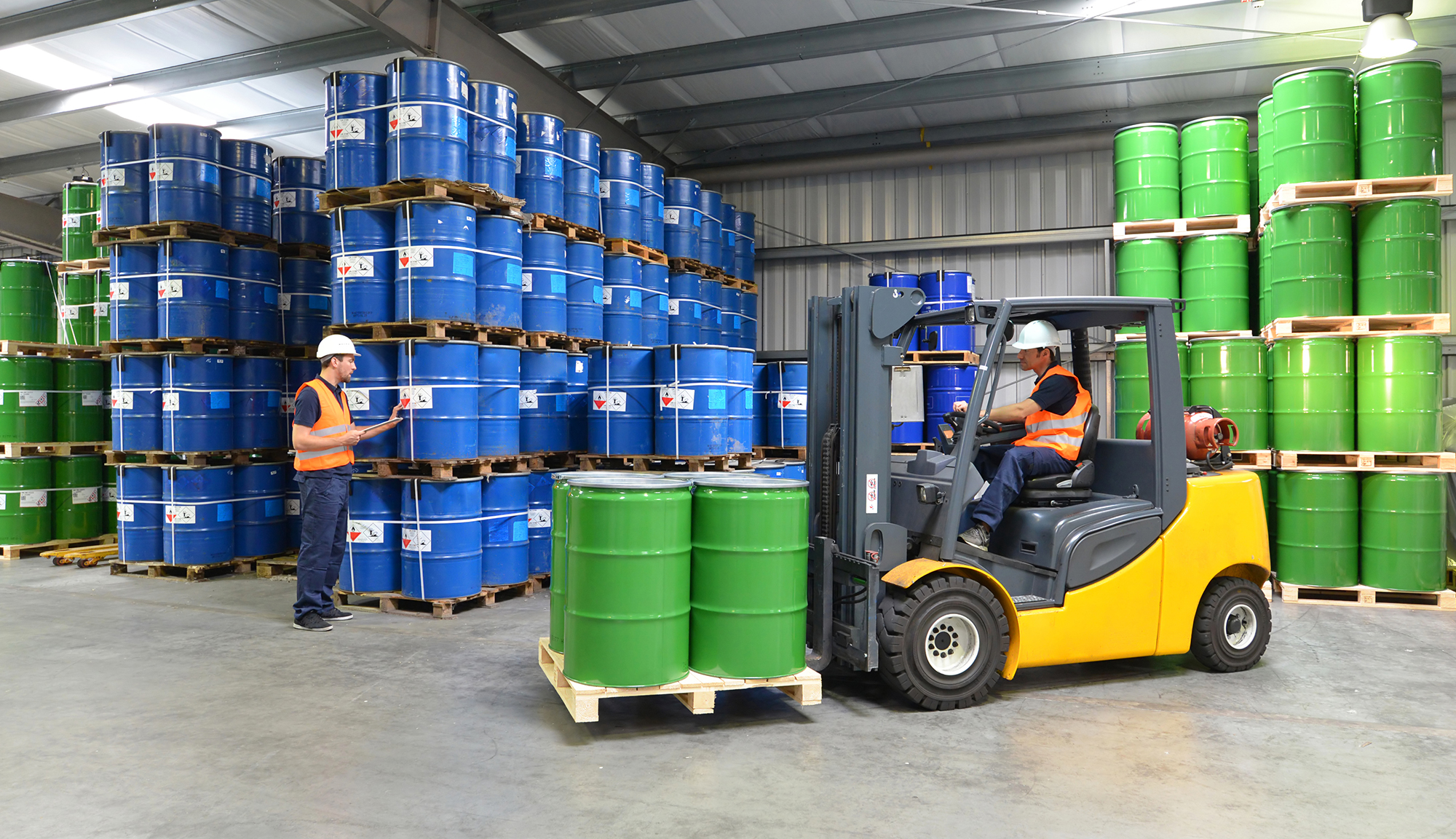
The floor changes too quickly. Forklifts move through narrow aisles. Pedestrians cross active traffic zones. New workers rotate in. Pallets shift. Dock schedules change. Production pressure rises. Aisles become congested. A hazard that did not exist during yesterday’s walkthrough can become today’s near miss.
That is why many distribution centers need more than a traditional safety program. They need safety expertise embedded directly into daily operations.
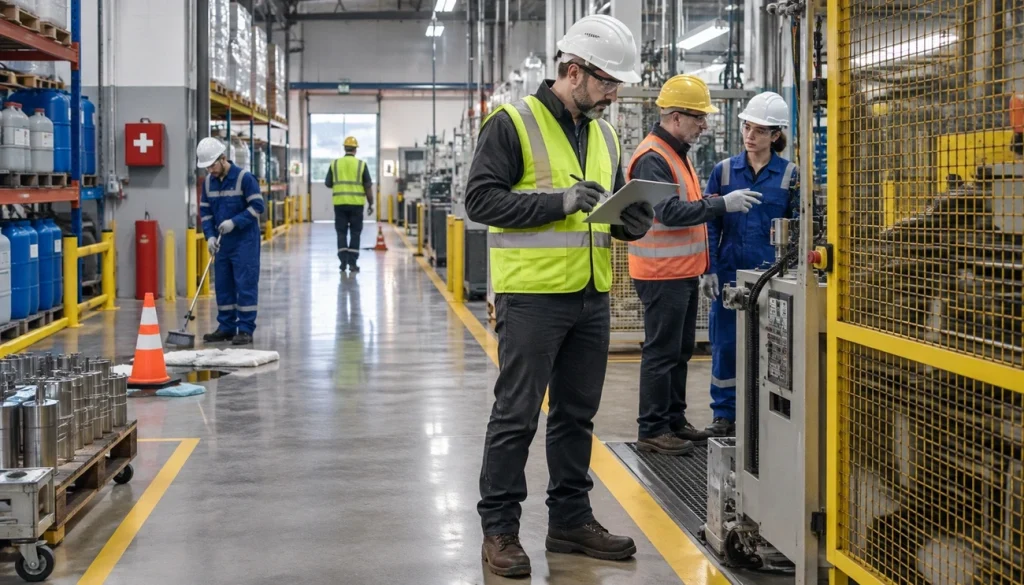
Embedded EHS specialists work where the risk happens. They observe tasks in real time, coach workers in the moment, respond to near misses quickly, and help supervisors close the gap between written safety rules and actual floor conditions.
For high-throughput DCs, that presence can make the difference between reacting to injuries and preventing them.
Why Traditional Safety Programs Fall Short in High-Throughput DCs
Distribution centers are built for speed. Orders need to move. Trucks need to load. Workers need to pick, pack, stage, replenish, and ship without delay.
That pace creates safety challenges that are difficult to manage from a distance.
A written policy may say pedestrians should use marked walkways. But what happens when a temporary staging area blocks the walkway? A forklift rule may require operators to slow at intersections. But what if visibility changes after new racking is installed? A training record may show that employees completed instruction. But are they applying it correctly during peak volume?
Traditional safety programs often rely on scheduled audits, lagging indicators, and periodic training. Those tools matter, but they do not always capture the conditions workers face in real time.
High-throughput facilities need a safety model that keeps up with the floor.
The Gap Between Policies and Daily Operations
Many DCs have strong safety policies on paper. Forklift operators are certified. Pedestrian lanes are marked. Speed limits are posted. Dock rules are documented. Near-miss reporting systems exist.
Still, close calls happen.
The issue is not always lack of effort. It is often the gap between the written program and the work environment.
Distribution center conditions change constantly. A new shift starts. A worker calls out. A trailer arrives late. A pallet is staged in the wrong place. A spill appears near a travel path. A new employee shadows a faster worker and copies unsafe habits. A forklift operator encounters a blind corner that was clear earlier in the day.
These small changes can create risk long before they show up in a formal safety report.
Embedded EHS specialists help close that gap because they are present while the work is happening. They can see when procedures no longer match the floor, when workers need coaching, and when a small hazard is starting to become a serious exposure.
Why Off-Site Safety Oversight Is Not Enough
Off-site safety managers can provide valuable leadership, compliance support, audits, and program structure. But they cannot see every floor-level risk from a remote office or occasional site visit.
A monthly report may show that injuries are down, while near misses are increasing in one dock area. A training dashboard may show 100% completion, while workers still use poor lifting techniques during peak shift. A low incident rate may hide repeated close calls that no one formally reports.
This is where embedded EHS specialists add value.
They are not waiting for a report to arrive. They are watching the process, talking to workers, joining shift huddles, reviewing hazard trends, and responding when conditions change. Their daily presence gives the facility a more accurate picture of safety performance.
That visibility matters because high-throughput DCs do not operate in theory. They operate in motion.
What Embedded EHS Specialists Actually Do
An embedded EHS specialist is not just an auditor walking around with a clipboard.
Their role is to support safety where work happens. They observe, coach, document, respond, and help supervisors turn safety expectations into daily habits.
In a distribution center, their daily work may include:
- Walking high-risk areas during active operations
- Observing forklift and pedestrian interactions
- Reviewing dock activity and trailer procedures
- Coaching workers on lifting and material handling
- Identifying slip, trip, and fall hazards
- Responding to near misses
- Supporting shift-start safety talks
- Helping supervisors correct unsafe conditions
- Reviewing PPE use
- Tracking hazard trends
- Supporting incident investigations
- Reinforcing safety procedures with frontline teams
This kind of support is especially valuable because it happens in context. Workers are not just told what to do in a classroom. They are coached while performing the task.