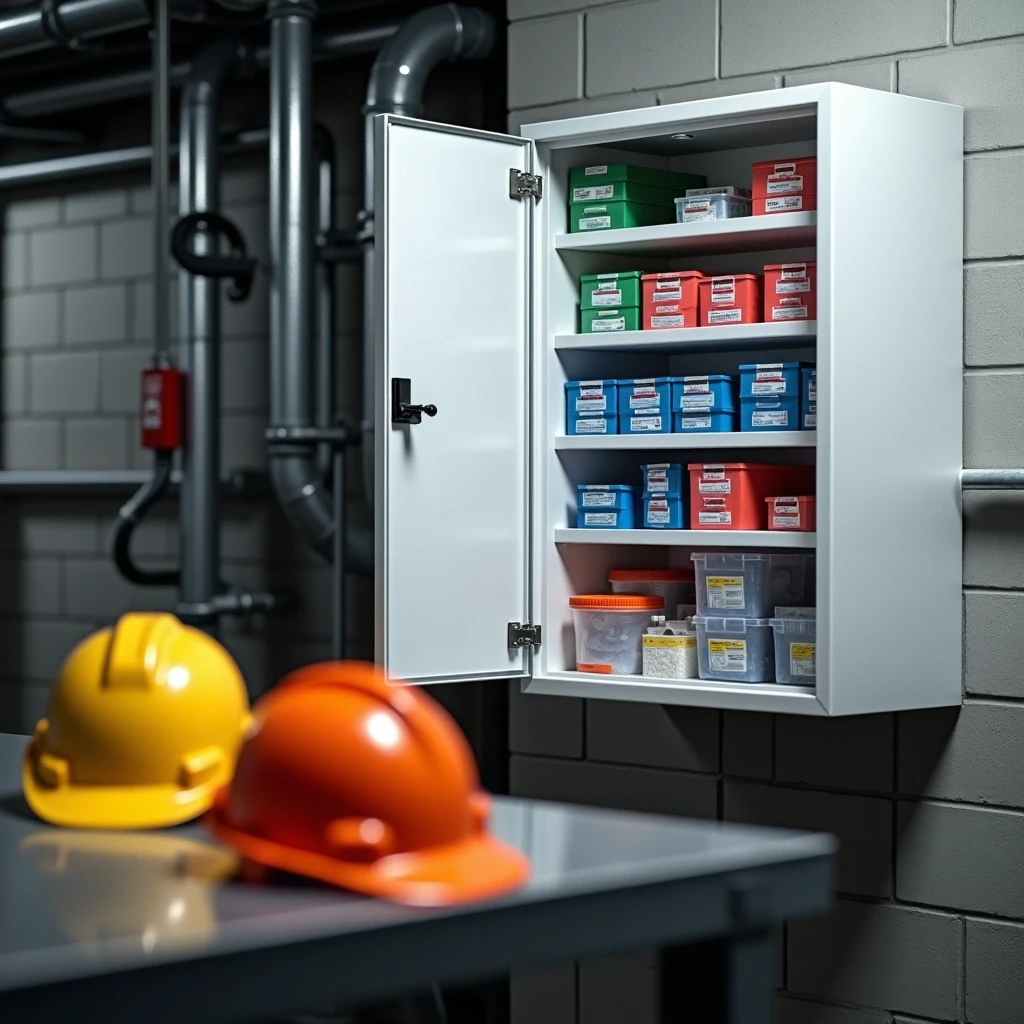

Industrial facilities need more from a first aid program than a cabinet mounted on a wall. The right supplies must be available, organized, easy to locate, appropriate for workplace hazards, and replenished before an emergency exposes a shortage.
Traditional first aid kits often begin adequately stocked but become less reliable over time. Bandages are used without being replaced. Expiration dates pass unnoticed. Small items become buried behind larger packages. Supplies migrate to other departments, and no one realizes that an essential product is missing until an employee needs it.
SmartCompliance cabinet solutions are designed to replace that inconsistent approach with a more organized and manageable first aid system. Clearly arranged supplies and a simplified refill process help industrial facilities maintain readiness without relying on time-consuming manual inventory checks.
For organizations strengthening first aid and workplace preparedness, Arbill provides SmartCompliance cabinets alongside PPE, safety programs, equipment, and facility-support solutions built around industrial operations.
Why Industrial First Aid Cabinets Need Active Management
Installing a first aid cabinet does not guarantee that a facility is prepared. Readiness depends on what happens after the cabinet is installed.
Supplies Get Used, Moved, and Forgotten
Industrial employees may need first aid supplies for cuts, scrapes, burns, eye irritation, strains, punctures, and other workplace injuries. When an item is removed from a conventional kit, the absence may remain unnoticed for weeks.
Other supplies may be borrowed for personal use, transferred to another department, or returned to the wrong location. A cabinet can appear full while lacking the specific item required during an incident.
SmartCompliance uses an organized layout that gives supplies designated locations. Missing products become easier to identify because the empty space is visible instead of hidden inside a crowded box.
Expiration Dates Create Hidden Gaps
Some first aid supplies have limited usable lives. Sterile dressings, ointments, medications, eye care products, and other components may eventually need replacement.
A cabinet that is not inspected consistently can contain expired products even though it appears adequately stocked. Regular inventory and expiration reviews are therefore essential parts of first aid management.
SmartCompliance helps simplify this process by creating a more visible, structured cabinet rather than requiring someone to sort through mixed supplies during every inspection.
Industrial Risks Vary by Facility
A small office and a metal fabrication plant do not have identical first aid needs. Industrial facilities may have higher exposure to sharp materials, powered machinery, chemicals, heat, electrical work, elevated tasks, material handling, and mobile equipment.
OSHA does not prescribe one universal cabinet configuration for every workplace. Employers must consider the size and nature of the operation, reasonably anticipated injuries, workforce distribution, and proximity to medical care.
That makes hazard-based cabinet planning more important than purchasing a generic kit and assuming it will remain adequate.
How SmartCompliance Cabinets Work
The value of SmartCompliance comes from combining organized access with a more efficient replenishment system.
Organized Supply Placement
Traditional first aid kits often store different products together in bags, boxes, or loose compartments. During an injury, workers may have to search through several packages to locate the correct bandage, dressing, treatment, or protective item.
SmartCompliance cabinets assign products to clearly identified positions. The visual arrangement helps workers find supplies faster and allows supervisors to recognize missing items without conducting a complete manual count.
This organization can be especially valuable in industrial environments where employees may be stressed, wearing gloves, or responding to an injury in a noisy and unfamiliar situation.
SmartTab ezRefill Management
Arbill’s First Aid SmartCompliance Program incorporates the SmartTab ezRefill system to help facilities identify what needs to be reordered and reduce unnecessary replenishment.
Instead of replacing full kits or ordering items based on estimates, safety teams can focus on the products that were actually used or are approaching replacement.
This helps reduce overordering while lowering the chance that supplies remain unavailable because no one completed a detailed cabinet inventory.
Configurable Cabinet Support
First aid needs can differ according to facility size, workforce, operating environment, and hazard profile.
A manufacturing plant may need different supplies than a warehouse, food-processing operation, laboratory, maintenance shop, or remote field location. SmartCompliance can be configured around the environment rather than forcing every workplace into the same cabinet arrangement.
The final selection should still be based on a workplace assessment and reviewed as hazards, staffing, and injury patterns change.