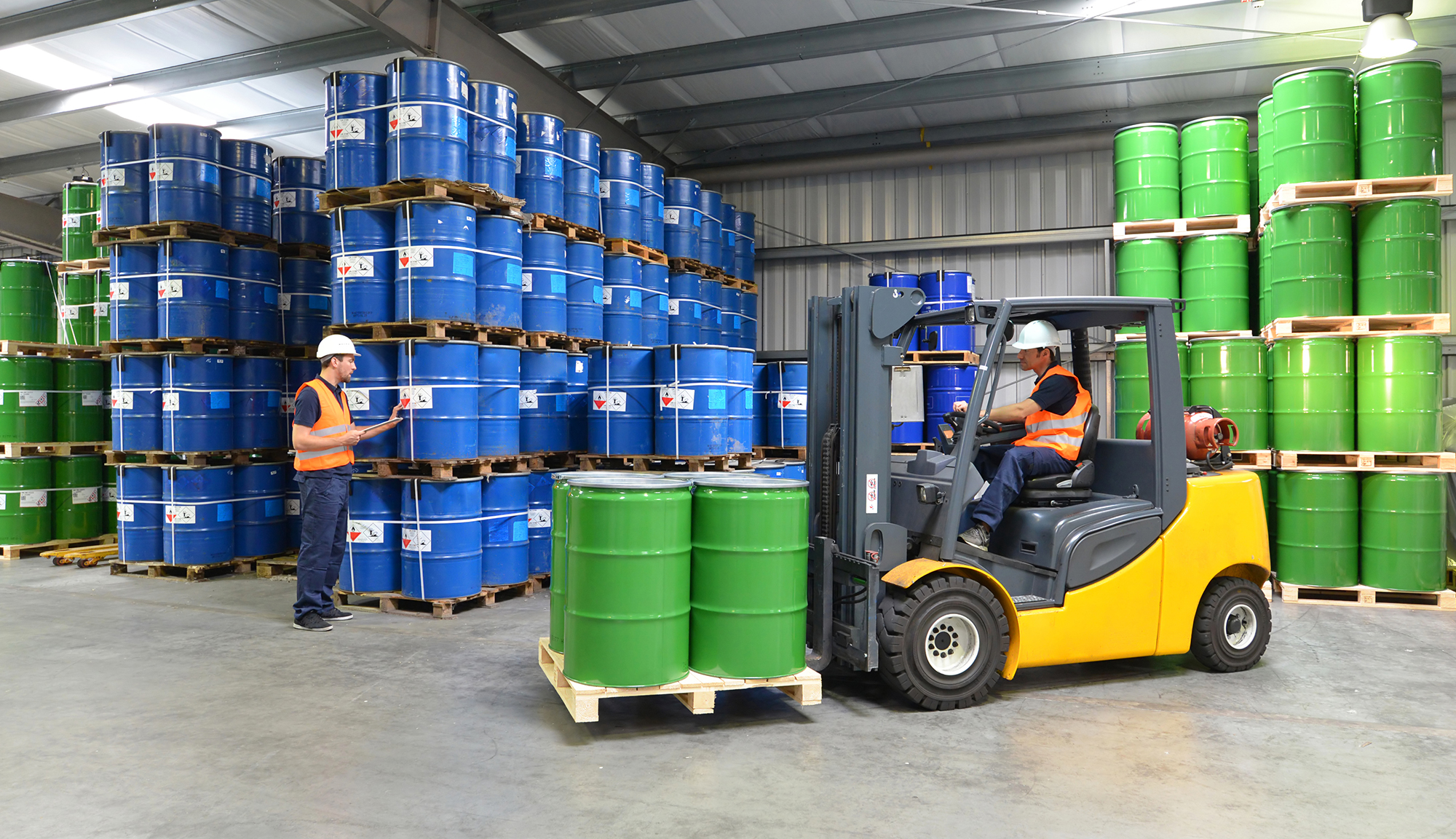
Warehouse ergonomics is not only about comfort.

It is about injury prevention, productivity, insurance costs, and long-term operational control.

In warehouses, workers lift, push, pull, reach, bend, twist, carry, stack, unload, wrap, pick, pack, and move materials throughout the day. When those tasks rely too heavily on manual effort, the risk builds quickly. Back strains, shoulder injuries, repetitive stress conditions, forklift collisions, struck-by incidents, slips, trips, and falling objects can all become expensive safety problems.

The right material handling equipment changes that equation.

Powered pallet jacks, forklifts with safety technology, lift tables, conveyors, dock levelers, automated vehicles, guards, and ergonomic workstation designs reduce the physical strain placed on workers. They also help lower the frequency of claims that drive workers’ compensation costs and insurance premiums.

For warehouse leaders, the question is not whether ergonomic equipment costs money. The question is how much preventable injury is already costing the operation.

Why Warehouse Ergonomics Matters

Warehouse work is physically demanding.

Workers may lift from the floor, reach above shoulder height, carry uneven loads, push heavy carts, pull manual pallet jacks, twist while handling boxes, or repeat the same motion hundreds of times in a shift. Even when each task seems manageable, the combined exposure can create musculoskeletal disorders over time.

The uploaded draft explains that warehouse injuries from manual lifting, forklift accidents, and equipment collisions can cost businesses thousands in workers’ compensation claims and higher insurance rates. It also notes that many of these incidents are preventable with proper equipment investments.

A strong ergonomics program looks at the way work is performed and asks:

  • Can the load be moved mechanically?
  • Can the worker avoid lifting from the floor?
  • Can the task be brought closer to waist height?
  • Can pushing and pulling be reduced?
  • Can travel distance be shortened?
  • Can repetitive reaching be limited?
  • Can equipment and pedestrians be separated?
  • Can workers move materials without awkward posture?
  • Can safety technology reduce collision risk?

Ergonomics is not about slowing the warehouse down. It is about designing work so people can perform it safely and consistently.

Common Warehouse Injuries Linked to Material Handling

Material handling injuries tend to follow predictable patterns.

The uploaded draft identifies several common injury categories: forklift-related accidents, manual lifting injuries, equipment tip-overs and collisions, and falling object incidents.

Common injuries include:

  • Back strains
  • Shoulder injuries
  • Herniated disks
  • Knee strain
  • Wrist and hand injuries
  • Repetitive stress injuries
  • Crush injuries
  • Struck-by injuries
  • Slip and trip injuries
  • Falls from elevated work areas
  • Injuries from falling products
  • Collision-related trauma

These injuries are expensive because they affect both the worker and the operation. A back injury may require medical treatment, restricted duty, lost time, replacement labor, overtime, and claim administration. A forklift collision may damage equipment, products, racking, and facility infrastructure in addition to injuring workers.

When the same types of injuries repeat, the issue is usually not bad luck. It is a system problem.

Manual Lifting Is a Major Cost Driver

Manual lifting is one of the most common ergonomic risk areas in warehouses.

Workers may lift cases from floor-level pallets, unload trucks, reach deep into bins, stack products above shoulder height, or twist while placing items onto conveyors or racks. Over time, these tasks create stress on the back, shoulders, knees, and hands.

The uploaded draft notes that back strains, herniated disks, and repetitive stress injuries dominate workers’ compensation claims in warehouses that rely heavily on manual material handling. It also explains that lifting above shoulder height or below knee level places exceptional strain on the spine and supporting muscles.

OSHA’s technical guidance on ergonomics notes that manual handling tasks should be designed to minimize weight, range of motion, and frequency, and that conveyors or carts should be used for horizontal movement whenever possible. OSHA also states that platforms and conveyors should be built around waist height to reduce awkward postures.

This is where equipment can make an immediate difference.

Lift tables, height-adjustable workstations, conveyors, carts, powered pallet jacks, and mechanical assists reduce the need for workers to repeatedly lift from poor positions.
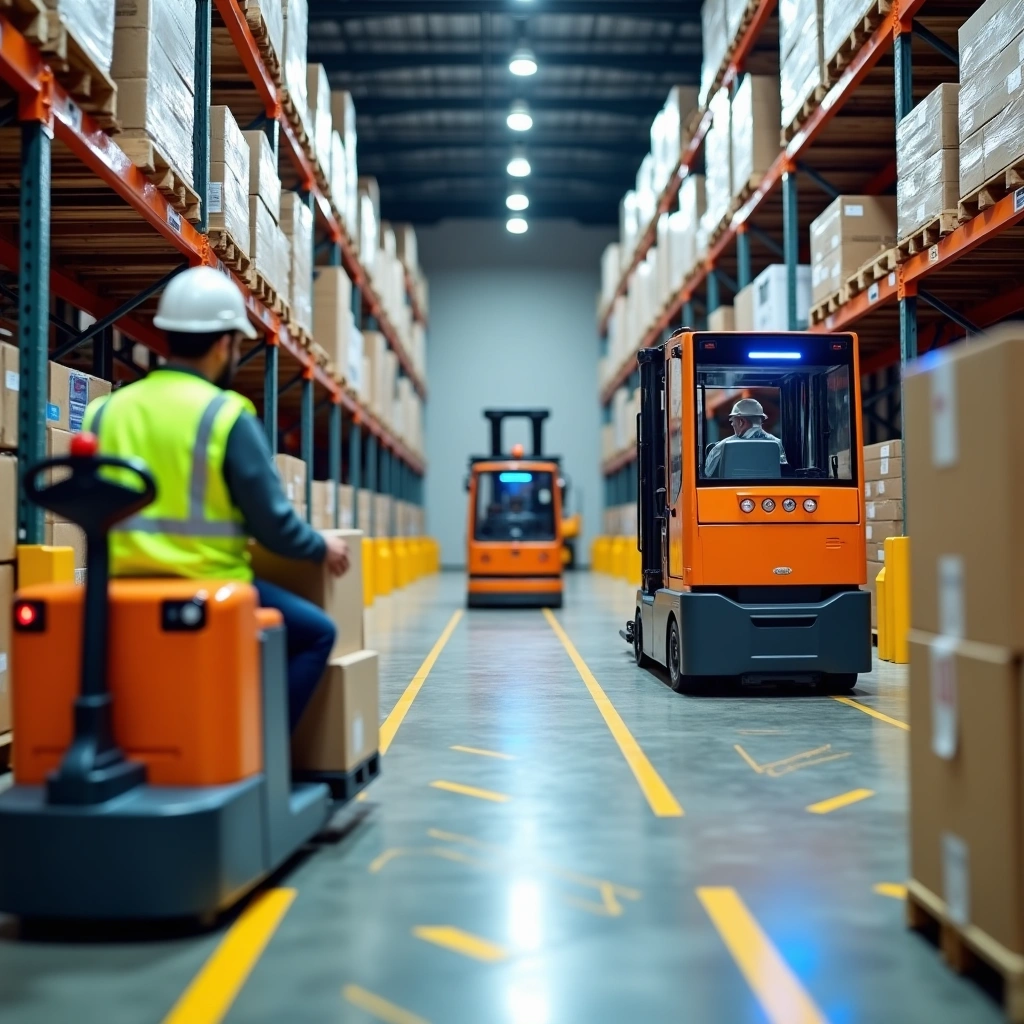

Explore Our Solutions!
Material Handling Equipment That Cuts Warehouse Injuries and Insurance Costs

Forklift and Powered Industrial Truck Hazards

Forklifts help move heavy loads, but they also create serious warehouse hazards.

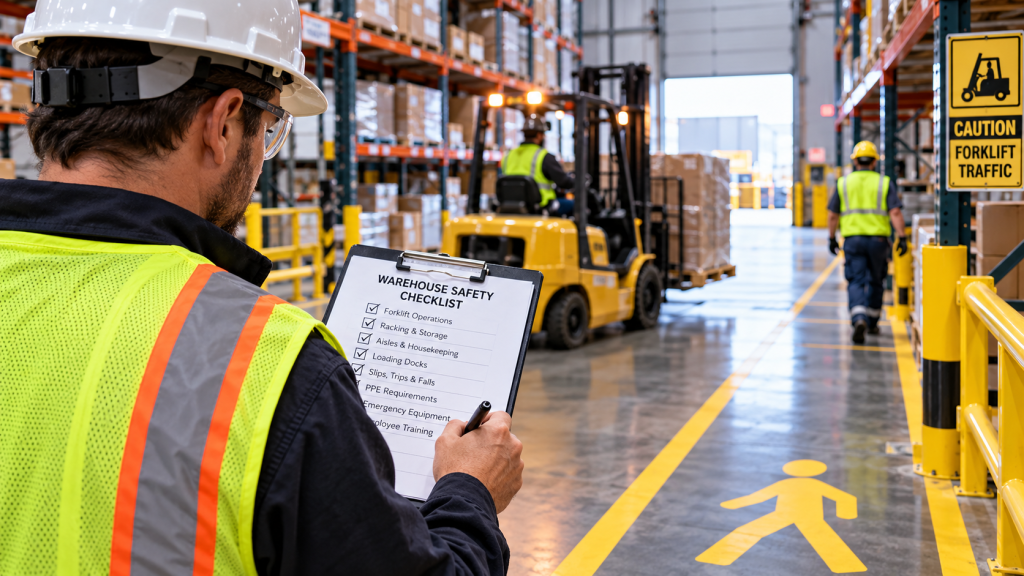
Operators may have limited visibility around racks, corners, dock areas, pedestrians, and stacked loads. Pedestrians may enter equipment paths without warning. Congested aisles, blind intersections, poor traffic flow, and rushed schedules can increase collision risk.

The uploaded draft identifies forklift incidents as a leading cause of warehouse injuries. It notes risks from poor visibility, unexpected pedestrian crossings, congested aisles, reversing equipment, and struck-by accidents involving workers, equipment, or racking systems.

Modern equipment and layout controls can reduce these risks through:

  • Pedestrian detection
  • Proximity sensors
  • Rear-view cameras
  • Audible alarms
  • Blue lights or warning lights
  • Speed controls
  • Visibility improvements
  • Seat and platform design
  • Traffic separation
  • Guardrails and barriers
  • Intersection controls
  • Operator training

Forklifts are necessary in many warehouses, but they must be managed as mobile hazards.

Powered Pallet Jacks Reduce Physical Strain

Manual pallet jacks can place significant strain on workers, especially when loads are heavy, floors are uneven, or travel distances are long.

Workers may push, pull, turn, stop, and maneuver heavy loads repeatedly. That effort can contribute to back, shoulder, wrist, and knee strain.

The uploaded draft explains that powered pallet jacks and forklifts reduce the manual force required to move heavy loads across warehouse floors. Electric pallet jacks can move multi-ton pallets without workers pushing overloaded manual jacks.

Powered pallet jacks can help reduce:

  • High push and pull forces
  • Shoulder strain
  • Back strain
  • Fatigue
  • Poor posture
  • Manual load movement
  • Productivity loss from worker exhaustion

They also help workers maintain better control of loads, especially in busy warehouses where traffic flow, aisle width, and staging areas affect safety.

Lift Tables and Dock Levelers Reduce Awkward Postures

Many warehouse injuries happen because the work is at the wrong height.

Workers bend to floor-level pallets, reach into deep containers, lean into trailers, or lift products from unstable positions. Lift tables and dock levelers help bring the work closer to the worker instead of forcing the worker to adjust to the load.

The uploaded draft explains that hydraulic lift tables raise heavy pallets and containers to optimal working heights, preventing low-level lifting that causes back injuries. It also notes that dock levelers create smooth transitions between warehouse floors and truck beds, reducing trip and strain hazards during loading operations.

These equipment solutions help reduce:

  • Floor-level lifting
  • Overreaching
  • Bending
  • Twisting
  • Load instability
  • Strain during unloading
  • Trip hazards at dock transitions
  • Poor posture during pallet breakdown

In ergonomic terms, height matters. The closer the task is to a neutral working position, the lower the strain on the worker.

Conveyors Reduce Carrying and Repetitive Lifting

Conveyor systems can reduce the need for workers to carry products across long distances or repeatedly lift and lower items between work areas.

Fixed conveyors, powered roller systems, belt conveyors, flexible conveyors, and height-adjustable conveyor sections can move materials between stations while reducing manual handling.

The uploaded draft explains that conveyor systems move materials between workstations without manual carrying or lifting, and that adjustable-height conveyors can bring materials to ergonomic working positions rather than forcing workers into awkward reaching or bending.

Conveyors can help reduce:

  • Repetitive carrying
  • Long-distance load movement
  • Shoulder strain
  • Back fatigue
  • Lifting frequency
  • Twisting between stations
  • Bottlenecks that cause rushed handling

They can also improve workflow consistency, which helps reduce the unsafe shortcuts workers may take when production pressure builds.

Automated Guided Vehicles Can Reduce Traffic Risk

Automated guided vehicles, or AGVs, can help reduce worker exposure to high-traffic movement patterns.

When repetitive transport tasks are handled by programmed equipment, fewer workers need to manually move materials through busy aisles. AGVs can also follow predictable routes and use sensors to stop when obstacles or workers enter their path.

The uploaded draft notes that AGVs transport materials along programmed routes, detect obstacles, stop automatically when workers enter their paths, and remove workers from certain high-traffic collision zones.

AGVs may support safety by:

  • Reducing manual transport
  • Limiting pedestrian exposure
  • Creating predictable traffic patterns
  • Reducing operator fatigue factors
  • Supporting layout control
  • Improving material flow consistency

Automation does not eliminate the need for safety planning. It changes the hazards that need to be managed.

As long as people go to work, we have an opportunity to help protect them.

Julie Copeland
Arbill CEO

Julie Copeland Arbill CEO

Barriers, Guards, and Layout Controls Prevent Collisions

Warehouse ergonomics is not only about lifting posture. It also includes the way people, products, and equipment move through the facility.

Physical barriers can separate pedestrians from forklifts, pallet jacks, AGVs, and other equipment. Guards can protect racking, columns, corners, and equipment from impact. Clear walkways and traffic patterns help prevent workers from entering danger zones.

The uploaded draft explains that safety barriers and guards separate pedestrian walkways from equipment operating zones and help prevent struck-by accidents. It also notes that column guards, rack end guards, and corner protectors can reduce damage that could contribute to falling-object hazards.

Layout controls may include:

  • Guardrails
  • Bollards
  • Rack guards
  • Pedestrian lanes
  • Crosswalks
  • Floor markings
  • Mirrors at blind corners
  • Controlled intersections
  • One-way traffic patterns
  • Dedicated staging areas
  • Dock safety controls

A better layout reduces the need for workers to make unsafe decisions under time pressure.

Safety Technology Adds Another Layer of Protection

Modern material handling equipment often includes safety technology that helps catch hazards before they become incidents.

The uploaded draft identifies several useful features: collision detection systems, visual and audible warnings, load capacity indicators, ergonomic design elements, emergency stop functions, automatic shutdown systems, backup cameras, and 360-degree visibility systems.

Useful safety features may include:

  • Pedestrian detection
  • Collision avoidance
  • Load weight indicators
  • Stability monitoring
  • Speed control
  • Automatic braking
  • Emergency stop buttons
  • Pull cords on conveyors
  • Backup cameras
  • Visibility systems
  • Operator-assist controls
  • Adjustable platforms and controls

These features do not replace training, maintenance, or supervision. They add protection when workers are tired, distracted, rushed, or working in congested areas.

How Ergonomic Equipment Reduces Insurance Costs

Insurance costs are affected by injury frequency, claim severity, risk profile, and documented safety improvements.

The uploaded draft explains that insurance carriers calculate workers’ compensation premiums based on a facility’s safety record and risk profile. It also notes that modern material handling equipment can influence those calculations by reducing claim frequency, supporting OSHA compliance, documenting safety improvements, and improving risk assessment outcomes.

Ergonomic equipment can help reduce insurance exposure by:

  • Lowering injury frequency
  • Reducing manual lifting claims
  • Reducing struck-by incidents
  • Reducing lost-time injuries
  • Improving safety audit results
  • Showing documented risk reduction
  • Supporting better worker retention
  • Reducing downtime after incidents
  • Improving compliance posture

The financial value is not limited to premium reductions. Fewer injuries also mean fewer disruptions, fewer replacement labor needs, and less management time spent on claims and investigations.

Documenting Safety Improvements Matters

Equipment upgrades should be documented.

If a warehouse invests in powered pallet jacks, conveyors, lift tables, guardrails, traffic controls, or collision detection systems, those improvements should be recorded and connected to safety goals.

The uploaded draft notes that insurers often need evidence when considering premium reductions and that equipment upgrade records, safety programs, training documentation, and third-party safety audits can support underwriting conversations.

Documentation should include:

  • Equipment purchased
  • Installation dates
  • Hazards addressed
  • Training completed
  • Inspection records
  • Maintenance records
  • Before-and-after injury trends
  • Workers’ compensation claim data
  • Near-miss trends
  • Safety audit findings
  • Corrective actions closed

This gives safety and operations leaders a clearer way to show the business impact of ergonomic improvements.

See Our Safety Services!
Fork Lift Pedestrian Safety

Calculating ROI for Material Handling Equipment

The ROI of material handling equipment should include more than purchase price.

A lift table, conveyor, powered pallet jack, or guardrail system may reduce injuries, downtime, claims, insurance costs, overtime, and productivity loss. Those savings should be included when evaluating the investment.

The uploaded draft recommends calculating ROI by reviewing direct injury costs, insurance premium reductions, productivity gains, maintenance costs, and downtime considerations.

A practical ROI review should include:

  • Current injury frequency
  • Average workers’ compensation claim cost
  • Lost-time days
  • Replacement labor costs
  • Overtime costs
  • Equipment repair costs
  • Insurance premium changes
  • Productivity improvements
  • Maintenance costs
  • Downtime reduction
  • Safety audit improvements

The goal is to compare the cost of prevention against the cost of continuing with preventable risk.

Building a Better Warehouse Ergonomics Program

The best ergonomics program starts with observation.

Safety leaders should walk the floor, watch how workers move materials, review injury records, interview employees, and identify tasks that create high force, awkward posture, repetition, or collision exposure.

OSHA’s ergonomics guidance recommends identifying potential ergonomic issues through a proactive review of workstations, work practices, the production process, injury logs, workers’ compensation records, and worker reports before MSDs occur.

A practical program should include:

  • Injury trend review
  • Workers’ compensation review
  • Task observation
  • Worker feedback
  • Equipment assessment
  • Material flow review
  • Traffic pattern review
  • Manual lifting review
  • PPE and footwear review
  • Training
  • Equipment maintenance
  • Safety technology review
  • ROI tracking

The program should focus on tasks that create the most exposure and cost.

Training and Maintenance Keep Equipment Effective

Even the right equipment can fail as a safety control if workers are not trained or equipment is poorly maintained.

Powered pallet jacks, forklifts, conveyors, AGVs, lift tables, and dock levelers all require safe operating procedures, inspection routines, and maintenance schedules. Workers should understand how to use equipment properly, what hazards remain, and when to report defects.

Training should cover:

  • Equipment-specific operation
  • Load capacity
  • Pedestrian safety
  • Traffic rules
  • Emergency stops
  • Safe lifting principles
  • Ergonomic work practices
  • Pre-use inspections
  • Defect reporting
  • Maintenance escalation

Maintenance should verify that safety features still work. Worn wheels, damaged guards, broken emergency stops, poor brakes, faulty sensors, and unstable platforms can turn safety equipment into a hazard.

Conclusion

Warehouse ergonomics is a safety strategy and a cost-control strategy.

The right material handling equipment reduces the physical strain that leads to back injuries, shoulder injuries, repetitive stress claims, and fatigue. It also helps prevent forklift collisions, struck-by incidents, tip-overs, falling objects, and unsafe traffic conditions.

Modern equipment such as powered pallet jacks, forklifts with safety technology, conveyors, lift tables, dock levelers, AGVs, barriers, and guards can reduce injury frequency while improving workflow and supporting insurance conversations.

The business case is clear: preventing injuries costs less than managing them after they happen.

When warehouses invest in ergonomic material handling equipment, they protect workers, reduce claims, improve operations, and build a stronger safety record that can support lower long-term insurance costs.

Request a Safety Assessment

Recent Posts

Material Handling Equipment That Cuts Warehouse Injuries and Insurance Costs
Warehouse Ergonomics: How the Right Material Handling Equipment Reduces Injuries and Insurance Costs

Warehouse Ergonomics: How the Right Material Handling Equipment Reduces Injuries and Insurance Costs

Why OSHA Lockout Tagout Failures Still Cause Serious Injuries in Utilities
Lockout/Tagout in Utilities: Why LOTO Failures Are Still One of the Leading Causes of Serious Injuries

Lockout/Tagout in Utilities: Why LOTO Failures Are Still One of the Leading Causes of Serious Injuries

How to Build a Confined Space Training Program That Meets OSHA Standards and Protects Your Team
Confined Space Entry in Chemical Plants: Building a Program That Satisfies OSHA and Keeps Workers Safe

Confined Space Entry in Chemical Plants: Building a Program That Satisfies OSHA and Keeps Workers Safe

Emergency Response Planning for Data Centers and Why IT and Facilities Teams Must Work Together
Data Center Safety: Why IT and Facilities Teams Need a Coordinated PPE and Emergency Response Plan

Data Center Safety: Why IT and Facilities Teams Need a Coordinated PPE and Emergency Response Plan

The Real Cost of Recordable Incidents in Oil & Gas
The True Cost of a Recordable Incident in Oil & Gas — and How Managed Safety Services Change the Math

The True Cost of a Recordable Incident in Oil & Gas — and How Managed Safety Services Change the Math