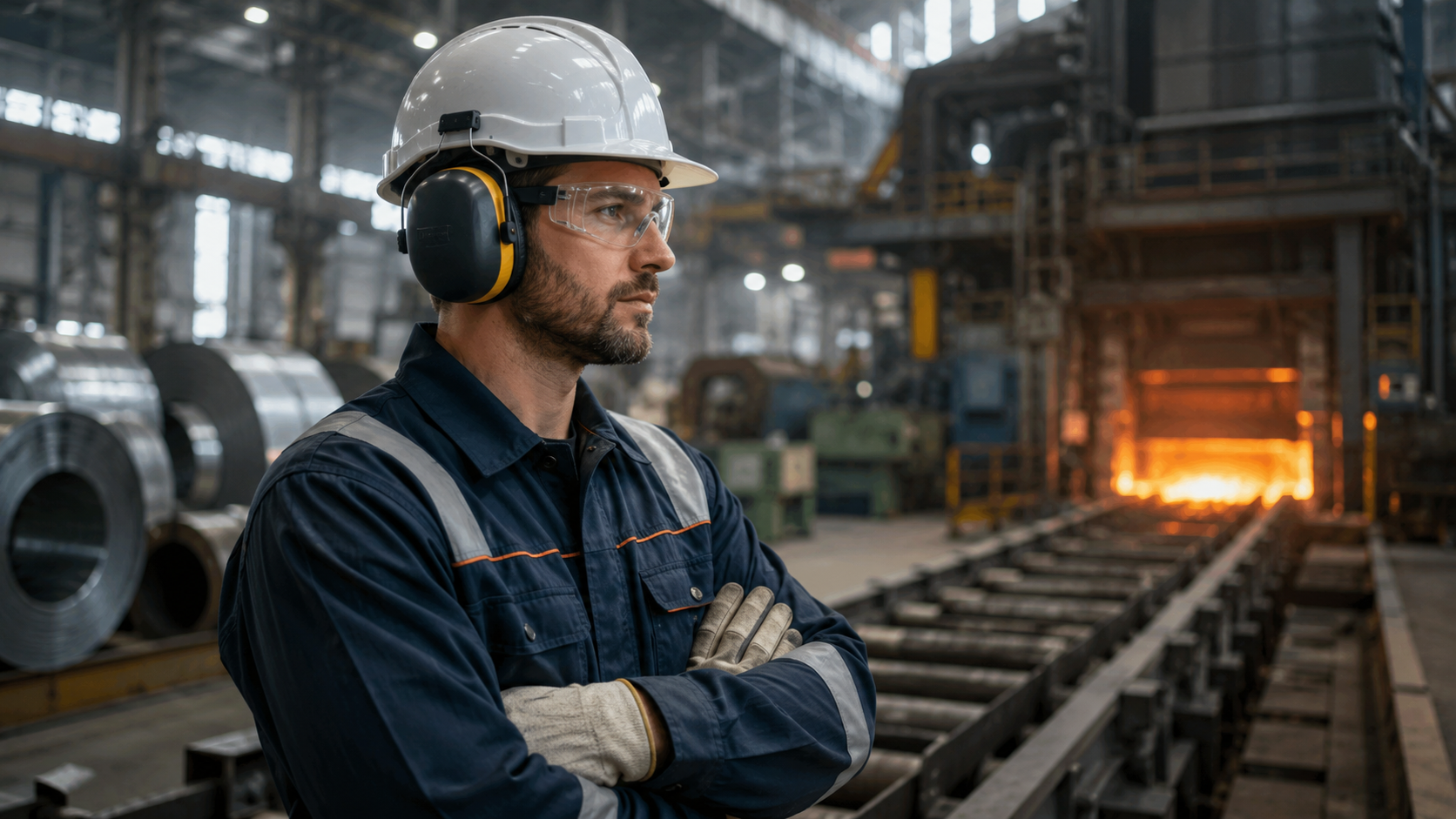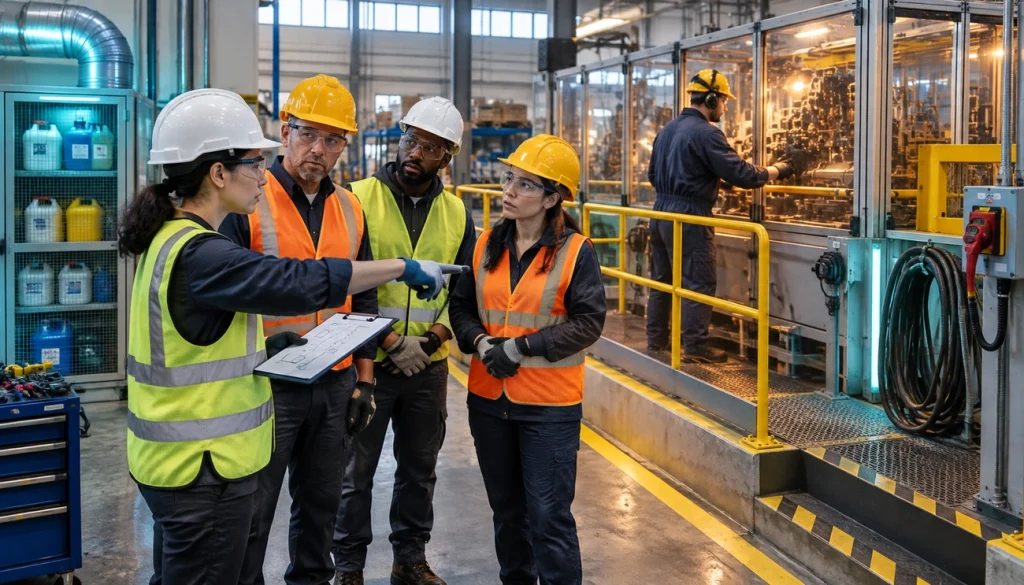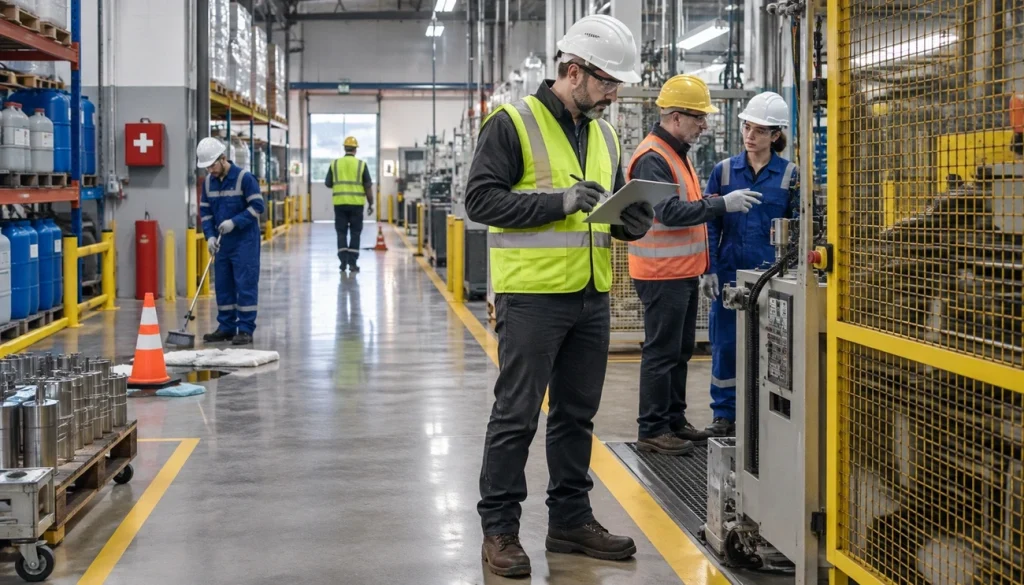
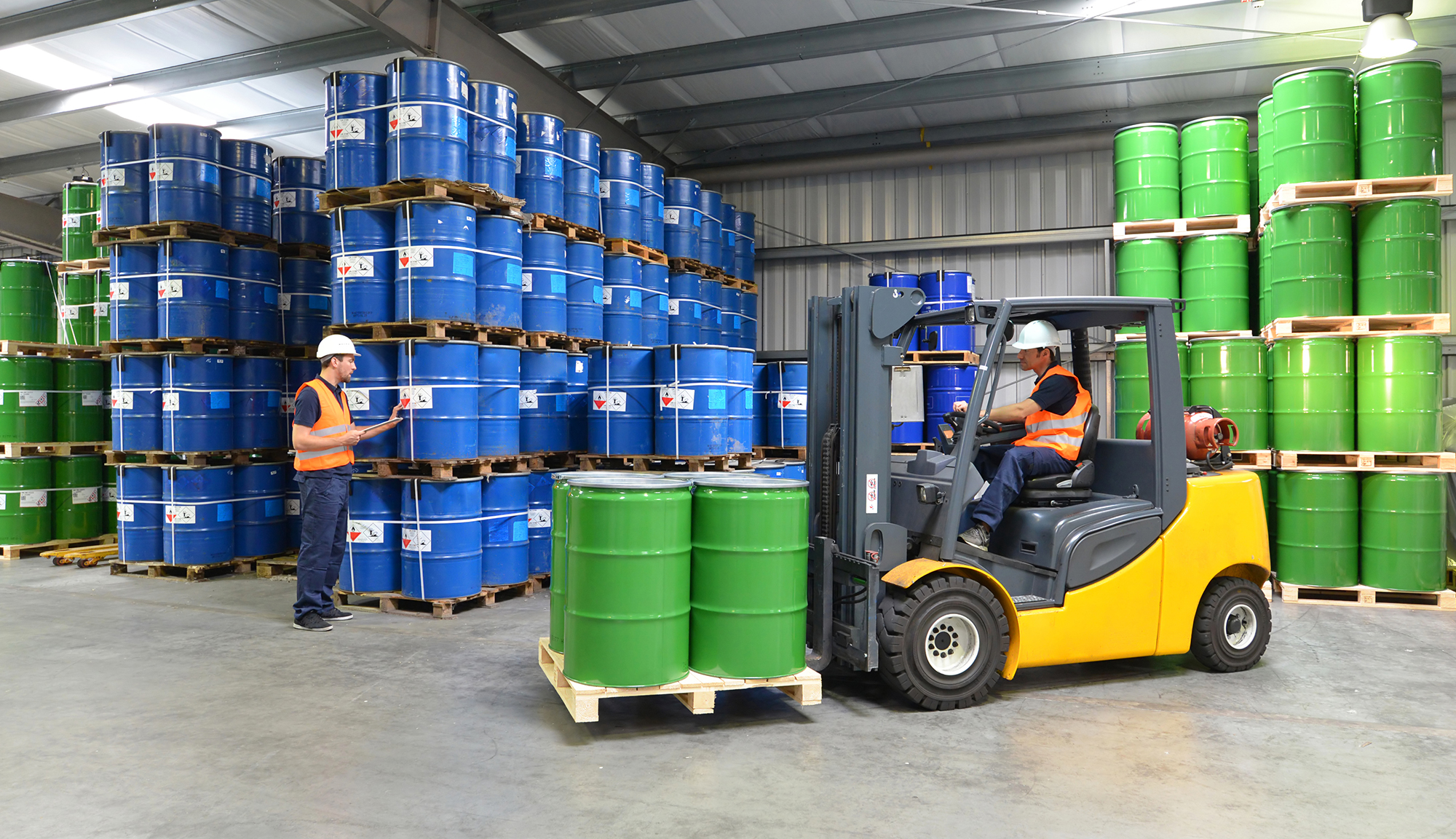
Heavy manufacturing environments are rarely quiet. Metal fabrication, steel processing, machining, stamping, grinding, welding, forging, material handling, compressed air systems, conveyors, motors, and heavy equipment can all create noise levels that threaten worker hearing over time.

The danger is that noise-induced hearing loss often develops gradually. A worker may not notice the damage during one shift, one week, or even one year. By the time hearing loss becomes obvious, the damage may be permanent.

That is why hearing protection in heavy manufacturing must be treated as part of a complete safety program. Earplugs and earmuffs matter, but they are only one piece of the solution. Employers need noise monitoring, hazard assessment, proper protector selection, worker training, fit, comfort, maintenance, and follow-up testing.

For companies managing demanding production environments, Arbill supports safety teams with PPE, training, assessments, and practical solutions designed around real workplace hazards.

Why Hearing Protection Matters in Heavy Manufacturing

Noise is one of the most common hazards in heavy industrial workplaces. Unlike a cut, burn, or impact injury, hearing damage may not be immediately visible. Workers may leave a shift thinking everything is fine, while repeated exposure slowly damages hearing.

Noise Exposure Builds Over Time

Manufacturing workers may be exposed to noise from multiple sources throughout the day. A grinder may be loud for a short period, while a press line, conveyor, or compressor may create steady background noise for hours. When these exposures combine, the total dose can become significant.

Heavy manufacturing teams often work long shifts, rotate between areas, and move around equipment with different sound levels. A hearing protection program should reflect those changing exposures instead of assuming every worker faces the same noise level.

Common Noise Sources

Noise in heavy manufacturing may come from stamping presses, grinders, saws, welding support equipment, pneumatic tools, forklifts, cranes, conveyors, compressors, blowers, motors, cutting operations, and impact tools.

In metal, steel, and fabrication environments, these hazards are often layered with heat, sparks, sharp edges, moving equipment, and production pressure. Arbill’s heavy industrial, metal, steel, and fabrication safety solutions can help safety teams connect hearing protection with the broader PPE and safety needs of these operations.

Hearing Loss Affects Safety and Communication

Hearing loss does more than reduce quality of life. It can also affect workplace safety. Workers may miss alarms, backup signals, shouted warnings, equipment changes, or instructions from nearby team members.

In high-risk environments, communication matters. A hearing protection program should reduce harmful noise exposure while still allowing workers to recognize important sounds and communicate safely.

Understanding OSHA Hearing Conservation Requirements

Hearing protection decisions should be based on measured exposure, not guesswork. OSHA’s occupational noise standard establishes when employers must monitor noise and create a hearing conservation program.

The 85 dBA Action Level

OSHA requires a hearing conservation program when employee noise exposure equals or exceeds an 8-hour time-weighted average of 85 dBA. This is known as the action level.

Once workers are included in the program, employers must address monitoring, audiometric testing, hearing protectors, training, and records. This helps identify workers at risk and ensures protection is selected and used correctly.

Noise Monitoring and Exposure Assessment

Noise monitoring helps determine which workers need to be included in the hearing conservation program and what level of protection is needed. In heavy manufacturing, noise can vary by machine, process, shift, production volume, maintenance condition, and worker location.

Monitoring should be repeated when equipment, production, process changes, or controls increase noise exposure or may make existing hearing protection inadequate.

Audiometric Testing

Audiometric testing helps track whether workers are experiencing changes in hearing over time. Baseline and follow-up testing can identify early signs of hearing loss and show whether the hearing conservation program is working.

Testing also helps safety teams respond when a worker experiences a standard threshold shift. That may require reviewing hearing protector adequacy, retraining, refitting, or improving noise controls.

Explore Our Solutions!
Hearing Protection Guide

Types of Hearing Protection

The best hearing protector depends on the noise level, task, fit, comfort, communication needs, and the worker’s ability to wear it correctly throughout the shift.

Earplugs

Earplugs fit inside the ear canal and can provide strong protection when inserted correctly. They are lightweight, easy to store, and often preferred in hot environments where earmuffs may feel uncomfortable.

However, earplugs depend heavily on proper insertion. A poorly inserted earplug may provide far less protection than expected. Workers need training and fit checks to make sure the plug seals correctly.

Earmuffs

Earmuffs cover the outer ear and are often easier for supervisors to verify visually. They may be useful for workers who need to remove and replace protection frequently or who struggle with proper earplug insertion.

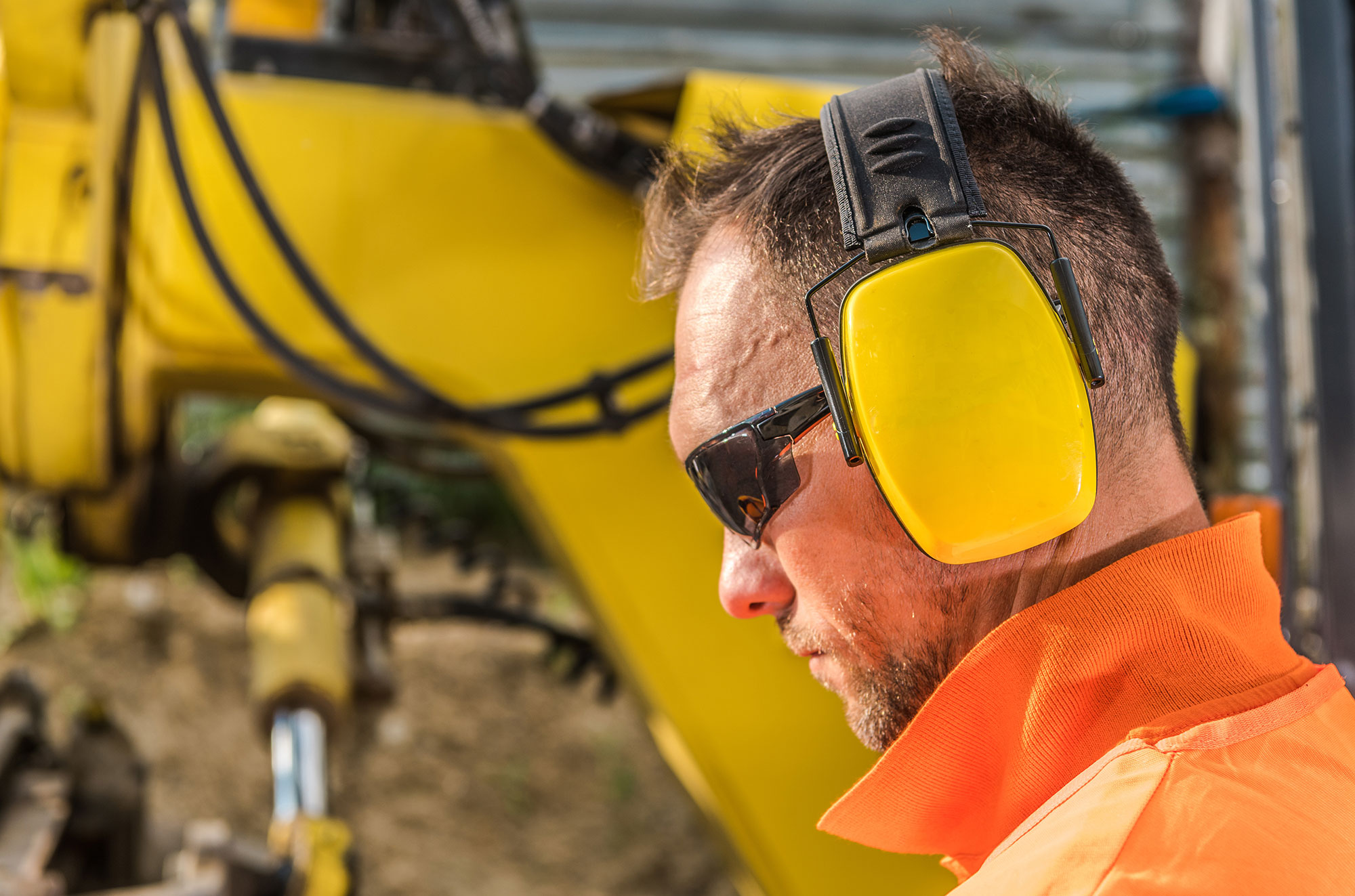
Earmuffs can be affected by eyewear, hard hats, facial hair, head shape, and other PPE that breaks the seal. In hot environments, comfort may also become a challenge during long shifts.

Dual Protection

Some high-noise areas may require both earplugs and earmuffs. Dual protection may be needed around extremely loud equipment, impact noise, or operations where one protector alone does not reduce exposure enough.

Dual protection should be based on exposure assessment and protector attenuation, not used randomly. Too much attenuation can also create communication problems if workers cannot hear alarms or warnings.

For selecting suitable options, Arbill’s hearing protection category can support teams looking for earplugs, earmuffs, and hearing conservation supplies.

Selecting the Right Hearing Protection

Hearing protection must reduce exposure enough to protect workers while still allowing safe communication and awareness.

Noise Reduction Rating and Real-World Use

Hearing protectors include a Noise Reduction Rating, but the listed number does not always represent real-world protection. Fit, insertion, seal, movement, sweat, eyewear, and inconsistent use can all reduce actual performance.

Safety teams should evaluate hearing protector attenuation for the specific noise environments where the protectors will be used. Workers also need options because one protector may not fit every person or every task.

Comfort and Worker Acceptance

A hearing protector that workers will not wear is not protective. Comfort matters because workers may need to wear protection for long periods.

A good program considers ear canal size, head shape, heat, sweat, pressure, communication needs, and compatibility with other PPE. Offering a variety of suitable protectors can improve compliance and help workers find options they will use consistently.

Communication and Situational Awareness

In heavy manufacturing, workers still need to hear alarms, instructions, vehicle movement, machine changes, and emergency signals. Hearing protection should reduce hazardous noise without isolating workers from critical cues.

In some environments, level-dependent or communication-compatible hearing protection may be useful. The goal is to protect hearing while supporting safe work, not simply block as much sound as possible.

As long as people go to work, we have an opportunity to help protect them.

Julie Copeland
Arbill CEO

Julie Copeland Arbill CEO

Hearing Protection and Other PPE

Heavy manufacturing workers rarely wear hearing protection alone. They may also need eye protection, face shields, hard hats, gloves, respirators, flame-resistant clothing, or high-visibility apparel.

Compatibility With Head and Eye Protection

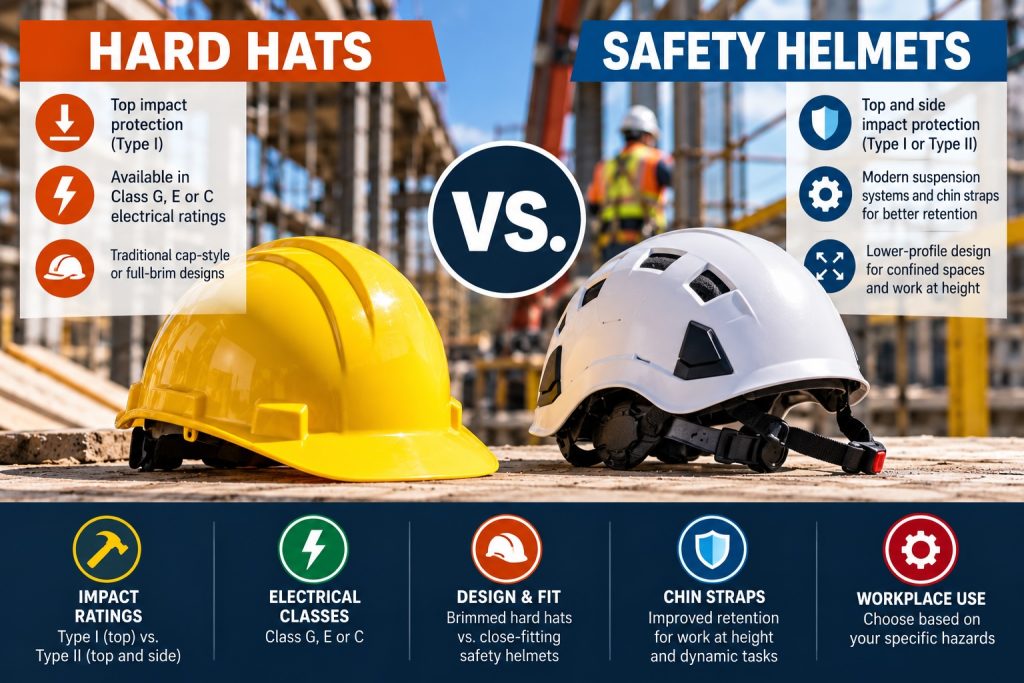
Earmuffs may need to fit with hard hats, safety glasses, goggles, or face shields. If eyewear breaks the earmuff seal, protection may be reduced. If a hard hat interferes with earmuff placement, the worker may not be fully protected.

PPE should be evaluated as a system. A hearing protector that works in isolation may not perform the same way when worn with other required protection.

Heat and Long Shifts

Heavy manufacturing environments can be hot. Earmuffs may feel uncomfortable during long shifts near furnaces, welding areas, or non-air-conditioned production floors. Workers may be tempted to remove protection if it traps heat or sweat.

Earplugs may be more comfortable for some hot environments, but they still require correct insertion and clean handling. The best choice depends on the task, exposure, and worker feedback.

Hygiene and Contamination

Dust, metal particles, oils, sweat, and grime can affect hearing protection. Reusable earplugs and earmuffs should be cleaned and stored properly. Disposable earplugs should be replaced as needed.

Poor hygiene can create ear irritation, discomfort, or reluctance to use protection. Clean storage and easy access help support consistent use.

Training Workers on Hearing Protection

Training is where the hearing conservation program becomes practical. Workers need to understand the hazard, the protection, and the reason consistent use matters.

What Training Should Cover

Training should explain how noise damages hearing, which areas require protection, how to select the right protector, how to wear it correctly, how to inspect it, how to clean and store it, and when to replace it.

Workers should also understand the limits of hearing protection. A protector only works when worn correctly and consistently. Removing it for a short conversation in a high-noise area can reduce protection.

For safety teams building or improving training, EHS safety training can help reinforce PPE use, hazard awareness, and compliance across heavy manufacturing teams.

Supervisors Reinforce Daily Use

Supervisors play a major role in hearing protection compliance. They should watch for improper fit, missing protection, damaged equipment, and workers removing protection in required areas.

Coaching should happen on the floor, where the work occurs. A worker may pass classroom training but still need help inserting earplugs correctly or choosing an option that fits better.

Refreshing Training When Conditions Change

Training should be repeated when new equipment, new processes, layout changes, or monitoring results show different noise exposures. Seasonal workers, new hires, temporary workers, and contractors may also need focused instruction before entering high-noise areas.

Hearing conservation is not a one-time orientation topic. It must be reinforced as operations change.

See Our Safety Services!
Hearing Protection for Heavy Manufacturing Environments

Assessing Noise Hazards in Heavy Manufacturing

A strong hearing protection program starts with understanding where the risk exists.

Facility Noise Mapping

Noise mapping helps identify high-exposure areas, equipment sources, and workers who may need monitoring or protection. It can show which areas require hearing protection signage, where engineering controls may help, and whether certain workers move through multiple exposure zones.

A noise map also supports clearer communication. Workers can see which zones require protection and why.

Task-Based Exposure Review

Area noise levels do not always tell the whole story. A worker who spends only part of the shift near loud equipment may have a different exposure than someone stationed there all day. A maintenance technician may face short bursts of very loud noise during repair tasks.

Task-based review helps safety teams understand exposure based on actual work patterns.

EHS Safety Assessments

A broader safety review can help identify gaps in hearing conservation, PPE selection, training, signage, worker behavior, and documentation. Arbill’s EHS safety assessments can support facilities looking to evaluate workplace hazards and strengthen safety programs based on real operating conditions.

Maintaining a Strong Hearing Conservation Program

Hearing protection programs need regular review. Equipment changes, production changes, worker feedback, and audiometric results can all reveal whether the program is working.

Inspection and Replacement

Hearing protection should be inspected regularly. Earplugs should be replaced when dirty, damaged, or no longer sealing properly. Earmuff cushions should be replaced when cracked, hardened, flattened, or damaged.

Workers should have access to replacements without delay. If protectors are unavailable, damaged, or uncomfortable, compliance drops quickly.

Recordkeeping and Follow-Up

A complete program should maintain records for noise monitoring, audiometric testing, training, protector selection, and follow-up actions. These records support compliance and help safety teams identify trends.

If testing shows hearing shifts, the program should respond with retraining, refitting, protector review, and exposure reassessment.

Continuous Improvement

The best hearing conservation programs improve over time. Worker feedback, noise monitoring results, incident reviews, equipment upgrades, and training observations should all inform program updates.

If workers repeatedly remove protectors in one area, the issue may be comfort, communication, heat, fit, or access. The solution should address the root cause, not just repeat the rule.

Conclusion

Hearing protection for heavy manufacturing environments must be built around real noise exposure, worker comfort, task demands, and long-term program management.

Workers in metal, steel, fabrication, machining, stamping, grinding, welding, and material handling environments face noise from many sources throughout the day. Without a strong hearing conservation program, that exposure can lead to permanent hearing loss and communication challenges that affect safety.

A complete program includes noise monitoring, audiometric testing, proper hearing protector selection, training, fit, maintenance, documentation, and continuous improvement. When these elements work together, hearing protection becomes more than a box to check. It becomes a practical system for protecting workers shift after shift.

Request a Safety Assessment

Recent Posts

Oil and gas teams often work across multiple sites
OSHA Compliance Guide for Oil & Gas Operations

OSHA Compliance Guide for Oil & Gas Operations

Industrial manufacturing safety in action
OSHA Compliance Guide for Heavy Industrial Manufacturing

OSHA Compliance Guide for Heavy Industrial Manufacturing

Automated safety in warehouse operation
TruSense Safety Technology for Warehouse & Distribution Centers

TruSense Safety Technology for Warehouse & Distribution Centers

First Aid Cabinet Management By Team
First Aid & Emergency Response Supplies for Industrial Facilities

First Aid & Emergency Response Supplies for Industrial Facilities

Hearing Protection for Heavy Manufacturing Environments

Hearing Protection for Heavy Manufacturing Environments

  • Previous ProjectFirst Aid & Emergency Response Supplies for Industrial Facilities

  • Next ProjectFall Protection Solutions for Industrial & Elevated Work

CUSTOMER SERVICE

800-523-5367

CONTACT US

Complete the short form below and an Arbill representative will get back to you within 24 hours.
* Required Fields

    ARBILL RESPECTS YOUR PRIVACY AND YOUR INFORMATION: By submitting the form above you agree to receiving emails from Arbill. Your submitted information is NEVER shared. You may unsubscribe at any time via the "unsubscribe" link in our emails. You can view our Privacy Policy HERE.