Respiratory protection can create a dangerous false sense of security when the equipment is selected, fitted, maintained, or used incorrectly.
A worker may appear fully protected while contaminated air leaks around the face seal, passes through an inappropriate cartridge, or reaches the breathing zone because the respirator was never selected for the actual exposure.
These failures are particularly concerning because respiratory hazards are often invisible. Dusts, fumes, mists, gases, vapors, and airborne chemicals may not produce an immediate warning that protection has failed. The health consequences can develop gradually after repeated exposure.
That is why an effective respiratory protection program must address much more than issuing respirators.
Organizations need a documented hazard assessment, appropriate respirator selection, medical evaluations, fit testing, training, user seal checks, maintenance, cartridge management, and ongoing program evaluation.
For industrial employers building or strengthening respiratory protection programs, Arbill provides PPE, assessments, training, and practical safety support designed around workplace exposure.
Mistake #1: Skipping Required Fit Testing
A tight-fitting respirator works only when the facepiece forms an adequate seal against the wearer’s face.
A respirator that fits one employee well may leak significantly on another employee even when both wear the same nominal size.
Fit Testing Is Not Optional
OSHA requires workers using tight-fitting respirators to pass an appropriate qualitative or quantitative fit test before using the respirator in the workplace.
Fit testing must also be repeated at least annually. Additional testing is necessary when an employee changes to a different respirator facepiece or experiences physical changes that could affect the seal.
These changes can include significant changes in body weight, major dental work, facial scarring, cosmetic surgery, or other alterations in facial structure.
The purpose is to confirm that the specific make, model, style, and size of respirator provides an acceptable fit for that individual.
One Respirator Model Will Not Fit Everyone
Face shapes and dimensions vary considerably.
OSHA’s fit-testing procedures require workers to have access to a sufficient range of respirator models and sizes so they can select an acceptable facepiece.
Standardizing one model for an entire workforce may simplify purchasing, but it can leave some employees without an acceptable fit.
Organizations should be prepared to stock alternative approved models when necessary.
Qualitative vs. Quantitative Fit Testing
Qualitative fit testing relies on a worker’s response to a test agent, such as taste or irritation.
Quantitative fit testing uses instruments to measure leakage and determine a numerical fit factor.
Which method is appropriate depends on the respirator and required protection level.
Fit testing should be conducted using OSHA-accepted protocols and by personnel capable of administering the procedure correctly.
Mistake #2: Confusing Fit Testing With a User Seal Check
Fit testing and user seal checks serve different purposes.
Passing an annual fit test does not eliminate the need to check the respirator every time it is worn.
Fit Testing Confirms the Model Fits the Worker
Fit testing verifies that a specific respirator can achieve the necessary seal on a particular employee.
It is performed under controlled conditions using a defined protocol.
A Seal Check Confirms the Respirator Is Seated Properly Today
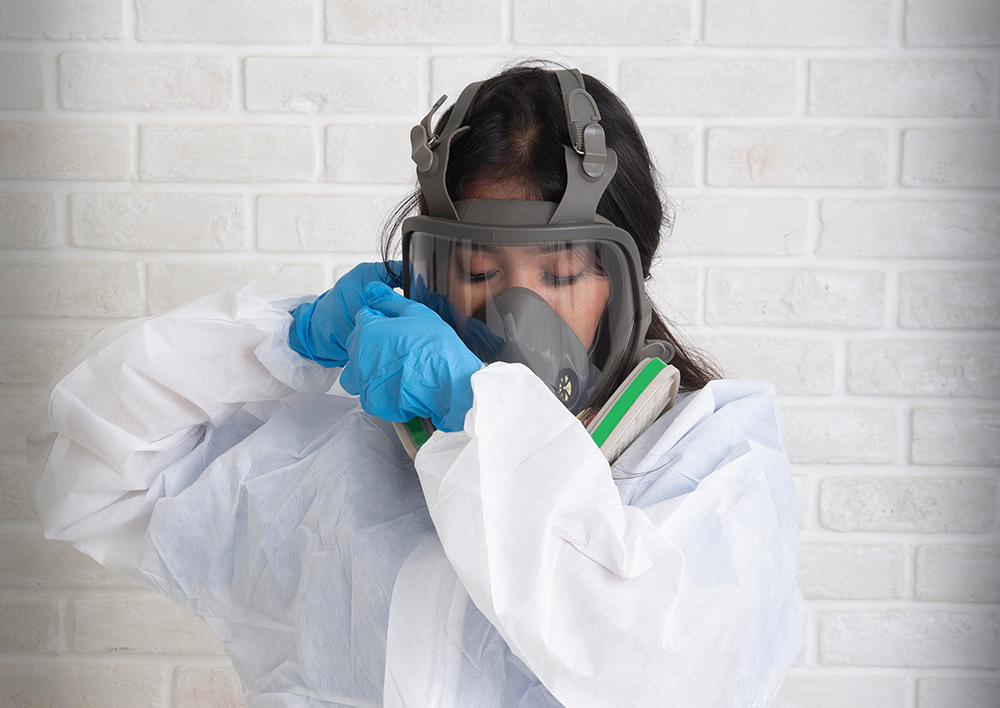
OSHA requires anyone wearing a tight-fitting respirator to perform a user seal check each time the respirator is put on.
The employee may use OSHA’s positive and negative pressure procedures or a manufacturer-recommended method that provides equivalent protection.
A seal check can reveal that the respirator was positioned incorrectly, a strap is loose, or something is interfering with the seal.
It takes only a short time but can prevent a worker from entering a hazardous environment with a poorly seated facepiece.
Seal Checks Do Not Replace Fit Tests
A worker might successfully perform a seal check on a respirator that is still not capable of achieving the required fit factor.
OSHA explicitly states that user seal checks are not substitutes for qualitative or quantitative fit testing.
Both requirements matter.
Mistake #3: Selecting a Respirator Before Evaluating the Hazard
Respirator selection should start with the contaminant—not with the respirator already sitting in the supply cabinet.
Identify the Airborne Hazard First
Employers need to know what workers may inhale.
That could include particulate matter, welding fumes, silica-containing dust, chemical vapor, gas, mist, smoke, biological material, or combinations of several contaminants.
The concentration is equally important.
A respirator appropriate for a low-level particulate exposure may be completely unsuitable when contaminant concentrations increase.
Know Whether Oxygen Is Adequate
Air-purifying respirators remove contaminants from surrounding air.
They do not create oxygen.
OSHA generally considers atmospheres containing less than 19.5% oxygen to be oxygen-deficient and treats them as immediately dangerous to life or health unless specific altitude-related exceptions apply.
An ordinary filtering facepiece or cartridge respirator cannot make an oxygen-deficient atmosphere safe.
Atmosphere-supplying respiratory protection is required for these environments according to the applicable standard.
Evaluate IDLH Conditions
Immediately dangerous to life or health conditions require specially selected atmosphere-supplying respiratory protection.
OSHA identifies approved approaches for IDLH atmospheres, including appropriate pressure-demand SCBA or combination supplied-air respirators with auxiliary self-contained air.
A worker should never enter an unknown or potentially IDLH atmosphere using an ordinary air-purifying respirator simply because the cartridge appears appropriate for the contaminant.