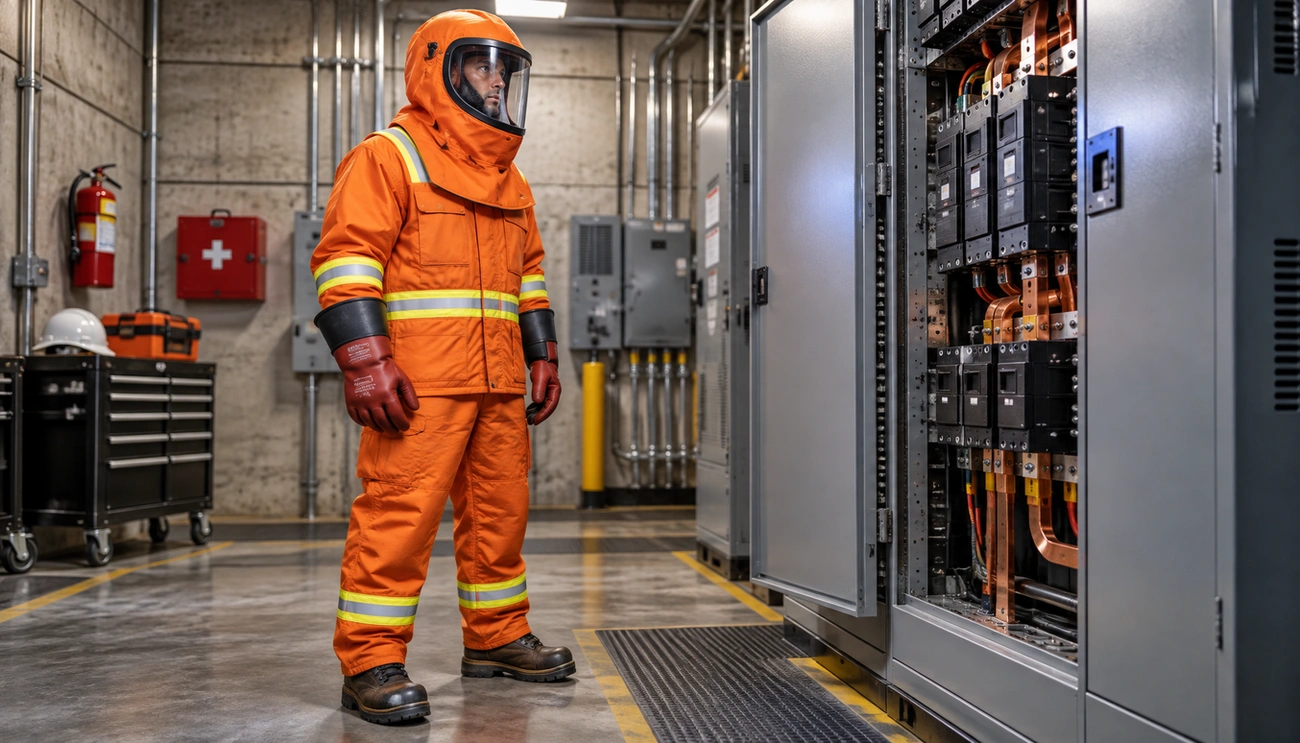

Arc flash incidents can release intense thermal energy, pressure, molten metal, light, and flying debris in a fraction of a second.
For workers performing electrical troubleshooting, maintenance, testing, switching, or other tasks near energized equipment, the consequences can include severe burns, hearing damage, eye injuries, and other trauma.
That is why arc flash PPE selection cannot be based on guesswork.
Employers need to determine whether an arc flash hazard exists, evaluate the potential exposure, establish the arc flash boundary, and select protective clothing and equipment with an arc rating suitable for the hazard.
NFPA 70E provides the primary industry framework for making those decisions, while OSHA establishes the employer’s legal responsibility to protect workers from electrical hazards.
What Is an Arc Flash?
An arc flash occurs when electrical current travels through an unintended path through the air between energized conductors or between a conductor and ground.
The event can release intense heat and energy almost instantly.
Workers may be exposed not only to thermal burns but also to flying molten material, intense light, pressure, noise, and damaged electrical components.
Because an arc flash can develop extremely quickly, PPE is designed to reduce injury when other controls cannot completely eliminate the exposure.
OSHA vs. NFPA 70E
Employers sometimes assume that NFPA 70E and OSHA are interchangeable.
They are not.
OSHA Establishes Legal Requirements
OSHA 29 CFR 1910.335 requires employees working where electrical hazards exist to use protective equipment appropriate for the body parts being protected and the work being performed.
OSHA also specifically requires eye or face protection where workers could be injured by electric arcs, flashes, or flying objects produced by an electrical explosion.
Protective shields, barriers, or insulating materials may also be required where dangerous electrical heating or arcing could occur.
NFPA 70E Provides a Detailed Safety Framework
NFPA 70E provides detailed methods for electrical safety-related work practices, including arc flash risk assessment, boundaries, work practices, and PPE selection.
For employers, OSHA creates the legal duty while NFPA 70E provides a practical framework for addressing arc flash hazards.
De-Energization Comes Before PPE
Arc flash PPE should not be treated as the primary control.
Electrical equipment should generally be placed in an electrically safe work condition before employees perform work where exposure to energized parts can be avoided.
De-energization, lockout/tagout, and verification significantly reduce arc flash exposure.
PPE becomes especially important during justified energized work and during tasks such as testing for absence of voltage, when workers may still be exposed until the de-energized condition has been verified.