One missing piece of PPE can turn a routine construction task into a serious injury.

Construction sites combine moving equipment, falling objects, sharp materials, power tools, dust, noise, electrical hazards, changing weather, elevated work, and constant interaction between workers and vehicles. Because conditions change from one phase of a project to the next, the protective equipment that was appropriate yesterday may not be enough for today’s work.

That is why construction PPE should never be treated as a standard package handed to every worker.

The right approach starts with the hazard. Employers need to determine what employees may be exposed to, select equipment suited to those conditions, make sure it fits properly, train workers to use it correctly, and replace damaged or unsuitable equipment before protection fails.

OSHA’s construction PPE requirements also now state explicitly that required personal protective equipment must properly fit each affected employee, reinforcing that correct sizing and compatibility are part of effective protection. (OSHA Construction PPE Requirements)

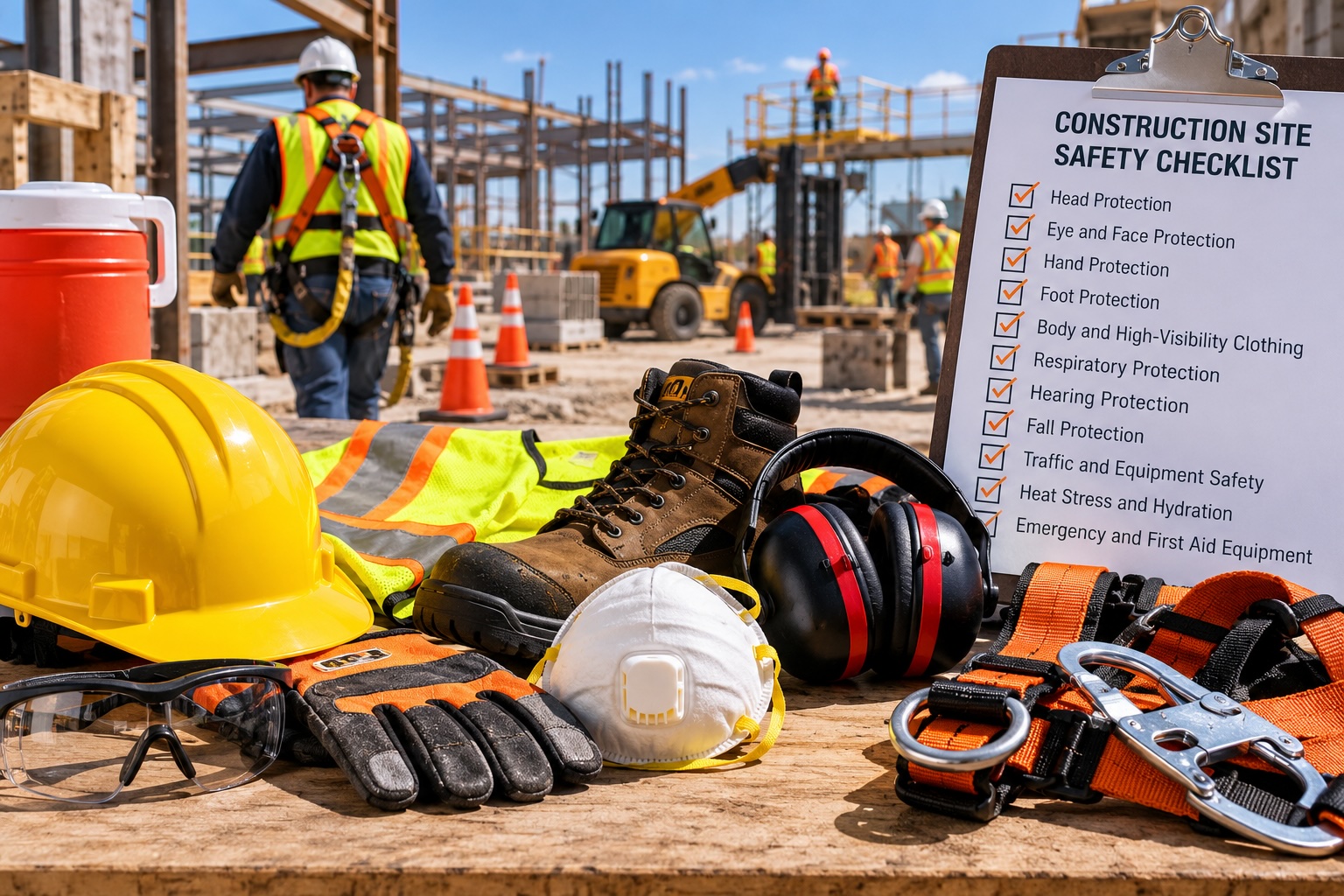
The following construction safety checklist covers the major PPE and equipment categories employers should review before work begins.

Start With a Construction Site Hazard Assessment

A construction PPE checklist should begin before anyone reaches for a hard hat or pair of gloves.

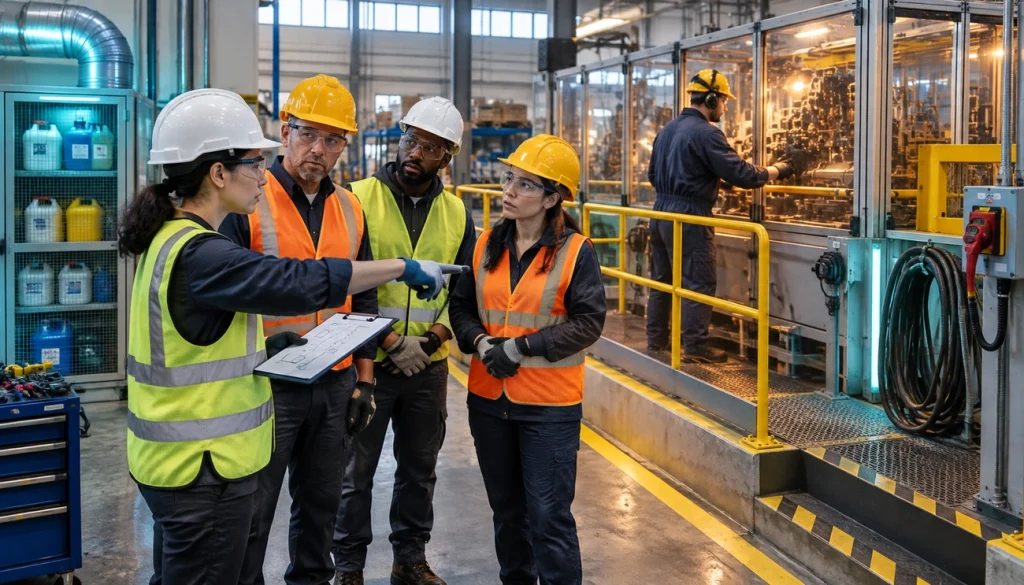
Walk the site and evaluate the tasks employees will actually perform. Consider routine work as well as material deliveries, equipment setup, maintenance, cleanup, temporary electrical work, elevated access, and changing weather conditions.

Construction hazards can include falling or flying objects, sharp materials, chemicals, dust, fumes, excessive noise, vehicle traffic, heat, cold, electricity, and falls from elevation.

Different trades may encounter very different combinations of those hazards on the same project.

A concrete crew, electrician, welder, equipment operator, roofer, and laborer should not automatically receive identical PPE simply because they work on the same site.

The objective is to match protection to the task while making sure different pieces of equipment can be worn together safely.

Head Protection

Head injuries can result from falling tools, building materials, equipment movement, overhead work, or workers striking fixed objects.

Protective helmets or hard hats are therefore among the most recognizable pieces of construction PPE.

Select Head Protection for the Actual Exposure

Construction employers should consider where impacts could originate.

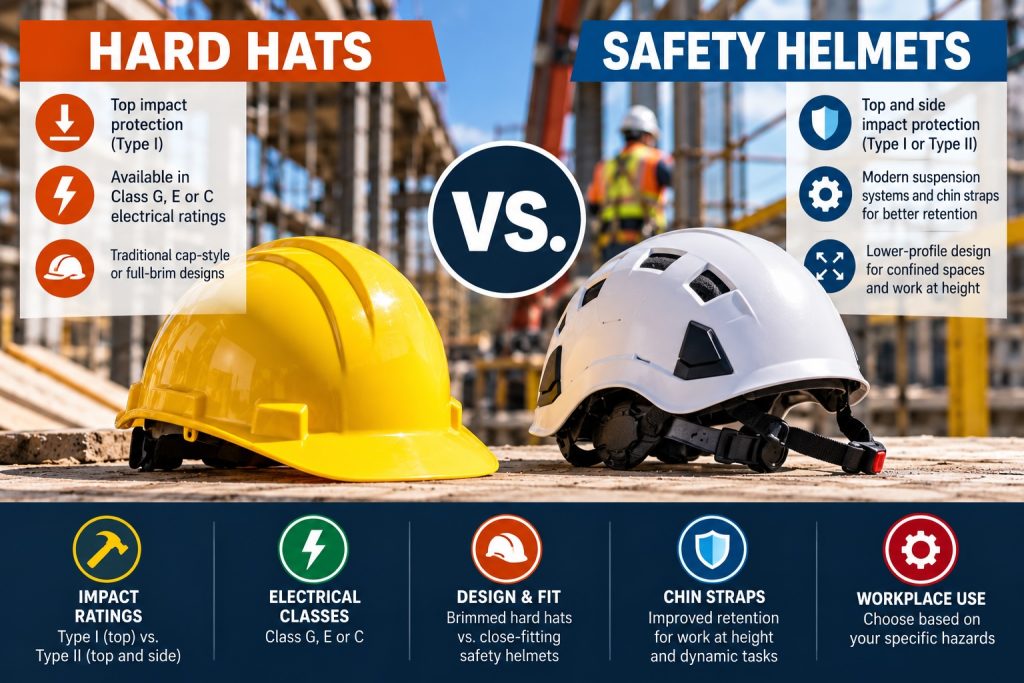
Traditional Type I helmets primarily address top impact, while Type II designs provide additional protection from certain lateral impacts. OSHA does not universally mandate Type II helmets for every workplace, but employers still need to select head protection that adequately addresses hazards identified through their assessment.

Electrical exposure also matters.

Helmet classes differ in the amount of electrical protection they are designed to provide, so workers performing electrical tasks may require different head protection from employees performing ordinary material handling.

Arbill’s head protection solutions include options for different industrial and construction environments.

Inspect Head Protection Before Use

Workers should look for cracks, dents, penetration damage, damaged suspension components, worn straps, deformation, or other visible deterioration.

Equipment that has sustained a significant impact should be evaluated according to manufacturer guidance even when the damage is not obvious.

Workers should also avoid unauthorized modifications such as drilling holes or attaching accessories in ways not approved by the manufacturer.

Eye and Face Protection

Construction work produces flying particles constantly.

Grinding, cutting, drilling, chipping, sawing, fastening, demolition, and concrete work can send material toward a worker’s face without warning.

Chemical splashes, welding radiation, dust, and molten material create additional exposure.

Safety Glasses Are Not the Answer to Every Eye Hazard

Impact-rated safety glasses may be suitable for many flying-particle hazards, but they are not automatically sufficient for chemical splash, heavy dust, or high-energy operations.

Chemical work may require goggles.

Grinding or cutting operations may justify a face shield used with appropriate primary eye protection.

Welding requires eye and face protection suitable for the optical radiation and other hazards involved.

The key is selecting protection for the exposure rather than treating all eyewear as interchangeable.

Check Eye Protection for Damage and Fit

Scratched lenses can reduce visibility.

Cracked frames, loose temples, damaged gaskets, or worn straps can compromise fit and protection.

Workers should also confirm that eye protection remains compatible with hard hats, respirators, hearing protection, and face shields.

Poor compatibility can encourage employees to remove one piece of PPE to make another more comfortable.

Explore Our Solutions!
Construction Safety Gear and Checklist

Hand Protection

Construction workers rely on their hands for nearly every task, which puts them close to sharp edges, rough materials, chemicals, heat, vibration, power tools, and pinch points.

A single general-purpose glove cannot adequately address all of those exposures.

Match Gloves to the Job

Cut-resistant gloves may be appropriate for handling sheet metal, glass, or sharp materials.

Chemical-resistant gloves should be selected according to the substance employees may contact.

Impact gloves can help protect hands where crushing or striking hazards are present.

Heat-resistant or welding gloves may be necessary around hot work.

The most protective glove is not always the most useful glove. Excessive bulk can reduce grip or dexterity, which may introduce another hazard.

Selection should balance protection with the movements workers actually need to perform.

Inspect Gloves Before Work

Employees should check for cuts, punctures, thinning material, damaged seams, chemical degradation, or contamination.

Disposable gloves should not be reused beyond their intended application.

Reusable gloves should be cleaned and stored according to manufacturer guidance so contamination or deterioration does not reduce protection.

Foot Protection

Construction workers may encounter falling materials, rolling equipment, exposed nails, uneven ground, wet surfaces, electrical hazards, and heavy tools.

Footwear should reflect those conditions.

Consider More Than Toe Protection

Safety-toe boots may protect against impact and compression, but other features can also matter.

Puncture-resistant construction may be useful where nails, screws, or sharp debris are present.

Slip-resistant soles can improve traction around mud or wet surfaces.

Water-resistant or insulated footwear may be necessary in difficult weather.

Certain electrical tasks can require footwear designed for specific electrical hazards.

No single boot feature solves every construction risk.

Check Footwear Condition

Workers should inspect soles, tread, stitching, toe areas, and closures.

A boot with severely worn tread may no longer provide reliable traction even when the upper remains in good condition.

Footwear that no longer fits properly can also create fatigue, blisters, or instability on uneven surfaces.

Replacement should therefore be based on condition and protective performance rather than an arbitrary age alone.

Body and Protective Clothing

Construction clothing may need to protect workers from visibility hazards, chemicals, heat, sparks, weather, or electrical energy.

The appropriate garment depends heavily on the trade and task.

High-Visibility Clothing

Employees working around trucks, loaders, forklifts, road traffic, or other mobile equipment may need high-visibility apparel.

The garment should remain visible as the outer layer.

Wearing a dark jacket over a high-visibility vest during cold weather can defeat the purpose of the visibility system.

Flame-Resistant and Arc-Rated Clothing

Hot work, certain utility operations, and electrical tasks can require specialized protective clothing.

Flame-resistant clothing and arc-rated clothing should not be treated as interchangeable.

Electrical arc hazards require clothing selected for the applicable exposure and rating.

Other thermal hazards may require different protective materials or clothing systems.

Weather Protection

Rain gear, insulated clothing, sun protection, and other seasonal equipment may also be necessary.

However, weather PPE still needs to remain compatible with fall protection, high-visibility requirements, respirators, and other safety equipment.

”As long as people go to work, we have an opportunity to help protect them.

Julie Copeland
Arbill CEO

Julie Copeland Arbill CEO

Respiratory Protection

Dust and airborne contaminants are common on construction sites.

Concrete cutting, demolition, sanding, welding, painting, insulation work, chemical application, and other activities can create respiratory exposure.

A disposable mask should never become the automatic answer to every airborne hazard.

Identify the Contaminant First

Respirator selection depends on what is present in the air.

Particulate filtering respirators can protect against certain airborne particles when properly selected and used, but they do not automatically protect against gases or vapors.

Some tasks may require elastomeric respirators with appropriate filters or cartridges, powered systems, or other respiratory protection.

Employers also need to consider exposure level and whether the atmosphere has conditions that make an air-purifying respirator unsuitable.

Respirators Require a Program

Where respirator use is required, the equipment should be part of a complete respiratory protection program.

That can include medical evaluations, fit testing for tight-fitting respirators, training, cleaning, storage, inspection, and filter or cartridge management.

Workers should understand how to perform required user seal checks and recognize when equipment should no longer be used.

Hearing Protection

Construction workers can encounter high noise from saws, breakers, grinders, compressors, generators, heavy equipment, impact tools, and demolition.

Repeated exposure can contribute to permanent hearing loss even when the worker does not experience immediate pain.

Match Hearing Protection to Exposure

Earplugs and earmuffs provide different levels of attenuation and may perform differently depending on fit and work conditions.

Some employees may need dual protection in particularly high-noise situations.

The correct approach begins with evaluating exposure rather than selecting the product with the largest number printed on the package.

Workers also need to insert or position hearing protection correctly.

Poorly fitted protection can provide substantially less attenuation than expected.

Fall Protection

Falls remain one of the most serious hazards in construction.

Workers may be exposed while working on roofs, scaffolds, leading edges, elevated platforms, structural steel, ladders, or around openings.

OSHA’s construction fall-protection rules generally require protection at 6 feet or more above a lower level for many construction activities under Subpart M, although different construction activities and specific standards can have different requirements. (OSHA Residential Fall Protection FAQ)

Personal Fall Protection Equipment

Where a personal fall arrest system is used, the system may include a full-body harness, connecting device, anchorage, and other compatible components.

Arbill’s fall protection equipment can support construction and industrial work where employees face elevated fall hazards.

Equipment selection should consider more than simply whether a harness is available.

The system needs to be appropriate for the task, fall distance, anchorage, clearance, worker weight, and potential swing-fall conditions.

Inspect Before Use

Fall protection equipment should be checked before use for cuts, fraying, chemical damage, burns, broken stitching, damaged hardware, corrosion, deformation, or other conditions that could compromise performance.

Equipment involved in an actual fall-arrest event should be removed from service and handled according to applicable requirements and manufacturer guidance.

Workers should never continue using questionable fall protection simply because replacement equipment is inconvenient to obtain.

Ladders and Access Equipment

Not every fall-prevention problem is solved by a harness.

Safe access equipment remains important.

Workers should use ladders designed for the task rather than standing on buckets, boxes, equipment, pallets, or other improvised surfaces.

Ladders should be inspected for damage, placed on stable surfaces, and positioned correctly before use.

Scaffolds, aerial lifts, and mobile work platforms require their own safe-use procedures and applicable fall-protection controls.

Construction safety planning should therefore look at how workers reach elevated areas, not just what they wear once they arrive.

Confined Space Equipment

Construction sites can contain tanks, vaults, pits, manholes, sewers, crawlspaces, and other areas that may meet the definition of a confined space.

Some may also become permit-required confined spaces because of atmospheric or physical hazards.

Equipment Depends on the Entry Hazard

Confined-space work may require atmospheric monitoring, ventilation, communication equipment, retrieval systems, respiratory protection, harnesses, lighting, or other specialized tools.

Emergency rescue capability needs to be planned before entry.

A tripod or retrieval line should not be purchased simply because a space looks confined.

The employer must determine the actual entry hazards and develop procedures around them.

Traffic and Mobile Equipment Safety

Construction sites often place pedestrians and vehicles in the same changing environment.

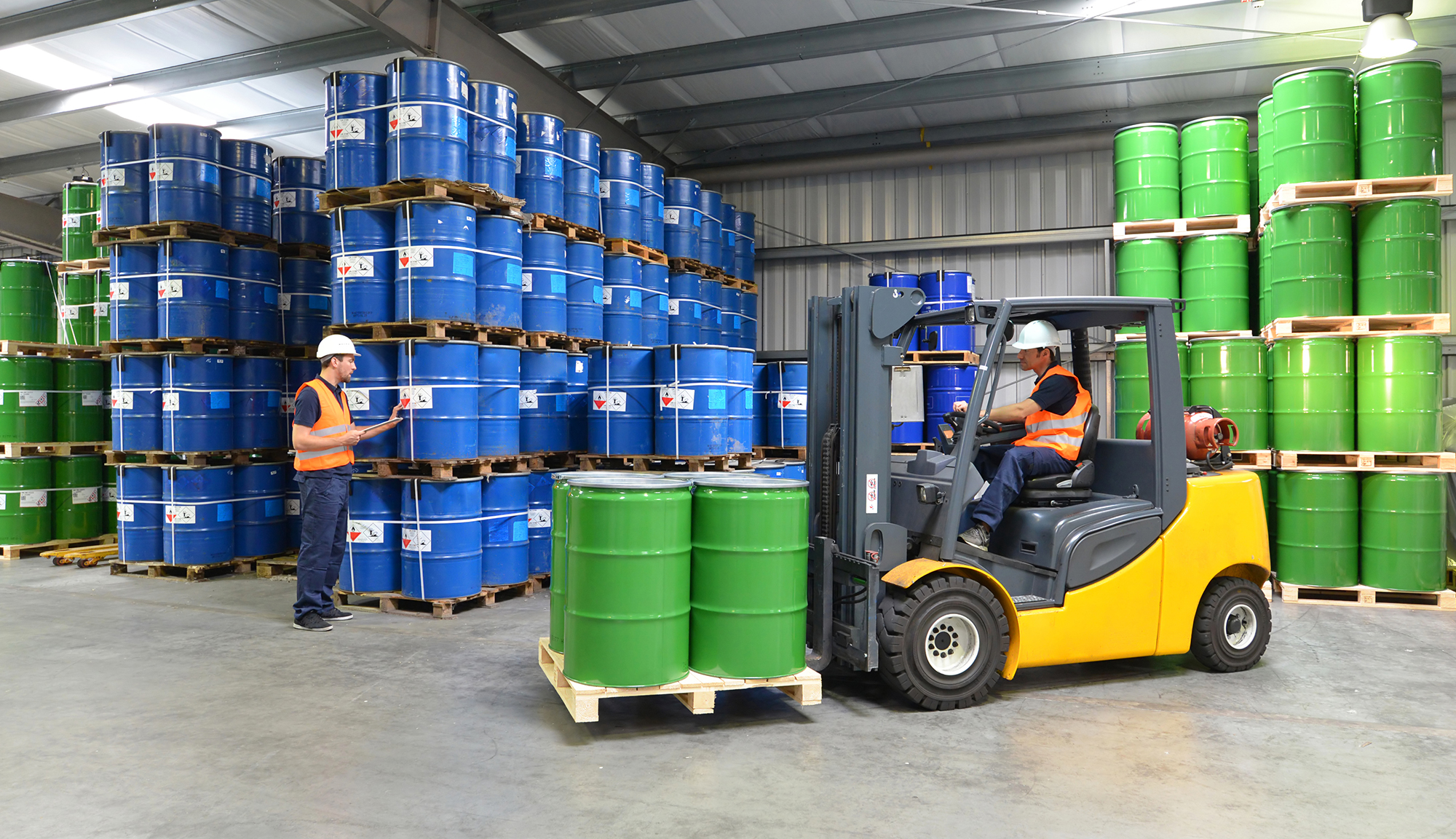
Dump trucks, loaders, forklifts, excavators, delivery vehicles, and other equipment can create struck-by hazards, particularly around blind areas.

Traditional controls remain important.

These include traffic planning, high-visibility clothing, barriers, spotters, alarms, mirrors, designated pedestrian routes, and operator training.

Technology Can Add Another Layer

Connected proximity systems can supplement those controls by providing real-time alerts when pedestrians and mobile equipment move too close together.

Arbill’s TruSense™ Forklift is designed to improve awareness around forklifts and nearby pedestrians.

Technology should supplement—not replace—safe traffic routes, operator training, physical separation, and effective site planning.

Heat Stress and Hydration Equipment

Construction employees working outdoors can experience substantial heat exposure, particularly while performing heavy physical work or wearing protective equipment.

Direct sunlight, humidity, radiant heat, and limited air movement can increase the strain further.

Heat safety should therefore be planned before hot weather begins.

Hydration Needs to Be Accessible

Workers should have practical access to drinking water throughout the workday.

If water is located too far from the work area, employees may postpone hydration because reaching it interferes with productivity.

Arbill’s Hydration Program can help employers structure workplace hydration and heat-stress support instead of relying on informal water availability.

PPE Can Increase Heat Burden

Respirators, impermeable garments, head coverings, protective clothing, and other PPE can increase heat strain.

That does not mean required equipment should be removed.

Instead, employers may need to adjust work practices through rest periods, shaded or cooled recovery areas, scheduling, acclimatization, hydration, and other heat controls.

Heat planning and PPE planning should therefore be connected.

First Aid and Emergency Equipment

Construction projects should be prepared for emergencies before work begins.

Appropriate first aid supplies need to remain available and accessible.

Depending on site hazards, emergency planning may also involve eyewash equipment, emergency showers, fire extinguishers, rescue systems, communication equipment, spill supplies, or automated external defibrillators.

Emergency equipment should never be buried behind construction materials or locked somewhere workers cannot reach quickly.

Plan for Changing Site Conditions

Construction sites evolve.

An emergency station that was well positioned during excavation may become difficult to reach when new walls, fencing, or stored materials appear.

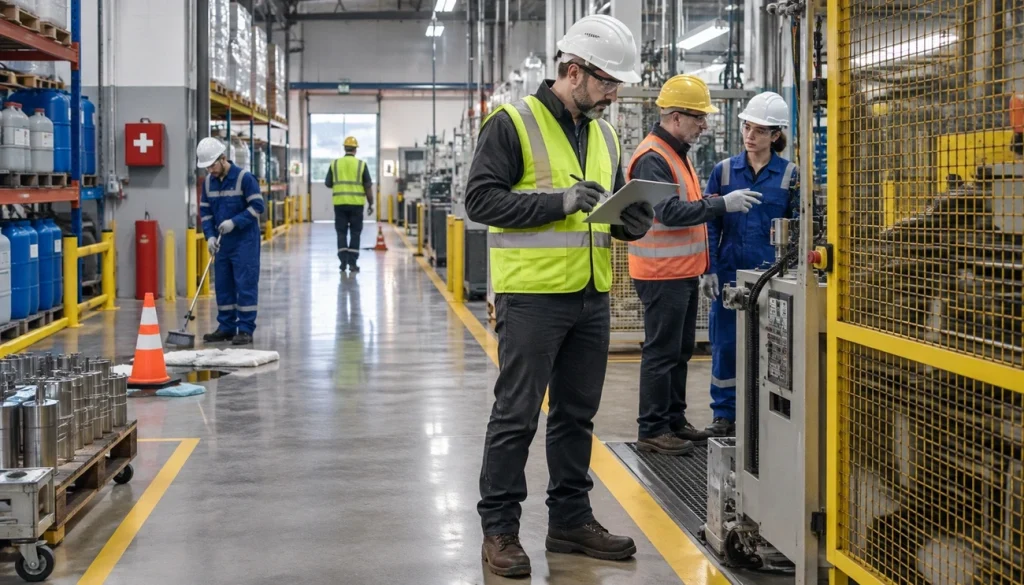
Emergency equipment locations should therefore be included in routine site inspections.

See Our Safety Services!
Construction Site Safety

Safety Helmets and PPE Must Fit Properly

PPE fit deserves specific attention on construction sites.

OSHA’s updated construction PPE language explicitly requires employers to ensure PPE properly fits each affected employee.

This is more than a comfort issue.

Oversized gloves can reduce dexterity.

Loose safety glasses may shift out of position.

An improperly sized harness may not protect the worker as intended.

Head protection that does not remain secure may move during climbing or bending.

Employers should offer appropriate sizes and options instead of expecting every worker to adapt to one standard product.

PPE Must Work as a System

Construction workers frequently wear several forms of PPE simultaneously.

A worker may need a helmet, eye protection, hearing protection, gloves, safety boots, high-visibility clothing, a respirator, and fall protection at the same time.

The equipment needs to remain compatible.

Safety glasses should not interfere with a respirator seal.

Cold-weather clothing should not prevent correct harness adjustment.

Ear muffs should remain compatible with the selected helmet.

A face shield should work with both head and eye protection.

Evaluating each product independently can miss conflicts that become obvious only when the worker wears the complete system.

Conduct Pre-Use Checks Every Day

PPE inspection should be part of normal construction work rather than something performed only during formal audits.

Before beginning a task, employees should look for obvious problems and make sure their equipment is ready.

A practical check should confirm that PPE is clean enough to inspect, free from obvious damage, correctly sized, properly adjusted, and appropriate for the task.

Specialized equipment such as fall protection and respirators may require more specific inspection procedures.

Workers should know exactly who to contact when a defect is discovered.

Do Not Use Universal PPE Replacement Dates

PPE replacement planning is important, but not every product has the same service life.

A glove used to handle sharp steel may wear much faster than the same model used for light material handling.

Boot life depends on the environment, construction, frequency of use, and wear.

Helmets may need replacement following impact or according to manufacturer guidance.

Fall protection equipment can require immediate removal from service after specific events or identified damage.

Respirator filters and cartridges follow their own replacement requirements.

The better approach is to combine manufacturer guidance, equipment condition, exposure, inspection results, and applicable safety requirements.

Keep Replacement PPE Accessible

Workers should not have to choose between delaying work and continuing with damaged protection.

Replacement gloves, eye protection, hearing protection, and other frequently consumed PPE should remain readily accessible.

For larger projects, controlled distribution or point-of-use storage can help maintain supply without allowing inventory to become disorganized.

Supervisors should monitor recurring shortages because they may indicate purchasing problems, excessive consumption, or unsuitable product selection.

Train Workers on More Than Wearing PPE

Construction PPE training should help employees understand:

Why the equipment is required, which hazards it addresses, how to put it on and adjust it, how to inspect it, what its limitations are, and how to care for it.

Training should also teach workers when PPE is not enough.

A worker should understand that a respirator cannot make an unknown atmosphere safe or that a harness does not make an unsuitable anchorage acceptable.

Hands-on practice is particularly valuable for equipment such as fall protection, respirators, and specialized protective clothing.

Review the Checklist When the Job Changes

Construction hazards do not remain static.

Excavation becomes structural work. Structural work becomes interior construction. Temporary power changes. Different contractors arrive. Vehicle routes move. Weather changes.

The PPE and safety equipment checklist should evolve along with the project.

Reassess protection when:

A new phase begins, equipment changes, new chemicals arrive, workers perform unfamiliar tasks, site layout changes, an incident or near miss occurs, or existing PPE proves unsuitable.

That keeps the checklist connected to the real site rather than the original project plan.

Construction Site Safety Checklist

Before work begins, supervisors should be able to confirm the following:

  • Required head, eye, face, hand, foot, and body protection is available and properly fitted.
  • PPE is appropriate for the task rather than selected only by trade or job title.
  • Respiratory and hearing hazards have been evaluated where applicable.
  • Fall hazards and safe access methods have been addressed.
  • Fall protection equipment has been inspected and suitable anchorages identified.
  • Confined-space work has been evaluated before entry.
  • Vehicle and pedestrian routes are controlled.
  • Heat stress, weather, and hydration needs are addressed.
  • Emergency and first aid equipment is accessible.
  • Workers have inspected their PPE and know how to use it.
  • Damaged or unsuitable equipment can be replaced promptly.
  • The PPE plan has been updated for current site conditions.

The checklist should be customized to the project rather than treated as a universal substitute for a job-specific hazard assessment.

Build Construction Safety Around the Hazard

PPE is an essential part of construction safety, but it should never be the only part.

Guardrails can prevent workers from reaching a fall edge.

Dust-control equipment can reduce airborne exposure before a respirator becomes necessary.

Traffic separation can reduce interaction between pedestrians and equipment.

Machine guarding can prevent contact with moving parts.

Ventilation can reduce chemical or welding-fume exposure.

The strongest construction safety programs use these higher-level controls first and PPE for the hazards that remain.

Arbill provides PPE, safety technology, training, assessments, and broader workplace safety solutions that can support employers building a more complete approach to worker protection.

Conclusion

Construction site safety depends on having the right protection available for the right task.

Head, eye, and face protection help address impact, debris, splash, and optical hazards. Gloves, footwear, and protective clothing help workers manage cuts, chemicals, compression, weather, heat, and visibility risks. Respiratory and hearing protection address exposures that may not produce an immediate injury but can cause serious long-term harm.

Fall protection, confined-space equipment, mobile-equipment controls, hydration, and emergency supplies complete the broader system.

But simply owning this equipment is not enough.

PPE needs to fit properly, remain compatible with other equipment, be inspected before use, and be replaced when its condition or manufacturer guidance indicates that protection can no longer be relied upon.

Construction sites also change quickly, so the checklist needs to change with them.

Employers that regularly reassess hazards, involve workers, maintain equipment, and match PPE to actual tasks are better positioned to prevent injuries rather than responding after they happen.

Request a Safety Assessment

Recent Posts

Safety Training
Leading vs. Lagging Safety Indicators: What Should You Track?

Leading vs. Lagging Safety Indicators: What Should You Track?

How to Conduct a Job Hazard Analysis - Your Complete Risk Assessment
What Is a Job Hazard Analysis (JHA) and How Do You Conduct One?

What Is a Job Hazard Analysis (JHA) and How Do You Conduct One?

How to Conduct a Workplace Safety Audit

How to Conduct a Workplace Safety Audit

Hard Hats vs. Safety Helmets
Safety Helmets vs. Hard Hats: What Employers Need to Know

Safety Helmets vs. Hard Hats: What Employers Need to Know

How to Choose the Right Chemical-Resistant Gloves for the Job

How to Choose the Right Chemical-Resistant Gloves for the Job

  • Previous ProjectHow Safety Equipment Helps Reduce Workers' Compensation Claims

  • Next ProjectWhy Regular PPE Training Is Essential for Employee Safety

CUSTOMER SERVICE

800-523-5367

CONTACT US

Complete the short form below and an Arbill representative will get back to you within 24 hours.
* Required Fields

    ARBILL RESPECTS YOUR PRIVACY AND YOUR INFORMATION: By submitting the form above you agree to receiving emails from Arbill. Your submitted information is NEVER shared. You may unsubscribe at any time via the "unsubscribe" link in our emails. You can view our Privacy Policy HERE.