Forklifts are essential to warehouses, manufacturing plants, distribution centers, loading docks, and other industrial facilities.
They are also large, heavy pieces of mobile equipment that frequently operate only a few feet from people on foot.
That combination creates a difficult safety challenge.
An operator may have limited visibility around a load. A pedestrian may step into an aisle without seeing an approaching truck. Storage racks can create blind intersections. Noise from production equipment can make horns harder to hear, while temporary pallets or materials can change traffic patterns that normally feel familiar.
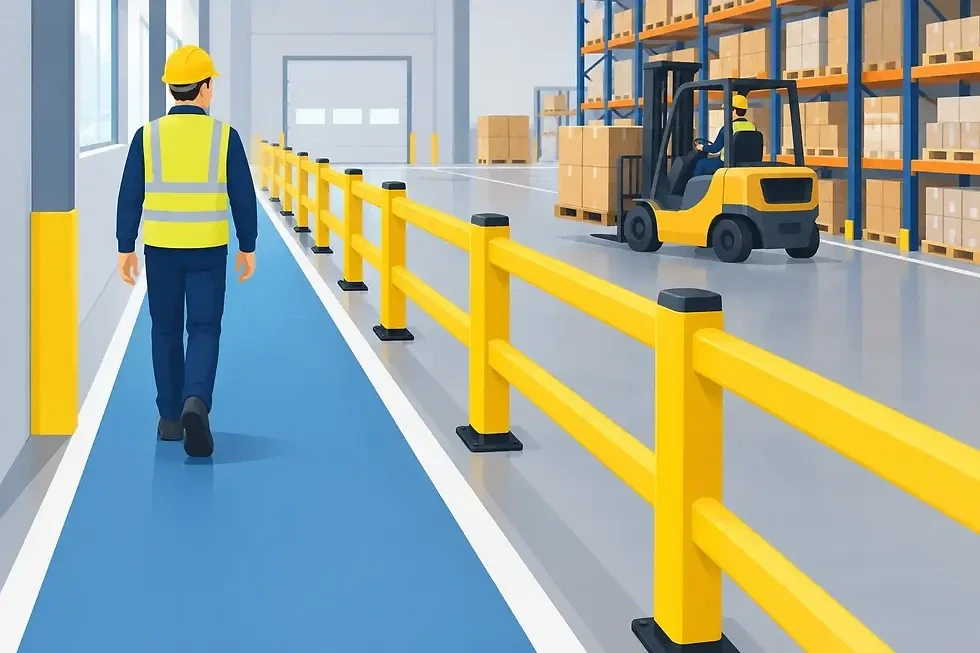
Traditional controls such as training, marked walkways, barriers, warning lights, mirrors, horns, and speed limits remain fundamental.
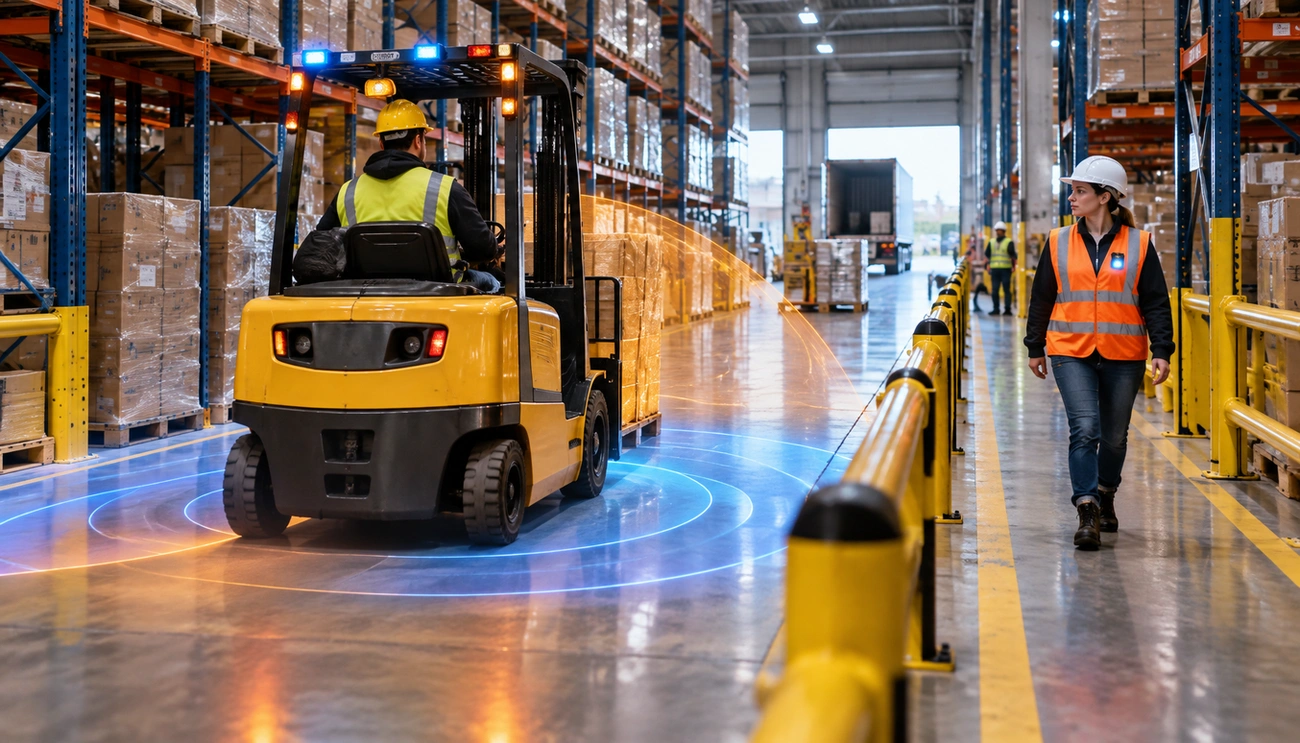
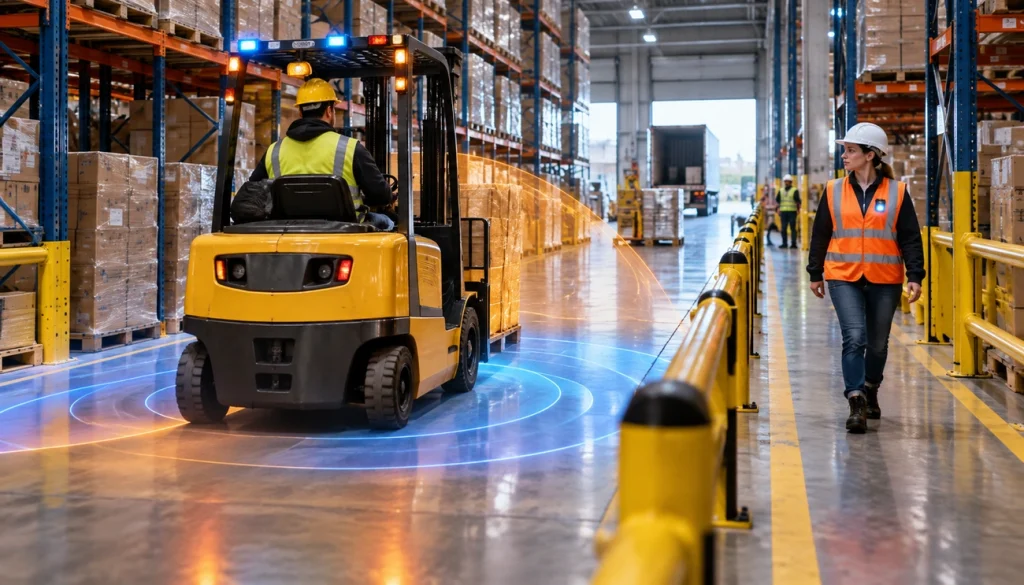
Forklift proximity detection systems add another layer by providing real-time warnings when pedestrians and powered equipment move dangerously close to one another.
Rather than relying solely on a worker seeing or hearing a forklift, these systems can actively detect proximity and alert the people involved before contact occurs.
Why Forklift and Pedestrian Interaction Is So Dangerous
Forklifts operate differently from passenger vehicles.
They may have limited forward visibility when carrying loads, rear steering that creates a wide tail swing, and stopping characteristics that depend on speed, load, surface conditions, and truck design.
Pedestrians may also underestimate how quickly a forklift can enter their path.
A worker may step out from behind storage racks, cross an aisle while focused on another task, or assume the operator has already seen them.
OSHA’s powered industrial truck guidance emphasizes that forklift traffic should be separated from pedestrians where possible and recommends controls such as designated walkways, barriers, horns, mirrors, signs, and reduced speeds in obstructed areas. (OSHA Forklift Pedestrian Safety)
Proximity detection does not replace those controls.
It strengthens them by adding a warning that responds to what is actually happening in the work area.
What Is a Forklift Proximity Detection System?
A forklift proximity detection system uses sensors or wearable devices to recognize when a pedestrian, another vehicle, or another tagged object enters a defined area around powered equipment.
Depending on the technology, the system may alert:
The forklift operator, the pedestrian, or both.
Warnings may be delivered through:
Vibration, lights, sound, or a combination of alert methods.
Some systems can also help safety teams understand where proximity events occur repeatedly.
The purpose is to give people additional time to recognize the hazard and respond before a collision.
How Proximity Detection Adds Another Layer of Awareness
Traditional forklift safety depends heavily on human attention.
Operators are trained to look in the direction of travel, slow down at intersections, sound horns around blind corners, and maintain safe clearance from pedestrians.
Pedestrians are expected to remain alert and stay within designated walking areas.
These practices remain necessary.
The challenge is that people can become distracted, visibility can change, and environmental conditions can make traditional warnings less effective.
A proximity system adds a technology-based warning that does not depend exclusively on eye contact.
Blind Corners Are a Major Use Case
Warehouses and manufacturing facilities frequently contain:
Tall storage racks, production machinery, stacked material, walls, doors, and temporary inventory.
Any of these can block the operator’s view.
A forklift may approach one side of a rack intersection at the same time a pedestrian approaches the other.
Neither person may see the other until they enter the intersection.
Mirrors and horns can help, but proximity detection can provide another warning before direct visual contact occurs.
This is especially valuable where traffic patterns are busy or frequently change.