Respiratory protection can create a dangerous false sense of security when the equipment is selected, fitted, maintained, or used incorrectly.

A worker may appear fully protected while contaminated air leaks around the face seal, passes through an inappropriate cartridge, or reaches the breathing zone because the respirator was never selected for the actual exposure.

These failures are particularly concerning because respiratory hazards are often invisible. Dusts, fumes, mists, gases, vapors, and airborne chemicals may not produce an immediate warning that protection has failed. The health consequences can develop gradually after repeated exposure.

That is why an effective respiratory protection program must address much more than issuing respirators.

Organizations need a documented hazard assessment, appropriate respirator selection, medical evaluations, fit testing, training, user seal checks, maintenance, cartridge management, and ongoing program evaluation.

For industrial employers building or strengthening respiratory protection programs, Arbill provides PPE, assessments, training, and practical safety support designed around workplace exposure.

Mistake #1: Skipping Required Fit Testing

A tight-fitting respirator works only when the facepiece forms an adequate seal against the wearer’s face.

A respirator that fits one employee well may leak significantly on another employee even when both wear the same nominal size.

Fit Testing Is Not Optional

OSHA requires workers using tight-fitting respirators to pass an appropriate qualitative or quantitative fit test before using the respirator in the workplace.

Fit testing must also be repeated at least annually. Additional testing is necessary when an employee changes to a different respirator facepiece or experiences physical changes that could affect the seal.

These changes can include significant changes in body weight, major dental work, facial scarring, cosmetic surgery, or other alterations in facial structure.

The purpose is to confirm that the specific make, model, style, and size of respirator provides an acceptable fit for that individual.

One Respirator Model Will Not Fit Everyone

Face shapes and dimensions vary considerably.

OSHA’s fit-testing procedures require workers to have access to a sufficient range of respirator models and sizes so they can select an acceptable facepiece.

Standardizing one model for an entire workforce may simplify purchasing, but it can leave some employees without an acceptable fit.

Organizations should be prepared to stock alternative approved models when necessary.

Qualitative vs. Quantitative Fit Testing

Qualitative fit testing relies on a worker’s response to a test agent, such as taste or irritation.

Quantitative fit testing uses instruments to measure leakage and determine a numerical fit factor.

Which method is appropriate depends on the respirator and required protection level.

Fit testing should be conducted using OSHA-accepted protocols and by personnel capable of administering the procedure correctly.

Mistake #2: Confusing Fit Testing With a User Seal Check

Fit testing and user seal checks serve different purposes.

Passing an annual fit test does not eliminate the need to check the respirator every time it is worn.

Fit Testing Confirms the Model Fits the Worker

Fit testing verifies that a specific respirator can achieve the necessary seal on a particular employee.

It is performed under controlled conditions using a defined protocol.

A Seal Check Confirms the Respirator Is Seated Properly Today

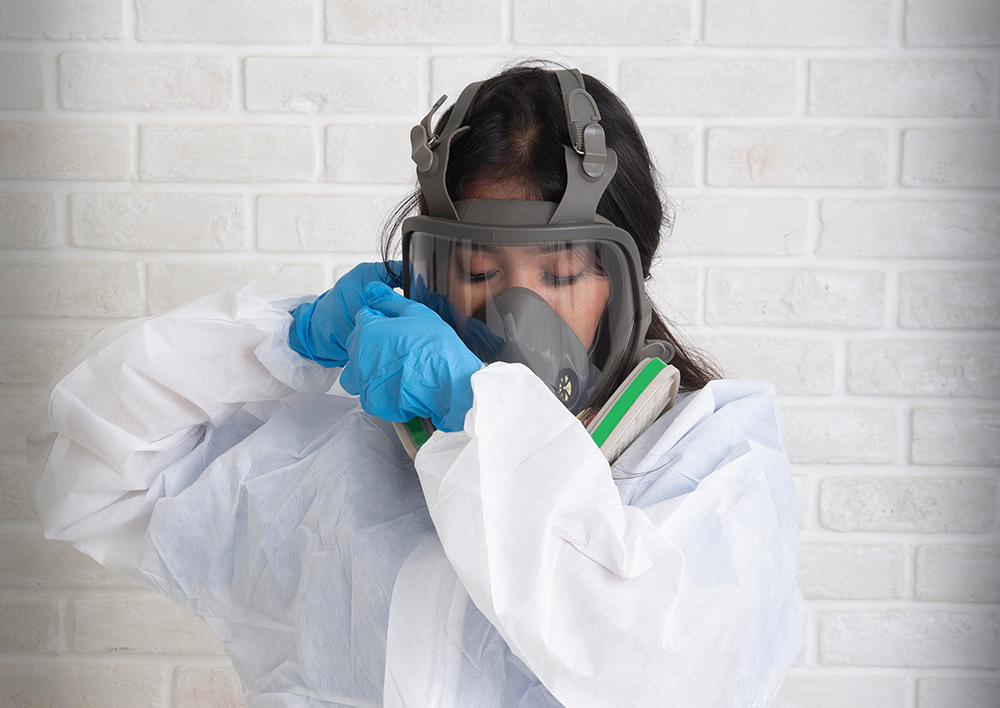
OSHA requires anyone wearing a tight-fitting respirator to perform a user seal check each time the respirator is put on.

The employee may use OSHA’s positive and negative pressure procedures or a manufacturer-recommended method that provides equivalent protection.

A seal check can reveal that the respirator was positioned incorrectly, a strap is loose, or something is interfering with the seal.

It takes only a short time but can prevent a worker from entering a hazardous environment with a poorly seated facepiece.

Seal Checks Do Not Replace Fit Tests

A worker might successfully perform a seal check on a respirator that is still not capable of achieving the required fit factor.

OSHA explicitly states that user seal checks are not substitutes for qualitative or quantitative fit testing.

Both requirements matter.

Mistake #3: Selecting a Respirator Before Evaluating the Hazard

Respirator selection should start with the contaminant—not with the respirator already sitting in the supply cabinet.

Identify the Airborne Hazard First

Employers need to know what workers may inhale.

That could include particulate matter, welding fumes, silica-containing dust, chemical vapor, gas, mist, smoke, biological material, or combinations of several contaminants.

The concentration is equally important.

A respirator appropriate for a low-level particulate exposure may be completely unsuitable when contaminant concentrations increase.

Know Whether Oxygen Is Adequate

Air-purifying respirators remove contaminants from surrounding air.

They do not create oxygen.

OSHA generally considers atmospheres containing less than 19.5% oxygen to be oxygen-deficient and treats them as immediately dangerous to life or health unless specific altitude-related exceptions apply.

An ordinary filtering facepiece or cartridge respirator cannot make an oxygen-deficient atmosphere safe.

Atmosphere-supplying respiratory protection is required for these environments according to the applicable standard.

Evaluate IDLH Conditions

Immediately dangerous to life or health conditions require specially selected atmosphere-supplying respiratory protection.

OSHA identifies approved approaches for IDLH atmospheres, including appropriate pressure-demand SCBA or combination supplied-air respirators with auxiliary self-contained air.

A worker should never enter an unknown or potentially IDLH atmosphere using an ordinary air-purifying respirator simply because the cartridge appears appropriate for the contaminant.

Explore Our Solutions!
Industrial Hygiene and Respiratory Consulting

Mistake #4: Choosing the Wrong Filter or Cartridge

Different respiratory hazards require different filter or cartridge technologies.

A respirator body is only one component of the protection system.

Particulate Filters Do Not Protect Against Every Vapor

Particulate filters capture specific airborne particles.

They do not automatically protect employees against chemical gases or vapors.

Similarly, a chemical cartridge designed for a particular vapor should not be assumed to provide sufficient particulate protection unless it also incorporates the appropriate filtration capability.

Employers must match the cartridge or filter to the known contaminant and exposure.

Color Coding Is Not Enough

Cartridge colors can help identify general categories, but workers should not be expected to select respiratory protection simply by recognizing a color.

The employer should establish approved respirator configurations for specific tasks.

Employees should understand exactly which cartridges belong with which work activities.

Arbill’s respiratory protection selection includes multiple respirator and filtration options for industrial applications, but the specific product must be matched to the hazard assessment and manufacturer limitations.

Mistake #5: Using Respirators Without a Written Program

When OSHA requires respirator use, the employer generally needs a written respiratory protection program with worksite-specific procedures.

Issuing masks without establishing the supporting program leaves major compliance and protection gaps.

The Program Connects Every Requirement

A respiratory protection program should address areas such as respirator selection, medical evaluation, fit testing, use procedures, cleaning, storage, maintenance, training, and program evaluation.

A qualified program administrator should oversee implementation.

The written program provides consistency across shifts, departments, supervisors, and facilities.

Without it, workers may receive different instructions depending on who happens to manage the task.

Update the Program When Conditions Change

New chemicals, production equipment, ventilation changes, job duties, or processes can change respiratory exposure.

The program should be reviewed when workplace conditions change instead of being treated as a document that is completed once and filed away.

A professional EHS safety assessment can help organizations identify respiratory hazards, program gaps, training deficiencies, PPE issues, and inconsistencies between written procedures and actual workplace practices.

Mistake #6: Ignoring Medical Evaluation Requirements

Respirators can place physiological stress on the wearer.

Breathing resistance, facepiece weight, heat, protective clothing, physical workload, and environmental conditions can all affect how demanding the respirator is to use.

Medical Evaluation Comes Before Required Use

Under OSHA’s respiratory protection standard, employees required to wear respirators must receive an appropriate medical evaluation before fit testing or required respirator use.

The purpose is to determine whether the employee can safely perform their work while wearing the selected respirator.

Different Respirators Create Different Demands

A lightweight filtering facepiece does not create the same burden as a full-facepiece respirator, PAPR, supplied-air system, or SCBA.

Workload and environmental conditions also matter.

An employee performing heavy physical work in high temperatures may face greater physiological demand than someone performing a lighter task in a climate-controlled environment.

Respirator selection should therefore consider both the hazard and the worker.

Mistake #7: Allowing Facial Hair to Interfere With the Seal

Tight-fitting respirators need direct contact between the sealing surface and the worker’s skin.

Facial hair within the sealing area can prevent that contact.

Beards and Stubble Can Break the Seal

OSHA’s mandatory fit-testing procedures prohibit testing when hair growth crosses the facepiece sealing surface. This includes beard growth, stubble, mustaches, or sideburns when they interfere with the seal.

The issue is not the employee’s appearance.

It is whether anything comes between the respirator sealing surface and the skin or interferes with valve function.

Jewelry, head coverings, eyewear, or other equipment may also create problems when positioned under the seal.

Consider Loose-Fitting Alternatives Where Appropriate

Some workers may be unable to use a tight-fitting facepiece because of facial hair or other conditions.

Depending on the hazard and required protection, a loose-fitting hood or helmet style PAPR may provide an alternative because it does not rely on the same face seal.

However, employers must still confirm that the alternative provides adequate protection for the exposure.

The solution should come from the respirator-selection process—not simply from choosing a device that appears easier to wear.

Mistake #8: Skipping the Seal Check After Readjusting the Respirator

Workers may remove and replace their respirator several times during a shift.

Every time a tight-fitting respirator is put back on, the seal needs to be verified.

Straps Can Shift

A respirator may sit differently after a lunch break than it did at the beginning of the shift.

Sweat, movement, hair, headgear, or other PPE can affect positioning.

Employees should not assume that a previously successful fit means the facepiece is seated properly every time.

Follow the Manufacturer’s Method

OSHA allows its positive or negative pressure seal-check procedures or an equally effective manufacturer-recommended method.

Workers should be trained on the exact procedure for the respirator they use rather than relying on an improvised method.

As long as people go to work, we have an opportunity to help protect them.

Julie Copeland
Arbill CEO

Julie Copeland Arbill CEO

Mistake #9: Using Odor as a Cartridge Change Schedule

This is a particularly important respiratory protection mistake.

Workers should not be told to keep using a gas or vapor cartridge until they smell or taste the contaminant.

Cartridges Need an Established Change Schedule

For gases and vapors, OSHA requires either an appropriate NIOSH-certified end-of-service-life indicator or an employer-established change schedule based on objective information or data.

The change schedule must ensure cartridges are replaced before the end of their service life.

The employer must document the basis for the schedule in the respiratory protection program.

Odor Is Not a Reliable Warning System

Odor thresholds vary by substance and individual.

Some hazardous chemicals may reach dangerous concentrations before a worker can smell them. People may also become less sensitive to an odor after continued exposure.

If a worker unexpectedly detects contaminant odor, taste, or irritation while using respiratory protection, they should leave the exposure area according to the employer’s procedures and report the problem.

But odor should not be the planned method for deciding when cartridges have expired.

Mistake #10: Using Particulate Filters Past Their Useful Life

Particulate filters also require attention.

As filters accumulate particles, breathing resistance may increase.

Filters can also become damaged, contaminated, wet, or otherwise unsuitable for continued use.

Replacement should follow manufacturer instructions, workplace conditions, the respiratory protection program, and any applicable NIOSH limitations.

Workers should be able to obtain fresh filters without continuing hazardous work while waiting for replacements.

Mistake #11: Failing to Inspect Respirators

Reusable respirators require routine inspection.

A cracked facepiece, damaged valve, missing gasket, deteriorated strap, or damaged cartridge connection can compromise protection even when the respirator originally passed a fit test.

Inspect Before Use

Workers should know what to examine each time they use the respirator.

They should look for physical damage, deterioration, missing parts, contamination, valve problems, and other conditions that could affect operation.

A defective respirator should be removed from service rather than temporarily repaired using unapproved parts.

Use Approved Replacement Components

Respirators are certified as specific configurations.

Mixing cartridges, valves, components, or replacement parts from unrelated manufacturers can compromise performance and certification.

Maintenance procedures should follow manufacturer instructions.

Mistake #12: Poor Cleaning and Storage

Respirators can become contaminated or damaged even when they are not being worn.

Clean Reusable Equipment Properly

Cleaning procedures should remove contamination without damaging facepiece material, valves, seals, or straps.

The frequency depends on how the respirator is used and whether it is individually assigned or shared.

Shared emergency equipment requires particularly careful sanitation.

Storage Conditions Matter

Respirators should be protected from contamination, dust, sunlight, extreme temperatures, moisture, chemicals, and physical deformation.

Throwing a facepiece into a toolbox or leaving it exposed on a workbench can damage the sealing surface.

Gas and vapor cartridges may also need specific storage practices once their packaging has been opened.

Mistake #13: Letting Other PPE Interfere With the Respirator

Employees rarely wear respirators alone.

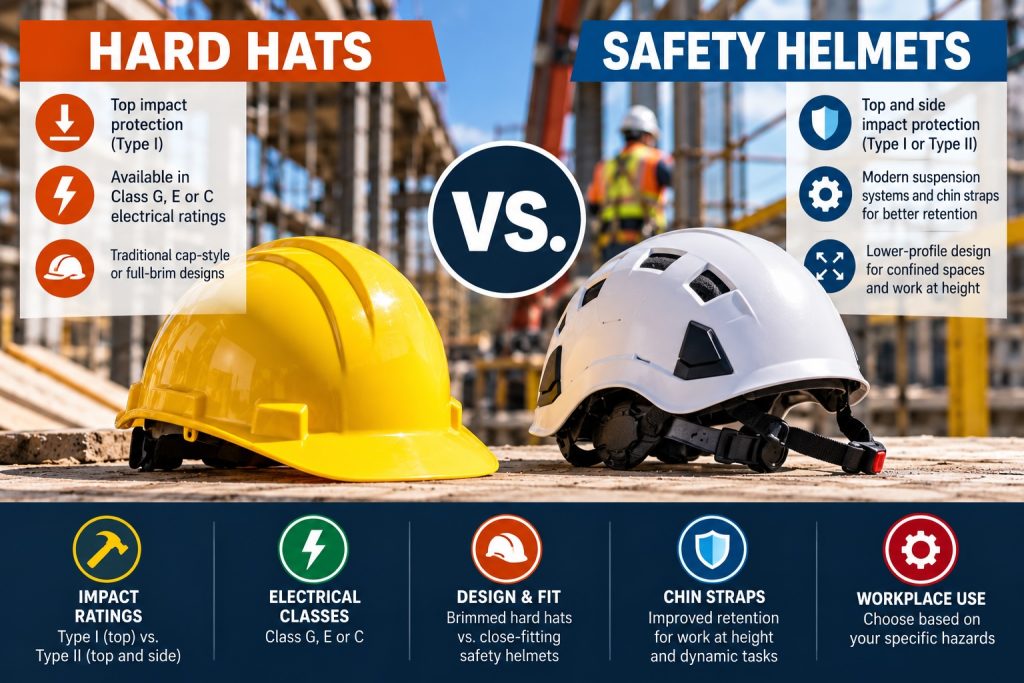
Safety glasses, goggles, face shields, helmets, hearing protection, protective suits, and other PPE may be required simultaneously.

Evaluate the Complete PPE Ensemble

OSHA prohibits conditions that interfere with the face-to-facepiece seal or valve function.

Safety glasses or headgear should not break the seal of a tight-fitting respirator.

The PPE hazard assessment should therefore evaluate equipment compatibility rather than selecting each item separately.

Test Equipment Under Real Working Conditions

A combination that appears acceptable during classroom training may become uncomfortable or unstable during bending, climbing, lifting, or hot work.

Workers should practice using the complete PPE ensemble before entering hazardous environments.

Mistake #14: Removing the Respirator Inside the Hazard Area

Discomfort can tempt employees to briefly remove a respirator to wipe sweat, communicate, adjust equipment, or catch their breath.

In a contaminated environment, even a brief removal can cause exposure.

Workers should leave the hazardous area according to established procedures before removing or adjusting respiratory protection when doing so would compromise protection.

If respirators regularly become uncomfortable enough that workers feel compelled to remove them, the employer should evaluate fit, workload, environmental heat, respirator type, and other contributing factors.

See Our Safety Services!
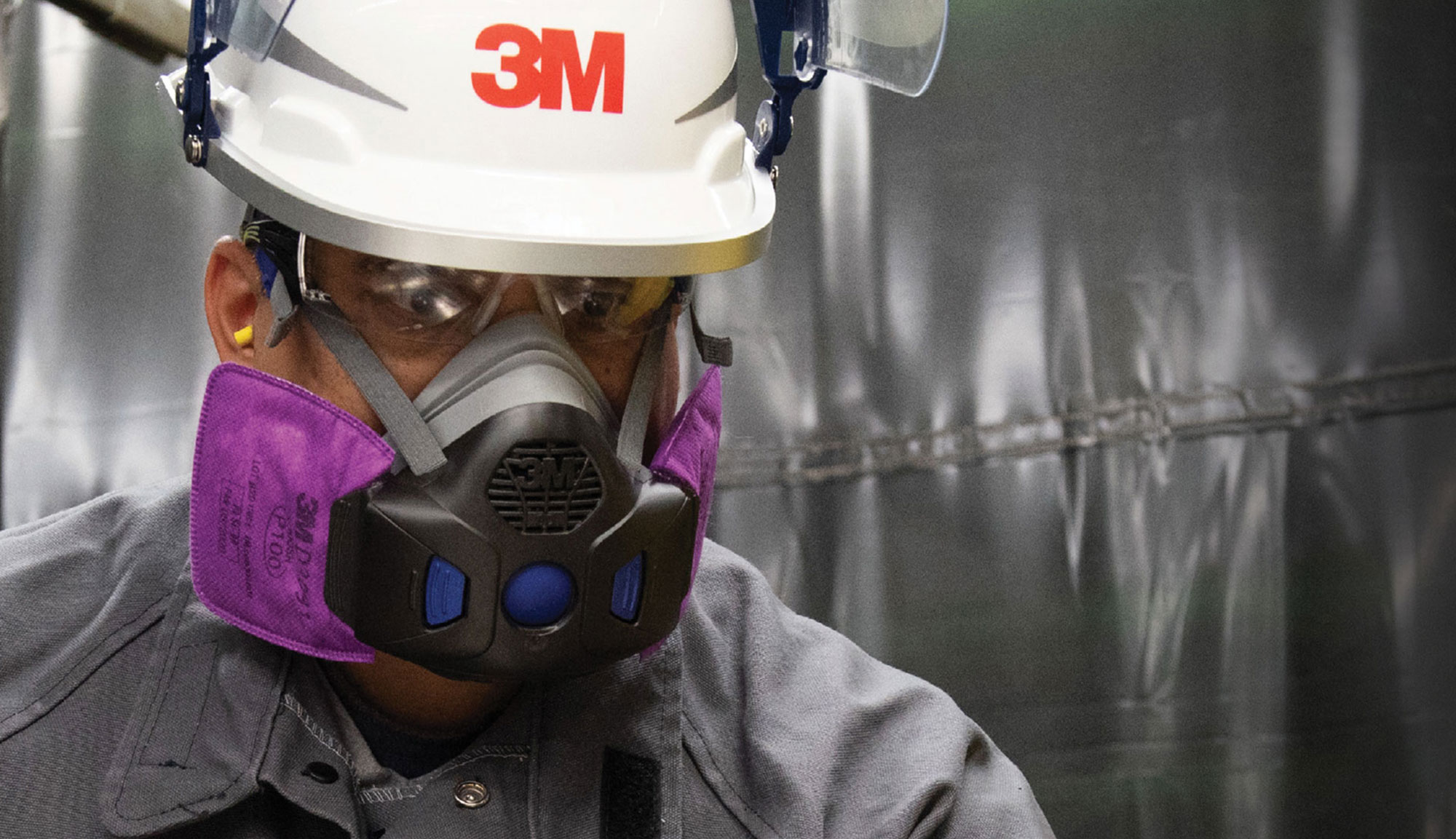
OSHA respiratory standard, 3M SecureClick Respirator, Arbill Respiratory PPE

Mistake #15: Ignoring Heat Stress From Respirator Use

Respiratory protection can add physiological burden, especially in hot industrial environments.

Full facepieces, protective clothing, physical exertion, humidity, and high temperatures can combine to increase heat strain.

Employers should coordinate respiratory protection with heat illness prevention instead of managing the two programs independently.

Work/rest schedules, hydration, engineering controls, cooler recovery areas, and workload adjustments may need to be modified when employees wear respiratory protection for extended periods.

Mistake #16: Providing Training Without Verifying Understanding

A presentation and attendance sheet do not guarantee that employees can use respirators properly.

Workers should demonstrate that they understand how to inspect the respirator, put it on, adjust it, perform the seal check, identify limitations, replace filters or cartridges, and recognize situations requiring them to leave the hazardous area.

Arbill’s EHS safety training can support respiratory protection education along with broader workplace PPE and industrial safety programs.

Hands-on instruction with the respirator workers actually use is particularly important.

Mistake #17: Treating Disposable Respirators as Automatically Simple

Filtering facepiece respirators may look simpler than reusable respirators, but required workplace use still carries important responsibilities.

When an employer requires a tight-fitting filtering facepiece respirator under OSHA’s respiratory protection standard, fit testing, medical evaluation, training, and other applicable program requirements can still apply.

Calling equipment “disposable” does not remove the employer’s responsibility to determine whether it is appropriate for the exposure.

Mistake #18: Failing to Reevaluate the Program

Respiratory programs should evolve with workplace conditions.

New substances, equipment, processes, ventilation changes, incident findings, employee feedback, or exposure-monitoring results may indicate that existing respiratory protection is no longer adequate.

Program evaluation should look beyond paperwork.

Observe employees using respirators in the field. Check whether seal checks are actually performed. Review cartridge replacement practices. Confirm that employees understand which respirator belongs with each task.

A program that exists only on paper can leave workers exposed despite technically complete documentation.

Building a Stronger Respiratory Protection Program

A reliable respiratory protection program follows a connected process.

Start by identifying airborne hazards and measuring exposure where necessary. Determine whether engineering and work-practice controls can adequately reduce exposure before relying on respirators.

When respiratory protection remains necessary, select a NIOSH-approved respirator appropriate for the contaminant and concentration.

Complete required medical evaluations, provide appropriate fit testing, train employees, establish cartridge change schedules where required, and ensure workers perform seal checks every time they don tight-fitting equipment.

Inspection, cleaning, storage, replacement, and field supervision should support those steps.

Respiratory protection works only when the entire system is maintained.

Conclusion

Respirators can provide critical protection against airborne workplace hazards, but small mistakes can undermine their effectiveness.

Skipping fit testing can leave workers in facepieces that never sealed correctly. Using the wrong respirator can expose employees to contaminants the equipment cannot control. Facial hair, damaged components, skipped seal checks, incompatible PPE, or poor storage can allow contaminated air into the breathing zone.

Cartridge management is equally important. Gas and vapor cartridges need objective change schedules or appropriate end-of-service-life indicators rather than waiting for workers to smell a contaminant.

A strong program therefore combines hazard assessment, proper selection, medical evaluation, fit testing, user seal checks, training, maintenance, inspection, change schedules, and periodic evaluation.

Respirators should never provide only the appearance of protection.

When each element of the program works together, employees can enter hazardous environments with respiratory protection that has been properly selected, tested, maintained, and verified for the job.

Request a Safety Assessment

Recent Posts

Workplace Safety Programs
How to Improve Safety Culture in Industrial Workplaces

How to Improve Safety Culture in Industrial Workplaces

Essential Guide to Preventing Workplace Eye Injuries
Workplace Eye Injuries: Causes, Prevention, and PPE Solutions

Workplace Eye Injuries: Causes, Prevention, and PPE Solutions

First Aid SmartCompliance
How Often Should First Aid Kits Be Inspected and Restocked?

How Often Should First Aid Kits Be Inspected and Restocked?

How to Implement Lockout Tagout Procedures in Manufacturing
Lockout/Tagout Best Practices for Manufacturing Facilities

Lockout/Tagout Best Practices for Manufacturing Facilities

Safety Glasses Side Sheilds
How to Select the Best Safety Glasses for Different Job Sites

How to Select the Best Safety Glasses for Different Job Sites

  • Previous ProjectHow to Select the Best Safety Glasses for Different Job Sites

  • Next ProjectHow Heat Stress Affects Workers and Ways to Prevent It

CUSTOMER SERVICE

800-523-5367

CONTACT US

Complete the short form below and an Arbill representative will get back to you within 24 hours.
* Required Fields

    ARBILL RESPECTS YOUR PRIVACY AND YOUR INFORMATION: By submitting the form above you agree to receiving emails from Arbill. Your submitted information is NEVER shared. You may unsubscribe at any time via the "unsubscribe" link in our emails. You can view our Privacy Policy HERE.