
Most industrial facilities think they have hydration covered: a water cooler, cases of bottled water, and reminders in toolbox talks. Still, workers experience heat-related symptoms and productivity drops that a stronger hydration strategy could have prevented.

The gap between having water available and having a real hydration program is wider than most safety leaders realize. Understanding that gap is the first step toward closing it.

Why Water Alone Is Not Enough

The physiological demands of industrial work in hot environments create a hydration challenge that water alone cannot fully address. When workers sweat heavily, they lose more than fluid. They lose electrolytes, including sodium, potassium, and magnesium, which are essential for muscle function, neural transmission, and thermoregulation. Replacing lost fluid with only water, without replacing electrolytes, can cause hyponatremia, a condition in which blood sodium drops too low, producing symptoms that are even more serious than those of mild dehydration.

Workers who rely on high-sugar sports drinks face a different problem. The sugar load produces an initial energy response followed by a crash, leaving workers in a worse metabolic state than before.Research shows that a 3 to 4 percent decrease in hydration can result in a 25 to 50 percent decline in performance, and even a 1 percent drop has been linked to a 12 percent decrease in productivity. When the replenishment option workers reach for spikes, then crash blood sugar, performance, and safety still decline. The beverage matters as much as the access to it.

The Problem With Reactive Hydration

One of the most persistent myths in workplace hydration is that thirst is a reliable signal for when workers need to drink. By the time a worker feels thirsty, they are already dehydrated at a level that impairs performance. Research shows that 3 percent dehydration slows reaction time to the equivalent of a 0.08 blood alcohol content, meaning a worker waiting until they feel thirsty is already compromised in decision-making and physical tasks.

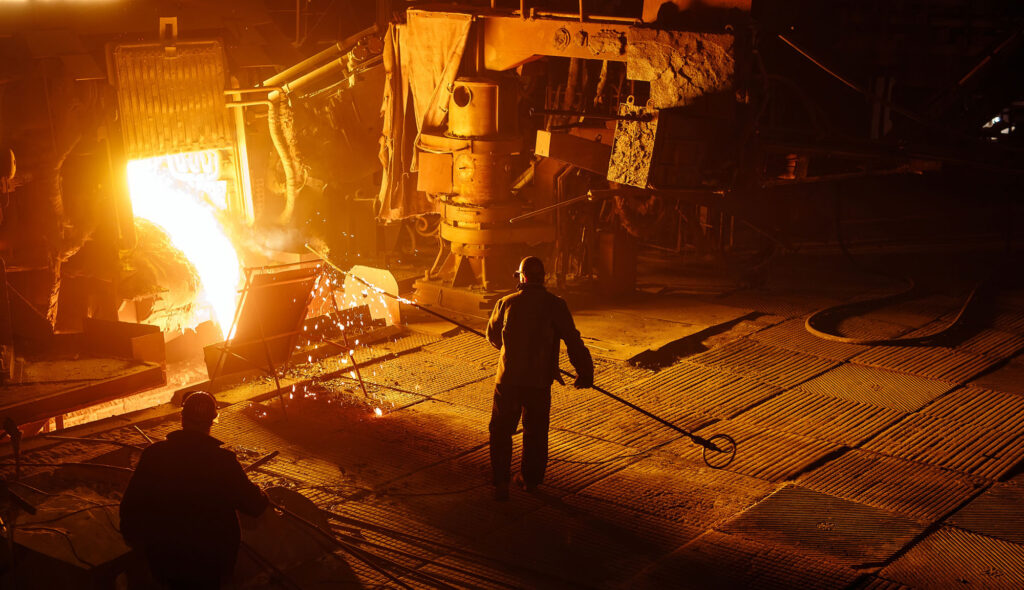
This matters enormously in environments where fine motor control, situational awareness, and physical coordination are constant demands. A worker in a steel foundry, on a construction site, or operating powered industrial equipment who is running while even slightly dehydrated has narrower safety margins than they appear to have. The resulting incidents are rarely labeled as hydration-related. They show up as trips, equipment errors, lapses in judgment, and near misses that few people connect to the worker’s fluid intake that morning.

A proactive hydration program builds structured drinking into the work schedule before dehydration occurs, rather than relying on workers to self-regulate when they are focused on production.

What Sword and Shield Were Built to Solve

The reason Sword and Shield exists as a hydration product is rooted directly in the industrial workplace. Foundries, steel mills, and other high-heat environments were generating unexplained injuries, headaches, and productivity problems with a common root cause: workers were chronically dehydrated, and the available options were either insufficient or counterproductive.

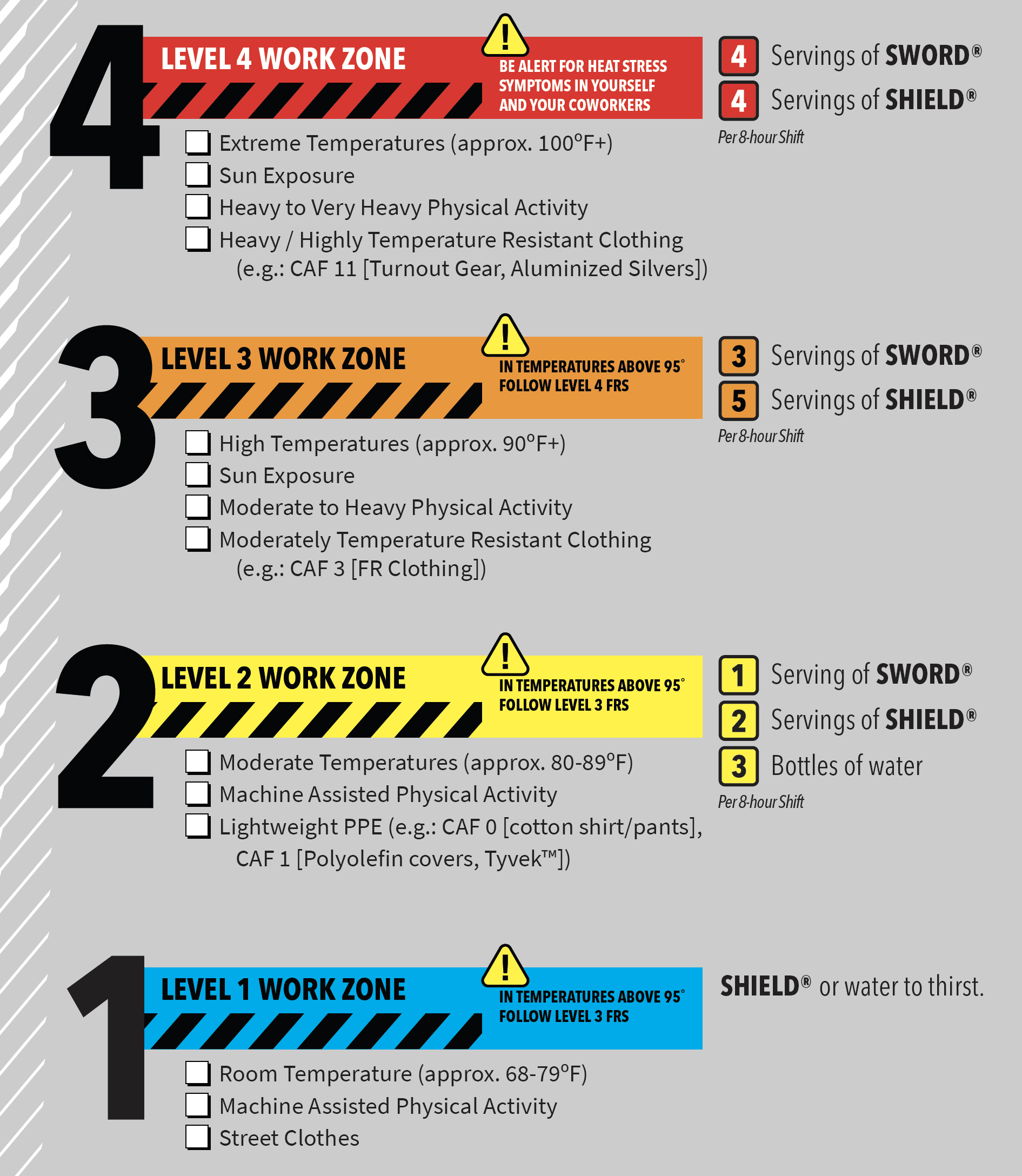
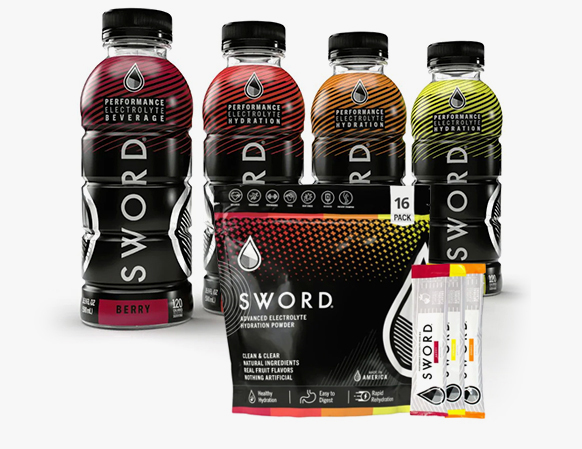
Sword is formulated at an IV level of electrolyte and fluid replacement, designed for workers facing the highest thermal loads, including those wearing multiple layers of PPE, working long shifts in extreme heat, or returning from heavy exertion. It replenishes what the body loses at the cellular level rather than simply topping off fluid volume. The shield is calibrated at a standard electrolyte replacement level, appropriate for workers in moderate heat conditions who need consistent replenishment throughout a shift without the sugar load of conventional sports drinks.

Both products are lightly flavored and clean-tasting by design, because a hydration product workers find unpleasant will not be used consistently. Adoption rates matter as much as formulation, and Sword and Shield were designed with that reality in mind.
Get Sword & Shield
Sword Performance Hydration Suggestions, Sword Performance, Shield, PPE, Hydration, Electrolyte Replenishment, Arbill Program for Hydration

What a Real Hydration Program Requires

Beyond the product, an effective workplace hydration program requires structural elements that most facilities have not implemented.

Scheduled hydration, not optional hydration. Workers in high-heat environments should drink on a schedule tied to their activity level and temperature, rather than waiting for thirst or a break. OSHA’s guidance recommends approximately one cup of water every fifteen to twenty minutes for workers in hot conditions, and supervisors must actively support that cadence rather than leaving it to individual judgment.

Accessibility at the point of work. A water cooler at the far end of the building is inaccessible to a worker running hot equipment in the middle of the production floor. Hydration stations need to be positioned where workers can reach them without interrupting workflow, and they need to contain the right product, not whatever is cheapest to stock.

PPE-adjusted hydration planning. Workers wearing flame-resistant clothing, chemical suits, or multiple protective layers experience significantly higher thermal load than workers in standard workwear. Their hydration requirements are higher, and the window for heat stress is shorter. A program that applies the same standard to all workers regardless of PPE requirements ignores the actual risk distribution on the floor.

Supervisor training on recognition and intervention. Even the best hydration program cannot replace supervisors who know the early signs of heat strain and understand that a worker who seems irritable, slowed, or unusually fatigued may be dehydrated rather than unengaged.

What to Do Now

Safety and operations leaders can take concrete steps before the hottest weeks of the year to build a hydration program that actually protects workers:

  • Audit hydration station locations. Walk every high-heat work area in your facility and confirm that cool water and electrolyte products are accessible at the point of work, not just in break rooms or at the end of production lines.
  • Identify workers with elevated hydration needs. Map every role that requires flame-resistant clothing, chemical suits, or multiple protective layers. Those workers carry a higher thermal load and need a hydration schedule that reflects that, not the same standard applied to everyone else.
  • Replace high-sugar drinks in your hydration program. If your current program relies on conventional sports drinks, consider whether switching to electrolyte-formulated products like Sword or Shield would better support worker performance and recovery throughout the shift.
  • Build hydration into the shift schedule. Work with supervisors to establish scheduled water breaks tied to activity level and ambient temperature. OSHA recommends approximately one cup of fluid every fifteen to twenty minutes for workers in hot conditions. That cadence needs active supervisor support, not individual worker discretion.
  • Train supervisors on dehydration warning signs. Brief every supervisor who oversees workers in hot environments on the early behavioral signs of dehydration: slowed reaction time, irritability, lapses in coordination, and unusual fatigue. Early intervention prevents the progression from mild dehydration to a serious heat incident.
Let’s Talk About Hydration

Making the Program Work Before Summer Peaks

The time to establish a hydration program structure is before the hottest weeks of the year arrive. By the time a facility is managing its first heat-related incident of the season, the window for prevention has already passed. Arbill works with industrial facilities to build hydration programs that account for actual thermal conditions, PPE requirements, and shift demands before summer demands it. Safer. Every Day.

Frequently Asked Questions

What is a workplace hydration program? 

A workplace hydration program is a structured system that ensures workers maintain adequate fluid and electrolyte levels throughout their shift. It includes scheduled drinking intervals, properly formulated hydration products, accessible hydration stations at the point of work, and supervisor oversight, particularly in high-heat or PPE-intensive environments.

Why is water not enough for industrial workers? 

Heavy sweating depletes electrolytes, including sodium, potassium, and magnesium, along with fluid. Replacing fluid without replacing electrolytes can cause hyponatremia, a condition more serious than dehydration. Workers in hot environments need electrolyte-formulated products like Sword and Shield rather than plain water or high-sugar sports drinks.

How often should workers drink in hot environments? 

OSHA recommends approximately one cup of fluid every fifteen to twenty minutes for workers in hot conditions. Workers should drink on a scheduled basis rather than waiting until they feel thirsty, since thirst is not a reliable early indicator of dehydration.

What is Sword and Shield hydration? 

Sword and Shield are electrolyte hydration products formulated specifically for industrial and high-heat workplace environments. Sword is calibrated at an IV level of electrolyte replacement for workers under the heaviest thermal loads. Shield is formulated at a standard electrolyte replacement level for workers in moderate heat conditions. Both are lightly flavored and designed for consistent all-shift use.

Sword Hydration Products
Let’s Talk About Heat Safety

Recent Posts

Heatstress and Hydration Safety
What to Look for in a Workplace Hydration Program (And Why Most Fall Short)

What to Look for in a Workplace Hydration Program (And Why Most Fall Short)

Heat Stress Prevention: How to Protect Workers This Summer

Heat Stress Prevention: How to Protect Workers This Summer

National Safety Month
National Safety Month 2026: A Practical Guide for EHS Leaders

National Safety Month 2026: A Practical Guide for EHS Leaders

Worker with Fall Protection Equipment
Fall Protection on Rigs and Elevated Platforms: The Compliance Standards That Can’t Be Cut With the Budget

Fall Protection on Rigs and Elevated Platforms: The Compliance Standards That Can’t Be Cut With the Budget

Worker Use Portable Gas Monitors Before Entering Confined Spaces
Gas Detection in the Field: What Your Oilfield Workers Need to Know Before Entering Any Confined Space

Gas Detection in the Field: What Your Oilfield Workers Need to Know Before Entering Any Confined Space