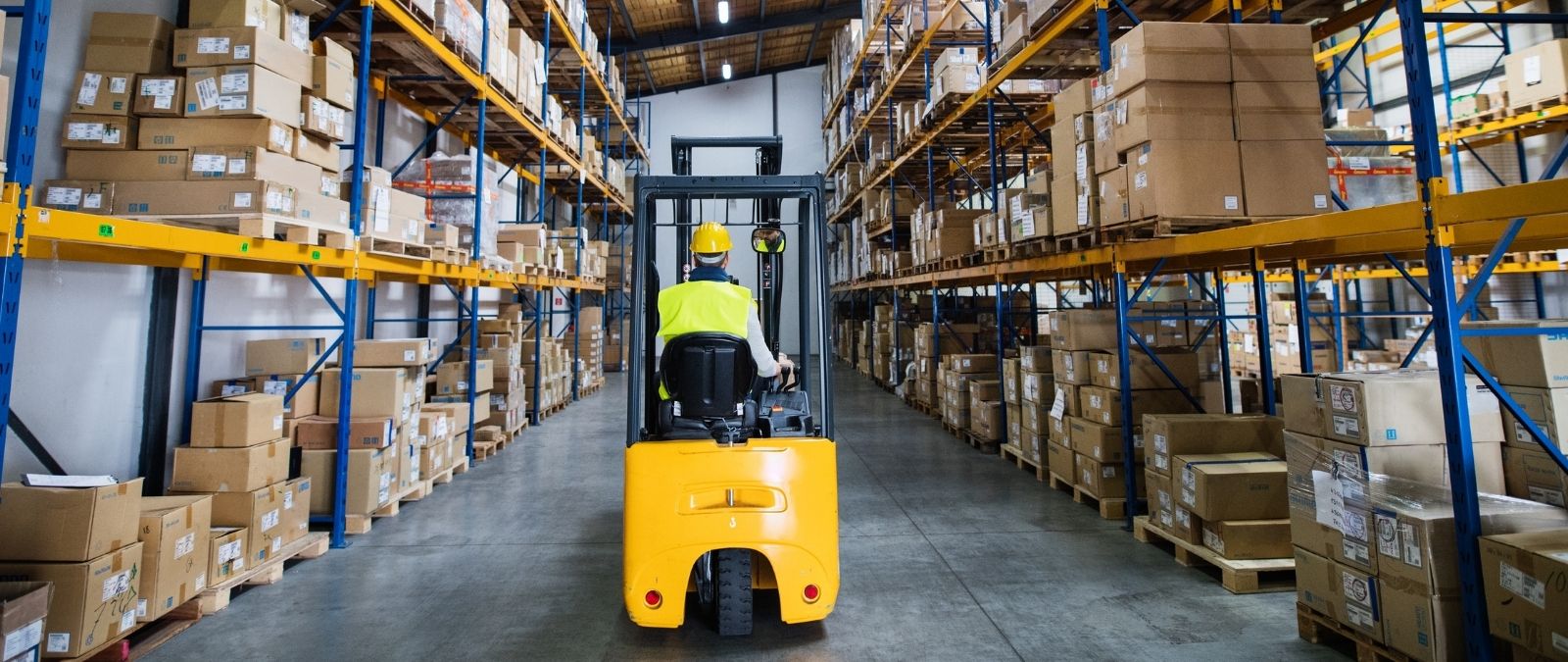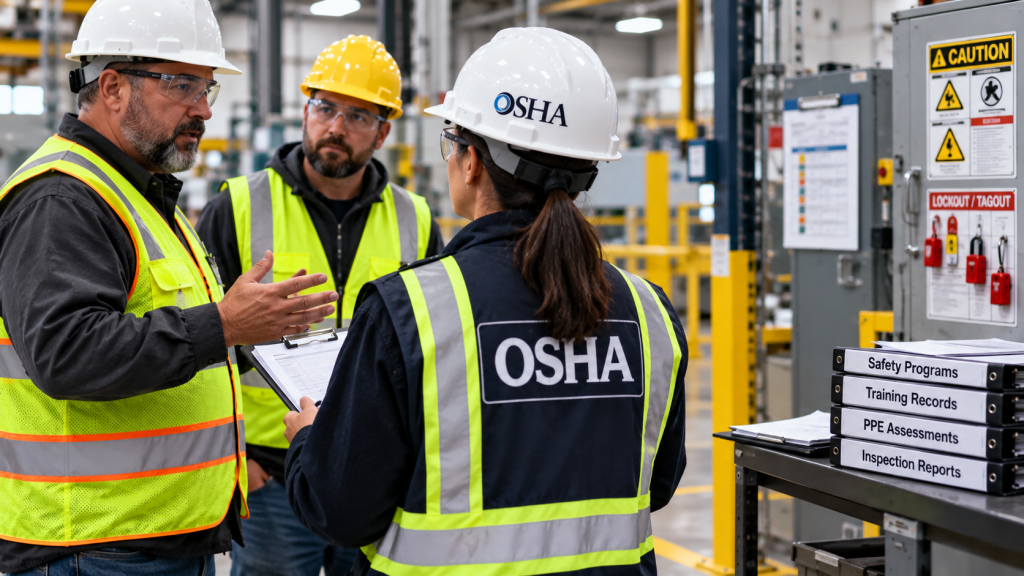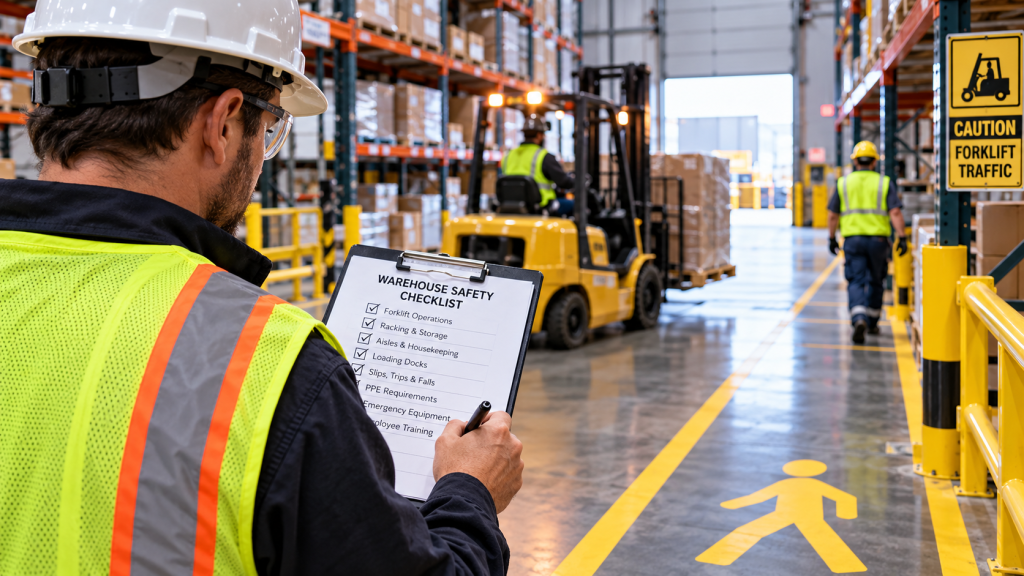
National Forklift Safety Day on June 9, 2026, spotlights the need for focused forklift operator training and safe equipment practices. Now in its 13th year, the Industrial Truck Association’s initiative reminds all industries that most forklift incidents are preventable, and prevention costs less than incidents.
For warehouse managers and EHS leaders, the day is most valuable when it prompts a genuinely honest review of where the facility currently stands. A real set of questions that surfaces the gaps before an incident or an OSHA inspection does. These are five every warehouse manager should address on June 9.
1. When Was Each Operator Last Evaluated Against Their Actual On-the-Job Performance?
OSHA’s Powered Industrial Truck Standard requires operators to be evaluated on the specific trucks they operate in their actual workplace conditions. A certification card from general training only documents completion and does not fully meet OSHA’s requirements.
An operator with online certification from two years ago who has never been formally observed using a loaded reach truck in your narrow aisles may be trained but not adequately evaluated. OSHA requires refresher training and re-evaluation after any incident, near miss, or observed unsafe behavior, and also when an operator is assigned a different truck type. Many facilities treat these triggers as optional, especially under production pressure. A genuine review of evaluation records, incident history, and equipment assignments will often reveal gaps that documentation reviews alone miss.
2. How Many Near Misses Last Month Went Unreported?
Near-miss reporting is one of the most reliable indicators of forklift program health, and also one of the areas where facilities most consistently deceive themselves. A facility with zero recorded near misses is rarely a facility with zero near misses. It is usually a facility where the culture around reporting has made workers reluctant to document events that did not result in injury.
According to the NSC, for every serious workplace injury, there are approximately 29 minor incidents and over 300 near misses. In forklift-heavy environments, that means dozens of unreported close calls every month. For June 9, ask whether your facility has created conditions in which workers feel safe reporting those events and whether there is a system in place to act on what is reported. Near-miss data only drives change when reporting is treated as a contribution rather than an admission of fault.
3. Are Your Pedestrian-Forklift Separation Controls Still Accurate?
Floor markings fade. Bollards get moved. Temporary storage creates new paths. Traffic patterns shift as operations change. A well-designed separation plan from two years ago may no longer reflect how people and equipment actually move through your facility today.
Walking the floor with staff who work in affected areas every day, rather than reviewing a floor plan in an office, typically reveals the gap between documentation and reality. Pedestrians cut through forklift travel lanes to save time. Operators reverse through areas with obstructed sightlines because product storage has changed around them. These are not simply compliance failures. They result from facilities evolving faster than safety controls are updated. Thirty percent of forklift accidents occur in warehouses, and pedestrian interactions account for a disproportionate share of serious incidents. The separation between people and equipment is the most important physical control on the floor and deserves a regular review.
4. Does Pre-Shift Inspection Actually Happen Every Shift?
OSHA requires pre-shift inspections covering brakes, steering, controls, warning devices, tires, and other safety-critical components. If defects are found that affect safety, the forklift must be taken out of service until repaired. In many facilities, there is a meaningful gap between documented inspections and actual inspections. When forms are completed in the break room before a shift starts, or the same checkboxes are marked daily without the operator leaving the seat, the inspection becomes a paperwork exercise.
Operators who conduct genuine daily inspections and feel empowered to tag out a vehicle without fear of pressure from supervisors form the foundation of a mechanical safety program that actually functions. On June 9, ask whether you could confidently describe what actually happens during pre-shift inspection at your facility, beyond what the forms show.
5. Does Your Protection Program Work When Training and Markings Fall Short?
Training, signage, floor markings, and operator certification all contribute to a safer forklift environment. Every one of them also depends on human consistency, and human consistency is not something any facility can guarantee across every shift, every operator, and every interaction between a forklift and a person on foot.
For National Forklift Safety Day, consider whether your protection program includes a layer that operates independently of human attention when mistakes occur. Proximity sensing technology like TruSense Forklift adds exactly that layer: automatic alerts when a forklift comes within six feet of a pedestrian, triggered in real time regardless of whether the operator noticed the worker or the worker looked up in time. It reinforces foundational safety elements during the lapses in human attention that no training program can fully eliminate.
If reviewing your forklift safety program surfaces gaps in how your facility manages pedestrian-forklift interactions, or if you want to understand what a TruSense pilot looks like in your highest-risk zones, the expertise to help you close those gaps is available. Safer. Every Day.