Managing EHS compliance across one oilfield site is demanding.

Managing it across multiple sites is a different challenge entirely.

Oilfield operators may have drilling sites, service yards, storage areas, maintenance locations, production facilities, and remote field operations spread across different regions. Each location may involve different hazards, different crews, different supervisors, different state requirements, and different levels of documentation maturity.

At the same time, OSHA expectations for worker safety and EPA requirements for environmental compliance do not slow down because operations are spread out. Workers still need proper training, hazard controls, PPE, emergency procedures, and safe work practices. Hazardous materials and waste still need to be identified, stored, documented, transported, and managed correctly.

That is where EHS managed services can make a major difference.

For oilfield operators, managed services provide structured support, specialized expertise, consistent documentation, site-level visibility, and practical safety guidance that internal teams may not have the time or capacity to maintain across every location.

Why Multi-Site Oilfield Compliance Is So Difficult

Oilfield operations are complex because every site has its own conditions.

One site may handle hazardous waste. Another may have confined space risks. Another may involve heavy equipment, elevated work, chemical storage, respiratory exposure, or emergency response needs. Some locations may be remote. Some may have high turnover. Others may rely on rotating crews or contractors.

The uploaded draft highlights this challenge clearly: each site demands consistent safety standards, current documentation, and trained personnel, but maintaining that level of oversight with internal resources alone often falls short.

The problem is not always lack of effort. It is often lack of visibility.

Corporate EHS leaders may create strong policies, but they cannot always see whether those policies are being applied correctly at every site. A report may show training completion, while field behavior tells a different story. A hazardous waste log may look current, while containers at one site are mislabeled or stored incorrectly. A site may have written procedures, but workers may be improvising because conditions changed.

Multi-site compliance requires more than policy distribution. It requires active management.

OSHA and EPA Requirements Must Work Together

Oilfield compliance often involves both worker safety and environmental responsibility.

OSHA focuses on protecting workers. That includes hazard communication, PPE, respiratory protection, emergency response, training, exposure control, confined space safety, fall protection, electrical safety, and safe work practices.

EPA and RCRA requirements focus heavily on how hazardous waste is identified, stored, handled, transported, documented, and disposed of. EPA states that RCRA generator regulations are designed to ensure hazardous waste is properly identified and handled safely to protect human health and the environment.

A common mistake is treating OSHA and EPA compliance as separate programs.

In reality, they overlap every day in oilfield operations. A hazardous waste storage area is not only an environmental concern. It is also a worker exposure concern. A spill is not only a reporting issue. It may also require emergency response, PPE, training, and exposure controls. A waste container is not only a disposal item. It may also create labeling, handling, compatibility, and employee safety questions.

EHS managed services help connect these programs so worker protection and environmental compliance support each other.

What EHS Managed Services Include

EHS managed services provide outside safety and compliance expertise that supports internal teams.

For oilfield operators, this can include safety assessments, compliance monitoring, documentation support, training coordination, program reviews, site visits, hazardous materials oversight, incident support, and practical recommendations that apply across multiple locations.

The uploaded draft describes managed services as a structured way to handle environmental, health, and safety responsibilities through external specialists who support safety assessments, compliance monitoring, training programs, and documentation across sites.

A managed services program may include:

  • Site-specific safety assessments
  • OSHA compliance reviews
  • EPA and hazardous waste program support
  • PPE program evaluation
  • Hazard communication review
  • Training documentation support
  • Emergency response planning
  • Incident and near-miss review
  • Corrective action tracking
  • Contractor safety support
  • Hazardous materials and waste documentation
  • Standardized procedures across locations
  • Support for audits and inspections

Arbill’s EHS managed services can help organizations strengthen safety programs with expert support that extends beyond basic compliance checklists.


Explore Our Solutions!
How Oilfield Operators Stay Compliant Across Multiple Sites

Where Internal EHS Teams Often Get Stretched

Internal EHS teams carry heavy responsibility.

They may be managing inspections, training, incident investigations, environmental records, PPE programs, vendor documentation, corrective actions, leadership reporting, regulatory updates, and worker questions across multiple sites.

When operations expand, the workload grows quickly.

The uploaded draft points out that in-house safety programs often rely on scheduled audits, periodic training, and lagging indicators. These tools matter, but they may not capture real-time conditions workers face in the field.

This is especially true when:

  • Sites are remote
  • Crews rotate between locations
  • Supervisors have different safety experience levels
  • Documentation systems are inconsistent
  • State requirements vary
  • Contractors are involved
  • Hazardous materials are handled differently by site
  • Training records are stored in multiple places
  • Corrective actions are not tracked centrally
  • Near misses are underreported

Managed services help fill these gaps by adding consistent oversight, specialized knowledge, and structured follow-through.

Site-Specific EHS Assessments Reveal Hidden Gaps

A strong managed services program starts with understanding what is actually happening at each site.

That means reviewing more than written policies. It means looking at work practices, physical hazards, PPE use, storage areas, documentation, training records, emergency procedures, and how employees respond to real conditions.

The uploaded draft explains that managed service assessments examine physical hazards, PPE compliance, safety program documentation, training practices, emergency preparedness, incident reporting, near-miss culture, and environmental compliance.

This type of assessment helps identify gaps such as:

  • Procedures that do not match field conditions
  • Missing or outdated training records
  • PPE that does not match exposure
  • Poor hazardous waste labeling
  • Inconsistent container management
  • Weak emergency response procedures
  • Incomplete inspection logs
  • Unclear employee responsibilities
  • Gaps in contractor oversight
  • Unresolved corrective actions

For teams building a stronger baseline, Arbill’s guide on what an EHS assessment includes can help clarify how structured reviews identify risk before it becomes an incident or compliance problem.

Standardization Helps Multi-Site Operators Stay Consistent

Consistency is one of the biggest benefits of EHS managed services.

When each site manages safety and environmental compliance differently, small differences can become major gaps. One site may document hazardous waste correctly. Another may not. One supervisor may hold strong toolbox talks. Another may skip them. One location may track corrective actions. Another may rely on memory.

Managed services help create a common framework across locations.

That does not mean every site receives the exact same checklist. Oilfield sites may have different hazards and state requirements. The goal is to create standardized expectations while allowing site-specific adaptation.

Standardization may include:

  • Common inspection templates
  • Consistent training documentation
  • Standard PPE evaluation methods
  • Centralized corrective action tracking
  • Shared emergency response planning structure
  • Common hazardous waste review process
  • Defined reporting expectations
  • Clear escalation procedures
  • Site-specific add-ons for unique hazards

This makes it easier for leaders to compare performance across locations and identify where support is needed.

As long as people go to work, we have an opportunity to help protect them.

Julie Copeland
Arbill CEO

Julie Copeland Arbill CEO

Embedded Support Improves Floor-Level Visibility

Multi-site operators often struggle with what happens between audits.

A site may look compliant during a scheduled review, but conditions can change quickly. Equipment moves. New workers arrive. Waste streams change. Contractors begin new tasks. A temporary storage area appears. A spill occurs. A supervisor leaves. A crew develops an unsafe shortcut.

EHS managed services can provide embedded or recurring support that brings safety closer to the work.

The uploaded draft notes that embedded specialists observe tasks in real time, coach workers in the moment, respond to near misses quickly, and help supervisors close the gap between written safety rules and actual work conditions.

For a related example of how on-site safety support closes the gap between policy and daily operations, Arbill’s article on embedded EHS specialists explains how floor-level observation and coaching can reduce risk in fast-moving operations.

In oilfield environments, that same principle matters. Safety improves when qualified support is close enough to see what workers are actually facing.

Training Must Stay Current Across Every Site

Training is one of the easiest areas to fall behind in a multi-site operation.

Workers may transfer between sites. New hires may start quickly. Contractors may join a project. Supervisors may interpret requirements differently. Some workers may need HAZWOPER-related training, confined space training, hazard communication, PPE training, respiratory protection training, fall protection training, or site-specific emergency response instruction depending on their role.

OSHA’s HAZWOPER standard applies to covered hazardous waste operations and emergency response operations, including certain cleanup operations, treatment, storage, and disposal facility operations, and emergency response operations involving hazardous substance releases.

A managed services program can help confirm:

  • Who needs training
  • Which training applies by role
  • Which records are current
  • Which workers are overdue
  • Which site-specific topics are required
  • Whether training is being applied in the field
  • Whether refresher training is needed
  • Whether contractor training has been verified

Training should not be treated as a spreadsheet exercise. It should prepare workers for the hazards they actually face.

Hazardous Waste Management Needs Central Oversight

Hazardous waste compliance becomes more complicated when oilfield operators manage multiple locations.

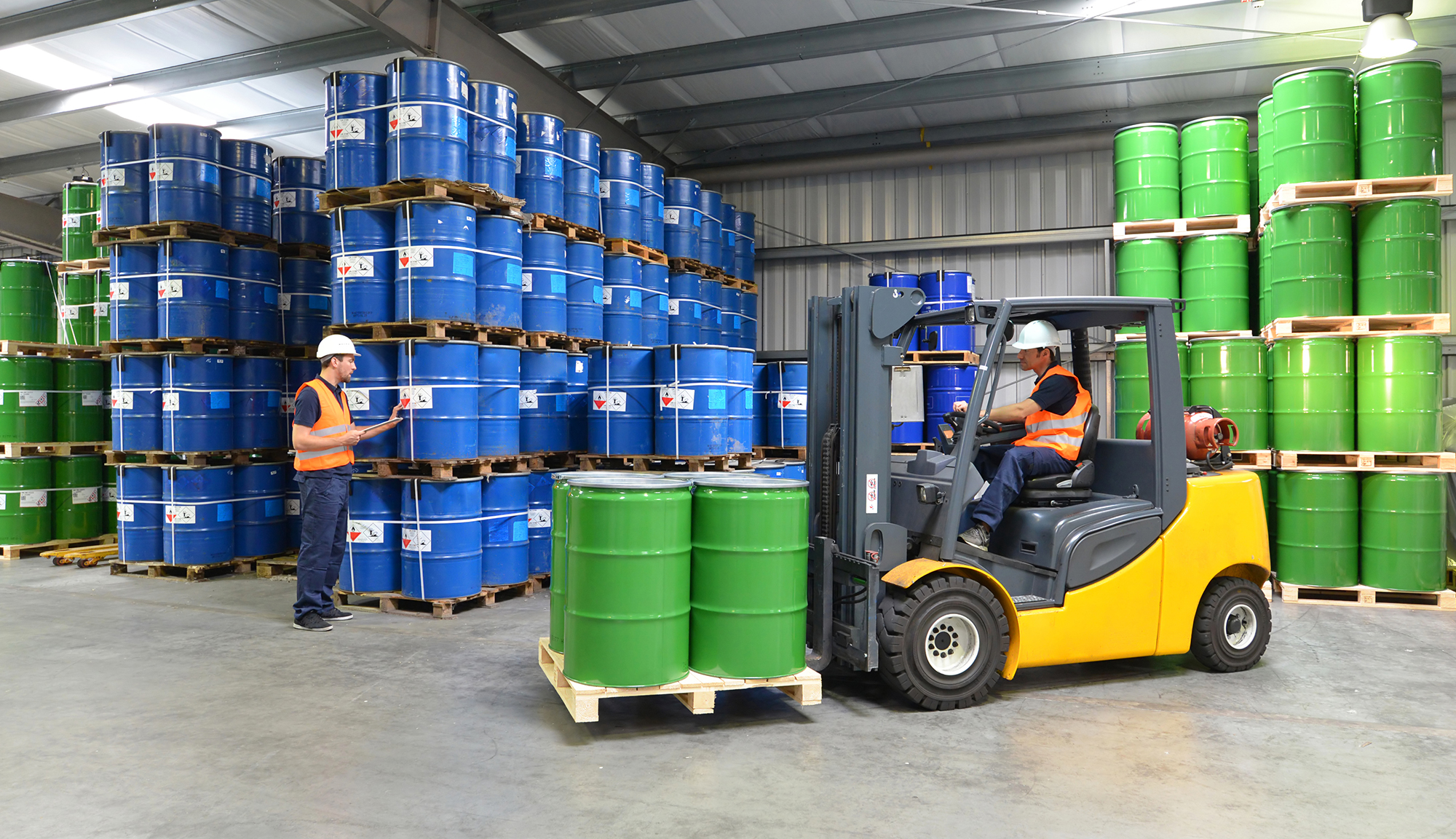
Each site may generate different waste streams. Those waste streams may include used oil, spent solvents, contaminated absorbents, process residues, aerosols, batteries, sludge, corrosive materials, or other regulated waste. Each waste stream must be identified, handled, stored, labeled, documented, and shipped correctly.

The uploaded draft emphasizes that each facility should know what hazardous waste is generated, where it originates, how it is classified, how much accumulates, where it is stored, how containers are labeled, how long waste remains on-site, which employees handle it, which vendor transports it, and which disposal facility receives it.

For more detail on this topic, Arbill’s article on hazardous waste EHS program expectations explains how worker safety, hazardous waste handling, storage, training, emergency planning, and documentation work together.

Managed services help ensure hazardous waste practices are not left to local interpretation alone. They provide a system for review, consistency, and follow-up.

Documentation Must Be Ready Before an Inspection

Documentation is where many multi-site programs break down.

One location may keep paper records in a binder. Another may store files in email. A third may rely on a supervisor’s spreadsheet. When an inspection, audit, incident, or leadership review occurs, the team may struggle to prove what was done.

Managed services help centralize and standardize documentation.

Important records may include:

  • Site assessments
  • Training records
  • PPE evaluations
  • Hazard communication documents
  • SDS access records
  • Waste determinations
  • Container inspection logs
  • Hazardous waste manifests
  • Emergency response plans
  • Incident reports
  • Near-miss reports
  • Corrective actions
  • Contractor safety records
  • Audit findings
  • Follow-up verification

The goal is not paperwork for its own sake. Good documentation helps prove compliance, guide decisions, and show whether corrective actions were completed.

See Our Safety Services!
EHS Managed Safety Solutions

Managed Services Help Track Regulatory Change

Regulatory requirements can change, and multi-site operators need a way to keep up.

Federal OSHA, state plans, EPA, state environmental agencies, and local requirements may all affect how a site operates. A change that affects one location may not affect another. A requirement that applies to one waste stream may not apply to another. A new enforcement priority may increase the importance of documentation in one area.

Managed services help monitor these changes and translate them into action.

That may include updating procedures, revising training, reviewing site practices, changing inspection forms, or helping leaders understand where the operation may have exposure.

Safety leaders can also use broader planning resources, such as Arbill’s National Safety Month guide for EHS leaders, to structure proactive program reviews and keep safety priorities visible across the organization.

Measuring EHS Performance Across Sites

Multi-site EHS performance should be measured with both lagging and leading indicators.

Lagging indicators show what already happened. These may include recordable injuries, lost-time incidents, spills, citations, claims, and corrective actions after incidents.

Leading indicators help show where risk may be building before an incident occurs.

Useful leading indicators include:

  • Hazards identified
  • Hazards corrected
  • Time to corrective action
  • Near misses reported
  • Training completion by role
  • Open audit findings
  • PPE compliance observations
  • Waste container inspection results
  • Emergency drill completion
  • Repeat findings by site
  • Worker safety suggestions
  • Supervisor follow-up rates

Managed services can help collect, organize, and interpret these metrics so leaders can see where each site stands and where resources should go next.

How EHS Managed Services Support Business Continuity

Compliance is not only about avoiding penalties.

A weak EHS program can disrupt operations. Incidents can stop work. Poor documentation can extend inspections. Environmental issues can trigger cleanup costs. Training gaps can delay job assignments. Missing PPE or unclear procedures can slow production. Serious injuries can damage morale and trust.

Managed services help reduce these disruptions by keeping programs active, current, and organized.

For oilfield operators, that means:

  • Fewer surprises during inspections
  • Better readiness for audits
  • Stronger incident prevention
  • Faster corrective action tracking
  • More consistent training
  • Better hazardous waste oversight
  • Improved worker confidence
  • Clearer leadership visibility
  • Scalable support as operations grow

The value is not just compliance support. It is operational stability.

Building a Managed Services Program That Fits Oilfield Operations

The best EHS managed services program should match the operator’s actual footprint.

Start by mapping all sites, operations, hazards, waste streams, and regulatory obligations. Identify which locations have the highest risk, weakest documentation, most frequent turnover, or most complex environmental requirements.

Then define the scope of support.

That may include:

  • Full program management
  • Site assessment support
  • Regional EHS coverage
  • Hazardous waste review
  • Training coordination
  • Contractor safety support
  • Emergency response planning
  • Documentation management
  • Audit preparation
  • Corrective action tracking
  • Leadership reporting

The program should also clarify responsibilities. Internal teams still need ownership, but managed services can provide structure, expertise, consistency, and additional capacity.

Conclusion

Multi-site oilfield operations need EHS programs that can keep pace with real field conditions.

OSHA and EPA requirements do not become easier because sites are remote, documentation is scattered, or crews rotate between locations. Workers still need protection. Hazardous waste still needs control. Training still needs to be current. Records still need to be ready. Corrective actions still need follow-through.

EHS managed services help operators close the gap between written expectations and site-level reality.

By combining assessments, compliance monitoring, training support, documentation management, hazardous waste oversight, and field-level guidance, managed services give oilfield operators a stronger way to manage risk across every location.

The result is a program that is more consistent, more visible, and better prepared for inspections, incidents, and daily operations.

For oilfield leaders, the goal is not just to keep up with OSHA and EPA requirements. The goal is to build an EHS system that protects workers, supports environmental responsibility, and scales with the operation.

Request a Safety Assessment

Recent Posts

Material Handling Equipment That Cuts Warehouse Injuries and Insurance Costs
Warehouse Ergonomics: How the Right Material Handling Equipment Reduces Injuries and Insurance Costs

Warehouse Ergonomics: How the Right Material Handling Equipment Reduces Injuries and Insurance Costs

Why OSHA Lockout Tagout Failures Still Cause Serious Injuries in Utilities
Lockout/Tagout in Utilities: Why LOTO Failures Are Still One of the Leading Causes of Serious Injuries

Lockout/Tagout in Utilities: Why LOTO Failures Are Still One of the Leading Causes of Serious Injuries

How to Build a Confined Space Training Program That Meets OSHA Standards and Protects Your Team
Confined Space Entry in Chemical Plants: Building a Program That Satisfies OSHA and Keeps Workers Safe

Confined Space Entry in Chemical Plants: Building a Program That Satisfies OSHA and Keeps Workers Safe

Emergency Response Planning for Data Centers and Why IT and Facilities Teams Must Work Together
Data Center Safety: Why IT and Facilities Teams Need a Coordinated PPE and Emergency Response Plan

Data Center Safety: Why IT and Facilities Teams Need a Coordinated PPE and Emergency Response Plan

The Real Cost of Recordable Incidents in Oil & Gas
The True Cost of a Recordable Incident in Oil & Gas — and How Managed Safety Services Change the Math

The True Cost of a Recordable Incident in Oil & Gas — and How Managed Safety Services Change the Math