OSHA’s most frequently cited standards remain remarkably consistent from year to year. The industries, facilities, and employers involved may change, but inspectors continue finding many of the same underlying weaknesses: missing safeguards, incomplete written programs, outdated training, poor documentation, unsuitable PPE, and differences between formal procedures and the way work is actually performed.
These citations should not be treated simply as a list of regulatory mistakes. They reveal where safety programs repeatedly break down and where workers continue to face preventable injuries, illnesses, and fatalities.
According to OSHA’s official Fiscal Year 2025 results, the Top 10 include standards from both construction and general industry. Employers therefore need to understand which regulatory framework applies to each activity, especially when manufacturing, maintenance, installation, repair, and construction work occur at the same site.
Arbill’s guide to OSHA 1910 versus 1926 in heavy manufacturing explains why a facility may operate primarily under general industry rules while certain construction activities fall under a different set of requirements.
The following sections explain OSHA’s current Top 10 and the practical steps employers can take to prevent the hazards behind them.
1. Fall Protection—General Requirements
Fall Protection under 29 CFR 1926.501 remained OSHA’s most frequently cited standard for Fiscal Year 2025. The standard primarily applies to construction activities and requires employers to protect workers who may fall from unprotected sides, edges, roofs, holes, excavations, and other elevated work areas.
Where Fall Protection Programs Break Down
Violations often begin before the employee reaches the elevated work area. Employers may fail to evaluate the walking-working surface, identify the fall distance, select an appropriate system, or provide a suitable anchor point.
Other problems appear when guardrails are incomplete, floor openings are uncovered, personal fall arrest systems are unavailable, or workers disconnect their equipment to move around an obstruction.
Facilities may also overlook temporary construction work performed by maintenance employees or contractors. Roofing repairs, equipment installation, structural modifications, and platform construction can trigger requirements that differ from normal manufacturing operations.
How to Avoid Fall Protection Citations
Evaluate each elevated task before work begins. Determine whether guardrails, safety nets, personal fall arrest systems, travel-restraint systems, or another approved method provides the most appropriate control.
Employees should know how to inspect harnesses, connectors, lanyards, self-retracting lifelines, and anchor points. The program must also address fall clearance, swing-fall exposure, equipment compatibility, and rescue after a fall.
Arbill’s OSHA Stand-Down guidance for manufacturing employers provides a practical framework for reviewing fall hazards, involving workers, and reinforcing prevention before an incident occurs.
2. Hazard Communication
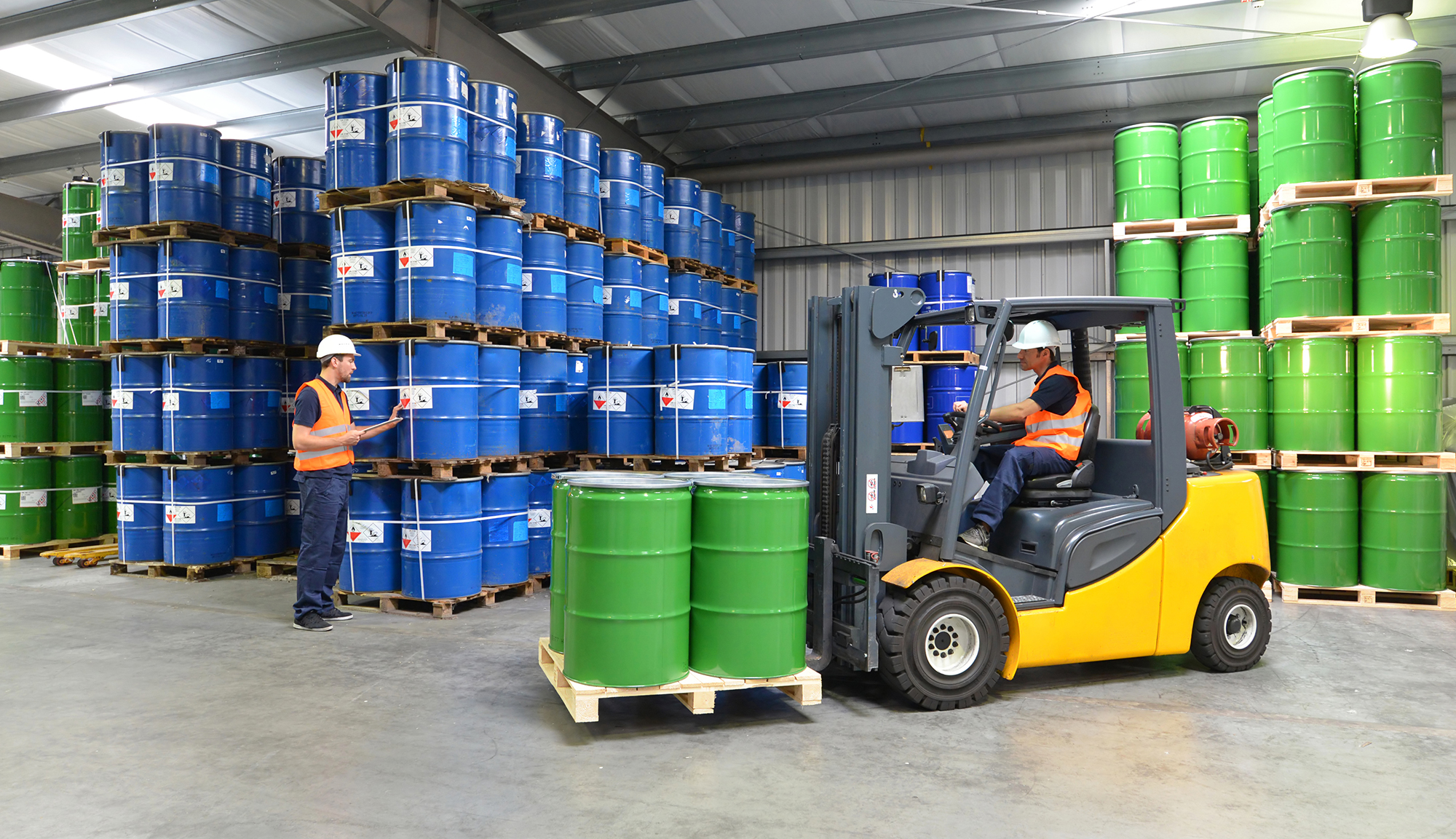
Hazard Communication under 29 CFR 1910.1200 ranked second. The standard requires employers to communicate chemical hazards through a written program, container labels, Safety Data Sheets, chemical inventories, and employee training.
Where HazCom Programs Break Down
Many facilities have a written program but fail to keep it aligned with the chemicals actually present. New products may enter through purchasing, maintenance, contractors, laboratories, or production without being added to the chemical inventory.
Secondary containers are another frequent problem. Solvents, cleaners, coatings, oils, and process materials may be transferred into bottles or portable containers without clear identification.
SDS access can also become unreliable during night shifts, emergencies, network outages, or work performed away from the main office. Training may explain GHS pictograms generally without addressing the chemicals employees handle during their actual jobs.
How to Avoid Hazard Communication Citations
Maintain a current inventory that matches product identifiers on labels and Safety Data Sheets. Establish a purchasing or approval process so EHS personnel can review new chemicals before use.
Inspect secondary containers and process areas routinely. Workers should know where SDSs are stored, how to interpret key sections, which PPE is required, and what to do during a spill or exposure.
Chemical and petrochemical operations can find broader guidance in Arbill’s OSHA compliance guide for chemical and petrochemical plants, which connects hazard communication with process safety, PPE, mechanical integrity, emergency planning, and contractor coordination.