ANSI and OSHA both influence workplace safety in the United States, but they serve very different functions.
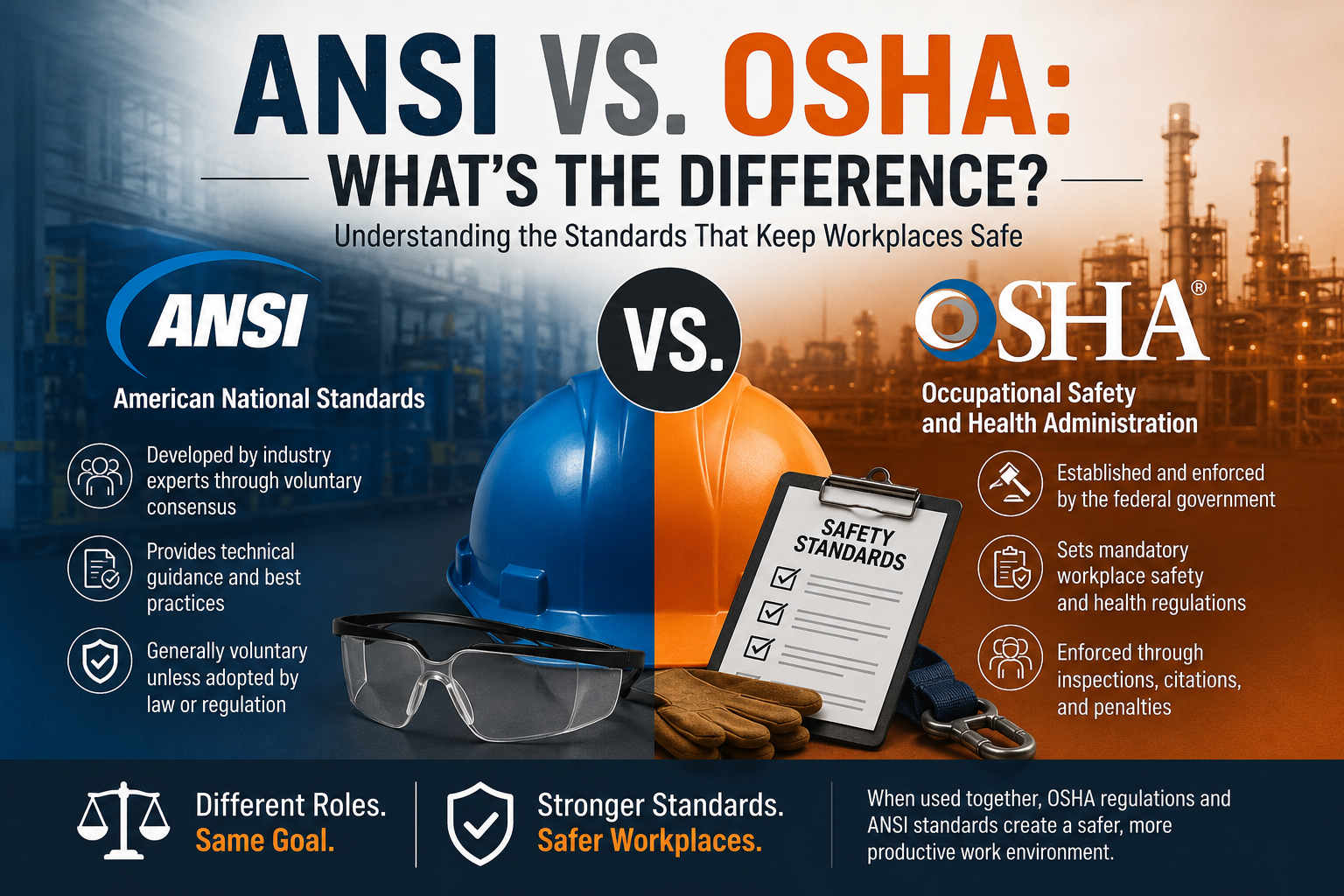
OSHA is a federal government agency with the authority to establish workplace safety and health regulations, conduct inspections, issue citations, and impose penalties. ANSI is a private nonprofit organization that coordinates and oversees the voluntary consensus standards system in the United States.
The simplest distinction is that applicable OSHA standards are legally enforceable, while American National Standards are generally voluntary unless they are incorporated into a law, regulation, contract, code, or other binding requirement.
That distinction sounds straightforward, but employers often encounter more complicated questions. An OSHA regulation may reference a specific ANSI standard. A newer ANSI edition may contain requirements that differ from the edition named by OSHA. An ANSI standard may also reflect accepted industry practice even when OSHA has not incorporated it directly.
Understanding the relationship helps employers select suitable PPE, develop accurate procedures, train workers effectively, and determine which safety requirements apply to their operations.
For organizations navigating workplace standards, Arbill provides safety assessments, EHS services, training, PPE, and practical compliance support built around real workplace hazards.
What Is OSHA?
The Occupational Safety and Health Administration is part of the United States Department of Labor. It was created under the Occupational Safety and Health Act of 1970 to help ensure safe and healthful working conditions.
OSHA Creates and Enforces Workplace Requirements
OSHA develops standards addressing workplace hazards across general industry, construction, maritime operations, and certain agricultural activities.
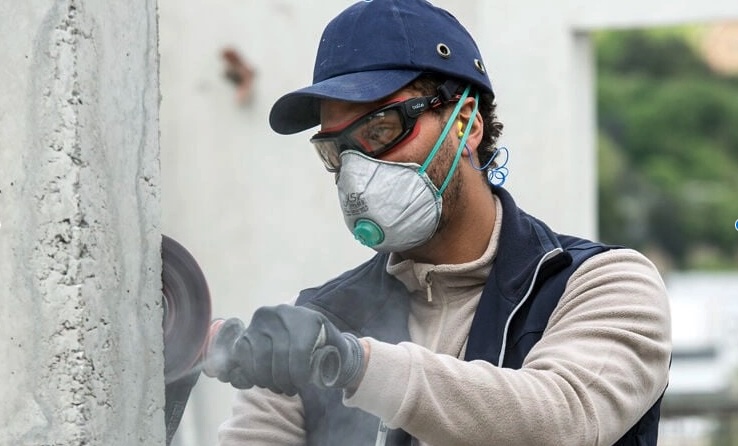
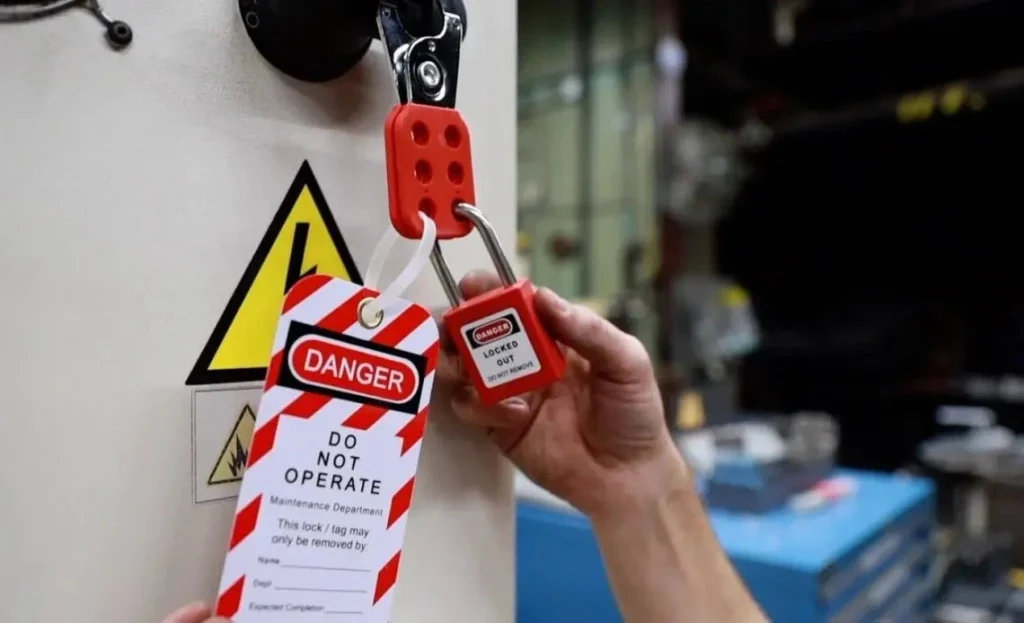
Its requirements cover subjects such as machine guarding, hazardous-energy control, respiratory protection, fall protection, electrical safety, hazard communication, confined spaces, powered industrial trucks, and personal protective equipment.
Employers covered by the OSH Act must comply with the standards applicable to their operations.
OSHA can inspect workplaces, review records, interview employees, document hazards, issue citations, establish correction deadlines, and assess financial penalties when violations are found.
The agency also provides guidance, consultation resources, training materials, interpretations, and compliance assistance.
OSHA Standards Have the Force of Law
An applicable OSHA standard is mandatory. Employers cannot treat it as a recommendation simply because they prefer another approach.
The exact requirement depends on factors such as the industry, work activity, equipment, hazard, and employee exposure.
A manufacturing facility may generally follow 29 CFR Part 1910, which covers general industry. However, construction, alteration, renovation, or major installation activities performed at the same facility may fall under Part 1926.
Arbill’s guide to OSHA 1910 versus 1926 in heavy manufacturing explains why the work being performed—not simply the employer’s industry—helps determine which standards apply.
The General Duty Clause
OSHA standards cannot describe every possible workplace hazard. Section 5(a)(1) of the OSH Act, commonly called the General Duty Clause, requires employers to provide workplaces free from recognized serious hazards.
The General Duty Clause may be relevant when a serious recognized hazard exists but no specific OSHA standard addresses it directly.
To support a General Duty Clause case, OSHA generally must establish that the hazard was recognized and that feasible methods were available to eliminate or materially reduce it.
Consensus standards, industry guidance, manufacturer instructions, incident history, and employer knowledge may help demonstrate that a hazard was recognized.
What Is ANSI?
The American National Standards Institute is a private nonprofit organization that administers and coordinates the voluntary standards and conformity-assessment system in the United States.
ANSI Is Not OSHA
ANSI is not a federal regulator. It does not conduct OSHA-style workplace inspections, issue government citations, or assess federal safety penalties.
It also does not personally develop most documents commonly called “ANSI standards.”
Instead, ANSI accredits standards-developing organizations and approves standards as American National Standards when the development process meets ANSI’s requirements for openness, balance, due process, consensus, and appeals.
Organizations such as ASSP, ISEA, NFPA, ASTM International, and other accredited developers may create technical standards that later receive the American National Standard designation.
The American National Standards Institute explains that American National Standards are developed through voluntary consensus processes and are not automatically laws.
ANSI Standards Provide Technical Detail
OSHA standards often establish baseline regulatory requirements. Consensus standards may provide more detailed technical guidance for products, testing methods, safety systems, signs, equipment, training, or program management.
Examples include standards covering occupational eye and face protection, industrial head protection, fall protection systems, safety signs, first aid supplies, and protective footwear.
These documents may describe product-performance criteria, markings, selection methods, inspection practices, testing procedures, and recommended program elements.
Because consensus standards are developed with input from manufacturers, users, technical specialists, government representatives, labor groups, and other stakeholders, they can address industry practices and emerging technologies in greater technical detail.
Voluntary Does Not Mean Unimportant
A voluntary standard is not legally enforceable merely because it has an ANSI designation.
However, employers, customers, contractors, insurers, purchasing agreements, and local authorities may require compliance with a particular standard. A consensus standard may also provide a recognized method for selecting safe equipment or controlling a hazard.
Following an appropriate current standard can help employers strengthen protection beyond the regulatory minimum. Ignoring a relevant standard without evaluating the underlying hazard can create operational, contractual, or liability concerns.