Personal protective equipment has traditionally been passive.

A hard hat protects against impact. Safety glasses shield the eyes. A harness arrests a fall. Gloves protect hands from cuts, heat, abrasion, or chemicals.

Smart PPE adds another layer.

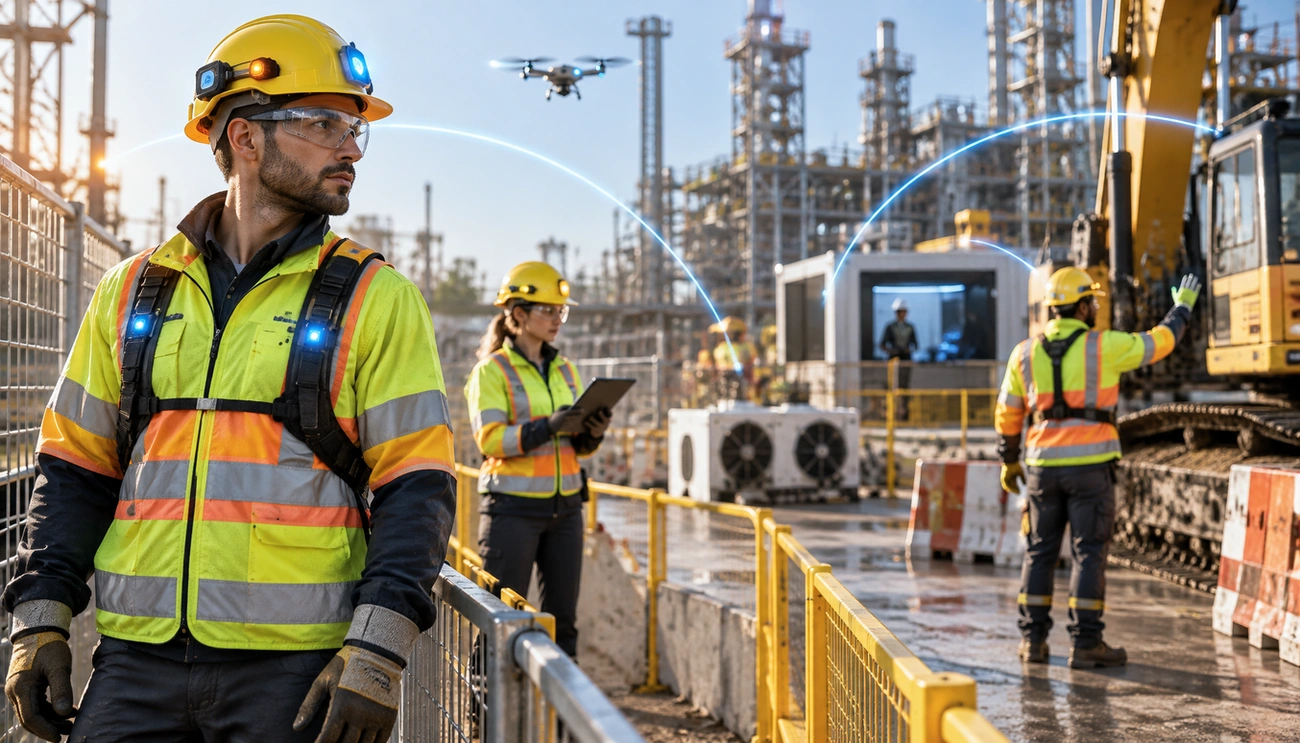
By combining protective equipment with sensors, connectivity, alerts, and software, employers can receive information about workplace conditions while the work is still happening. That can include heat exposure, worker location, gas concentrations, proximity to moving equipment, impact events, falls, or repetitive movement patterns.

The result is a shift from safety systems that mainly document incidents after they happen toward systems that can identify certain hazards in real time.

However, smart PPE does not replace traditional safety controls.

Its real value comes from helping workers and supervisors recognize danger earlier, respond faster, and use workplace data to identify patterns that might otherwise remain hidden.

What Is Smart PPE?

Smart PPE is protective equipment that incorporates technology beyond the equipment’s traditional protective function.

A connected hard hat may still provide head protection, but it may also include impact detection or location tracking.

A high-visibility vest may help workers remain visible while also carrying a proximity sensor that warns when a vehicle approaches.

A wearable device may measure heat exposure, motion, or environmental conditions and send alerts to the worker or supervisor.

The protective equipment still has to perform its primary job.

What changes is the addition of information.

The Technology Behind Smart PPE

Most smart PPE systems combine several basic elements.

Sensors collect information from the worker, equipment, or surrounding environment. Wireless connectivity sends that information to another device or safety platform. Software then interprets the data and determines whether an alert or action is needed.

Depending on the system, sensors may monitor:

  • Movement
  • Temperature
  • Gas concentration
  • Impact
  • Location
  • Proximity
  • Biometric information

The technology can be built directly into PPE or connected to equipment workers already use.

Smart PPE Does Not Replace the Hierarchy of Controls

Smart PPE can warn workers that a hazard exists.

It does not necessarily remove the hazard.

A gas detector can alert an employee that dangerous conditions are developing, but it does not repair a ventilation problem.

A proximity sensor can warn a worker that a forklift is approaching, but it does not replace traffic separation or safer facility design.

A wearable heat sensor may indicate rising heat strain, but it does not eliminate excessive process heat.

This distinction matters because PPE remains part of the last line of defense in the hierarchy of controls.

Employers should still look first at elimination, substitution, engineering controls, and safe work practices before relying on PPE.

Smart technology makes PPE more informative. It does not move PPE to the top of the control hierarchy.

Smart PPE Is Moving Safety From Reactive to Proactive

Traditional safety programs often rely heavily on incidents, inspections, near misses, and employee reports.

Those sources remain important, but they often describe something that has already happened.

Smart PPE introduces the possibility of detecting certain conditions earlier.

A proximity device can warn someone before vehicle contact occurs.

A heat-monitoring system can identify increasing heat strain before symptoms become severe.

A fall-detection system can alert a supervisor immediately after an incident instead of relying on another employee discovering the worker.

This ability to act sooner is one of the biggest reasons smart PPE is receiving more attention across industrial workplaces.

Explore Our Solutions!
How Smart PPE Is Saving Lives and Reducing Injuries

Heat Stress Monitoring Is Becoming More Connected

Heat stress can develop gradually.

A worker may become fatigued, dizzy, or dehydrated before recognizing how serious the exposure has become.

Wearable technology can add another source of information.

Depending on the system, devices may monitor factors such as body temperature, heart rate, environmental temperature, or activity level.

When readings move outside established parameters, the worker or supervisor can receive an alert.

Alerts Can Support Earlier Intervention

The purpose of a heat alert is not to replace supervision or employee awareness.

It gives the safety team another opportunity to intervene.

A worker may need water, rest, shade, cooling, or reassignment before conditions become more serious.

This is especially useful in environments where employees move between areas with very different heat conditions.

Arbill’s article on PPE mistakes in hot weather and how to prevent them explains why heat exposure, PPE selection, hydration, and worker comfort should be considered together rather than as separate safety issues.

Gas Detection Can Provide Immediate Warning

Some respiratory hazards are difficult to recognize without instrumentation.

Low oxygen, toxic gases, and certain chemical exposures may not provide a reliable visual or odor warning before conditions become dangerous.

Connected gas-detection equipment can continuously monitor the surrounding atmosphere.

If a threshold is reached, the worker may receive an audible, visual, or vibrating warning.

Some systems can also send information to supervisors or control rooms.

Location Data Can Improve Emergency Response

In large facilities, confined spaces, remote areas, or complex industrial sites, knowing that an alarm occurred may not be enough.

Knowing where it occurred can make the response faster.

A connected device that sends both an alert and the worker’s location may help rescue teams determine where assistance is needed without waiting for someone to report the worker missing.

The technology does not replace confined-space procedures, ventilation, atmospheric testing, or rescue planning.

It can strengthen the communication layer around those controls.

Proximity Detection Is Changing Vehicle Safety

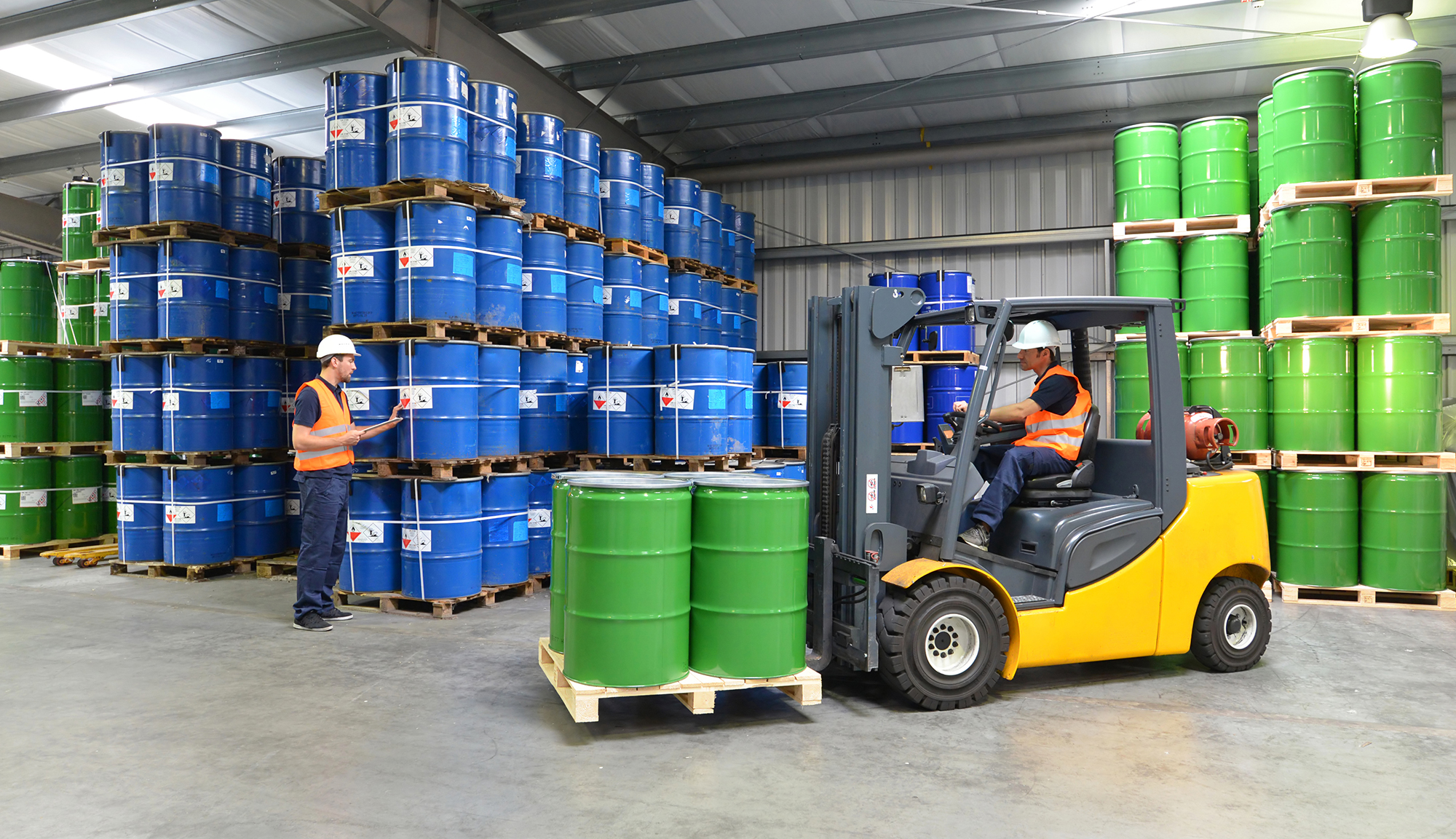
Forklifts, loaders, trucks, and other mobile equipment create serious risks in warehouses, manufacturing plants, loading areas, and industrial yards.

Traditional controls include marked walkways, horns, mirrors, barriers, speed limits, traffic plans, and operator training.

Those controls remain necessary.

Smart proximity technology adds another layer by detecting when pedestrians and vehicles move too close to one another.

Workers may receive a vibration or audible warning, while operators may receive a separate alert.

Real-Time Awareness Can Help in Blind Areas

This can be particularly valuable around:

Blind corners, rack intersections, loading docks, production equipment, temporary storage, and busy pedestrian crossings.

The important advantage is that the alert responds to actual movement instead of relying only on a static sign or painted floor marking.

That becomes useful in facilities where layouts change frequently because of production or storage needs.

”As long as people go to work, we have an opportunity to help protect them.

Julie Copeland
Arbill CEO

Julie Copeland Arbill CEO

Connected PPE Can Improve Lone-Worker Protection

Lone workers create a different safety challenge.

If someone falls, becomes ill, or encounters a hazardous atmosphere while working alone, the delay before another person recognizes the problem can increase the seriousness of the incident.

Connected wearables can help reduce that delay.

Fall-detection technology may recognize sudden motion consistent with a fall and send an alert automatically.

Location tracking may help responders find the worker more quickly.

Some systems may also include manual emergency buttons workers can activate when they need assistance.

For remote maintenance, utility, field service, or isolated industrial work, these features can add valuable communication capability.

Motion Sensors Can Support Ergonomic Programs

Not every workplace injury occurs suddenly.

Musculoskeletal problems can develop through repeated lifting, twisting, bending, reaching, and awkward posture.

Wearable movement sensors can help identify some of those patterns.

A sensor may track posture or motion and provide feedback when movement falls outside expected limits.

Over time, the collected information may also reveal which jobs produce the highest number of risky movements.

Use the Data to Improve the Task

The goal should not be to use a wearable to repeatedly tell an employee to stand differently.

If the same unsafe motion appears hundreds of times during the same task, the work itself may need improvement.

The employer may need to adjust:

Workstation height, material placement, lifting methods, tools, mechanical assistance, or production layout.

Smart PPE becomes most useful when data leads to better work design instead of simply generating more alerts.

Smart PPE Is Also Changing PPE Program Management

The impact of connected safety technology extends beyond individual wearables.

PPE distribution and inventory management are also becoming more data-driven.

Organizations managing large workforces or multiple facilities often struggle with inconsistent PPE access, uncontrolled inventory, and different product standards between locations.

Arbill’s guide to PPE program management for multi-site industrial operations explains how standardization, access, inventory control, and task-based selection can help employers manage PPE more consistently across locations.

Connected systems can make those programs easier to monitor.

PPE Vending Adds Visibility to Product Use

PPE vending is an example of safety technology that does not need to be worn to create useful data.

Instead of storing high-use PPE in open cabinets or supply rooms, facilities can distribute products through controlled vending systems.

Workers gain faster access near the point of use while management gains better visibility into what is being consumed.

Arbill’s PPE vending solutions can help employers manage frequently used items while improving product availability and inventory accountability.

Usage Data Can Reveal Safety Problems

PPE consumption data can provide clues.

If one department uses cut-resistant gloves far faster than others, the employer can investigate whether the task is unusually abrasive, whether the glove is unsuitable, or whether workers are replacing products unnecessarily.

If workers rarely access required hearing protection from a vending unit, the safety team can determine whether supplies are in the wrong location or whether compliance is poor.

The value comes from interpreting the data rather than simply collecting it.

Smart Distribution Can Support High-Risk Work Areas

PPE vending can be particularly useful where workers consume protective products frequently.

Welding floors are one example.

Workers may need gloves, safety glasses, sleeves, hearing protection, respiratory products, or other disposable PPE throughout the shift.

If those items are stored far from the work area, employees may delay replacement.

Arbill’s guide to PPE vending machines for welding floor safety explains how point-of-use access can support both safety and inventory management in demanding industrial environments.

Smart PPE Alerts Need a Clear Response Plan

Technology can detect a condition almost instantly.

That does not mean the organization will respond instantly.

An alert is only effective if someone knows what it means and what to do.

A safety team introducing connected PPE should determine in advance:

Who receives each alert?

What action should the worker take?

Does a supervisor need to respond?

When should work stop?

When is emergency response required?

What happens if the worker cannot be reached?

Without those decisions, dashboards can become another source of information that no one consistently acts on.

Alerts Need to Work in Real Industrial Environments

Factories, warehouses, construction sites, and processing facilities are rarely quiet.

Workers may be around engines, presses, conveyors, tools, ventilation systems, and other noise sources.

An audio alert alone may not be reliable.

Smart PPE may therefore use multiple alert methods such as vibration, sound, lights, or notifications sent to another device.

Redundancy can help increase the likelihood that a warning is noticed.

The alert also needs to be understandable.

If workers cannot tell the difference between a heat warning, proximity warning, and equipment fault, the technology may create confusion instead of improving safety.

False Alarms Can Undermine Trust

Smart PPE has to balance sensitivity with reliability.

If equipment triggers constant unnecessary warnings, workers may begin ignoring them.

This is similar to any alarm system.

An alert that activates too frequently becomes background noise.

Pilot testing should therefore evaluate:

Accuracy, false alarms, missed alerts, battery performance, communication range, and worker response.

A system should prove that it works under actual operating conditions before an employer relies on it across an entire facility.

Battery Life and Connectivity Matter

Connected PPE introduces failure modes traditional PPE does not have.

Sensors require power.

Wireless devices require communication.

Software may require network access.

If the battery dies or the signal disappears, the connected feature may stop working even though the underlying PPE still provides its traditional physical protection.

Employers need procedures for battery checks, charging, replacement, calibration, maintenance, and connectivity failures.

A backup plan is also important.

Workers should never be placed in a position where a failed sensor leaves them without a safe way to perform the job.

Smart PPE Still Has to Be Good PPE

Adding electronics does not eliminate the need for basic protective performance.

A smart hard hat still has to provide appropriate head protection.

A connected harness still has to provide the fall protection required for the task.

A sensor-equipped vest must still meet any visibility requirements that apply.

Employers should first verify that the PPE itself is appropriate for the hazard and then evaluate whether the connected features add meaningful value.

Technology should enhance protection, not distract from it.

See Our Safety Services!
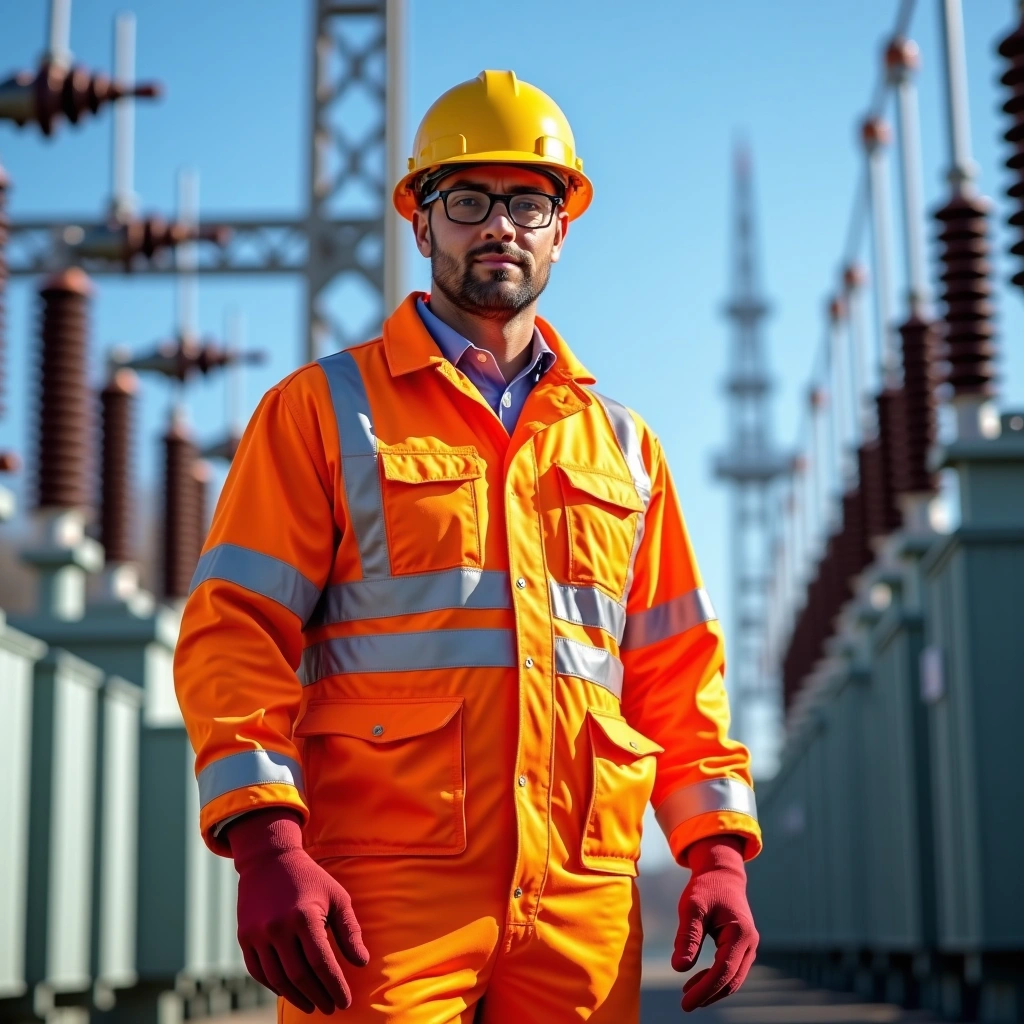
Arc Flash PPE for Utilities & Power Companies

Fit and Comfort Become Even More Important

Connected components may add:

Weight, bulk, straps, batteries, sensors, or cables.

If those features interfere with movement or comfort, workers may resist wearing the equipment correctly.

A device that works perfectly in a product demonstration may behave very differently during an eight- or twelve-hour industrial shift.

That is why employees should participate in product testing before large-scale adoption.

They can identify practical problems that specifications may not reveal.

Worker Privacy Needs to Be Addressed

Connected PPE can collect information that traditional safety equipment never collected.

Depending on the system, this may include:

Location, movement, biometric measurements, exposure data, or working patterns.

Employers need clear policies explaining what information is collected, why it is collected, who can access it, how long it is retained, and how it will be used.

This is especially important when the same data could potentially be interpreted as productivity or performance monitoring.

Workers are more likely to trust safety technology when the purpose and limits are clearly communicated.

Smart PPE Should Not Become Employee Surveillance

There is an important difference between monitoring a hazard and monitoring every movement of a worker.

A proximity system may need location data to prevent collisions.

A fall-detection system may need motion data to identify an emergency.

That does not automatically mean every piece of collected information should be used for employee discipline or productivity measurement.

Organizations should define data boundaries before deployment.

Poorly handled privacy issues can undermine worker participation in an otherwise useful safety program.

Measure Whether the Technology Actually Works

Smart PPE should be evaluated like any other safety investment.

A manufacturer may provide impressive features, but employers should determine whether those features improve their own workplace.

Before a pilot begins, establish baseline information.

That may include:

Near misses, injury frequency, emergency response time, vehicle proximity events, heat incidents, or other relevant measures.

After the pilot, compare the same indicators.

If response time improves, high-risk events decline, or previously hidden hazards become visible, the system may be producing real value.

If nothing changes, the organization should investigate why before purchasing more equipment.

Compare Similar Work When Measuring Results

Measurement needs context.

A smart PPE pilot used by warehouse pickers should not automatically be compared with a crew performing electrical maintenance at height.

Different tasks have different hazards.

Results should be evaluated by:

Job type, shift, work area, exposure level, and operating conditions.

This creates a more accurate picture of whether the technology is improving safety.

Pilot Before Scaling

One of the strongest ways to introduce smart PPE is through a limited pilot.

Start with a clearly defined hazard and a small group of workers.

Test the equipment during normal operations.

Evaluate whether alerts are accurate, whether the technology is comfortable, whether batteries last long enough, whether connectivity is reliable, and whether employees understand how to respond.

Worker feedback should be included alongside safety metrics.

If the system performs well, expansion can happen gradually.

A pilot limits both financial risk and the possibility of rolling out a poorly suited product to hundreds of employees.

Train Workers and Supervisors Differently

Workers and supervisors interact with smart PPE in different ways.

Workers need to know how to wear or activate the equipment, recognize alerts, respond correctly, and report problems.

Supervisors may need additional training on dashboards, escalation procedures, equipment maintenance, and data interpretation.

Safety teams also need to know how to distinguish between an isolated alert and a pattern requiring a larger workplace change.

Technology without training rarely creates sustainable improvement.

Be Careful With Predictive AI Features

Some smart PPE platforms are beginning to incorporate predictive analytics or artificial intelligence.

These systems may attempt to identify patterns linked to fatigue, unsafe movement, heat strain, or other risks before a traditional threshold is reached.

These features may be useful, but employers should evaluate them carefully.

A predictive warning should not be treated as infallible.

Organizations should understand what data the system uses, how alerts are generated, how often false positives occur, and whether results have been validated in environments similar to their own.

Predictive technology should supplement established safety controls rather than replace them.

Smart PPE Works Best as Part of a Larger Program

Connected technology can provide information faster than many traditional methods.

But the strongest safety programs still depend on fundamentals.

Employers need hazard assessments, safe work procedures, employee training, engineering controls, appropriate PPE, inspections, corrective action, emergency planning, and worker participation.

Smart PPE adds another source of information to those systems.

Arbill supports organizations through a combination of PPE, safety technology, training, assessments, and EHS solutions that can help employers connect product selection with broader workplace safety goals.

The important word is connect.

Technology should strengthen the existing safety system rather than become a separate initiative that operates without the rest of the program.

How to Introduce Smart PPE Safely

A successful rollout begins by identifying a specific problem instead of purchasing technology simply because it is new.

Choose an exposure or operational challenge where real-time information could genuinely improve safety.

Then evaluate available products against the hazard and existing PPE requirements.

Run a pilot.

Involve employees.

Establish response procedures.

Define privacy rules.

Measure baseline performance.

Track results.

Correct technical problems before expansion.

Only after the system demonstrates measurable value should the organization consider scaling it across departments or locations.

Questions to Ask Before Investing in Smart PPE

Before adopting a connected PPE system, employers should be able to answer several practical questions.

What hazard are we trying to control?

What does the equipment measure?

How accurate are the alerts?

What happens when the device loses power?

What happens when connectivity fails?

Who receives alerts?

What action should they take?

Does the underlying PPE meet the required protective standard?

Will workers wear it comfortably for an entire shift?

What employee information is collected?

How will success be measured?

If those questions do not have clear answers, the technology may not be ready for broad deployment.

Conclusion

Smart PPE is changing workplace safety because it adds real-time information to equipment workers already rely on.

Connected hard hats, wearables, gas monitors, proximity systems, fall detection, heat sensors, and data-enabled PPE distribution can help organizations recognize hazards earlier, communicate warnings faster, and identify patterns that traditional safety systems may miss.

But the technology is not a substitute for hazard control.

Sensors cannot repair unsafe equipment. Alerts cannot replace training. Connected PPE cannot compensate for poor work design or inadequate procedures.

The strongest applications use smart PPE as another layer within an established safety program.

Employers that pilot technology carefully, involve workers, protect employee data, establish clear response procedures, and measure actual results are more likely to gain meaningful value from connected safety systems.

Smart PPE will continue to evolve, but the goal remains the same: give workers the right protection, identify hazards earlier, and help safety teams act before an exposure becomes an injury.

Request a Safety Assessment

Recent Posts

Safety Training
Leading vs. Lagging Safety Indicators: What Should You Track?

Leading vs. Lagging Safety Indicators: What Should You Track?

How to Conduct a Job Hazard Analysis - Your Complete Risk Assessment
What Is a Job Hazard Analysis (JHA) and How Do You Conduct One?

What Is a Job Hazard Analysis (JHA) and How Do You Conduct One?

How to Conduct a Workplace Safety Audit

How to Conduct a Workplace Safety Audit

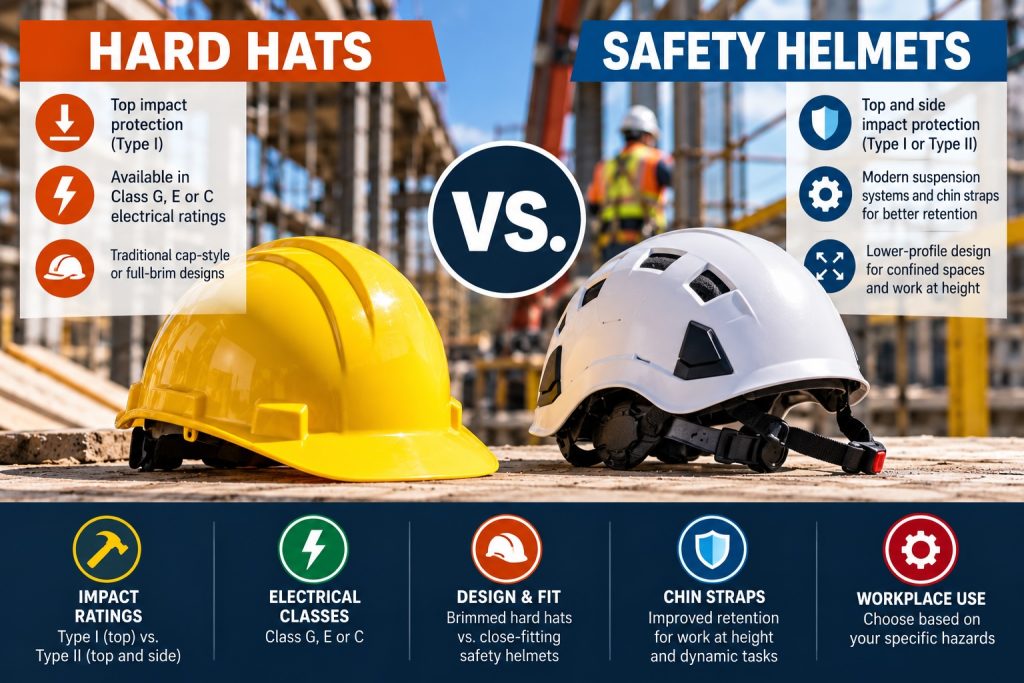
Hard Hats vs. Safety Helmets
Safety Helmets vs. Hard Hats: What Employers Need to Know

Safety Helmets vs. Hard Hats: What Employers Need to Know

How to Choose the Right Chemical-Resistant Gloves for the Job

How to Choose the Right Chemical-Resistant Gloves for the Job

  • Previous ProjectWhy Regular PPE Training Is Essential for Employee Safety

  • Next ProjectTop Safety Trends Shaping Industrial Workplaces in 2026

CUSTOMER SERVICE

800-523-5367

CONTACT US

Complete the short form below and an Arbill representative will get back to you within 24 hours.
* Required Fields

    ARBILL RESPECTS YOUR PRIVACY AND YOUR INFORMATION: By submitting the form above you agree to receiving emails from Arbill. Your submitted information is NEVER shared. You may unsubscribe at any time via the "unsubscribe" link in our emails. You can view our Privacy Policy HERE.