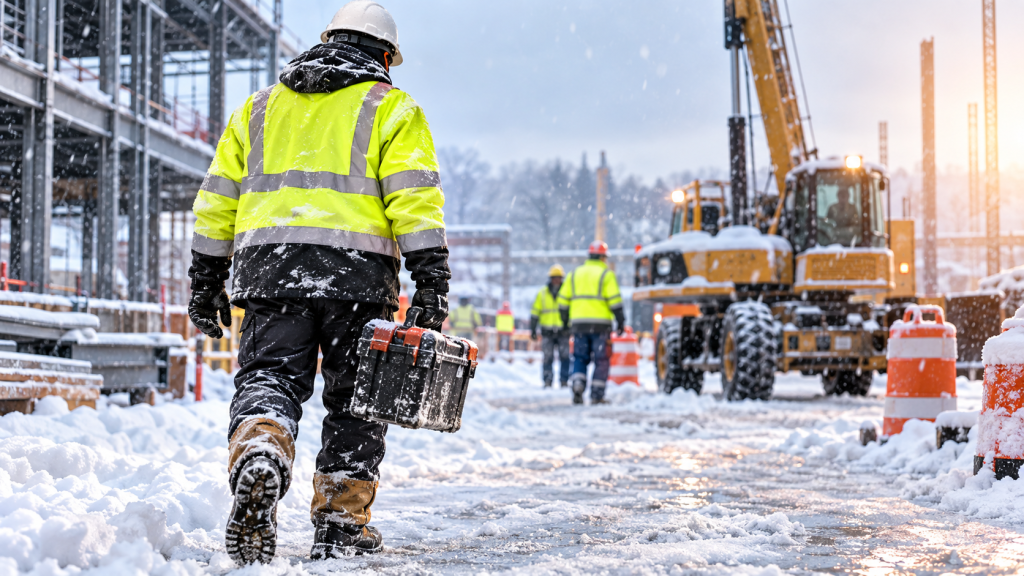
Winter weather can change the risk profile of a job site within hours.
A work area that is safe under dry conditions may become hazardous after snow, freezing rain, strong winds, or a sudden temperature drop. Walking surfaces lose traction. Equipment behaves differently. Workers may have reduced dexterity. Visibility can decline. Vehicles require more stopping distance, and prolonged exposure to cold can lead to serious cold-related illness.
For construction crews, utility workers, maintenance teams, warehouse personnel, transportation employees, and other industrial workers, winter safety requires more than simply wearing a heavier jacket.
Employers need to plan for how cold, moisture, wind, snow, and ice affect workers, equipment, access routes, emergency response, and normal work procedures.
Winter Weather Creates More Than One Hazard
The most obvious winter hazard is low temperature, but cold weather usually introduces several risks at the same time.
Snow may conceal uneven surfaces or open edges.
Ice can turn parking lots, ladders, steps, roofs, loading docks, and walkways into slip hazards.
Wind can increase cold stress and affect lifting operations.
Heavy clothing can reduce mobility.
Gloves can limit dexterity.
Snow and fog can reduce visibility around vehicles and heavy equipment.
Recognizing these combined hazards is the first step toward preventing winter incidents.
Cold Stress Can Develop Faster Than Workers Expect
Cold stress occurs when the body loses heat faster than it can replace it.
Wind, wet clothing, fatigue, and prolonged exposure can accelerate that process.
OSHA notes that cold stress can lead to conditions including hypothermia, frostbite, trench foot, and chilblains. Workers may be at risk even at temperatures near freezing, particularly in areas where people are not accustomed to cold conditions. (OSHA Cold Stress Guidance)
Hypothermia
Hypothermia occurs when the body’s core temperature drops too low.
Early signs may include shivering, fatigue, reduced coordination, and confusion.
As the condition becomes more serious, the employee may lose the ability to recognize that they are in danger.
That makes coworker awareness particularly important.
Frostbite
Frostbite occurs when skin and underlying tissues freeze.
Hands, fingers, toes, ears, nose, and other exposed areas are especially vulnerable.
Cold metal, wind, moisture, and inadequate gloves or footwear can increase risk.
Trench Foot
Trench foot can develop when feet remain wet and cold for extended periods.
It does not require freezing temperatures.
Workers whose boots, socks, or footwear remain damp throughout a shift may be at risk.
Wind Chill Changes the Real Exposure
The air temperature alone does not tell the whole story.
Wind removes heat from exposed skin more quickly, making conditions feel considerably colder than the thermometer indicates.
That is why winter planning should consider wind chill rather than temperature alone.
A moderate air temperature combined with strong wind can create more serious cold exposure than a colder but calm day.
Supervisors should review conditions before outdoor work begins and continue monitoring them throughout the shift.
Wet Workers Get Cold Faster
Moisture significantly increases heat loss.
Rain, melting snow, perspiration, wet gloves, damp socks, and water entering boots can all make employees colder much faster.
A worker performing physically demanding labor may initially feel warm and begin sweating.
When activity slows, the moisture trapped inside clothing can cool rapidly.
This is why winter PPE needs to manage both insulation and moisture.
Workers should have access to dry replacement gloves, socks, and other clothing when conditions warrant it.