Process safety culture is not built after an incident.
It is built before the alarm sounds, before the release occurs, before the near miss is reported, and before a regulator asks why the warning signs were missed.
Chemical plants operate in environments where small deviations can become serious events quickly. A valve position changes. A procedure is skipped. A sensor drifts. A maintenance backlog grows. A worker notices something unusual but does not report it. A process change happens without enough review. These are the early signals that determine whether a facility stays ahead of risk or reacts after damage is done.
That is why managed EHS services matter.
For chemical plants covered by Process Safety Management expectations, safety culture must be active, visible, and practical. It cannot live only in binders, annual training slides, or audit reports. It has to show up in daily decisions, field observations, training, hazard reviews, documentation, corrective actions, and leadership follow-through.
Managed EHS services help plants keep that system moving before the PSM clock runs out.
Why Process Safety Culture Has to Start Early
Chemical plant incidents rarely come from one single failure.
They usually develop through a chain of small gaps: incomplete documentation, weak training, equipment deterioration, poor communication, missed maintenance, unclear procedures, or pressure to keep production moving. When those gaps are not corrected early, they can align into a serious event.
The uploaded draft makes this point clearly: many facilities operate reactively, addressing hazards only after near misses or accidents expose vulnerabilities. That approach leaves workers at risk and creates exposure to downtime, regulatory penalties, and reputational damage.
A proactive process safety culture works differently.
Workers speak up before conditions become dangerous. Supervisors respond to concerns quickly. Management funds corrective actions before incidents force them. EHS teams track leading indicators, not just injury rates. Procedures are reviewed when work changes. Training is refreshed before knowledge fades.
In a strong culture, process safety is not treated as a compliance task. It is treated as how the plant operates.
What PSM Really Requires From Chemical Plants
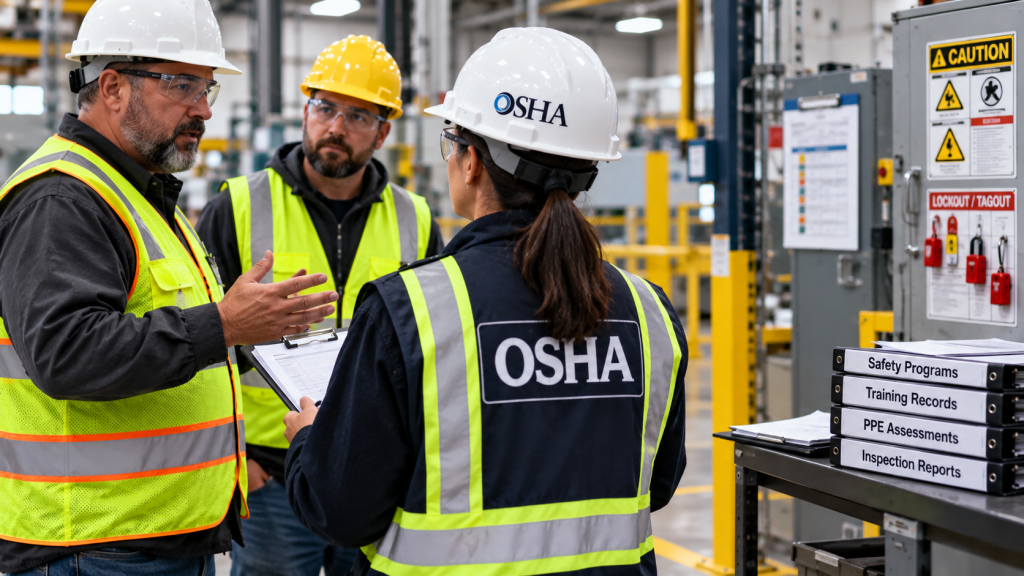
OSHA’s Process Safety Management standard applies to covered processes involving highly hazardous chemicals. OSHA explains that the PSM standard emphasizes managing hazards associated with highly hazardous chemicals and establishes a comprehensive management program that integrates technologies, procedures, and management practices.
That is important because PSM is not one checklist.
It is a management system. It connects process safety information, process hazard analysis, operating procedures, training, mechanical integrity, management of change, incident investigation, emergency planning, compliance audits, and employee participation.
For chemical plants, that means the program must stay current as operations change.
A facility may have strong documentation today, but if equipment changes, staffing changes, materials change, procedures drift, or maintenance conditions worsen, the program can become outdated. That is where process safety culture and managed EHS support become critical.
The question is not only whether the plant has a PSM program. The question is whether the program still reflects the work being done.